
When you pick up a standard pencil, you will almost always find the letters “HB” stamped near the end of the barrel. This simple label is not a brand name or a random code; it is the key to understanding how the pencil will perform on paper.
In short, HB stands for Hard Black. It represents the universal middle ground of the graphite grading scale, offering an optimal balance between lead hardness and line darkness. This makes it the go-to choice for everyday writing, schoolwork, and general office tasks.
Understanding how this scale works allows you to select the right tool for your specific needs, whether you are shading a sketch, taking a standardized exam, or drafting precise technical lines.
Products mentioned in this guide
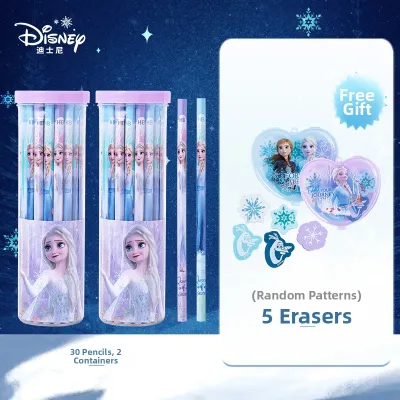
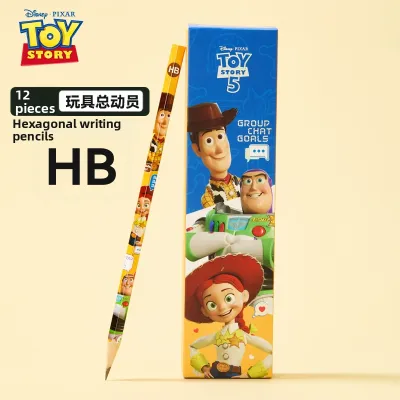
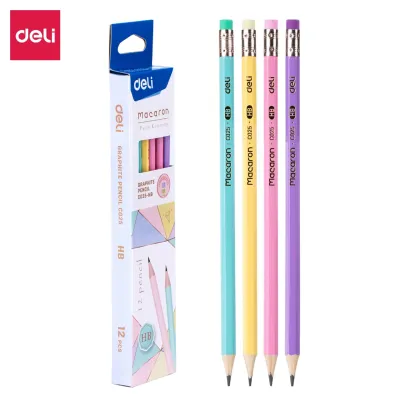
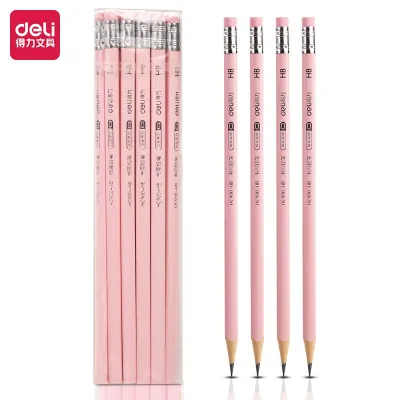
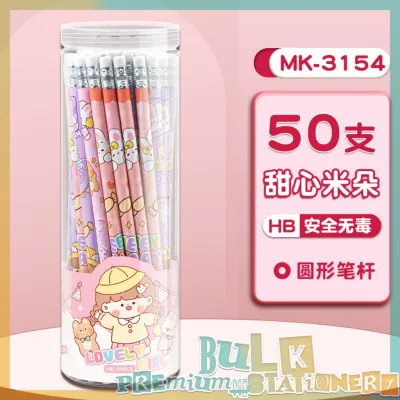
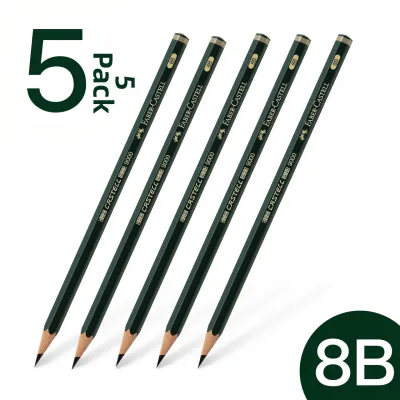
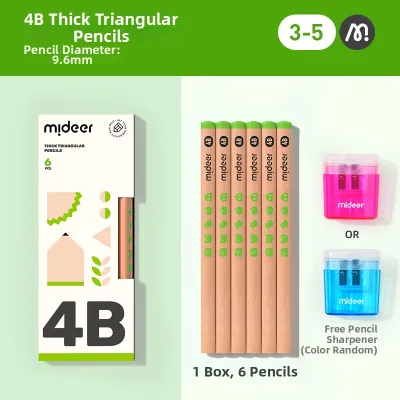
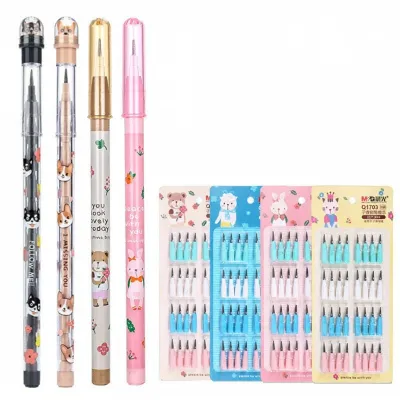
Prices are valid at publication and may change. Please refer to the product page for the latest price.
Decoding the Pencil Grading Scale: What H, B, and HB Mean
To understand the HB designation, it helps to look at what actually goes into a pencil core. Despite the common term “lead,” modern pencils actually use a mixture of non-toxic graphite and clay. The ratio of these two ingredients determines how the pencil behaves.
The letter H stands for Hardness. Pencils with a high “H” rating contain more clay and less graphite. This composition results in a hard lead that wears down slowly, holds a sharp point for a long time, and leaves light, thin gray lines on the page.
The letter B stands for Blackness. Pencils with a high “B” rating contain more graphite and less clay. This makes the lead much softer, allowing it to deposit a generous amount of dark, rich graphite onto the paper with minimal pressure.
The HB grade sits directly in the center of this spectrum. By blending roughly equal parts clay and graphite, manufacturers create a pencil that is hard enough to resist breaking easily, yet dark enough to be highly legible.
The scale extends outward in both directions to accommodate different tasks. As the number preceding the letter increases, the characteristic becomes more pronounced. For example, a 4H pencil is significantly harder and lighter than a 2H pencil. Conversely, a 4B pencil is much softer and darker than a 2B pencil. You may also occasionally see an F pencil, which stands for “Firm”; this sits between H and HB, designed to hold a very fine point for detailed work.
How Pencil Hardness and Blackness Affect Your Writing
The balance of clay and graphite directly influences how a pencil feels and performs under different conditions. Observing these physical traits can help you decide which grade suits your writing style.

Visual Output and Line Quality Harder grades (H to 9H) produce light, crisp, and thin lines. They are ideal for initial layout sketches or technical drawings where the lines need to be easily covered or erased later. Softer grades (B to 9B) deliver deep, dark, and expressive lines. These are preferred by artists for shading, blending, and creating dramatic contrast.
Smudge Resistance and Climate Factors Because soft B-grade pencils deposit loose graphite particles on the paper surface, they are highly prone to smudging. In warm, humid tropical climates, paper naturally absorbs ambient moisture from the air. Writing with a soft B-grade pencil on slightly damp paper can lead to significant smearing, especially for left-handed writers whose hands drag across the page. Harder H-grade pencils resist smudging because the clay binds the graphite tightly, making them a cleaner option for rapid note-taking in humid conditions.
Point Retention and Wear If you dislike sharpening your pencil constantly, harder grades are highly practical. They maintain a sharp tip through pages of writing. Soft B-grade pencils wear down rapidly, requiring frequent sharpening to keep a clean line.
Erasability and Paper Interaction While soft B-grade lines are dark, they are relatively easy to lift from the paper with a quality eraser because the graphite sits loosely on the surface. However, using a poor-quality eraser can smear the dark dust across the page. Hard H-grade lines do not smear, but because the lead is so hard, pressing too firmly can physically score or indent the paper fibers, leaving permanent grooves even after the graphite is erased.
Choosing the Right Pencil Grade for Your Daily Tasks
Selecting the right pencil grade depends on your primary activity, your writing pressure, and your environment.
A Practical Decision Framework
- General Writing and Note-Taking: Standard HB is the reliable baseline. If you have a very light writing grip and find HB too faint, switching to a 2B pencil can provide darker, more legible text without requiring you to press harder.
- Standardized Exams: In many schools and testing centers, 2B pencils are highly recommended or required. The darker graphite ensures that optical mark readers (OMR) can easily scan and register your shaded answers.
- Sketching and Art: A single pencil is rarely enough for drawing. Purchasing a multi-grade set (typically ranging from 2H to 6B) allows you to transition smoothly from light guidelines to deep, rich shadows.
- Technical Drafting: If you work with rulers, T-squares, or detailed templates, hard grades like 2H or 4H prevent graphite buildup on your drawing tools and keep your layouts clean.
What to Verify Before Buying When shopping for school or office supplies, check the end of the pencil barrel for clear grade markings. If you are purchasing bulk boxes for daily office use, standard HB boxes of 12 are usually the most cost-effective choice, often costing under ₱100. For specialized tasks, verify whether the packaging specifies the intended use, such as “drawing” or “exam grade,” to ensure the graphite mixture matches your expectations.
Frequently Asked Questions (FAQ)
Is an HB pencil the exact same as a #2 pencil?
For most everyday writing tasks, an HB pencil is functionally equivalent to a #2 pencil. The difference lies in the regional grading systems. The alphanumeric scale (HB) is widely used in Europe and Asia, while the numeric scale (1 to 4) is traditional in the United States, with #2 representing the middle standard. Because manufacturers use proprietary formulas, an HB pencil from one brand may feel slightly softer or harder than a #2 pencil from another. Testing a single pencil on your preferred paper is the best way to verify its feel.
Does the HB grading system apply to mechanical pencil leads?
Yes, the HB grading scale applies directly to mechanical pencil lead refills. You can easily find refills labeled HB, 2B, or H to match your writing preference. When purchasing refills, always verify that the lead diameter (such as 0.5 mm or 0.7 mm) matches the exact specifications of your mechanical pencil body to prevent jamming or slipping.

Community discussion
Share your experience or ask a question. Comments are reviewed before publication.