
Acrylic sheet is a highly durable, transparent thermoplastic material that serves as a premier choice for signage, displays, and creative crafts. Often referred to by trade names like Plexiglass, this material offers a unique balance of optical clarity, structural rigidity, and impact resistance. When planning a signage project, choosing between acrylic, traditional glass, and lightweight foam board depends heavily on your display environment, budget, and how long the sign needs to last. Understanding the physical properties and practical limitations of each material ensures that your finished sign remains professional, legible, and intact throughout its intended lifespan.
Understanding Acrylic Sheet as a Signage Material
Acrylic sheet is manufactured in two primary forms: cast and extruded. Cast acrylic offers superior optical clarity and is easier to machine, laser-cut, and engrave, making it the preferred choice for custom signage. Extruded acrylic is more cost-effective and offers tighter thickness tolerances, which is ideal for simple, flat-panel displays. Both forms are available in crystal-clear, frosted, translucent, and vibrant solid colors, allowing designers to achieve diverse visual effects.
In terms of physical traits, acrylic sheet is remarkably lightweight yet rigid. It is significantly lighter than glass of the same dimensions, simplifying handling and installation. Its light transmission is exceptional, often allowing more light to pass through than standard glass, which enhances backlit signs. However, acrylic has a moderate surface hardness, meaning it can scratch more easily than glass if subjected to rough handling or abrasive cleaning tools.
Products mentioned in this guide
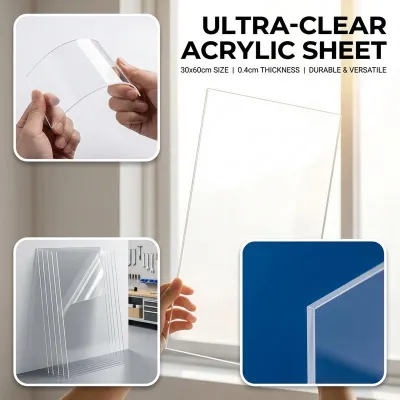
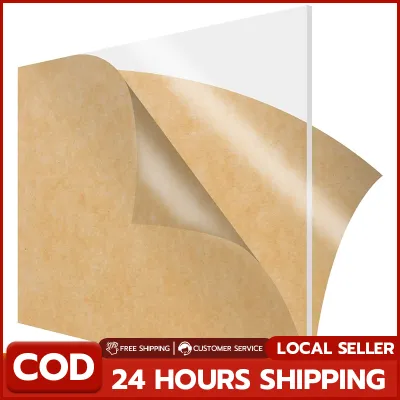
38 Lazada user ratings
Na-recieve ko na & Good Condition & Sakto sa size na Order ko sa sunod Order ulit Ako Thanks rin sa nag deliver
thank you seller at sa rider na wlang saw a ako lage inuuna.,sauulitin .
Matagal lang dumating. Pero ok un unit. Thanks
Quality: ok Price: ok
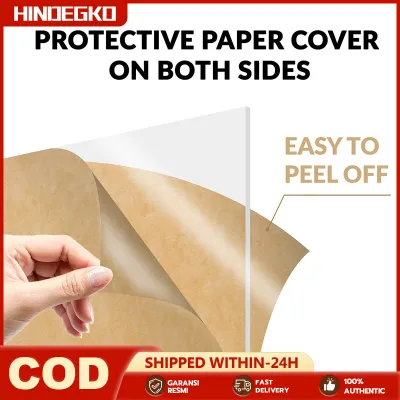
5 Lazada user ratings
Crystal clear transparency, great for displays, Crystal clear transparency, great for displays, Clear acrylic sheet, perfect for DIY project…Read full reviewShow less
Crystal clear transparency, great for displays, Crystal clear transparency, great for displays, Clear acrylic sheet, perfect for DIY projects
High-quality material, durable and long-lasting, Thank you seller for shipping the order immediately as requested, much appreciated!
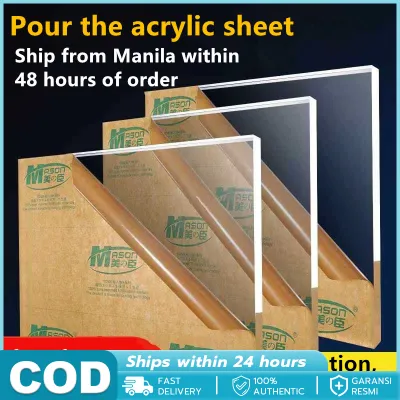
16 Lazada user ratings
Quality:I thought the 3mm is not enough but its quite thick. Therefore, I can say the quality is good. Price:The price is affordable especia…Read full reviewShow less
Quality:I thought the 3mm is not enough but its quite thick. Therefore, I can say the quality is good. Price:The price is affordable especially that I used coins so I got some discounts. Variety:we can select sizes however maybe we need to chat the seller if we choose to customize the size.
well packed and delivered the product sizes are ok, some scratches and grooves are visible at near view. anyway thanks Lazada and Handler Go…Read full reviewShow less
well packed and delivered the product sizes are ok, some scratches and grooves are visible at near view. anyway thanks Lazada and Handler God Bless HAPPY NEW YEAR
good enough for the price. little crack on one side . I'll try to fix it if I can. if can hide the cracked ? I will buy again. thank you.
madaling mabasag manipis pangit
3 Lazada user ratings
second order thanks po ulit, maganda quality at clear na clear no damage safe na dumating sakto lang sukat..at kapal Tama lang din.
Perfect size for my needs, Clear and transparent, just as described, Versatile for various DIY projects,

2,050 Lazada user ratings
Quality:100% Ease of Use:very suitable for my hamster bin Appearance: Thank you seller. napaka accommodating mo po. hindi na ako magtataka b…Read full reviewShow less
Quality:100% Ease of Use:very suitable for my hamster bin Appearance: Thank you seller. napaka accommodating mo po. hindi na ako magtataka bakit dami mo sales po. Super sulit as per request, nagawa nila. salamat po. uulit ako for sure. salamat po ulit seller.
Versatile and functional design, Perfect for arts and crafts, Provides protection and safety, Smooth and polished finish,
Great for DIY projects, High-quality acrylic sheet, Smooth and polished finish, Sturdy and reliable material,
Easy to clean and maintain, Easy to work with, Versatile and customizable, Perfect for display purposes,
2 Lazada user ratings
Quality:10 Price:10 Variety:10 bilis dumating galing pang overseas, sakto sa sukat okay naman yung item, well wrap may bubble wrap at baot n…Read full reviewShow less
Quality:10 Price:10 Variety:10 bilis dumating galing pang overseas, sakto sa sukat okay naman yung item, well wrap may bubble wrap at baot ng box. walang damage sakto lang sa price siguro.
Super quality nice..
Prices are valid at publication and may change. Please refer to the product page for the latest price.
When planning an installation, you must consider environmental limits. In tropical climates with intense sunlight, high humidity, and seasonal rain, standard acrylic can warp or degrade if not properly specified. Acrylic naturally expands and contracts with temperature fluctuations, requiring installers to leave adequate clearance in mounting frames. For outdoor applications, verify the manufacturer’s specifications to ensure the sheet contains UV stabilizers that prevent yellowing and brittleness.
Acrylic Sheet vs. Glass for Displays and Signage
When high transparency and a premium aesthetic are required, the choice typically comes down to acrylic sheet versus traditional glass. Acrylic is approximately half the weight of glass, drastically reducing the structural support required for hanging signs, wall-mounted directories, or overhead displays. This lightweight nature makes installation safer and more manageable, eliminating the need for heavy-duty wall anchors or specialized rigging equipment.

Impact resistance and safety are critical factors in public spaces. Acrylic is highly shatter-resistant, offering up to seventeen times the impact resistance of standard glass. If subjected to a severe blow, acrylic may crack or chip, but it will not shatter into sharp, hazardous shards. This makes it the safer choice for high-traffic retail environments, schools, and public exhibitions. Conversely, glass offers superior surface hardness and scratch resistance, meaning it can withstand frequent physical contact and cleaning without developing the fine hairline scratches that can dull the surface of acrylic over time.
Optical clarity and glare control also play a role in material selection. While both materials offer excellent visibility, standard float glass often exhibits a noticeable green tint along the polished edges of thicker panels. Acrylic maintains a perfectly clear, colorless edge, which is highly desirable for modern, minimalist floating signs. However, both glossy acrylic and standard glass are highly reflective. If your sign will be placed under direct spotlights or near bright windows, you may need to specify non-glare or matte-finished acrylic to maintain readability.
From a cost and maintenance perspective, acrylic is highly durable but requires specialized care. Standard glass cleaners containing ammonia, alcohol, or solvents will chemically attack acrylic, leading to a network of fine cracks known as crazing. Cleaning acrylic requires a soft microfiber cloth and a mild soap solution. While high-quality acrylic sheets can carry a higher initial material cost than basic float glass, the reduced risk of breakage during transport, installation, and daily use often results in lower long-term replacement costs, saving you thousands of pesos (₱) over the lifespan of the display.
Acrylic Sheet vs. Foam Board for Temporary and Lightweight Projects
For short-term events, temporary promotions, or budget-conscious displays, foam board is a common alternative to acrylic sheet. The primary difference lies in structural rigidity and long-term durability. Foam board consists of a lightweight polystyrene core sandwiched between two sheets of paper or plastic. While incredibly light and easy to handle, foam board lacks structural strength and is highly susceptible to denting, creasing, bending, and corner damage. Acrylic, as a solid thermoplastic, provides a rigid, flat surface that resists physical impacts and maintains its professional appearance indefinitely.
Surface printing and fabrication methods also differ significantly. Foam board is exceptionally easy to customize; it can be cut effortlessly with a standard utility knife and is ideal for direct flatbed UV printing or mounting printed paper posters. Acrylic requires more intensive fabrication, including specialized scoring tools, fine-toothed saws, or laser cutters to achieve clean edges. Graphics are typically applied to acrylic using high-quality adhesive vinyl decals or direct-to-substrate UV printing. Because ink adhesion and vinyl bonding depend on the specific acrylic surface finish and ink chemistry, it is always wise to perform a small trial application on a scrap piece to verify compatibility and adhesion strength before proceeding with a full production run.
Environmental adaptability is a decisive factor, particularly in tropical regions. Standard paper-faced foam board is highly sensitive to moisture and humidity. In damp environments, the paper liners can absorb moisture, leading to warping, bubbling, delamination, and mold growth, restricting its use to dry indoor settings. Acrylic is completely waterproof and impervious to humidity, making it highly suitable for both indoor and outdoor signage. When used outdoors, however, acrylic signs must be securely anchored to withstand wind loads, as the rigid sheets can act like sails.
Analyzing the lifecycle and cost-effectiveness reveals distinct use cases for each material. Foam board is highly economical for single-use events, trade show presentations, or temporary directional signs where the budget is limited and the sign will be discarded afterward. Acrylic represents a larger upfront investment but offers a virtually unlimited lifespan when properly maintained. For permanent storefront signs, corporate lobby plaques, or directional signage that will be displayed for years, acrylic is the far more cost-effective choice.
How to Choose the Right Material for Your Specific Project
Selecting the ideal material requires a systematic evaluation of your project’s environment, expected lifespan, and installation method. To guide your decision, consider the following scenario-based framework:
- Outdoor Permanent Signage: Choose UV-stabilized acrylic sheet. Its weather resistance and structural integrity ensure it survives tropical rain and sun, whereas foam board will degrade rapidly and glass poses a safety hazard in high winds.
- Indoor High-Traffic Displays: Choose acrylic sheet. It provides the elegant, high-clarity look of glass but eliminates the liability of shattering if bumped by customers or staff.
- Short-Term Indoor Events: Choose foam board. It is highly budget-friendly, lightweight, and can be easily mounted using basic double-sided adhesive tape or lightweight easel stands.
Once you select your material, use this specification checklist to prepare your order or fabrication plan:
- Thickness: For small, framed signs, a thickness of 2mm to 3mm is usually sufficient. For larger, unframed, or freestanding signs, select a thickness of 4.5mm to 6mm or more to prevent the panel from bowing under its own weight.
- Dimensions: Measure your mounting space carefully, allowing a clearance of 2mm to 3mm per meter to accommodate thermal expansion in warm tropical climates.
- Edge Treatment: Specify polished edges (such as flame polishing or diamond polishing) if the edges of the acrylic sheet will be exposed, ensuring a smooth, glass-like finish.
- Mounting Hardware: Ensure your mounting hardware, such as stainless steel standoff screws or hanging chains, is rated for the weight of the selected sheet thickness.
While DIY fabrication is feasible for simple projects, you must recognize when to seek professional assistance. You should stop and consult a professional signage fabricator if your design requires complex curved cuts, intricate laser engraving, flame-polished edges on thick sheets, or large-scale outdoor installations that require structural engineering and wind-load calculations. Attempting complex cuts at home without specialized equipment often leads to cracked sheets, wasted materials, and potential safety hazards.
Frequently Asked Questions (FAQ)
Can acrylic sheet be used outdoors without yellowing?
Yes, acrylic sheet can be used outdoors successfully, but you must select the correct grade. Standard utility-grade acrylic may yellow, become brittle, and lose its clarity under prolonged exposure to intense tropical sunlight. To ensure long-term performance, verify that the product label or manufacturer specification sheet explicitly states the material is UV-stabilized or rated for outdoor use, which often includes a multi-year warranty against UV degradation.
What is the best way to clean acrylic without scratching it?
To clean acrylic without scratching the surface, always use a clean, ultra-soft microfiber cloth. Avoid paper towels, polyester cloths, or kitchen sponges, as their fibers can cause micro-scratches that dull the finish over time. Never use household glass cleaners, ammonia, or alcohol-based solvents, which can cause the plastic to crack or turn cloudy. Instead, use a mild mixture of dish soap and lukewarm water, wiping gently without applying heavy pressure.
How do I cut acrylic sheet at home without cracking it?
For thin acrylic sheets up to 3mm, use a specialized acrylic scoring tool to score a deep line along a straight edge, then place the sheet over a sharp table edge and apply quick, even downward pressure to snap it cleanly. For thicker sheets, use a fine-toothed saw blade designed specifically for plastics, keeping the blade cool and moving at a steady pace to prevent melting. Always wear safety goggles and protective gloves to shield yourself from sharp plastic chips, and consult a professional fabricator for complex shapes or thick panels.
Community discussion
Share your experience or ask a question. Comments are reviewed before publication.