
Air-dry clay is a versatile, user-friendly modeling material that hardens at room temperature without a specialized kiln or oven. Primarily composed of water, binders, and paper fibers or mineral fillers, this dry clay is highly accessible for hobbyists, students, and professional crafters. By exposing the sculpted piece to air, the moisture evaporates, leaving behind a solid, lightweight structure ready for painting and sealing. It serves as an excellent entry point into sculpting, requiring minimal initial investment in specialized equipment.
How Air-Dry Clay Cures and What to Expect
The curing process of air-dry clay relies entirely on the evaporation of its water content. Unlike traditional ceramic clays that undergo chemical changes at high temperatures in a kiln, air-dry clay experiences a physical transition as moisture leaves the material. Consequently, the clay shrinks by five to ten percent during drying. Crafters must account for this shrinkage when building over rigid armatures, as the clay can crack if it cannot contract freely around a solid core.
The ambient environment plays a critical role in how successfully the clay cures. In tropical climates with high relative humidity, such as in the Philippines, evaporation slows down considerably. A piece that dries in twenty-four hours in an arid climate may require forty-eight to seventy-two hours to cure in a humid room. Placing the piece in a well-ventilated area with consistent airflow, such as near a gentle fan, helps facilitate even drying. Avoid rushing this process with direct heat, which causes warping and surface cracks.
Products mentioned in this guide
![Jovi Air Dry Clay White 500g [2285]](https://img.lazcdn.com/g/p/8b82dde3d75fbe85d2fefe503294dab3.jpg_400x400q80.jpg_.webp)
![Jovi Air Dry Clay - White 1000g [2286]](https://img.lazcdn.com/g/p/db9cc8e716da206931c23fd9db9fb7d8.jpg_400x400q80.jpg_.webp)
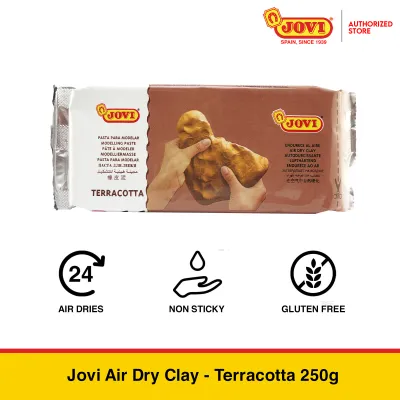
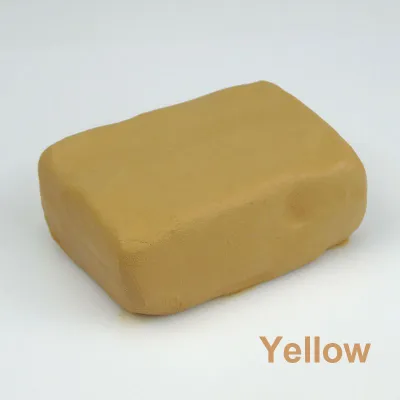
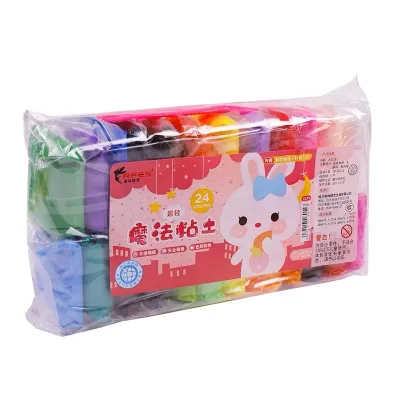
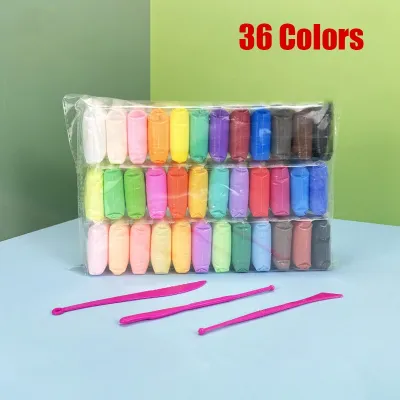
Prices are valid at publication and may change. Please refer to the product page for the latest price.
Once fully cured, the clay is lightweight, relatively durable, and highly porous. Because it does not undergo vitrification—the process where heat fuses silica particles into glass—the finished piece remains sensitive to moisture. If exposed to water, the dried clay will soften and eventually dissolve. The cured surface has a matte, slightly textured finish that readily absorbs paints, inks, and protective coatings.
Air-Dry Clay vs. Polymer and Pottery Clay
Choosing the right modeling medium depends on your workspace, budget, and project goals. Traditional pottery clay requires a kiln reaching temperatures exceeding nine hundred degrees Celsius, making it impractical for home crafters without studio access. Polymer clay is a synthetic material made of polyvinyl chloride (PVC) and plasticizers that cures in a standard household oven at low temperatures. While polymer clay is highly durable and water-resistant after baking, it requires a dedicated baking appliance to avoid food contamination risks.

Air-dry clay stands out for its simplicity and accessibility. It requires no heating equipment, making it exceptionally safe for young children and classroom settings. From a cost perspective, dry clay is generally more economical per kilogram than polymer clay, allowing for larger-scale projects without a significant financial burden. However, this accessibility comes with trade-offs in durability. Polymer clay remains slightly flexible after baking, making it highly impact-resistant, whereas cured air-dry clay is brittle and can shatter if dropped on hard surfaces.
Furthermore, the water resistance of these materials differs fundamentally. Polymer clay is completely waterproof once baked, making it suitable for items that encounter moisture. Air-dry clay, even when coated with high-quality sealants, should never be submerged or subjected to wet conditions. For beginners seeking a low-barrier entry to sculpting large decorative objects, air-dry clay is often the most practical choice, while polymer clay is better suited for miniature figures and jewelry.
What You Can Make (and What to Avoid)
Air-dry clay is highly suited for decorative and educational projects. It is commonly used to create custom trinket dishes, jewelry organizers, wall hangings, relief tiles, and miniature figurines. Because it accepts detail well, crafters can press textured stamps, leaves, or lace into the wet clay to create intricate surface patterns. It is also an excellent medium for school dioramas, architectural models, and relief maps, as it can be easily shaped and painted with standard school supplies.
However, the material has strict limitations that crafters must respect to prevent project failure. Because it remains water-soluble and porous, air-dry clay must never be used to make food-safe items such as mugs, bowls, or plates. Even with a food-safe varnish, the underlying clay structure cannot withstand washing or contact with liquids. Additionally, air-dry clay is unsuitable for outdoor use, as rain and high humidity will quickly degrade the structure. It should also not be used for high-stress structural parts, such as heavy-duty brackets or functional hooks, as it lacks the tensile strength to support significant weight.
Before starting any project, always check the manufacturer’s label on the packaging. Different formulations have varying load-bearing capacities and drying characteristics. Some specialty clays are formulated specifically for ultra-lightweight applications, while others contain added fibers to improve structural integrity for larger sculptures. Matching the clay’s specific properties to your project goals ensures a successful and long-lasting creation.
How to Choose the Right Air-Dry Clay for Your Project
When selecting a dry clay, texture is a primary factor. Smooth, mineral-based clays are ideal for projects requiring fine details, clean lines, and a polished finish. These clays smooth easily with a wet fingertip during sculpting and sand down to a porcelain-like texture once dry. Conversely, fiber-reinforced or paper-based air-dry clays are lighter and stronger, making them the preferred choice for larger sculptures requiring internal wire armatures. The fibers help prevent cracking as the clay shrinks, though the surface may remain slightly textured.
Color selection is another key consideration. Most air-dry clays are available in natural earth tones like white, grey, or terracotta. White clay provides a neutral canvas that allows painted colors to appear vibrant and true. Terracotta clay offers a rustic, traditional pottery aesthetic that looks excellent with simple clear glazes. Pre-colored clays are also available in vibrant hues, which can be blended together like dough to create custom shades, making them popular for children’s crafts.
Finally, consider package sizing relative to your project volume. Once a package of air-dry clay is opened, curing begins immediately. To prevent the remaining clay from drying out, purchase sizes that match your immediate needs, or prepare airtight storage solutions. Wrapping unused clay tightly in plastic wrap and storing it inside a sealed container with a damp sponge or cloth helps preserve its workability for future projects.
Essential Tools and Finishing Steps
Working with air-dry clay does not require expensive, specialized equipment. Basic shaping can be achieved using household items like rolling pins, butter knives, cookie cutters, and toothpicks. For advanced detailing, a basic set of wooden or silicone sculpting tools helps refine curves, carve textures, and smooth joints. Keeping a small bowl of water nearby is essential; dipping your fingers or tools in water helps smooth out surface imperfections and join separate clay pieces securely.
Once the sculpted piece is completely dry, post-drying treatments are necessary to achieve a professional finish. Use a fine-grit sandpaper, such as four-hundred grit, to gently sand away rough edges, fingerprints, or bumps. Be sure to wear a dust mask during this step to avoid inhaling fine clay particles. After sanding, wipe the piece clean with a dry cloth to remove dust before applying color or protective coatings.
To protect your finished craft from moisture and wear, applying a sealant is highly recommended. Acrylic paints can be used to add color, followed by a coat of clear polyurethane, acrylic varnish, or mod podge. These sealants are available in matte, satin, and high-gloss finishes, allowing you to customize the final look. While these coatings significantly improve water resistance and durability, they do not make the clay fully waterproof or safe for food contact.
Frequently Asked Questions (FAQ)
Is air-dry clay safe to use for food or drink containers?
No, air-dry clay is not safe for food or drink containers. Because the clay is highly porous and cured without high-heat vitrification, it easily absorbs moisture, oils, and organic matter from food. This creates an ideal breeding ground for bacteria and mold within the clay structure. Even if you apply multiple layers of commercial sealant, these coatings can degrade over time, crack, or leach harmful chemicals, making the vessel unsafe for consumption or liquid storage.
Can you bake or microwave air-dry clay to dry it faster?
You should not bake or microwave air-dry clay to accelerate the drying process. Rapid heating forces the water inside the clay to evaporate too quickly, leading to severe warping, bubbling, and deep structural cracks. In extreme cases, microwaving can cause the clay to scorch or catch fire due to uneven heating. To ensure the structural integrity of your craft, always allow the clay to dry naturally at room temperature, following the manufacturer’s recommended drying times.
Community discussion
Share your experience or ask a question. Comments are reviewed before publication.