
When shopping for needlework supplies, you may encounter the term “cherry fabric.” In the textile market, this name can refer to a specific commercial fabric line, a particular cotton-synthetic blend, or simply a fabric featuring printed cherry patterns. If you are planning an embroidery project, the suitability of this material does not depend on its brand name or print, but rather on its physical weave structure, fiber composition, and thread count. Understanding these characteristics is essential before you invest time and effort into a complex stitching project.
This guide will help you evaluate cherry fabric by examining its physical properties and matching them to the correct needlework techniques. You will learn how to identify the fabric’s composition, determine if it can support the precise grid required for traditional counted cross-stitch, and discover practical workarounds or alternative embroidery styles if the weave is not ideal.
How to Identify Cherry Fabric's Composition and Weave
To determine how a specific cherry fabric will behave under your needle, start by verifying its fiber content. You can find this information by checking the product bolt label, packaging, or online manufacturer specifications. Cherry fabric lines are commonly produced as 100% cotton, cotton-polyester blends, or lightweight linens. In tropical climates with high humidity, such as the Philippines, fiber composition plays a significant role in fabric behavior. Pure natural fibers like cotton and linen breathe well and hold consistent tension in an embroidery hoop, whereas high-synthetic blends can feel slippery or stretch unevenly when pulled tight.
Products mentioned in this guide
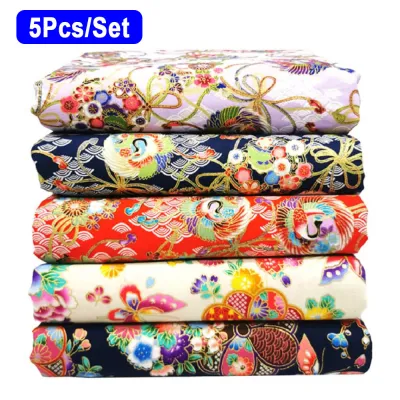
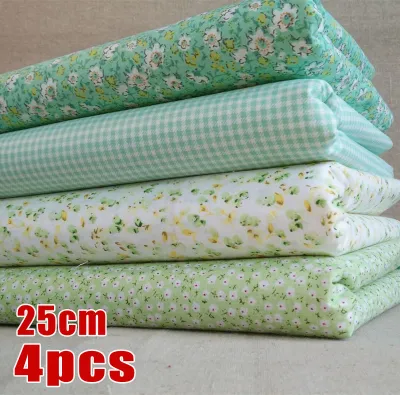
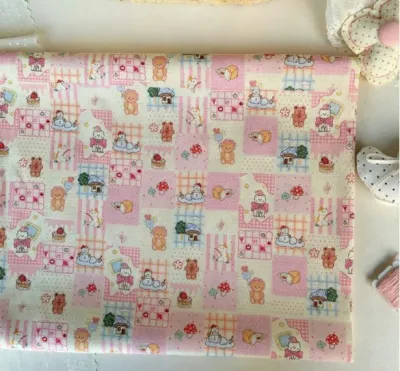
Prices are valid at publication and may change. Please refer to the product page for the latest price.
Next, examine the weave structure visually and by touch. Hold the fabric up to a bright light source or use a magnifying glass to inspect the alignment of the threads. A standard plain weave features a simple over-and-under pattern where threads are packed tightly together, which is common in quilting cottons. A twill weave displays diagonal ribs or ridges, which makes it highly unsuitable for geometric stitching. An evenweave fabric, on the other hand, features a balanced grid where the vertical (warp) and horizontal (weft) threads are of equal thickness and spacing, creating perfect squares.
Finally, look for indicators of thread count, fabric weight, and sizing. Sizing is a starch-like chemical agent applied during manufacturing to give the fabric temporary stiffness and structure. While sizing can make a thin fabric feel temporarily sturdy, it will wash out during the finishing process, altering the fabric’s drape and density. Checking the stated thread count helps you estimate how closely woven the threads are, which directly influences how easily an embroidery needle can pass through the material without snagging.
Does Cherry Fabric Meet Cross-Stitch Requirements?
Traditional counted cross-stitch relies on a highly structured, uniform grid. Each stitch forms an “X” that must occupy an identical square space to ensure the finished design remains symmetrical and undistorted. Dedicated cross-stitch fabrics, such as Aida or evenweave linen, are woven with distinct, visible holes at regular intervals. This open structure allows a blunt tapestry needle to slide smoothly between the threads without piercing the fibers themselves.

If your cherry fabric is a standard plain-weave cotton or a tight synthetic blend, it will likely lack these open, pre-defined holes. Attempting to execute counted cross-stitch on a tightly woven fabric presents several challenges. Because the threads are packed closely together, you cannot easily count them to maintain consistent stitch sizes. Furthermore, using a blunt tapestry needle on tight fabric is difficult and frustrating, while switching to a sharp embroidery needle increases the risk of splitting the fabric threads unevenly, resulting in distorted, crooked stitches.
However, the fabric’s suitability changes if you are working on a pre-printed or stamped cross-stitch project. Stamped cross-stitch patterns are printed directly onto the fabric, eliminating the need to count threads or locate specific grid holes. For stamped designs, a smooth, tightly woven plain-weave cherry fabric is entirely appropriate. The fabric simply serves as a stable background, provided it is heavy enough to support the weight of the embroidery floss without puckering or sagging under the tension of the stitches.
Alternative Embroidery Techniques for Non-Grid Fabrics
If you have purchased a beautiful cherry fabric only to find its weave is too tight for counted cross-stitch, you do not have to let it go to waste. This material can serve as an excellent canvas for surface embroidery, also known as freestyle embroidery. Unlike cross-stitch, surface embroidery does not rely on a grid. Instead, you transfer a design onto the fabric using a water-soluble pen or transfer paper, then use versatile stitches like satin stitch, stem stitch, French knots, and chain stitch to fill in the pattern. The tight, smooth surface of plain-weave cotton is ideal for these decorative stitches.
For those who are determined to complete a counted cross-stitch design on a non-grid cherry fabric, temporary stabilizers offer a practical workaround. You can baste a layer of waste canvas onto the surface of your fabric. Waste canvas provides a temporary, stiff grid that you can easily count and stitch through. Once your design is complete, you lightly mist the area with water to soften the canvas sizing, then use tweezers to pull the individual canvas threads out, leaving your perfect cross-stitch design resting directly on the cherry fabric. Water-soluble canvas sheets offer a similar solution and dissolve completely when soaked in warm water.
While these workarounds are highly effective for small accents or monograms, they require extra patience and care. Pulling embroidery floss through both the stabilizer and a tightly woven fabric increases friction, which can wear down the thread, causing it to lose its sheen or fray prematurely. If your planned project is a large, full-coverage cross-stitch piece, using a temporary grid over a tight fabric can become incredibly tedious. In such cases, it is best to save the cherry fabric for surface embroidery and choose a dedicated Aida or evenweave fabric for your cross-stitch project to avoid unnecessary frustration.
Pre-Purchase Checklist for Embroidery Fabrics
To ensure your next needlework project goes smoothly, use a systematic verification process before buying fabric. First, match the fabric’s thread count to your planned embroidery floss. A higher thread count or a tighter weave requires fewer strands of floss to prevent the stitches from looking bulky. For example, while you might use three or four strands of floss on a coarse Aida fabric, a finer plain-weave fabric may only require one or two strands to maintain a clean, professional appearance.
Next, verify the fabric’s colorfastness and care instructions, especially if you plan to wash the finished piece. In warm, humid climates, moisture can accelerate dye bleeding, which can ruin hours of careful stitching. You can test a small swatch of the fabric by soaking it in warm water with a mild, pH-neutral soap and pressing it against a clean white paper towel. If any dye transfers to the towel, you should pre-wash the entire fabric cut before you begin stitching to lock in the colors and remove excess dye.
Finally, confirm the seller’s return and exchange policies before finalizing your purchase. Most local textile shops and online marketplaces cut fabric to order from a larger bolt, meaning they generally do not accept returns on custom-cut yardage unless there is a clear manufacturing defect. Carefully calculate your project dimensions, adding at least two to three inches of extra margin on all sides to allow for hooping and edge finishing, to ensure you purchase the correct amount of material. Whether you are spending ₱100 or ₱1,000 on specialty fabrics, verifying the weave first saves both money and time.
Frequently Asked Questions (FAQ)
Can I use cherry fabric for stamped cross-stitch?
Yes, cherry fabric is highly suitable for stamped cross-stitch, provided the pattern is pre-printed directly onto the material. Because stamped designs do not require you to count individual threads or locate specific grid holes, the tight weave of a standard plain-weave fabric is not an obstacle. To achieve the best results, secure the fabric tightly in an embroidery hoop to maintain even tension, and verify that the printed ink is water-soluble so it washes out completely once your stitching is finished.
How do I prevent fraying on cut embroidery fabric?
Woven fabrics naturally tend to fray along raw, cut edges as you handle them during stitching. To prevent this, you can apply a thin line of fabric sealant or fray-check adhesive along the edges, or use pinking shears to cut a zigzag border. If you have access to a sewing machine, sewing a quick zigzag or overlock stitch around the perimeter is a highly durable solution. For a quick, temporary fix, you can also wrap the raw edges with low-tack painter’s tape, making sure to remove it before washing the finished piece.
Community discussion
Share your experience or ask a question. Comments are reviewed before publication.