
Finding the perfect writing instrument is a highly personal endeavor. The ideal ballpen is not a single, universally superior product; rather, it is a precise match between ink chemistry, tip engineering, and ergonomic design tailored to your specific writing environment and paper type. When selecting a pen, you must navigate fundamental trade-offs, such as choosing between the effortless glide of fast-flowing ink and the rapid drying times required to prevent smudges.
To make an immediate decision, you should evaluate four core elements: the ink formulation, the tip diameter, the grip ergonomics, and the overall barrel weight. Balancing these factors ensures that your pen remains reliable, whether you are signing official documents, taking rapid meeting notes, or writing for hours during an exam. By understanding how these components interact, you can easily identify which pen will perform consistently under your daily writing conditions.
Ink Flow, Drying Time, and Smudge Resistance
The chemical composition of a pen’s ink dictates how it flows onto the page and how quickly it sets. Traditional oil-based ballpoint ink is highly viscous, meaning it is thick and paste-like. This high viscosity prevents the ink from bleeding through thin paper, making it exceptionally reliable for double-sided notebook pages and cheap office paper. Because oil-based ink is naturally water-resistant, it is highly durable and less prone to fading over time, though it requires more downward hand pressure to write smoothly.
Products mentioned in this guide
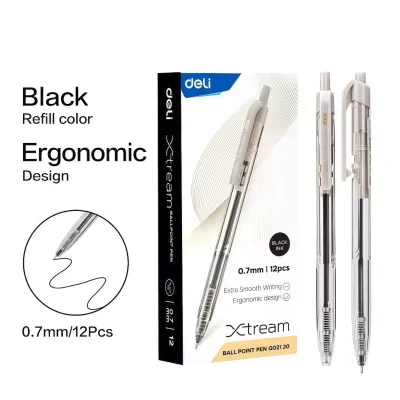
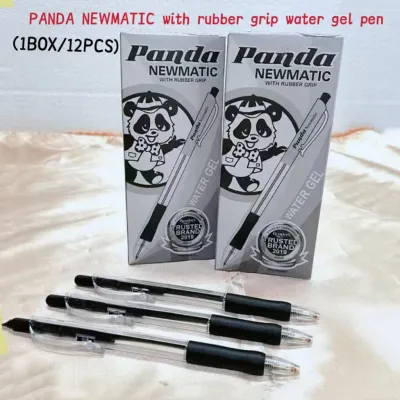
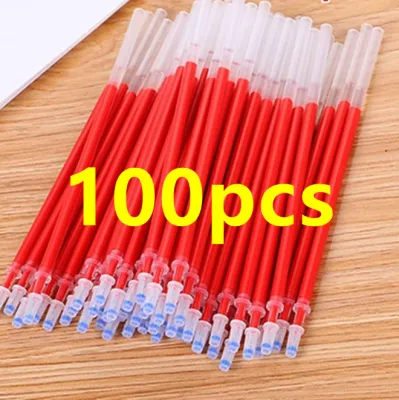
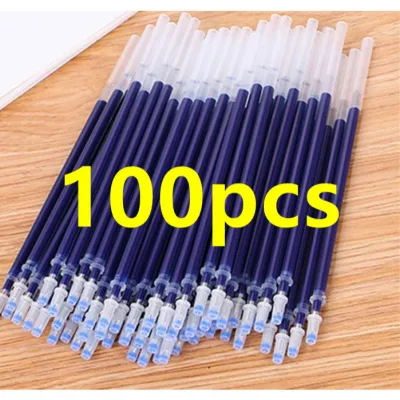
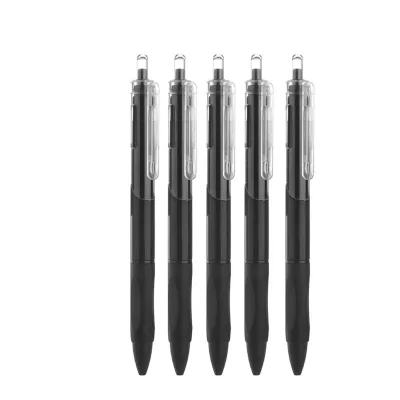
Prices are valid at publication and may change. Please refer to the product page for the latest price.
Low-viscosity ink, often marketed as hybrid ink, combines the best properties of oil-based and gel inks. By blending lubricants into the oil-based formula, manufacturers create an ink that flows with minimal friction while retaining excellent water resistance. This hybrid formulation allows for a incredibly smooth writing experience that requires very little hand pressure, though it may occasionally pool at the tip if the pen is left idle.
Gel-like ballpoint ink utilizes a water-based suspension that thins under the shear force of the rolling ball. This creates highly vibrant, saturated lines and an effortless glide across the page. However, because gel ink is water-based, it carries a higher risk of bleeding through thin paper fibers. In humid tropical climates, where paper naturally absorbs ambient moisture from the air, gel ink can spread or feather more easily, requiring a higher-quality paper stock to maintain clean lines.
To verify smudge resistance before committing to a specific ink type, you can perform a simple three-second swipe test. Write a short sentence on your standard notebook paper, wait exactly three seconds, and drag your side-hand across the text. If you are a left-handed writer, this test is critical, as your hand naturally follows your writing path and can easily smear slow-drying inks.
When browsing options, check manufacturer packaging for specific terms like “quick-dry” or “archival.” A quick-dry label typically indicates the presence of highly volatile solvents that evaporate almost instantly upon contact with paper, which is ideal for left-handed users and fast note-takers. Archival or document-proof labels mean the ink is acid-free and pigment-based, ensuring it will resist water, light, and chemical washing over decades of storage.
Tip Size, Material, and Line Consistency
The tip of a ballpen consists of a tiny, high-precision sphere housed in a metal socket. The diameter of this ball determines the width of the line and directly influences the tactile feedback you feel while writing. Selecting the right tip size is a matter of matching your handwriting style and the physical constraints of your writing tasks.

Ultra-fine tips, ranging from 0.38mm to 0.5mm, are engineered for precision. They are highly suited for writing in tight spaces, such as pocket planners, margin notes, or detailed mathematical formulas. Because they deposit a very thin layer of ink, they dry almost instantly and rarely bleed. However, because the contact point is so small, ultra-fine tips can feel slightly scratchy on rough paper textures and require a lighter, more vertical writing angle.
Medium tips, typically measuring 0.7mm, serve as the industry standard for daily writing. They offer a balanced compromise, providing a highly visible line and a smooth glide without excessive ink consumption. A 0.7mm tip is versatile enough for general note-taking, signing documents, and filling out standard forms, making it the safest choice for general office environments.
Bold tips, measuring 1.0mm or larger, deliver an exceptionally smooth writing experience because the larger sphere rolls with minimal friction. These tips produce rich, highly visible lines that are excellent for signatures and bold headings. The trade-off is a significantly higher rate of ink consumption and longer drying times, which increases the risk of smudging on glossy or non-porous paper surfaces.
The material of the ball itself plays a crucial role in the durability and consistency of the pen. Most high-quality pens utilize tungsten carbide, an extremely hard ceramic-metal compound that resists wear and maintains its perfect spherical shape over miles of writing. Stainless steel balls are also common; while highly durable and corrosion-resistant, they can sometimes feel slightly stiffer on hard writing surfaces compared to tungsten carbide.
To verify claims of “skip-free” performance, look for pens designed with a double-ball mechanism or a spring-loaded tip. These internal designs prevent air from entering the cartridge and stop ink from retreating when the pen is held at an angle. You can easily test line consistency by drawing continuous, rapid figure-eight loops on a sheet of paper; a high-quality tip will maintain a solid, unbroken line without skipping or thinning out.
Grip Comfort, Barrel Design, and Ergonomics
Writing comfort is directly tied to the physical design of the pen’s barrel and grip section. During extended writing sessions, a poorly designed pen can cause muscle fatigue, finger cramping, and joint strain. Evaluating the physical ergonomics of a pen is just as important as assessing its ink performance.
Grip materials generally fall into three categories: rubberized, textured plastic, and bare metal. Soft rubberized or silicone grips provide excellent cushioning and reduce the pinching pressure required to hold the pen. However, in warm, humid environments, low-grade rubber grips can degrade, becoming sticky or attracting dust. Textured plastic or knurled metal grips offer excellent slip resistance when fingers get sweaty, providing reliable control without the risk of material degradation.
Barrel weight and balance significantly affect hand fatigue. Lightweight plastic pens are easy to maneuver and put minimal strain on the wrist, but they require you to apply more downward pressure if the ink flow is stiff. Heavy metal pens shift the center of gravity; a front-weighted pen naturally pulls the tip toward the paper, allowing the weight of the pen to do the work so your hand can remain relaxed.
Barrel thickness is another critical factor to match to your hand size. Standard pens usually have a diameter of 8mm to 9mm, which works well for average hands. If you have larger hands or suffer from joint discomfort, a wider barrel of 11mm to 13mm can prevent your fingers from wrapping too tightly, reducing long-term strain.
The choice between retractable (click) and capped mechanisms often comes down to convenience and safety. Retractable pens are highly convenient for quick, one-handed deployment and eliminate the risk of losing a cap. However, capped pens offer a superior airtight seal that prevents the ink from drying out over long periods of non-use. Capped designs are also safer for pocket carry, as they physically prevent the tip from coming into contact with fabric and causing accidental ink stains.
Matching Pen Features to Specific Writing Scenarios
To simplify your selection process, it is helpful to match specific pen specifications to your primary daily writing tasks. Different environments demand different priorities, and no single pen configuration excels in every situation.
Scenario 1: Fast-Paced Meeting Notes and Left-Handed Writing
For rapid note-taking, you need an ink that dries almost instantly to keep up with your hand movement without smearing. Left-handed writers especially require a fast-setting formula to avoid dragging their palm through fresh ink. The ideal configuration is a low-viscosity hybrid ink paired with a 0.7mm medium tip and a textured, slip-resistant grip that keeps your fingers secure during hurried writing.
Scenario 2: Filling Out Carbon Copies and Multi-Part Forms
Carbon copies require physical pressure to transfer the writing through multiple layers of paper. A soft gel pen will not work here, as the tip cannot withstand the necessary force. For this task, choose a traditional high-viscosity oil-based ink with a firm 0.7mm or 1.0mm tungsten carbide tip. A sturdy, rigid plastic or metal barrel is essential to handle the heavy downward pressure required.
Scenario 3: Long-Form Journaling and Exam Writing
When writing continuously for hours, minimizing hand strain is the absolute priority. You need an ink that flows effortlessly with zero pressure, combined with a highly comfortable grip. The best setup is a gel ink or ultra-smooth hybrid ink, a 0.5mm or 0.7mm tip for clean lines, and a wide, cushioned silicone grip on a lightweight barrel to keep your hand relaxed.
| Writing Scenario | Recommended Ink Type | Ideal Tip Size | Key Grip & Barrel Feature |
|---|---|---|---|
| Fast Notes / Left-Handed | Low-Viscosity Hybrid | 0.7mm | Textured, slip-resistant grip |
| Carbon Copies / Forms | High-Viscosity Oil-Based | 0.7mm to 1.0mm | Rigid barrel, firm tungsten carbide tip |
| Long-Form / Exams | Gel or Smooth Hybrid | 0.5mm to 0.7mm | Wide, cushioned silicone grip |
How to Test and Verify a Ballpen Before Bulk Purchasing
Before investing in a large quantity of pens for an office, school, or business event, conducting a systematic test can save you from costly mistakes. Buying a single unit or a small sample pack allows you to verify performance under your exact working conditions before committing to a bulk order.
First, always test the sample pens on the actual paper stock used in your daily environment. Paper quality varies wildly, and a pen that writes beautifully on premium, heavy-weight paper may bleed or feather on standard copy paper or cheap notepad sheets. Write several lines of text to observe how the ink interacts with the specific fibers of your paper.
Next, execute a standard testing protocol to check for mechanical consistency. Draw a series of continuous, rapid loops across the page, then write several sentences at varying angles, from a steep 90-degree vertical hold to a relaxed 45-degree slant. This helps you identify if the pen skips, scratches, or loses ink flow when held at your natural writing angle.
Finally, when purchasing bulk boxes, inspect the packaging for manufacturing dates or batch codes. Oil-based inks can dry out or separate if stored in hot, humid warehouses for years. Choosing fresh stock ensures that the internal solvents have not evaporated, guaranteeing that your bulk investment performs perfectly right out of the box.
Frequently Asked Questions (FAQ)
How can I revive a ballpen that has stopped writing?
If a ballpen stops writing, the issue is usually a minor blockage at the tip or a temporary increase in ink viscosity. You can often resolve this by scribbling firmly on a high-friction surface, such as a piece of rough cardboard or the rubber sole of a shoe, which forces the ball to rotate and clear any dried ink crust.
Another safe method is to apply mild heat to lower the ink’s viscosity. You can roll the pen firmly between your palms for a minute, or place the sealed plastic cartridge in a cup of warm water for a few minutes. Avoid using open flames, such as lighters, directly on the pen, as this can easily melt the plastic housing, damage the precision ball socket, and cause the ink to leak.
If you observe large air bubbles inside the clear ink tube, or if the metal tip is visibly bent or corroded, the pen has likely reached the end of its lifespan. In these cases, the physical seal of the ball-and-socket joint has been compromised, and the pen should be discarded or refilled.
Does storing a ballpen vertically or horizontally affect its lifespan?
Yes, storage orientation directly impacts ink consistency and the immediate readiness of your pen. Storing ballpens vertically with the tip pointing downward is generally recommended for daily-use pens. This position keeps the ink in constant contact with the back of the ball, ensuring that the pen writes instantly without skipping when you pick it up.
However, for long-term storage of gel pens or highly liquid hybrid pens, horizontal storage is often preferred. This prevents the ink from pooling excessively at the tip, which can lead to leakage, and prevents air bubbles from forming at the back of the cartridge.
Regardless of orientation, avoid storing pens in environments subject to extreme temperature fluctuations, such as inside a vehicle parked under direct sunlight. High heat causes the air inside the cartridge to expand, which can force the ink out through the tip or the rear breather hole, resulting in messy leaks and ruined stationery.
Community discussion
Share your experience or ask a question. Comments are reviewed before publication.