
Purchasing a 12-piece erasable pen set is a practical way to stock up on versatile writing instruments for school, office work, or creative journaling. However, bulk stationery purchases often come with hidden quality variances, such as uneven ink flow, fragile tips, or erasers that smudge rather than clean. To ensure your investment provides smooth writing and clean corrections, you must evaluate specific chemical, physical, and structural indicators before finalizing your purchase.
Quick Answer: Essential Checks for Erasable Pen Sets
When selecting a 12-piece erasable pen set, your primary focus should be on ink opacity, the durability of the erasing mechanism, and tip consistency across all twelve pens. Unlike standard gel pens, erasable pens rely on specialized thermo-sensitive ink that reacts to friction-induced heat. A high-quality set must deliver legible, dark lines that disappear completely under friction without tearing the paper or leaving a heavy, greasy residue.
Because bulk sets are often stored in warehouses for extended periods before sale, verifying the packaging and drying resistance is critical. A poorly sealed 12-piece set can suffer from premature evaporation, leaving you with dry, unusable pens right out of the box. Prioritize sets that feature airtight caps or individual tip seals, and ensure the built-in silicone erasers are firm enough to generate the necessary friction without wearing down prematurely.
Products mentioned in this guide
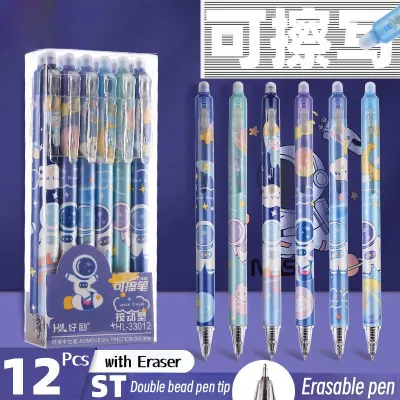
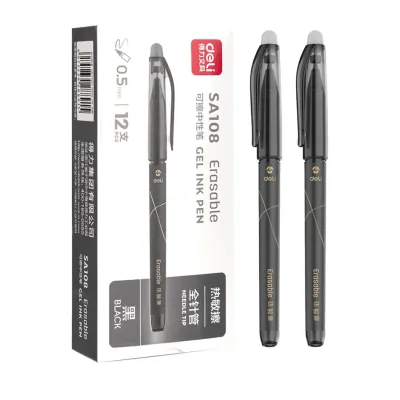
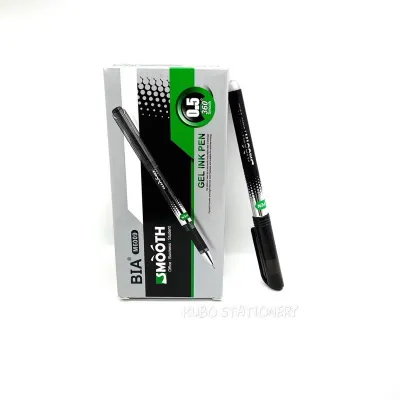
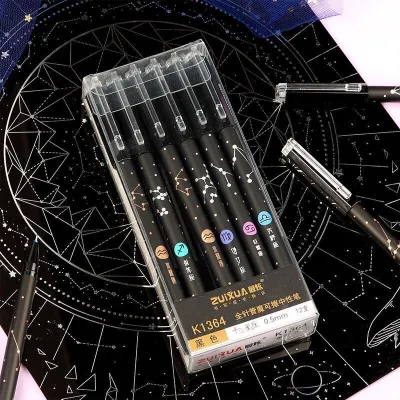
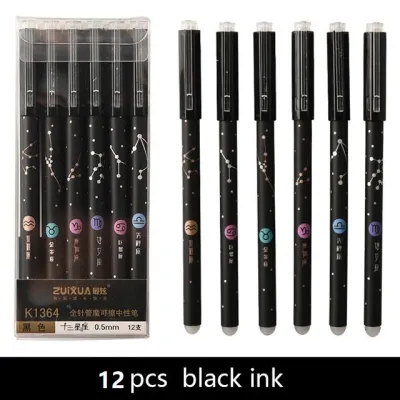
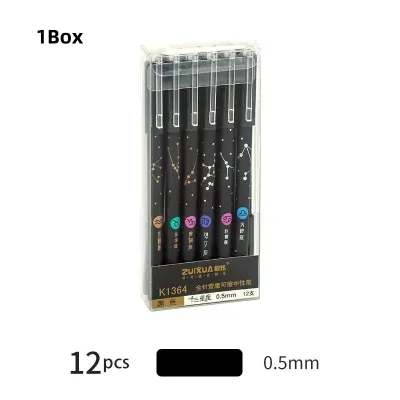
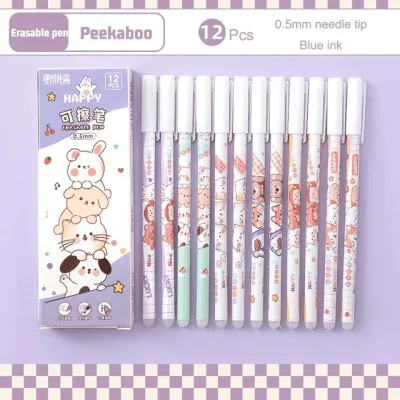
Prices are valid at publication and may change. Please refer to the product page for the latest price.
Evaluating Ink Opacity and Erasing Performance
The core technology behind erasable pens is thermo-sensitive gel ink, which contains microencapsulated pigments that become transparent when exposed to temperatures typically reaching 60°C or higher. When evaluating a set, check the manufacturer’s technical specifications to confirm they utilize this friction-based heat mechanism rather than abrasive chemical erasers. A quality thermo-sensitive ink should flow smoothly from the reservoir, leaving a consistent line that dries quickly enough to prevent smudging, especially for left-handed writers.

Ink opacity is a common pain point in bulk erasable sets, as the chemical additives required for thermal sensitivity can sometimes dilute the color pigments. Before buying, verify user feedback or product specifications regarding color saturation, particularly for standard colors like black and blue. Low-grade formulations often produce a watery, greyish line instead of a deep black, which can strain the eyes during long reading or writing sessions.
Another critical factor is the level of ghosting or residue left behind after erasing. High-quality erasable ink should disappear cleanly, leaving no visible shadow of the previous text. Poorly formulated inks often leave a yellowish or oily stain on the page, or require excessive physical pressure to erase, which can warp or tear standard notebook paper. If you are writing on thin paper, such as 70 gsm school pad paper common in local classrooms, a gentle friction rub should be sufficient to clear the ink without compromising the paper fibers.
Furthermore, environmental factors play a significant role in ink performance, particularly in tropical climates like the Philippines. High ambient temperatures can affect the stability of thermo-sensitive ink; if a notebook is left inside a hot car or a room without air conditioning where temperatures rise significantly, the written text may fade or disappear entirely. When choosing a set, look for brands that specify a stable temperature threshold to ensure your notes remain intact under normal tropical weather conditions.
Inspecting Pen Construction and Tip Durability
The physical construction of the pens in a 12-piece set directly impacts their longevity and comfort during extended writing sessions. Look for ergonomic designs that feature a soft, rubberized or silicone grip section rather than bare, hard plastic. A comfortable grip reduces finger fatigue and prevents the pen from slipping, which is especially important during long exams or extensive note-taking sessions in humid environments.
The tip of the pen—specifically the nib size and material—determines the precision and smoothness of your writing. Erasable pens are commonly available in 0.5mm extra-fine or 0.7mm medium tip sizes. Stainless steel or tungsten carbide ball tips are preferred for their durability, as they resist deformation even when dropped. Ensure the tip style (such as a sturdy bullet tip or a precise needle tip) matches your writing style; needle tips offer excellent visibility for detailed diagrams, while bullet tips provide greater structural strength for heavy-handed writers.
The capping or clicking mechanism is another vital component to inspect. Retractable erasable pens are highly convenient because they eliminate the risk of losing a cap, but they must have a robust internal spring mechanism that seals the tip when retracted. Capped pens, on the other hand, must feature a tight, audible click when closed to prevent air from entering the cartridge. A loose cap or a faulty retraction mechanism will quickly dry out the gel ink, rendering the pen useless long before the ink supply is actually depleted.
Additionally, examine the placement and material of the eraser. Most modern erasable pens feature a hard silicone rubber stud integrated into the tail cap or the pen cap. Unlike traditional rubber erasers that crumble and leave debris, these silicone erasers work purely through friction-generated heat and should not wear down over time. Ensure the eraser is securely attached to the pen body so it does not wobble or detach when you apply pressure during corrections.
Assessing the 12-Piece Set Configuration and Value
A 12-piece set can come in various configurations, and choosing the right mix depends entirely on your intended use. Some sets offer a single color, such as twelve black or twelve blue pens, which is ideal for students and professionals who do heavy daily writing. Other sets provide a rainbow assortment of twelve distinct colors, which is excellent for color-coding notes, bullet journaling, or mind mapping. Carefully review the product description to ensure the color distribution aligns with your needs, avoiding sets with redundant or impractical shades that you will rarely use.
Refillability is a major factor in determining the long-term value of your purchase. Because erasable gel ink tends to be consumed faster than standard ballpoint ink due to its higher flow rate, having access to compatible refills is highly beneficial. Check if the 12-piece set is designed to accept standard-sized refills, and verify if the manufacturer or local stationery suppliers offer replacement ink cartridges. Purchasing a refillable pen body is not only more economical over time but also reduces plastic waste.
The packaging of the set should also be evaluated for its protective qualities. A sturdy, reusable plastic pouch or case is highly desirable for keeping your twelve pens organized and protected from dust and physical damage. More importantly, check if the pens are shipped with protective wax beads sealing the metal tips. These tiny plastic or wax seals prevent the ink from drying out during transit and storage, ensuring that the twelfth pen writes just as smoothly as the first one you open, even months down the road.
When budgeting for a 12-piece set, prices can range from budget-friendly options around ₱150 to premium brand sets costing upwards of ₱800. While budget sets on online marketplaces are highly appealing, they often suffer from higher defect rates, such as leaking cartridges or scratchy tips. Balancing cost with brand reputation and verified user experiences will help you avoid the frustration of a bulk purchase where half the pens fail to write properly.
Final Pre-Purchase Checklist and Usage Boundaries
Before checking out your selected 12-piece erasable pen set, it is crucial to understand the strict usage boundaries of thermo-sensitive ink. Because the ink disappears when exposed to heat, these pens must never be used on legal documents, bank checks, official school exams, or archival records. If a document signed with an erasable pen is left near a heat source, exposed to direct sunlight, or laminated, the writing will vanish, potentially causing severe administrative or legal complications.
Once your set arrives, establish a practical testing routine with the first pen to verify its performance before opening the rest of the pack. Test the pen on the specific paper types you use most frequently, such as standard copy paper, lined notebooks, or sketchpads. Write a few sentences to check for ink smoothness and drying speed, then use the built-in eraser to test how cleanly the ink disappears. If you observe significant bleed-through, feathering, or persistent ghosting, you may need to adjust your paper choice or consider a different pen formulation.
Use this final checklist to guide your purchase decision:
- Tip Size: Confirm whether you are buying 0.5mm for fine detail or 0.7mm for bolder, smoother lines.
- Color Variety: Verify if the set contains the exact color mix (monochrome vs. multi-color) required for your tasks.
- Sealing Quality: Look for pens with protective wax tips or airtight caps to prevent premature drying.
- Refill Compatibility: Check if replacement cartridges are widely available and easy to install.
- Seller Return Policy: Ensure the seller offers a return or replacement policy for defective items, which is common in bulk stationery packs.
Frequently Asked Questions (FAQ)
Can I restore erased ink if I accidentally remove it?
Yes, because thermo-sensitive ink relies on a physical temperature reaction rather than chemical destruction, you can often restore erased writing. To do this, place the affected paper inside a freezer or expose it to temperatures below -10°C for about fifteen to twenty minutes. The cold temperature will cause the chemical pigments to transition back to their colored state, making the text visible again. However, keep in mind that this recovery process may also bring back previously erased mistakes on the same page, and the restored ink remains sensitive to future friction heat.
Why do some colors in the set write lighter than others?
The variation in color intensity within a multi-color erasable set is due to the unique chemical formulations required for different pigments. Darker colors like black, blue, and red contain denser concentrations of thermo-sensitive dyes that absorb more light, resulting in higher opacity. Lighter shades, such as pink, light green, or orange, naturally have lower pigment density to allow the thermal transition to occur smoothly. For primary writing and extensive note-taking, it is best to rely on the darker, high-contrast colors in your set, while reserving the lighter shades for highlighting, underlining, or decorative color-coding.
Community discussion
Share your experience or ask a question. Comments are reviewed before publication.