
A 10-color ball pen is an exceptionally versatile tool for students, professionals, and journal enthusiasts who rely on color-coded systems to organize complex information. By consolidating ten distinct ink shades into a single barrel, these multi-pens eliminate the clutter of carrying multiple writing instruments. However, choosing the right model requires evaluating key technical features to ensure the pen performs reliably during long writing sessions.
When buying a 10-color ball pen for everyday note-taking, you should prioritize ink formulation, tip precision, switching mechanics, and ergonomic barrel designs. Balancing these factors ensures that your multi-pen remains comfortable during long writing sessions while delivering clean, legible lines across all ten colors. Selecting the ideal pen involves understanding how these components interact with your writing style and your preferred paper types.
Quick Guide: Core Criteria for 10-Color Ball Pens
Selecting a 10-color ball pen requires a different approach than choosing a standard single-color pen. Because these instruments house ten individual ink cartridges and a complex selector mechanism inside a single body, they are inherently wider and heavier than traditional pens. To find a model that fits your daily workflow, you must balance color variety with physical comfort and mechanical reliability.
Products mentioned in this guide
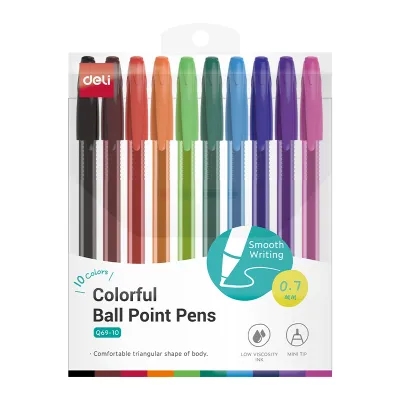
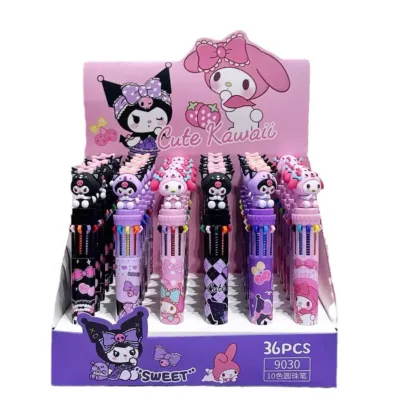
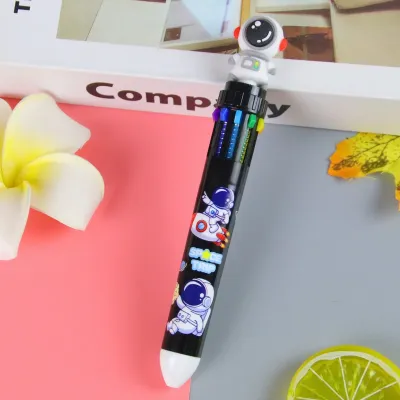
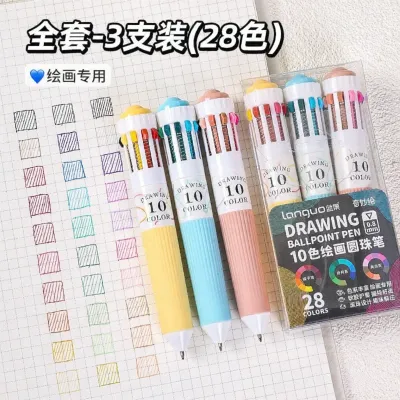
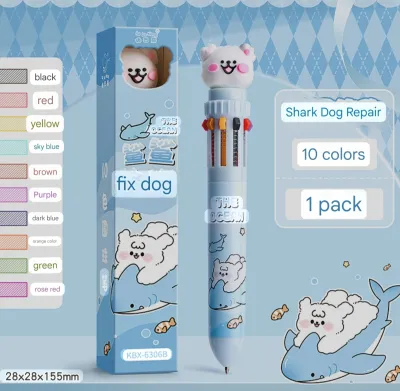
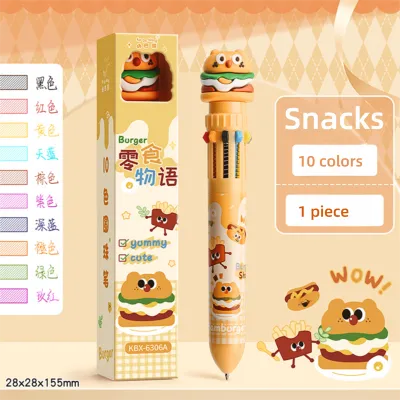
Prices are valid at publication and may change. Please refer to the product page for the latest price.
To evaluate a 10-color ball pen effectively, focus on these four primary selection pillars:
- Tip Size: Fine tips (0.5mm or smaller) offer excellent precision for compact handwriting and detailed diagrams, while medium tips (0.7mm) provide smoother ink flow and bolder lines for headings.
- Ink Formulation: Gel inks deliver vibrant, saturated colors but require longer drying times, whereas oil-based inks dry almost instantly and resist bleeding on thin paper.
- Switching Mechanism: Click-action sliders allow for fast, one-handed color changes, while twist-action or dial-select mechanisms offer a sleeker, more compact barrel design.
- Grip Ergonomics: A textured, rubberized, or contoured grip is essential to prevent hand fatigue, as the wider barrel diameter forces a wider finger pinch during extended writing.
Before making a purchase, always verify the product specifications on the packaging or manufacturer’s listing. Look closely at the refill compatibility, the specific ink type loaded in each slot, and the overall barrel diameter. Ensuring that replacement cartridges are readily available for your chosen model will prevent you from having to discard the entire pen once your favorite colors run out.
Key Specifications for Everyday Note-Taking
To get the most out of a 10-color ball pen, you must look beyond the novelty of having multiple colors and examine the technical specifications. These details directly affect how smoothly the pen glides across the page, how quickly the ink dries, and how neat your notes look over time.

Ink Formulation and Drying Time
The choice between gel ink and oil-based ink is one of the most critical decisions you will make. Gel ink relies on water-based suspended pigments, which produce incredibly vibrant, rich colors that make color-coded sections stand out clearly on the page. However, because gel ink is water-based, it lays down a wetter line that takes longer to dry. In highly humid environments, such as the tropical climate of the Philippines, high relative humidity can significantly slow down evaporation, increasing the risk of smudging if you turn the page too quickly or accidentally brush your hand across the paper.
In contrast, traditional oil-based ballpoint ink uses a highly viscous paste solvent. It dries almost instantly through rapid absorption into the paper fibers, making it highly resistant to smudging and an excellent choice for left-handed writers or fast-paced lecture environments. Oil-based inks are also less prone to feathering or bleeding through thin, low-cost notebook paper (such as standard 50gsm to 70gsm school pads). The trade-off is that oil-based colors can sometimes appear less vibrant or require more downward writing pressure, which can lead to hand strain over time.
For the best of both worlds, look for low-viscosity hybrid inks. These formulations combine the smooth, effortless glide of gel ink with the rapid drying times and water resistance of oil-based ink. Regardless of the ink type you choose, it is highly recommended to perform an observable trial on your preferred notebook paper. Test each of the ten colors to check for bleed-through, ghosting on the reverse side of the page, and drying speed under your typical writing conditions.
Tip Size and Line Precision
The tip size of your 10-color pen determines the thickness of your writing and how much detail you can squeeze into tight spaces. For daily note-taking, the most common tip sizes range from extra-fine (0.5mm or smaller) to medium (0.7mm). Choosing the right size depends heavily on your handwriting scale and the layout of your notebooks.
If you have small, compact handwriting, keep highly detailed planners, or regularly draw intricate diagrams and mind maps, a 0.5mm or finer tip is highly recommended. These fine tips restrict ink flow, producing clean, sharp lines that do not blur together in tight grid patterns or narrow margins. Fine tips also lay down less ink, which minimizes the risk of bleed-through on thinner paper mediums.
If you write with larger, broader strokes or use your pen primarily for bold headings, bullet journal titles, and rapid brainstorming sessions, a 0.7mm tip is often more suitable. The larger tungsten carbide ball in a 0.7mm tip rolls more easily across the paper, providing a smoother, more fluid writing experience that requires less effort. However, keep in mind that a 0.7mm tip lays down a thicker layer of ink, which can saturate cheaper paper and cause noticeable ghosting on the back of the page.
When evaluating a 10-color pen, pay close attention to line consistency across all ten cartridges. In lower-quality multi-pens, lighter colors like yellow, lime green, or light pink can suffer from skipping or uneven ink flow due to differences in pigment density. Ensure that the pen design maintains a steady, uniform line regardless of which color slider you engage.
Switching Mechanisms and Speed
The mechanism used to switch between colors is the mechanical heart of any multi-pen. Because a 10-color pen must manage ten individual cartridges within a confined space, the internal tracks and springs are under constant tension. The design of this mechanism directly impacts how quickly you can transition between colors during active note-taking.
Click-action sliders are the most common and popular mechanism for multi-pens. To select a color, you simply slide down the corresponding tab at the top of the pen until it locks into place. Pressing a different color’s slider automatically releases the previous one. This system allows for incredibly fast, one-handed color switching, which is invaluable during fast-paced lectures or meetings. The main drawback of click-action designs is that they require a wider upper barrel to accommodate the individual springs and guide tracks, which can make the pen top-heavy.
Twist-action and dial-select mechanisms offer a sleeker alternative. With these designs, you rotate the upper cap or a central collar to align an indicator with your desired color, then press down or twist further to extend the tip. While these mechanisms result in a much slimmer, more uniform barrel that fits easily into standard pencil cases, they are slower to operate and usually require two hands to switch colors. This can interrupt your writing flow if you need to change colors frequently.
When choosing a pen, test the tactile feedback of the switching mechanism. A high-quality multi-pen should provide a distinct, positive “click” or locking sensation, letting you know the cartridge is fully engaged and secure. Avoid mechanisms that feel mushy, loose, or require excessive force, as these are prone to jamming or slipping back into the barrel while you write.
Ergonomics and Build Quality for Extended Use
Because a 10-color pen must hold ten separate refills, the barrel diameter is naturally wider than that of a standard single-color pen. While a standard pen typically measures 8mm to 10mm in diameter, a 10-color pen can easily exceed 14mm to 18mm. Writing with a wide barrel alters your hand mechanics, making ergonomics and build quality critical factors for preventing hand fatigue during long study or work sessions.
When holding a wide-barrel pen, your fingers are forced into a wider pinch grip. This can strain the small muscles in your hand if the pen is poorly balanced or lacks a proper grip section. To ensure comfort, look for pens that feature a textured, rubberized, or contoured silicone grip. A high-quality grip provides friction, preventing your fingers from slipping down the barrel. This is especially important in warm, humid climates where hands can sweat easily, causing you to grip the pen tighter and accelerating hand fatigue.
Another critical ergonomic factor is the pen’s center of gravity. Because the complex slider mechanism and springs are located at the top of the pen, many 10-color pens are inherently top-heavy. A top-heavy pen constantly pulls backward while you write, requiring extra effort from your hand muscles to keep the tip pressed against the paper. Look for designs that feature a lower center of gravity, often achieved by incorporating a slightly heavier grip section or a tapered barrel design that concentrates weight closer to the writing tip.
Build quality and materials also play a vital role in the longevity of your pen. Standard budget models are often made entirely of lightweight, brittle plastics that can crack easily, especially at the threaded joint where the barrel unscrews to access the refills. For daily carry in bags or pencil cases, look for pens constructed from durable, high-impact plastics or models that feature metal pocket clips and reinforced joints. A sturdy metal clip not only secures the pen to your notebook or pocket but also indicates a more robust overall build quality.
Recommended Pen Types for Different Note-Taking Styles
Not all 10-color pens are built the same way. Understanding the different structural designs available will help you choose a pen that matches your specific note-taking habits, budget, and maintenance preferences.
Modular and Customizable Multi-Pens
Modular multi-pens are designed for users who want complete control over their writing tools. Instead of buying a pre-loaded pen, you purchase an empty multi-pen barrel (which may feature 3, 5, or up to 10 slots) and select individual ink cartridges to load into it. This allows you to customize your color palette, tip sizes, and even ink types to suit your exact needs.
- Customized Palette: You can swap out standard colors you rarely use, such as yellow or light green, and replace them with more practical options like dark brown, blue-black, or even a mechanical pencil component.
- Cost Efficiency: Because you can purchase individual refills, you only need to replace the colors you use most frequently (like black or blue) rather than discarding the entire pen or buying a whole new set of colors.
- Refill Flexibility: You can mix and match different tip sizes (e.g., a 0.5mm black ink for body text and a 0.7mm red ink for bold headings) within the same pen body.
While modular systems offer unmatched versatility, they do require a higher initial investment, as the barrel and individual refills are typically sold separately. You must also ensure that the refills you buy are specifically compatible with your exact brand and model of multi-pen barrel.
Fixed 10-Color Retractable Pens
Fixed 10-color retractable pens are pre-loaded, all-in-one units that are ready to write straight out of the package. These pens typically feature a standard set of ten colors, including black, blue, red, green, pink, purple, orange, light blue, light green, and yellow. They are highly popular among students and casual journalers due to their convenience and affordability.
- Instant Readiness: There is no assembly required; you can start color-coding your notes immediately.
- Budget-Friendly: Fixed multi-pens are generally much less expensive than modular systems, making them highly accessible for student budgets, with many reliable options priced well under ₱150.
- Fast Switching: The click-action slider design allows you to jump between colors with a single click, keeping your writing flow uninterrupted during fast-paced lectures.
However, fixed pens often feature wider, bulkier barrels to accommodate the pre-set cartridges. Additionally, finding individual replacement refills for budget fixed pens can be difficult. Once your primary colors (like black or blue) run out, you may have to purchase a whole new pen, which can be less cost-effective and environmentally friendly in the long run.
Twist-Action and Dial-Select Pens
Twist-action and dial-select pens are designed for professionals and writers who prioritize a sleek, compact aesthetic and pocket safety. These pens use a rotating mechanism to select and extend the desired ink cartridge, eliminating the bulky external sliders found on standard click-action pens.
- Sleek and Compact: Without external sliders, the barrel of a twist-action pen is much slimmer and more uniform, closely resembling a standard premium single-color pen.
- Pocket Safety: The twist mechanism provides a highly secure retraction, ensuring that ink tips are never accidentally exposed while the pen is carried in a shirt pocket, pencil case, or bag, preventing costly ink stains.
- Durable Construction: These pens are often made from higher-end materials, such as aluminum or reinforced resin, offering a more professional look and feel.
The primary trade-off is switching speed. Rotating the dial to select a color takes longer than pressing a slider and often requires using both hands. This makes twist-action pens less suitable for rapid, high-frequency color changes during active note-taking, but ideal for slow, methodical planning and journaling.
Practical Tips for Color-Coding and Pen Maintenance
To maximize the utility of your 10-color ball pen and ensure it serves you well over time, implementing a structured color system and practicing proper pen maintenance is essential.
To keep your notes organized and easy to read, establish a consistent color legend before starting a new notebook. Assign specific roles to different colors and stick to them throughout your study or work sessions. For example, you might use blue for general body text, red for critical deadlines and exam dates, green for vocabulary and definitions, and purple for illustrative examples. Write this legend on a sticky note or on the inside cover of your notebook so you can refer to it easily. Avoid using more than four or five colors on a single page, as over-color-coding can make your notes visually overwhelming and difficult to scan.
Proper storage is crucial for maintaining smooth ink flow across all ten cartridges. Always store your 10-color pen horizontally or tip-down. Storing a multi-pen tip-up can cause the ink in the unused cartridges to pull away from the writing tips, leading to dry starts, skipping, and air bubbles inside the tiny refill tubes. This is particularly important for gel inks, which are more susceptible to drying out when exposed to air.
If one of your colors begins to skip or clog, do not use harsh chemical solvents, alcohol, or direct heat (such as a lighter) to clear the tip. These methods can easily melt the delicate plastic barrel, ruin the internal springs, or alter the chemical composition of the ink. Instead, gently scribble in circles on a rough piece of scrap paper or a rubber eraser to generate friction and draw the ink down. If the pen has been sitting unused for a long time, scribbling on a slightly damp paper towel can help dissolve any dried ink residue blocking the ball tip.
Finally, when purchasing replacement refills, always check the manufacturing or packaging dates if available. Gel and hybrid inks have a limited shelf life and can become highly viscous or dry out over several years, even if they remain sealed in their packaging. Choosing fresh refills ensures a smooth, skip-free writing experience from the very first stroke.
Frequently Asked Questions (FAQ)
Can I use a 10-color ball pen for official or legal documents?
While you can use the black or blue cartridges of a 10-color pen for casual paperwork, they are generally not recommended for official, legal, or archival documents. Formal documents typically require specialized black or blue ink that is certified as waterproof, fade-resistant, and chemically stable to prevent tampering and ensure long-term legibility. Most standard multi-color pens use dye-based inks that can fade over time when exposed to light or bleed when contact with water occurs. If you must sign important documents, verify that the specific black or blue refills in your multi-pen are rated as pigment-based, archival, or document-proof before signing.
Do 10-color pens run out of ink faster than single-color pens?
Yes, individual cartridges in a 10-color pen will deplete significantly faster than those in a standard single-color pen. Because ten separate refills must fit inside a single barrel, each ink tube is physically much thinner and holds a fraction of the ink volume found in a dedicated single-color pen. If you use one or two colors (such as black or blue) for the bulk of your writing and only use the other eight colors for accents, those primary colors will run out quickly. To manage this, consider a modular multi-pen system where you can easily purchase and replace individual high-use refills, or keep a dedicated single-color black pen alongside your 10-color pen for heavy writing tasks.
Community discussion
Share your experience or ask a question. Comments are reviewed before publication.