
Quick Guide: What Makes a Good School Notebook Set
Selecting a high-quality school notebook set requires looking beyond the cover design or the lowest price tag. For students who need to carry multiple subjects daily, a 10-piece bundle offers an efficient, cost-effective way to prepare for the academic year. However, a bundle is only a smart investment if the notebooks can withstand daily wear and tear while matching the student’s specific academic requirements.
When evaluating a notebook 10 pcs set, four fundamental metrics determine its overall utility: paper weight, binding type, ruling format, and physical dimensions. A mismatch in any of these areas can lead to frustrating ink bleed-through, torn pages, or notebooks that are too bulky for a standard school bag. For students in tropical climates like the Philippines, where high humidity can soften paper fibers and weaken cardboard covers, choosing the right specifications is even more critical to ensure notes remain legible and intact from June to March.
Key Specifications to Check Before Buying
To find a notebook set that will last the entire school year, you must understand the technical specifications listed on the packaging. Manufacturers often use generic marketing terms such as “premium quality” or “ink-proof,” but the actual performance of the paper depends on measurable physical standards.
Products mentioned in this guide
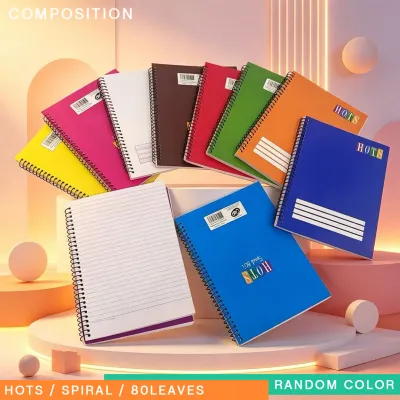
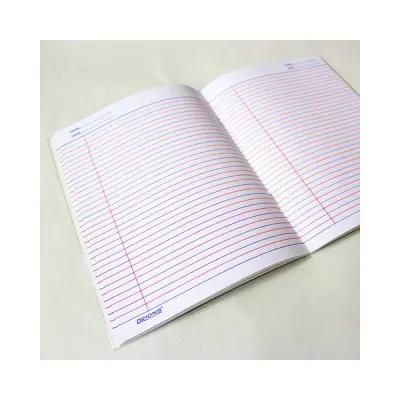

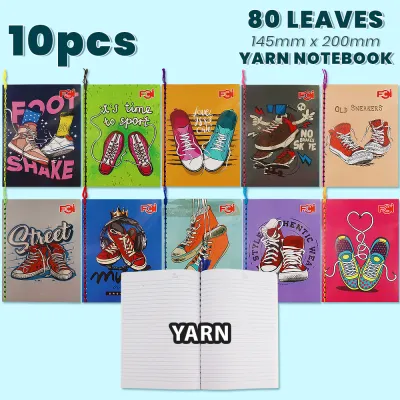
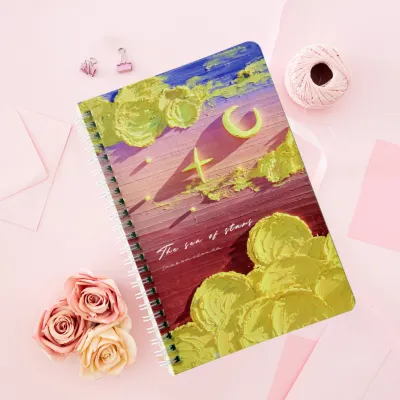
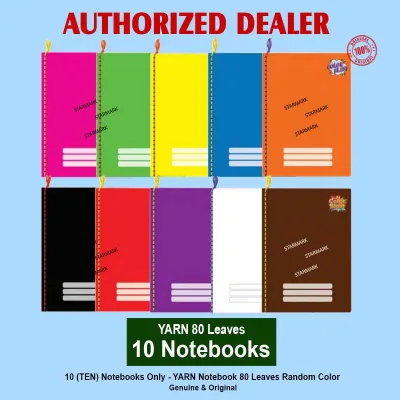
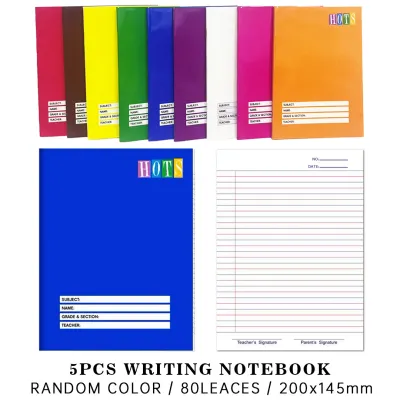
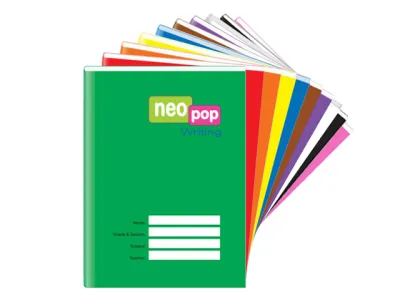
Prices are valid at publication and may change. Please refer to the product page for the latest price.

Paper Weight and Ink Compatibility
Paper weight is measured in grams per square meter, commonly abbreviated as GSM. This metric represents the density and thickness of the paper sheets. For standard school notebooks, paper weight typically ranges from 50 GSM to 100 GSM, and understanding this number is key to preventing writing frustrations.
- 50 to 60 GSM: This is lightweight paper, often found in budget-friendly utility packs. While highly economical, this paper is thin and prone to significant show-through (where writing is visible on the reverse side) and bleed-through (where ink leaks through the fibers). It is best reserved for basic ballpoint pens and light pencil work.
- 70 to 80 GSM: Considered the standard school grade, this weight offers a reliable balance between thickness and bulk. It handles standard ballpoint pens and most fine-tip gel pens without bleeding, making it the ideal baseline for general note-taking across multiple subjects.
- 90 GSM and Above: This heavy-duty paper is highly resistant to ink penetration. If the student regularly uses wet writing instruments—such as liquid ink rollerballs, fountain pens, or broad-tip highlighters—90 GSM or higher is highly recommended to ensure both sides of the page remain fully usable.
Because paper performance is also affected by the specific ink formulation and ambient humidity, you should always perform a quick writing test. When opening a new 10-piece set, take a single notebook and write a few test lines on the very last page using the student’s preferred pens and highlighters. Observe how long the ink takes to dry, and check the back of the page for feathering (where the ink spreads sideways along the fibers) or bleed-through. If the ink bleeds heavily, consider matching that specific notebook set with standard ballpoint pens rather than gel pens.
Size and Ruling Formats
The physical dimensions of a notebook dictate how much information can fit on a single page and how easily the book fits onto a crowded classroom desk. School notebooks generally follow standard international paper sizes, each suited to different tasks:
- A4 (210 x 297 mm): This is the largest standard size, offering maximum writing area. It is excellent for high school and college students who need to write extensive lecture notes, draw detailed diagrams, or paste in printed hand-outs. However, A4 notebooks take up significant desk space and require a spacious backpack.
- B5 (176 x 250 mm): A highly popular intermediate size, B5 notebooks are slightly smaller than A4 but larger than A5. They offer a comfortable writing area while remaining compact enough to fit easily on standard school armchairs and inside medium-sized bags.
- A5 (148 x 210 mm): Compact and lightweight, A5 notebooks are highly portable and ideal for quick journaling, vocabulary lists, or homework diaries. They are less suited for intensive lecture notes due to the limited line width.
In addition to physical size, the ruling format must align with the student’s grade level and subjects. Lined paper is categorized by the spacing between the horizontal lines. Wide-ruled paper (typically 8mm or wider) is designed for younger students whose handwriting is still developing. College-ruled paper (around 7mm spacing) features narrower lines, allowing older students to fit more text on a single page.
For mathematics, engineering, and science courses, grid or graph ruling (usually 5mm squares) is indispensable for keeping numbers aligned and drawing accurate charts. Dotted ruling provides a subtle guide for both writing and drawing, making it a versatile option for creative note-taking and mind mapping. Before purchasing a 10-pack, measure the student’s backpack and verify the school’s specific syllabus requirements to ensure you select the correct size and ruling combination.
Binding Types: Spiral vs. Thread-Sewn for Daily Use
How a notebook is bound directly impacts its durability, how flat it lies on a desk, and how well it survives being repeatedly pulled out of a stuffed backpack. The two most common binding styles for school use are spiral (wire-bound) and thread-sewn (composition-style) bindings.
Spiral and Wire-O Binding
Spiral notebooks utilize a continuous plastic or metal coil threaded through punched holes along the edge of the paper. Wire-O binding uses double-loop metal rings that clasp the pages together. Both designs offer distinct operational advantages for active students.
The primary benefit of spiral binding is its ability to lie completely flat when opened on a desk. Furthermore, the pages can be folded back a full 360 degrees, effectively cutting the notebook’s physical footprint in half. This makes spiral notebooks exceptionally practical for small classroom desks, lecture halls with limited workspace, or when writing while standing.
However, spiral bindings have notable vulnerabilities in a school environment. The exposed metal or plastic coils can easily snag on clothing threads, pencil cases, or the interior mesh pockets of school bags. Over time, a bent metal coil can cause pages to catch, tear, or come unthreaded entirely.
When choosing a spiral notebook 10 pcs set, inspect the quality of the coil. Look for thick, high-density plastic coils, which resist bending better than cheap, thin wire. If choosing metal coils, ensure that the ends of the wire are neatly crimped and turned inward to prevent sharp edges from scratching the student’s hands or tearing bag liners.
Thread-Sewn and Glue-Bound (Composition Books)
Thread-sewn notebooks, often referred to as composition books, feature folded sheets of paper stitched together along the spine with thread, which is then reinforced with a glued cloth or paper tape. This traditional binding method is highly valued for its structural integrity.
The greatest advantage of thread-sewn binding is page security. Because the pages are sewn in groups, it is virtually impossible for individual sheets to fall out during normal use. The smooth, flat spine lacks any protruding coils, allowing these notebooks to slide effortlessly into backpacks and stack neatly on bookshelves without snagging.
The trade-off is that thread-sewn notebooks do not naturally lay completely flat, especially when they are brand new. Forcing the notebook open too wide can crack the glued spine, which weakens the structure and may eventually cause pages to loosen. Additionally, tearing a page out of a thread-sewn notebook is highly discouraged; because the pages are physically linked across the spine, removing a page from the front half of the book will often cause the corresponding page in the back half to fall out.
For subjects where notes must be kept intact as a continuous, permanent record—such as laboratory logs, history journals, or major thesis drafts—thread-sewn notebooks are the superior option. They provide a durable, book-like archive that can withstand years of storage.
How to Build Your 10-Piece Set: Configurations by Subject
Because pre-packaged 10-piece notebook sets sold in retail stores often contain identical lined books, they may not meet the diverse needs of a modern student’s schedule. To maximize utility, parents and students should consider building a custom 10-piece set or selecting multi-packs that offer a mix of formats tailored to specific academic disciplines.
The STEM-Focused Configuration
Science, Technology, Engineering, and Mathematics (STEM) courses demand a layout that accommodates both text and visual data. A standard lined notebook is often insufficient for drawing molecular structures, plotting coordinate planes, or writing complex multi-line algebraic equations.
For a student with a heavy STEM workload, an ideal 10-piece configuration should include:
- 4 Grid or Graph Notebooks: Specifically for mathematics, physics, and chemistry, where keeping numbers, decimal points, and graphs aligned is critical.
- 2 Blank or Dotted Notebooks: Excellent for biology diagrams, laboratory observations, or free-form mind mapping where horizontal lines would only clutter the page.
- 4 Lined Notebooks: Reserved for general lecture notes, vocabulary definitions, and homework assignments.
For STEM subjects, larger formats like B5 or A4 are highly recommended. The extra surface area provides the necessary physical space to write out long equations on a single line, preventing confusing line breaks that can lead to calculation errors.
The Humanities and General Writing Configuration
Humanities courses—such as literature, history, social studies, and language arts—require extensive writing, essay drafting, and highly structured note-taking. Here, the priority is maximizing the usable writing space per page while keeping notes organized.
A highly effective 10-piece configuration for humanities students consists of:
- 8 Lined Notebooks (College-Ruled): The narrow spacing of college ruling allows for dense, efficient text entry, minimizing the number of times a student has to flip pages during a fast-paced lecture.
- 2 Multi-Subject Notebooks with Dividers: These are ideal for organizing long-term projects, research notes, or vocabulary lists that need to be kept separate from daily class notes.
When selecting lined notebooks for these subjects, look for pages that feature pre-printed vertical margins on the left side. These margins are incredibly useful for applying structured note-taking systems, such as the Cornell method, where the margin space is used for key terms, dates, and review cues, while the main area holds the detailed lecture notes.
The Elementary and Middle School Starter Configuration
Younger students have different physical and developmental needs compared to high school or college students. Their handwriting is larger, their motor skills are still refining, and their school supplies are subjected to much rougher physical handling.
For elementary and middle school students, a practical 10-piece set should be configured with:
- 10 Wide-Ruled Notebooks: The wider spacing (8mm or more) accommodates larger, developing handwriting and helps younger children practice letter formation without feeling cramped.
- Durable Polypropylene (Plastic) Covers: Young students are prone to spilling water or dropping their bags on damp ground. Plastic covers are waterproof and wipe clean easily, protecting the paper inside far better than standard paperboard.
- A5 or Composition Sizes: Smaller notebook sizes are lighter to carry and fit perfectly on the smaller desks typically found in primary school classrooms. This prevents the student's workspace from becoming cluttered and reduces the physical weight of their backpack.
Inspecting Quality and Durability Before Purchase
Whether you are buying a shrink-wrapped 10-piece bundle from a local bookstore or receiving an online delivery, conducting a thorough physical inspection is essential before the school term begins. Catching defects early allows you to exchange the set before the student writes in them.
First, evaluate the cover material. If the set uses cardboard covers, check their stiffness and thickness. In humid environments, thin cardboard covers will quickly absorb moisture from the air, causing them to warp, curl, and lose their ability to protect the inner pages. If the covers are plastic, flex them slightly to ensure they are pliable but not brittle; cheap plastic covers can crack easily along the spine when exposed to cold air-conditioned classrooms or rough handling.
Second, examine the binding alignment. For spiral sets, check that the coil runs perfectly straight and that every single page is fully threaded onto the coil. For sewn notebooks, inspect the spine stitching for loose threads or areas where the glue has peeled away. Pages should be cut cleanly and evenly; run your hand along the edges of the closed notebook to check for jagged cuts, folded corners, or sheets that are stuck together.
Third, verify the physical page count. While you do not need to count every page, check that the thickness of the notebooks in the bundle is consistent. Sometimes, manufacturing errors result in individual notebooks having fewer pages than advertised. Ensure that the page count listed on the label refers specifically to the writing sheets and does not misleadingly include the front and back covers.
Finally, if purchasing from open retail shelves, pay close attention to storage conditions. Avoid buying bundles that have been stored on the bottom shelves near the floor or directly under air conditioning vents, as these are highly susceptible to moisture damage. Look for tightly sealed shrink-wrap with no tears, which ensures the paper inside has remained dry and protected from dust and humidity during storage and transport.
Frequently Asked Questions (FAQ)
Can I mix different notebook types in a single 10-piece set?
Factory-sealed 10-piece notebook sets are almost always uniform, containing identical notebooks of the same size, ruling, and cover color to keep production and retail costs low. If a student requires a mix of grid, lined, and blank paper for different school subjects, buying a single pre-packaged 10-pack of identical notebooks is usually impractical. Instead, a more effective strategy is to purchase two separate 5-piece sets of different formats, or to select individual notebooks separately to compile a fully customized 10-piece bundle tailored to the student’s exact schedule.
What is the ideal paper weight for standard school pens?
For everyday school writing with standard ballpoint pens, a paper weight of 70 to 80 GSM is highly sufficient and provides a smooth writing experience without adding excessive weight to the student’s backpack. However, if the student prefers writing with gel pens, liquid ink rollerballs, or colorful highlighters, this standard paper may exhibit noticeable ghosting or minor bleed-through. For these wetter ink types, look for notebooks specified at 90 GSM or higher to ensure that both sides of each sheet can be written on cleanly.
Are recycled paper notebooks suitable for everyday school use?
Recycled paper notebooks are an excellent, environmentally friendly choice for school use and are highly suitable for general note-taking. However, because of the recycling process, this paper often has a slightly rougher surface texture, visible fiber flecks, and a lower overall opacity compared to virgin paper. This means that ink may dry slightly slower or be more prone to feathering. Before committing to a full 10-piece recycled set, it is highly recommended to purchase a single notebook first and test it with the student’s favorite pens to ensure the writing experience and legibility meet their standards.
Community discussion
Share your experience or ask a question. Comments are reviewed before publication.