
Buying school and office supplies in bulk is one of the most practical ways to stay organized while keeping costs manageable. When you purchase a 10 pcs notebook set, you are securing a consistent, uniform supply of writing space for an entire academic semester, a fiscal year of corporate meetings, or a series of creative projects. However, not all bulk notebook sets are manufactured to the same standards. A set that seems like an exceptional bargain can quickly become a source of daily frustration if the paper feathers under your favorite pen, the binding falls apart mid-semester, or the covers warp under tropical humidity.
To make an investment that truly supports your daily productivity, you must look beyond the cover designs and evaluate the physical specifications of the notebooks. The ideal choice hinges on a balance of paper weight, binding durability, page dimensions, and cover resilience. By understanding how these elements interact with your writing tools and daily environment, you can confidently select a multi-pack that offers both high performance and outstanding value. This guide breaks down the essential criteria to examine before purchasing your next bulk notebook set.
Core Selection Criteria: Paper, Binding, and Size
Paper Quality and Weight (GSM)
The foundation of any good notebook is its paper, and the primary metric for measuring paper quality is GSM, or Grams per Square Meter. This figure represents the weight and thickness of the paper. Standard, budget-friendly notebooks typically feature paper ranging from 70 to 80 GSM. While this thickness is perfectly adequate for writing with standard ballpoint pens or hard pencils, it often struggles when paired with wetter inks. If you write with gel pens, rollerballs, or fountain pens, 70-80 GSM paper is highly susceptible to ghosting—where the writing is visible on the reverse side of the page—or complete bleed-through, which renders the back of each sheet unusable.
Products mentioned in this guide
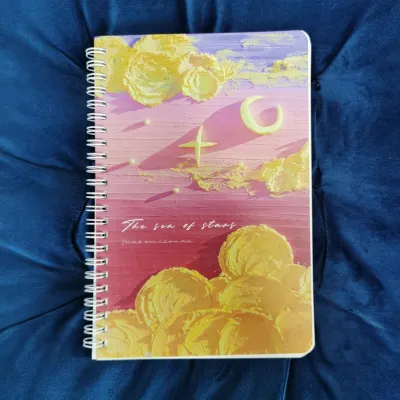
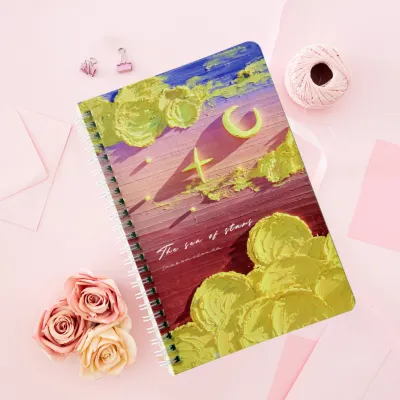
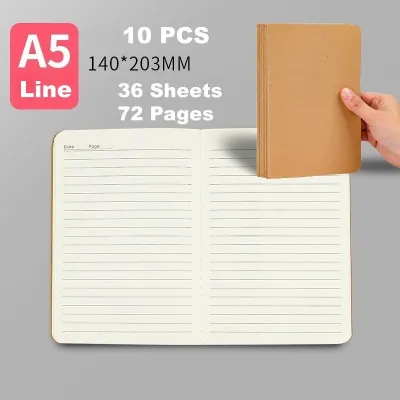
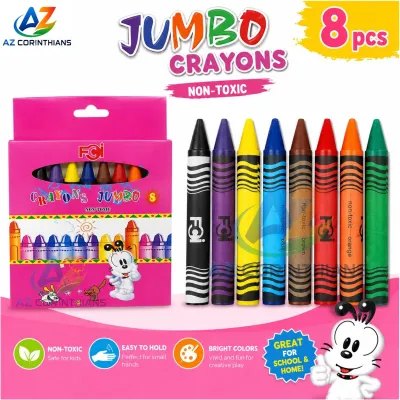
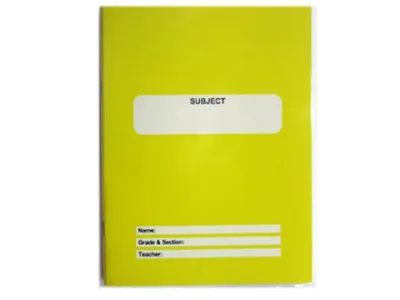
Prices are valid at publication and may change. Please refer to the product page for the latest price.
For a premium writing experience, especially if you prefer liquid ink or dual-tip brush pens, look for notebook sets featuring 90 to 100 GSM paper. This heavier weight provides the structural integrity needed to resist ink saturation and minimize feathering, which is when ink spreads along the paper fibers to create fuzzy lines. Furthermore, the local climate plays a subtle but significant role in paper behavior. In highly humid environments, paper naturally absorbs moisture from the air, which can soften the fibers and make even decent paper more prone to bleeding and slow ink drying times. Opting for slightly heavier, high-density paper helps mitigate these climate-induced writing issues.
Binding Types
How a notebook is bound dictates how easily it opens, how flat it lies on a desk, and how well it survives being pulled in and out of a bag. Multi-packs generally feature one of three primary binding styles:
- Spiral and Wire-O Binding: These notebooks utilize a continuous plastic or metal coil threaded through punched holes along the spine. The primary benefit of spiral binding is its exceptional flexibility; you can open the notebook a full 360 degrees, folding the unused pages completely back to save desk space. This makes them ideal for writing on your lap or on cramped lecture hall desks. However, the coils can easily snag on loose threads in your backpack, and cheap metal spirals may bend out of shape or even rust over time if exposed to high humidity.
- Thread-Sewn (Smyth Sewn) Binding: Considered the gold standard for durability, thread-sewn notebooks feature folded groups of pages sewn together with strong thread before being glued into the spine. This construction allows the notebook to lie completely flat (180 degrees) when opened, providing a seamless writing surface across the left and right pages. Because there are no rings to catch or glue lines to snap, thread-sewn notebooks are incredibly resilient and excellent for long-term archiving.
- Perfect Bound (Glued) Binding: This style uses a strong, flexible adhesive to secure the edges of the pages directly to a wrap-around cover, similar to a paperback novel. Perfect binding offers a clean, professional, and stackable spine that looks excellent on a bookshelf. The trade-off is that cheaper glued bindings can be stiff, resisting your efforts to lay the book flat. If you force a low-quality perfect-bound notebook open too wide, the adhesive spine can crack, causing individual pages to detach and fall out.
Page Sizes and Formats
Selecting the right dimensions ensures your notebooks fit comfortably into your daily routine and storage spaces. The three most common sizes available in bulk sets include:
- A4 (210 x 297 mm): This is the standard letter-adjacent size, offering maximum writing real estate. It is excellent for detailed technical drawings, extensive lecture notes, or office records that stay permanently on a desk. However, A4 notebooks are bulky and heavy, making them less convenient for constant travel.
- A5 (148 x 210 mm): Highly portable and compact, A5 is the most popular size for personal journals, daily planners, and quick meeting notes. It fits easily into small bags, purses, and tote bags, offering a comfortable balance between writing space and portability.
- B5 (176 x 250 mm): Sitting comfortably between A4 and A5, B5 is often considered the ideal compromise. It provides ample space for structured note-taking without the unwieldy footprint of an A4 book. It is highly favored by students who need to write formulas, diagrams, and text side-by-side.
Beyond size, consider the page layout. Standard lined or ruled pages (usually featuring 6mm college ruling or 8mm wide ruling) are best for continuous text. Grid or graph formats are indispensable for mathematics, engineering, and scientific diagrams. Dotted grids offer a subtle guide for both writing and drawing, making them the preferred choice for bullet journaling. Blank pages offer complete freedom for sketching, mind-mapping, and unconstrained brainstorming.
Cover Material
The cover serves as the primary shield for your notes. Flexible cardstock covers are lightweight, eco-friendly, and easy to pack, but they offer minimal protection against spills and tend to fray or crease at the corners very quickly. Polypropylene (PP) covers, which are made of flexible plastic, are highly durable, tear-resistant, and water-resistant. They are particularly valuable for protecting your work during sudden tropical downpours or accidental water bottle leaks inside your bag. Hardcovers, made from thick chipboard wrapped in paper or leatherette, provide a completely rigid writing surface, allowing you to take notes comfortably even when standing up, though they add noticeable weight to a 10-piece set.
Matching the Right 10-Piece Set to Your Daily Needs
For Students and Daily Note-Taking
Academic environments demand durable, highly portable notebooks that can withstand constant handling throughout a busy semester. For most students, a 10-piece set of B5 or A5 notebooks is the most practical choice. These sizes fit neatly onto small classroom desks and tablet arms without crowding your laptop or tablet.

Spiral-bound or thread-sewn designs are highly recommended for students because they allow the notebook to lie perfectly flat, making it easy to write quickly during fast-paced lectures. Look for sets featuring standard lined or grid pages with a reliable 70 to 80 GSM paper weight. Since students primarily write with ballpoint pens or quick-drying gel pens, this paper weight offers an excellent balance of cost-efficiency and performance, allowing you to dedicate a separate, color-coded notebook to each subject without breaking your budget.
For Office Meetings and Professional Use
In a corporate or professional setting, your stationery choices contribute to your professional presentation. A cohesive 10-piece notebook set in dark, neutral, or minimalist tones helps maintain a polished look in boardrooms and client meetings. A5 thread-sewn or high-quality glued notebooks are ideal here, as their clean spines won’t snag on professional attire, laptop sleeves, or briefcases.
Look for professional notebook sets that feature durable polypropylene or thick, matte cardstock covers. Inside, look for helpful organizational features such as pre-printed margins, designated spaces for dates and meeting titles, built-in ribbon bookmarks, and elastic closure bands. Paper in the 80 to 90 GSM range is preferred for professional use, ensuring that notes written with rollerballs or executive gel pens remain crisp, clear, and professional on both sides of the page.
For Journaling, Sketching, and Creative Work
For creative applications, the tactile experience of writing and drawing is just as important as the content itself. If you plan to use your 10-piece set for personal journaling, sketching, or mixed-media projects, prioritize paper weight above all else. Seek out sets that offer heavy 90 to 120 GSM acid-free paper. This thickness is crucial for preventing feathering, ghosting, and bleed-through when using wet inks, fine liners, markers, or light watercolor washes.
Dotted or completely blank formats provide the ultimate freedom for creative layouts, allowing you to combine text, sketches, and pasted ephemera seamlessly. Thread-sewn binding is highly recommended for creative work, as it allows you to draw across two-page spreads without a disruptive gap in the center. Additionally, thread-sewn spines are durable enough to handle frequent erasing, page flipping, and the physical expansion that occurs when you paste photos or mementos into your journal.
Bulk Buying Checks: Page Count, Durability, and Value
Verify Page Count per Book
One of the most common pitfalls when purchasing a 10 pcs notebook set is overlooking the actual page count per book. Some budget-friendly sets manage to offer a low price point by quietly reducing the number of sheets in each notebook—sometimes providing only 30 to 40 sheets (60 to 80 pages) per book instead of the standard 80 sheets (160 pages). Always check the product specifications carefully to confirm whether the listing refers to “sheets” or “pages” (remembering that one sheet equals two writable pages). To ensure you are getting a genuine bargain, calculate the total cost per page across the entire 10-pack rather than simply comparing the upfront price of the sets.
Check for Lay-Flat Capability
Writing comfortably near the inner margins of a notebook requires the book to open wide and stay flat. For glued or sewn notebooks, check user feedback or product specifications to verify if they feature true 180-degree lay-flat capability. If a notebook’s spine is too rigid, you will find yourself constantly fighting to hold the pages down with one hand while writing with the other. Over time, forcing a poorly constructed glued notebook to lie flat will break the adhesive bond, leading to loose, falling pages that can compromise your records.
Assess Perforation and Margins
If your workflow involves tearing out pages to share with colleagues, hand in assignments, or file away in a ring binder, look for notebook sets that feature micro-perforated pages. Micro-perforations allow you to tear sheets out cleanly without leaving messy, jagged edges along the spine. Additionally, if you plan to use a hole-puncher on your notes, check that the notebooks feature adequate margins on the left side of the page so that your written text isn’t cut off or punched through once archived.
Evaluate Consistency
When buying in bulk, consistency across all ten units is a key indicator of manufacturing quality. Budget multi-packs can sometimes suffer from quality control issues, such as misaligned line ruling, variations in paper color from one book to another, or uneven cover cutting. Reading customer reviews can provide valuable insight into whether a brand maintains strict quality standards across all notebooks in a single pack, ensuring that your tenth notebook performs just as beautifully as your first.
Frequently Asked Questions (FAQ)
Is 80 GSM paper thick enough for gel or fountain pens?
Yes, 80 GSM paper is generally sufficient for standard gel pens (such as 0.5mm or 0.7mm tips) and fine-nib fountain pens paired with drier inks. However, if you use broad-nib fountain pens, wet rollerballs, or heavy permanent markers, you are likely to experience noticeable ghosting and occasional bleed-through. If you regularly use these wetter writing instruments, it is highly recommended to look for notebook sets with 90 GSM paper or higher to ensure clean, double-sided writing.
Should I choose spiral-bound or thread-sewn notebooks for a 10-piece set?
Your choice should depend on where and how you plan to write. Choose a spiral-bound set if you frequently write on your lap, on small school desks, or in tight spaces, as the ability to fold the notebook completely in half is incredibly convenient. Opt for a thread-sewn set if you prioritize long-term durability, a professional aesthetic, and want a book that slides smoothly in and out of a packed bag without any metal coils snagging or bending.
How do I store a 10-piece notebook set to prevent damage?
To preserve the quality of your unused notebooks, store the set in a cool, dry place away from direct sunlight, which can fade the covers and yellow the paper edges over time. In humid regions, avoid storing paper in damp drawers or directly on concrete floors, as paper fibers quickly absorb ambient moisture, leading to warping, musty odors, or mold. Keeping the notebooks stacked flat or vertically on a well-ventilated shelf, ideally inside their original shrink-wrap or a sealed plastic container, will keep them in pristine writing condition until you are ready to use them.
Community discussion
Share your experience or ask a question. Comments are reviewed before publication.