
Quick Answer: Core Selection Criteria
When choosing a 12-piece black gel pen set for everyday writing, the most critical quality indicators to evaluate are tip size consistency, ink drying speed, and barrel ergonomics. A high-quality gel pen must deliver a smooth, uninterrupted line without requiring excessive downward pressure, which directly prevents hand strain during long writing sessions.
A 12-piece set serves as a highly practical baseline for daily note-taking, journaling, and office tasks. This quantity ensures you always have an immediate backup when a pen runs out of ink, without the burden of storing an excessively large inventory that might dry out before use. For a standard workload, a dozen pens can easily cover several months of continuous documentation.
It is important to distinguish between reliable everyday gel pens and specialized drafting or art pens. Everyday writing instruments prioritize rapid ink drying, comfortable grips, and consistent performance on standard, non-premium paper. In contrast, specialized art pens focus on varied line weights, archival pigment properties, and slow-drying inks designed for blending, which are often impractical for quick office notes or fast-paced lectures.
Products mentioned in this guide
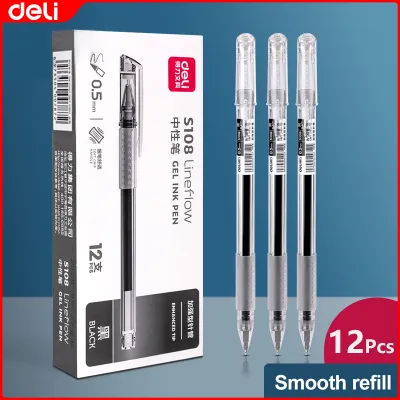
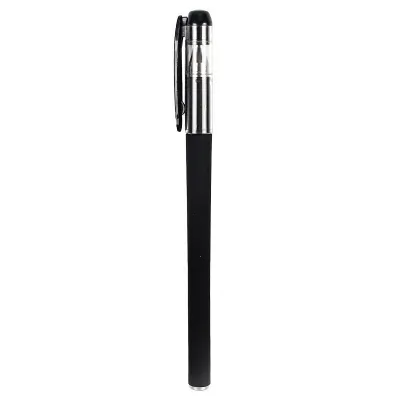
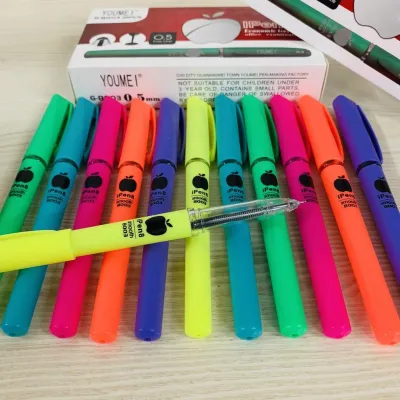
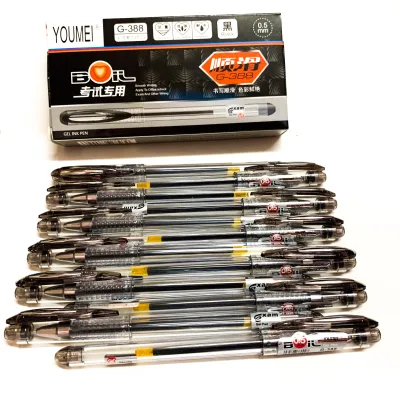
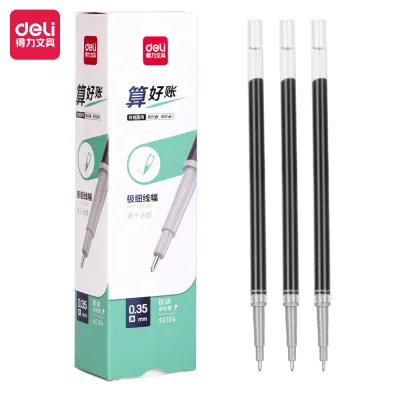
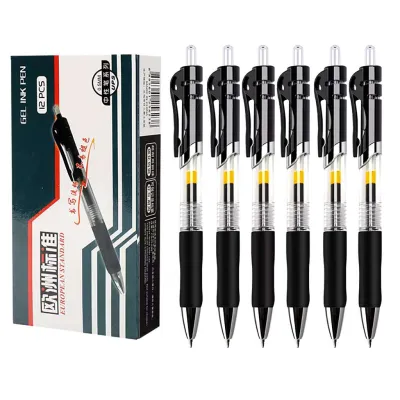
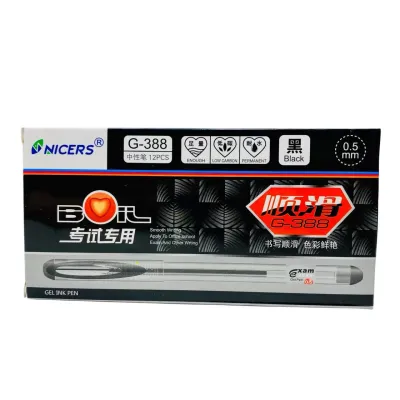
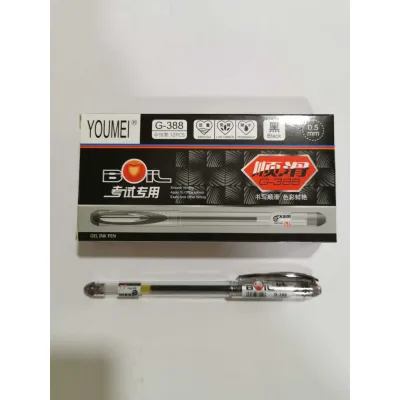
Prices are valid at publication and may change. Please refer to the product page for the latest price.
Evaluating Ink Flow and Tip Size for Daily Tasks
Selecting the right tip size is the first step in ensuring your gel pen matches your writing style and paper choices. Most everyday gel pens are available in standard tip sizes, typically ranging from ultra-fine 0.38mm to bold 0.7mm or 1.0mm. To find your ideal match, check the manufacturer specifications on the packaging or product listing, and consider your handwriting size and the spacing of your notebook lines.

If you have small, compact handwriting or frequently write in tight grids, a 0.5mm or finer tip is generally the most suitable choice. These finer tips deposit less ink onto the page, which helps maintain legibility and prevents letters from closing up. Conversely, if your handwriting is large and cursive, a 0.7mm tip offers a bolder, more fluid line that glides effortlessly across the paper, though it will consume ink at a faster rate.
Consistent ink flow is the hallmark of a well-engineered gel pen. When testing a new pen, observe how the ink behaves on standard notebook paper. Look closely for skipping, which occurs when the ball inside the tip fails to roll smoothly, leaving blank gaps in your letters. You should also watch out for blobbing, where excess ink pools at the beginning or end of a stroke, creating messy spots that are highly prone to smearing.
Smudge resistance and water resistance are critical factors, especially when writing quickly or working in humid environments. Rather than relying on vague marketing terms like “smudge-free,” verify these claims by checking the product labels for specific ink formulations. Pigment-based gel inks generally offer superior water resistance and archival longevity compared to dye-based inks, making them highly desirable if you need your notes to withstand accidental spills or high humidity.
Assessing Grip Comfort and Barrel Ergonomics
Writing comfort is essential for preventing hand fatigue, particularly during extended writing sessions at school or work. The material and design of the pen’s grip zone play a major role in how much pressure you must apply to keep the pen stable. Textured rubber or elastomer grips are highly effective because they provide traction, reducing the physical effort required to hold the pen.
In warm, tropical climates where hands can easily become sweaty, smooth plastic or polished metal barrels can become slippery and difficult to control. This slippage forces you to grip the pen more tightly, leading to rapid hand fatigue and writer’s cramp. A textured, non-slip rubber grip absorbs sweat and keeps your fingers securely in place, allowing for a relaxed, natural writing posture.
Barrel weight and balance are equally important ergonomic factors, though they are rarely detailed in basic product specifications. To evaluate these features visually, look at the pen’s overall construction and cap design. A pen should feel balanced in your hand; if it is too top-heavy when the cap is posted on the back, it will pull your hand backward, straining your wrist. Lightweight plastic barrels with a low center of gravity near the tip generally offer the most comfortable experience for prolonged daily use.
Before purchasing a 12-piece set, use this quick checklist to identify potential ergonomic red flags:
- Hard plastic seams: Check if there are sharp manufacturing ridges or seams running directly through the grip zone where your fingers rest.
- Overly thick or thin barrels: Avoid barrels that force your fingers into an unnaturally wide pinch or a cramped, tight squeeze.
- Abrupt steps: Look for a smooth transition between the pen barrel and the grip area, as sharp steps can dig into your fingers over time.
Refillability, Longevity, and Set Value
Evaluating the long-term value of a 12-piece gel pen set requires looking beyond the initial purchase price. One of the most effective ways to ensure sustainability and cost-efficiency is to verify if the pen model accepts standard refills. You can confirm this by checking the manufacturer’s documentation or packaging for refill codes, such as the widely compatible standard G2-style refill format.
Opting for a refillable gel pen set offers significant financial and environmental advantages over disposable multi-packs. While a disposable set might have a lower upfront cost, a refillable set allows you to retain the comfortable pen barrels and simply replace the internal ink cartridges. Over several months of heavy writing, purchasing individual refills—which often cost only a fraction of a new pen—proves to be much more economical and drastically reduces plastic waste.
To monitor your ink usage and avoid running out of ink unexpectedly, look for pens designed with ink capacity indicators. Many modern gel pens feature transparent or semi-transparent barrels, or a clear window along the side of the pen body. Because gel ink is consumed much faster than traditional oil-based ballpoint ink, these visual indicators are incredibly helpful for letting you know exactly when it is time to prepare a replacement refill.
When calculating the overall value of a set, consider the cost per pen against your typical usage rate. A budget-friendly 12-piece set priced around ₱150 to ₱300 can be an excellent choice for general office use, while a premium refillable set costing ₱500 or more may offer better long-term durability and a superior writing experience. Balancing your budget with your daily writing volume will help you choose the most practical option.
Building Your Shortlist: Pre-Purchase Checks
To ensure you get the best possible performance from your 12-piece black gel pen set, it is wise to perform a few simple pre-purchase checks before finalizing your order from an online marketplace or a local stationery store. This systematic approach helps you avoid common pitfalls like scratchy tips, slow-drying ink, or poor shelf life.
Start by thoroughly reviewing the product listings and focusing on verified buyer feedback. Look specifically for reviews that mention the following real-world performance factors:
- Drying speed: Search the comments for terms like "smudge," "left-handed," or "dry time" to see how the ink performs on standard paper.
- Tip durability: Check if other users have experienced scratchiness or bent tips after minimal use.
- Ink consistency: Look for complaints regarding skipping, leaking, or pens arriving dried out.
Next, cross-reference the specific pen model with the availability of replacement refills on your preferred e-commerce platforms. If you find that refills for that particular model are difficult to source or excessively expensive, you may want to consider a more widely supported pen model to ensure you can easily maintain your set in the future.
Finally, always check the seller’s return policies and warranty conditions before making your purchase. Because gel pens are sensitive to storage temperatures and transit conditions, there is always a small risk of receiving a batch with dried-out ink or manufacturing defects. A reliable seller with a clear, hassle-free return policy ensures that you can quickly exchange any defective units without losing your investment.
Frequently Asked Questions (FAQ)
How can I prevent my black gel pens from drying out?
To maximize the lifespan of your black gel pens, store them horizontally or tip-down. Storing them horizontally keeps the ink column balanced, while storing them tip-down ensures the ink is always in contact with the ball point, preventing air pockets from forming inside the cartridge. Avoid storing gel pens tip-up for long periods, as this can cause the ink to drain away from the tip, leading to scratchy writing or complete drying.
Additionally, always click or cap your pens immediately after every writing session. Gel ink is water-based, meaning the solvents inside the ink can evaporate rapidly when exposed to the air, leading to a clogged tip. Keep your pen set stored in a cool, dry place away from direct sunlight and extreme heat sources, as high temperatures can degrade the gel formula and cause the ink to leak or dry out prematurely.
Are 0.5mm and 0.7mm gel pen tips interchangeable for everyday writing?
While both 0.5mm and 0.7mm tips are excellent for daily writing, they are not entirely interchangeable because they offer distinct writing experiences and require different paper conditions. A 0.5mm tip produces a fine, precise line that is ideal for small handwriting, detailed notes, and thin notebook paper. Because it deposits less ink, it dries much faster and is far less likely to bleed through the page or smudge, making it highly practical for quick, everyday tasks.
In contrast, a 0.7mm tip delivers a bolder, darker line that glides more smoothly across the paper, making it a favorite for signature work and expressive cursive writing. However, the larger tip deposits a significantly higher volume of ink, which requires a longer drying time and can easily feather or bleed through thin, low-quality paper. Before committing to a 12-piece set, check the paper weight of your primary notebooks; thin paper pairs best with 0.5mm, while thicker paper can handle 0.7mm beautifully.

Community discussion
Share your experience or ask a question. Comments are reviewed before publication.