
Starting your jewelry-making journey with a glass beads set is an exciting step into a world of color, texture, and personal expression. However, walking into a craft store or browsing online marketplaces can quickly become overwhelming due to the sheer volume of options available. A successful start relies heavily on choosing a kit that balances bead quality, tool utility, and design versatility. In tropical climates like the Philippines, where high humidity and ambient warmth can accelerate the wear of low-quality materials, making an informed choice is even more critical to ensure your handmade creations last. Choosing a well-curated starter kit saves you from the frustration of mismatched threads, broken needles, and peeling colors, allowing you to focus entirely on mastering your new craft.
Essential Features to Check in a Glass Beads Set
The quality of a glass bead is often hidden inside its center, making the bead hole the first critical point of inspection. When manufacturing standards are low, bead holes can vary wildly in diameter within the same batch, or worse, contain jagged glass burrs. These sharp internal edges act like tiny saws, slowly fraying and eventually snapping your beading thread or elastic cord as the jewelry moves against the body. Before purchasing, or immediately upon opening a new set, inspect the holes of several random beads to ensure they are clean, round, and uniform. If you notice white powder or glass dust inside the holes, this is often a remnant of the manufacturing release agent, which should be washed out to prevent it from clogging your needles or discoloring your thread.
High-quality glass beads should feel smooth and pleasant against the skin, especially since jewelry like bracelets and necklaces involves prolonged body contact. Run your fingers over the beads to check for rough mold lines, sharp protrusions, or unevenly applied outer coatings. Cheaply made beads often feature visible seams where the two halves of the mold met during production, which not only looks unprofessional but can also cause skin irritation over time. Additionally, check that any painted, galvanized, or glazed finishes are applied evenly across the entire surface of the bead, without bald spots or pooling near the holes.
Products mentioned in this guide
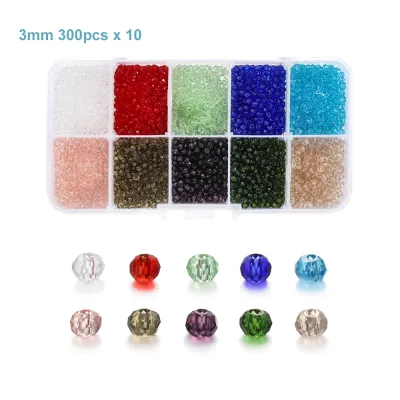
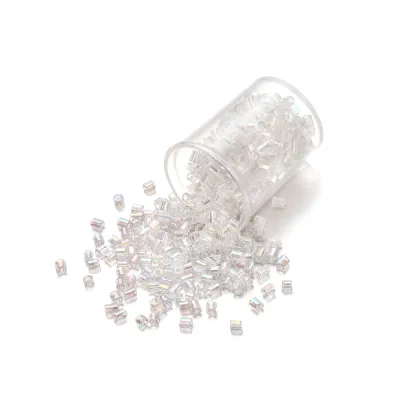
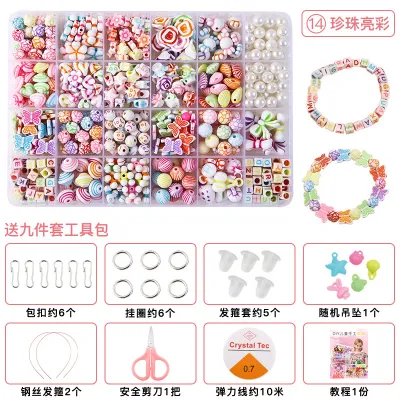
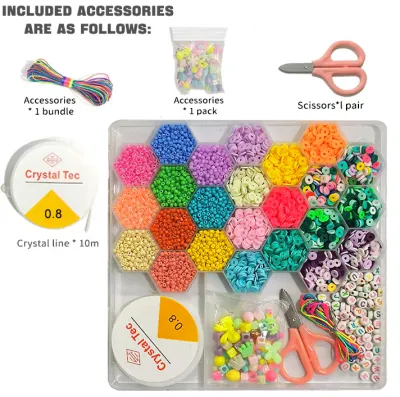
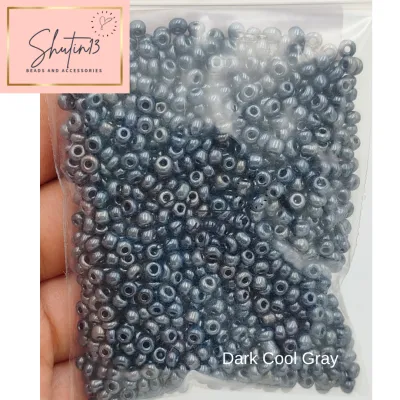

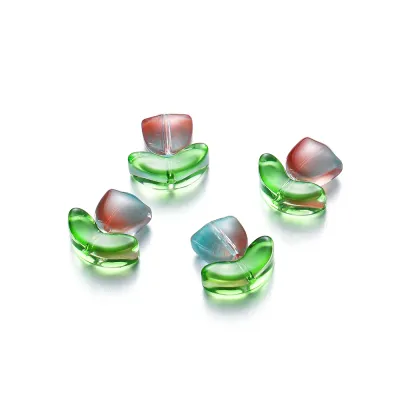
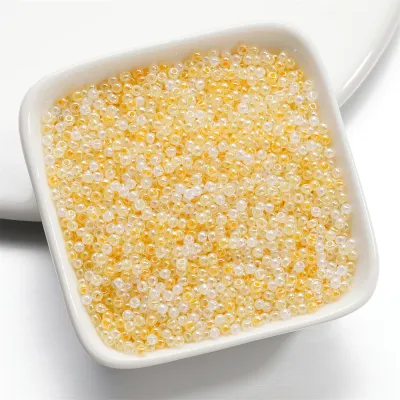
Prices are valid at publication and may change. Please refer to the product page for the latest price.
Understanding the specific type of glass in a set helps you match the material to your intended projects. Seed beads are tiny, uniform cylinders or rounds ideal for intricate bead weaving, looming, and delicate spacer work. Pressed glass beads are formed by squeezing molten glass into precise molds, resulting in highly consistent shapes like smooth rounds, faceted bicones, or teardrops that are perfect for structured patterns. Lampwork beads, which are individually crafted by melting glass rods over a torch, offer unique, artistic focal points but are typically sold individually rather than in beginner sets. For a beginner, a set dominated by high-quality pressed glass beads offers the most forgiving and satisfying entry point into the craft.
Must-Have Components and Accessories for Beginners
A beginner glass beads set should ideally include the primary stringing materials needed to start crafting immediately, but these materials must be compatible with the beads provided. Elastic polyurethane cord is the standard for quick, clasp-free bracelets, but its thickness must align with the bead holes; a 0.8mm cord will not pass easily through a 0.6mm seed bead hole. For heavier glass beads, nylon-coated stainless steel beading wire is preferred for its strength and drape, requiring a completely different set of finishing techniques. Ensure the kit specifies the thickness of the included cords and wires so you can verify they will actually fit through the beads without forcing them.

Findings are the metal components—such as lobster clasps, jump rings, and crimp beads—that turn a string of beads into a wearable piece of jewelry. In humid environments, cheap base-metal findings can tarnish, rust, or turn green within weeks of exposure to air and skin oils. Look for sets that include findings made of stainless steel, brass, or nickel-free alloys to ensure your closures remain secure and hypoallergenic. Additionally, verify that the crimp beads included are soft enough to be flattened securely with pliers without cracking, as brittle crimps will fail and cause your jewelry to fall apart.
A durable, well-designed storage box is not a luxury; it is an absolute necessity when dealing with hundreds of tiny glass pieces. The organizer should feature individual compartments with tight-fitting, secure latches that prevent beads from migrating into adjacent sections when the box is moved or tilted. A single loose lid can result in hours of tedious sorting or a catastrophic spill on your workspace. Look for containers made of clear, sturdy plastic so you can easily assess your inventory at a glance without constantly opening the lid and exposing the contents to dust and moisture.
Evaluating Variety: Shapes, Sizes, and Colors
When selecting your first set, aim for a high ratio of foundational shapes over highly specialized novelty shapes. Round beads, rondelles, and simple faceted bicones are incredibly versatile, allowing you to learn basic stringing, tension control, and pattern creation without the awkward spacing issues that novelty shapes like stars or shells can introduce. Once you master the basics with symmetrical shapes, you can easily integrate accent beads into your designs. A good beginner set should consist of approximately 70% to 80% foundational shapes, with the remainder dedicated to fun accents.
A well-rounded starter kit should offer a range of sizes, typically spanning 4mm, 6mm, and 8mm diameters. This gradient allows you to experiment with the scale, weight, and drape of your jewelry; a necklace made entirely of 8mm glass beads can feel heavy and rigid, whereas graduating from 4mm near the clasp to 8mm at the center creates a balanced, comfortable piece. Mixing sizes within a single project also adds visual depth and structural stability, preventing the design from looking flat or monotonous.
The visual appeal of glass beads comes from their diverse finishes, including transparent, opaque, frosted, and metallic coatings. However, because colorfastness and finish durability depend on the exact material and manufacturing combination, beginners should test their beads before committing to complex designs. A simple, observable trial—such as soaking a few beads in warm water or rubbing them vigorously between your fingers—can reveal whether a metallic or dyed coating is prone to rubbing off under the influence of daily wear and tropical humidity. For long-lasting jewelry, prioritize sets that feature through-colored glass, where the color is melted directly into the glass batch rather than painted or sprayed onto the surface afterward.
How to Verify Quality and Compatibility Before Buying
When shopping on online marketplaces, look past the colorful promotional photos and scrutinize the technical specifications. Reliable listings will state the exact material (such as soda-lime glass), the precise bead dimensions in millimeters, and the specific hole diameter. Avoid listings that use vague terms like “mixed craft beads” without providing metric measurements, as you may end up with beads that are too small for your stringing wire or needles. If the listing does not specify the hole size, it is best to contact the seller directly or look for an alternative product that provides transparent specifications.
Customer feedback is an invaluable resource for identifying common manufacturing defects before you spend your money. Look for reviews that mention “chipped glass,” “blocked holes,” or “colors fading after a few days of wear.” Pay close attention to user-uploaded photos, which often show the true colors and uniformity of the beads far better than professionally lit product images. If multiple reviewers complain about receiving broken beads or mismatched sizes, it is a strong indicator of poor quality control and inadequate packaging.
To guarantee a seamless crafting experience, always cross-reference the thickness of your preferred stringing material with the stated bead hole sizes. If you plan to use a standard 0.7mm elastic cord, ensure the bead set you choose has a minimum hole diameter of 0.8mm to allow for easy threading. If you are using a beading needle, remember that the needle itself and the doubled-over thread must both be able to pass through the bead hole simultaneously. Keeping a simple compatibility chart on hand will help you avoid purchasing beautiful beads that you cannot actually use with your existing tools.
Frequently Asked Questions (FAQ)
Can I use regular sewing thread for glass bead jewelry?
Regular polyester or cotton sewing thread is not suitable for glass bead jewelry because it lacks the necessary tensile strength and abrasion resistance. The inner edges of glass bead holes, even high-quality ones, can gradually wear down thin sewing thread, leading to sudden breakage. Instead, look for specialized nylon beading threads, monofilament cords, or flexible nylon-coated steel wires designed specifically to withstand the weight and friction of glass. Always check the manufacturer’s specifications to ensure your chosen thread matches the weight and style of your project.
How do I store glass beads to prevent them from scratching or tangling?
To protect your glass beads from scratching, chipping, or tangling, store them in compartmentalized plastic organizers with individual, secure latches. Keep the storage containers in a cool, dry place away from direct sunlight, as prolonged exposure to UV rays and high humidity can degrade delicate surface coatings, dyed finishes, and elastic stringing cords over time. Additionally, placing a small silica gel packet inside your storage box can help absorb excess moisture, protecting metal findings from premature tarnishing.
What is the difference between glass beads and crystal beads for beginners?
Standard glass beads are molded or cut from basic silica glass, offering a smooth, classic appearance and excellent durability at an affordable price point, with starter sets often ranging from ₱200 to ₱600. Crystal beads, on the other hand, contain added metal oxides that increase the glass’s refractive index, resulting in exceptional sparkle, high clarity, and precisely cut facets. While crystals offer superior brilliance, they are heavier, more delicate, and significantly more expensive, making standard glass beads the practical choice for beginners practicing their foundational techniques.
Community discussion
Share your experience or ask a question. Comments are reviewed before publication.