
Selecting the right coloring set for your child’s art class is more than just picking the largest box on the shelf. A successful school art experience depends on balancing teacher requirements, safety standards, and practical classroom usability. With the wide variety of art supplies available today, parents must look beyond vibrant packaging to find tools that support learning without causing unnecessary classroom distractions or messy accidents.
To make an informed choice, you need to evaluate how the coloring mediums interact with standard school paper, how easily the set can be transported in a busy backpack, and whether the materials are safe for daily use. By focusing on these practical factors, you can select a coloring set that keeps your child inspired, organized, and ready for every creative project.
Check the School's Art Supply List and Requirements
Before heading to local stationery stores or browsing online marketplaces, always consult the official school supply list provided by your child’s teacher. Art teachers design their curricula around specific mediums to teach particular techniques, such as color mixing with watercolors or fine-line control with colored pencils. Purchasing the wrong medium can leave your child unable to participate fully in the day’s lesson.
Products mentioned in this guide
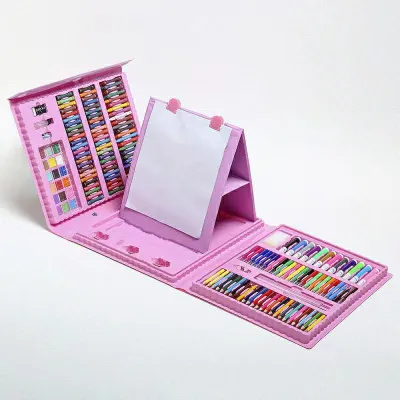
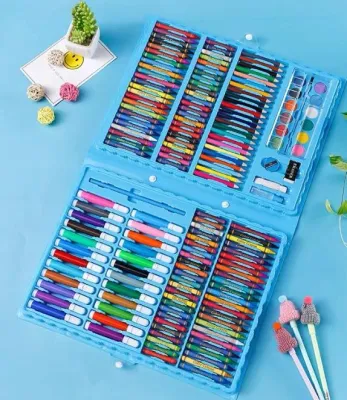
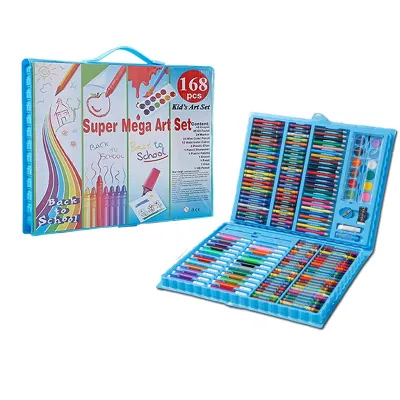
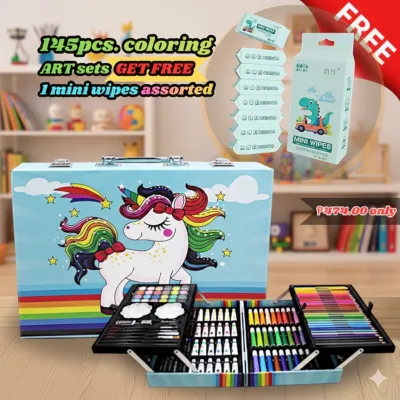
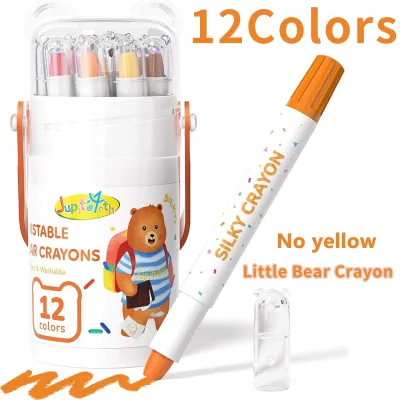
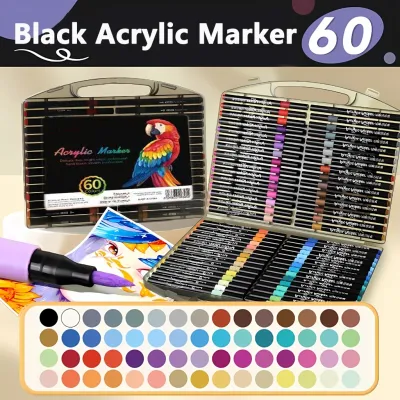
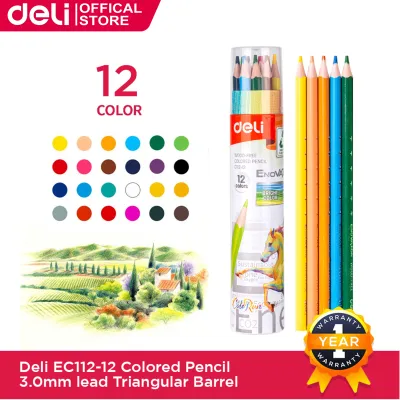
Prices are valid at publication and may change. Please refer to the product page for the latest price.
Pay close attention to any restricted items on the school’s list. Many schools ban permanent markers or highly liquid paints for younger grade levels to prevent permanent stains on school uniforms and classroom furniture. Additionally, some classrooms prohibit sets that include sharp utility knives or metal scissors due to safety policies.
If the teacher specifies a particular format, such as jumbo-sized crayons for early childhood development or water-soluble colored pencils for older students, prioritize those exact specifications. When the list is open-ended, opting for standard, student-grade versions of core mediums is generally the safest and most practical approach.
Verify Safety Certifications and Age Appropriateness
Safety should always be your primary filter when evaluating any coloring set. Children frequently touch their faces, mouths, and eyes while working on art projects, making non-toxic formulations essential. Look for recognized safety certifications on the packaging, such as the AP (Approved Product) seal from the Art and Creative Materials Institute (ACMI) or equivalent local regulatory clearances. These labels guarantee that the materials have been toxicologically evaluated and are safe for classroom use.

Age recommendations on art supplies are not just suggestions; they reflect both safety standards and developmental design. For younger children in preschool or early elementary grades, look for coloring sets featuring thick, break-resistant items. Triangular-shaped crayons and jumbo colored pencils are ideal for these age groups because they prevent rolling off school desks and help develop proper grip strength.
For older students, sets can feature finer tips and more complex mediums, but you should still inspect the kit for potential physical hazards. Avoid sets that include loose, low-quality plastic sharpeners with exposed blades, or small, easily swallowed caps. Ensuring the tools match your child’s physical coordination prevents frustration and keeps the classroom environment safe.
Evaluate the Coloring Medium and Paper Compatibility
Different coloring mediums behave uniquely depending on the paper they are applied to, making compatibility a key consideration. In typical classrooms in the Philippines, students often work on standard drawing books, sketchpads, or thin intermediate pad paper. Understanding how each medium performs on these surfaces will help you avoid messy bleed-through or torn pages.
Colored pencils are highly versatile, offering excellent control for detail work, shading, and layering. When choosing colored pencils, consider whether they are wax-based or oil-based. Wax-based pencils are softer and blend easily, but they can break more frequently under heavy pressure. Oil-based pencils are harder, hold a sharp point longer, and are highly durable, though they require more effort to blend.
Crayons and oil pastels are excellent for broad strokes and vibrant color laydown. However, our tropical climate and high humidity can affect these wax-based mediums. Low-quality crayons can soften or become brittle in warm classrooms, while cheap oil pastels may become overly sticky and smudge easily on adjacent pages. Look for high-quality, break-resistant formulations that maintain their structural integrity in warm weather.
Markers provide brilliant, saturated color but carry the highest risk of bleeding through thin school paper. If the art class requires markers, check the product labels for bleed-resistance or water-based formulas. Before sending a new set to school, have your child perform a quick trial run on a scrap piece of their actual school paper. Observe the smoothness of the stroke, the drying speed to prevent smudging, and whether the ink feathers or bleeds through to the back of the page.
Assess Piece Count, Storage, and Portability
While a massive art case containing over a hundred pieces might seem like an exciting gift, it is rarely practical for a school environment. Large, multi-tiered cases are heavy to carry, take up too much space on small classroom desks, and often lead to lost pieces. A compact set containing 12 to 24 essential colors is usually more than enough for standard school projects and keeps the desk clutter-free.
The durability of the storage case is just as important as the coloring tools themselves. Look for sets housed in sturdy plastic cases, metal tins, or heavy-duty zippered canvas pouches. During the rainy season, school bags can easily get damp; a water-resistant plastic or metal case provides an extra layer of protection, keeping paper-wrapped crayons and wooden pencils dry and usable.
Ensure the case features secure, user-friendly closures. Latches and zippers should be robust enough to withstand daily opening and closing, yet simple enough for your child to operate independently. A secure closure prevents pencils and crayons from spilling into the bottom of a backpack, saving you from broken leads and stained bag linings. Finally, check the dimensions of the set to ensure it fits comfortably alongside textbooks, notebooks, and lunchboxes.
Plan for Refills, Replacements, and Maintenance
Art supplies are consumables that will inevitably wear down, break, or run out over the course of the school year. To manage costs and avoid buying entirely new sets mid-term, look for brands that offer open-stock replacements. Being able to purchase individual colored pencils or specific marker colors—especially heavily used shades like black, blue, and red—saves money and reduces waste.
Proper maintenance extends the lifespan of any coloring set. Teach your child simple habits, such as firmly capping markers until they click to prevent the ink from drying out in warm classrooms. For colored pencils, invest in a high-quality, enclosed pencil sharpener that catches shavings. This keeps the pencil tips sharp without creating a mess at their school desk.
Establish a routine to inspect your child’s coloring set before the start of each school term. Check for broken leads inside the wooden casings, worn-down crayon tips, or dried-out markers. Replacing or sharpening these items at home ensures your child is fully prepared for their next art lesson without any classroom interruptions.
Frequently Asked Questions (FAQ)
Are washable markers better than regular markers for school?
Yes, washable markers are generally much better for school use, especially for primary school students. They feature water-based inks that wash out of skin, clothing, and school uniforms easily, saving parents from difficult laundry stains. Regular or permanent markers offer deep color vibrancy but pose a high risk of permanent staining and are typically restricted by teachers to older grade levels.
How many colors does a standard school coloring set need?
A standard set of 12 to 24 colors is ideal for most school art classes. This range provides all the primary and secondary colors, along with essential neutral tones like brown, black, and white, allowing children to learn basic color mixing and shading. Larger sets with 36 or more colors are usually unnecessary for general classes and are best reserved for specialized high school art electives.

Community discussion
Share your experience or ask a question. Comments are reviewed before publication.