
A well-curated Christmas pack offers a convenient, all-in-one solution for holiday gift wrapping, saving you from the hassle of sourcing individual supplies. However, not all bundled sets provide the right balance of quality, quantity, and versatility. Before adding a set to your cart, it is crucial to look beyond the festive exterior and evaluate the actual components inside. This guide breaks down the essential elements you should expect in a comprehensive wrapping kit, helping you verify paper dimensions, material compatibility, and accessory usability to ensure your holiday presents are wrapped beautifully and securely.
When shopping for a holiday wrapping kit, the convenience of having matching papers, ribbons, and tags in a single package is highly appealing. In the Philippines, where holiday gatherings are large and gift-giving is a central tradition, a complete set can save hours of searching through crowded stationery aisles. However, a poorly put-together pack can lead to frustration, such as running out of tape, finding that the paper tears at the slightest fold, or discovering that the tags do not stick to the glossy sheets. To make a smart purchase, you must understand how to evaluate each component’s specifications and compatibility before committing to a bundle.
Core Wrapping Papers: Checking Dimensions, Materials, and Sheet Counts
The foundation of any Christmas pack is the wrapping paper itself. When evaluating a bundle, the first step is to check whether the paper is supplied in rolls or pre-cut sheets, as this significantly impacts usability. Rolls offer continuous length, allowing you to wrap larger items without unsightly seams, but they require careful storage to prevent creasing. Pre-cut sheets are highly convenient for standard-sized boxes, but you must verify their exact dimensions. A standard sheet measuring 50 by 70 centimeters is ideal for medium-sized books, toy boxes, or apparel boxes, but it will fall short for larger appliances or board games. Before purchasing, measure the perimeter and depth of your typical gifts to ensure the sheets can wrap around them with at least a five-centimeter overlap on all sides.
Products mentioned in this guide
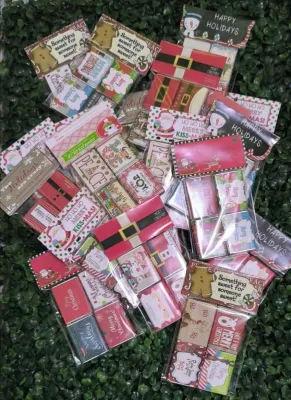
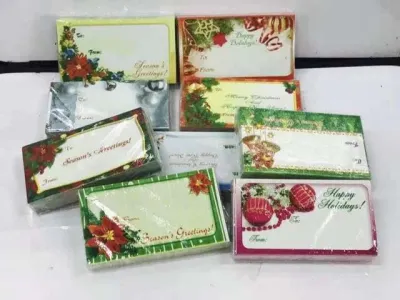
Prices are valid at publication and may change. Please refer to the product page for the latest price.
Paper weight and material composition are equally critical for a clean, professional finish. Wrapping paper weight is typically measured in grams per square meter (gsm). In a standard Christmas pack, look for paper that is at least 70 gsm to 80 gsm. Paper that is too thin, such as lightweight 50 gsm utility paper, is prone to tearing at the corners of sharp boxes and often suffers from poor opacity, allowing the gift’s original packaging or branding to show through. Conversely, paper that is too thick, exceeding 120 gsm, can be stiff and difficult to fold, requiring heavy-duty adhesive to hold the seams in place.
The material type also dictates how the paper behaves during the wrapping process. Kraft paper, made from unbleached wood pulp, is highly durable, offers excellent tear resistance, and provides a rustic, classic holiday aesthetic. Coated or glossy papers feature a thin synthetic layer that gives them a vibrant, reflective finish, but they can be slippery to handle and may resist standard adhesive tapes. Matte finishes offer a modern, elegant look and are generally easier to fold and tape, though they can sometimes show finger oils or scuff marks if handled roughly.
When inspecting a pack online or in-store, look closely at the print quality and alignment. High-quality wrapping paper should display crisp, aligned patterns without color bleeding or offset registration. If the patterns are misaligned or the colors appear faded, it often indicates low-grade printing processes that may also result in ink transferring to your hands during wrapping. Opacity is another factor you can verify by holding a sheet up to the light; if you can clearly see your hand through the paper, it will not hide the contents of your gift box effectively.
Ribbons, Bows, and Embellishments for the Perfect Finish
A complete Christmas pack should include coordinating ribbons and bows that complement the paper designs. However, manufacturers often cut corners on these decorative elements, providing short spools or fragile bows that flatten easily. When reviewing a pack, check the total length of the ribbon provided. A single medium-sized gift box typically requires about 1.5 to 2 meters of ribbon for a simple cross-wrap and bow. If a pack contains five sheets of paper but only a single three-meter spool of ribbon, you will quickly run out of decorative material. Look for kits that offer at least 10 to 15 meters of total ribbon length to ensure you can embellish every wrapped gift.

The material of the ribbon determines both its ease of use and its final appearance. Satin and grosgrain ribbons are popular choices because they drape beautifully and can be tied into tight, secure knots. Organza ribbons offer a delicate, sheer look but can be slippery and difficult for beginners to tie neatly. Paper twine or jute string is commonly paired with kraft paper packs, offering a rustic charm and excellent knot security, though they lack the formal elegance of fabric ribbons. Avoid packs that include cheap, stiff plastic ribbons that crease permanently when bent, as they are difficult to work with and tend to unravel easily.
Pre-made bows are a convenient addition, but their usability depends heavily on their adhesive backing. Check whether the bows feature self-adhesive peel-and-stick tabs or if you will need to supply your own double-sided tape. The adhesive must be strong enough to bond with the specific surface of the wrapping paper. For instance, standard adhesives often struggle to stick to heavily textured, glittered, or highly glossy papers. Furthermore, low-quality adhesives can degrade in warm, humid environments, causing the bows to fall off the gifts before they are even delivered.
If the pack includes extra embellishments like stickers, seals, or metallic sequins, verify their compatibility with the primary wrapping paper. Stickers require a smooth, clean surface to adhere properly; they will peel away quickly if applied to textured kraft paper or glitter-coated sheets. If you plan to use wax seals or heavy decorative elements, ensure the wrapping paper is sturdy enough to support the weight without sagging or tearing.
Gift Tags, Labels, and Auxiliary Tools for Easy Organization
Keeping track of multiple presents during the busy holiday season requires reliable identification components. A comprehensive Christmas pack must include high-quality gift tags or adhesive labels. When evaluating these items, pay close attention to the surface finish of the tags. Many budget packs include highly glossy, plastic-coated tags that look attractive but are highly resistant to standard writing instruments. Writing on a glossy tag with a standard ballpoint or gel pen often results in severe smudging, ink pooling, or complete failure to transfer. Look for tags made from uncoated cardstock, matte paper, or kraft card, which easily accept ink from ballpoint pens, gel pens, and permanent markers without bleeding through to the other side.
The structural integrity of the tags is another important consideration. Hanging tags should be made from thick cardstock (at least 250 gsm) to prevent them from bending or tearing off the gift during transport. Check if the hanging holes are pre-punched and reinforced with a metal eyelet or a double-layer paper border. Additionally, verify that the pack includes an adequate supply of tying materials, such as pre-cut twine, elastic loops, or satin strings. If the pack only provides tags without any strings, you will be forced to purchase them separately, defeating the purpose of an all-in-one kit.
Some premium Christmas packs also include auxiliary tools designed to make the wrapping process smoother and more professional. These tools can include compact tape dispensers, safety paper cutters, or bone folders. A bone folder is a flat, dull-edged tool used to score paper and press down folds, allowing you to achieve incredibly crisp, sharp creases on your gift boxes. Safety cutters are excellent for making straight, continuous cuts along wrapping paper rolls without the risk of jagged edges or accidental cuts. While not strictly necessary, the inclusion of these tools adds significant value to a holiday pack, especially for those who wrap a large volume of gifts.
Your Pre-Purchase Evaluation Checklist for a Christmas Pack
To ensure you get the best value and utility from a Christmas pack, it is helpful to perform a quick systematic review before making your purchase. Start by analyzing the component ratio. A well-balanced pack should have a logical relationship between the number of wrapping sheets, tags, ribbons, and tape. For example, if a pack contains ten large sheets of wrapping paper, it should ideally include at least ten gift tags, ten pre-made bows or an equivalent length of ribbon, and at least one full roll of adhesive tape. Packs that offer an abundance of paper but only two or three tags will require you to buy extra supplies anyway, reducing the overall convenience.
Next, consider the packaging and shipping format of the pack itself. Wrapping paper is highly susceptible to damage during transit and storage. If you are purchasing online, check if the pack is shipped in a sturdy cardboard tube or a rigid box. Wrapping paper rolls that are shipped in thin plastic wrap often arrive with crushed ends, deep creases, or torn edges, rendering a significant portion of the paper unusable. Similarly, pre-cut sheets should be packed flat with rigid cardboard backing to prevent them from folding or wrinkling in transit.
You should also evaluate the adhesive components included in the pack. Double-sided tape and standard clear tape can degrade over time, especially when stored in warm, humid warehouse environments. If the pack has been sitting in storage for a long period, the tape may lose its stickiness or become brittle. If possible, look for packs that use standard, widely compatible tape sizes so you can easily swap in a fresh roll of high-quality stationery tape if the included one underperforms.
Finally, perform a quick cost-benefit analysis. Calculate the total cost of the Christmas pack and compare it to the estimated cost of buying the items individually. While buying a bundle is often cheaper and much more convenient, some low-quality packs are priced at a premium simply because of their festive packaging. If the individual components—such as thin 50 gsm paper, plastic ribbons, and smudge-prone tags—do not meet your quality standards, it may be more economical to purchase a few high-quality rolls of wrapping paper and a spool of durable fabric ribbon separately. This ensures your gifts look beautiful and remain securely wrapped throughout the holiday season, even if you spend around ₱500 to ₱1,000 on a premium set.
Frequently Asked Questions (FAQ)
Can a standard Christmas pack accommodate unusually shaped gifts?
Standard Christmas packs are primarily designed for rectangular boxes, as pre-cut sheets and standard wrapping papers can wrinkle or tear when forced around irregular shapes like stuffed toys, round bottles, or soft clothing. To wrap unusually shaped gifts using a standard pack, you can create a simple gift pouch by folding a sheet of wrapping paper in half, taping the sides, and securing the top with the included ribbon. Alternatively, you can place the irregular item inside a plain cardboard box first, then wrap the box normally. If the pack includes tissue paper, you can also use it to wrap the item loosely before placing it in a gift bag.
How should I store leftover supplies from a Christmas pack?
To preserve unused wrapping materials for the next holiday season, you must protect them from humidity, dust, and light degradation, which are common challenges in tropical climates like the Philippines. Store wrapping paper rolls vertically in a tall, rigid plastic container or a dedicated wrapping organizer to prevent the edges from crushing. Keep pre-cut sheets flat inside a sealed plastic sleeve with a piece of cardboard to prevent bending. Store ribbons, bows, and adhesive tags in airtight plastic bins with a few packets of silica gel to absorb excess moisture, which prevents the adhesives from drying out or losing their stickiness and keeps fabric ribbons from developing mold.
Community discussion
Share your experience or ask a question. Comments are reviewed before publication.