
A comprehensive mega art set is a convenient way to prepare students for school art projects, but not all kits are created equal. A truly useful set must balance versatile drawing tools, reliable wet mediums, durable application accessories, and sturdy crafting essentials, all housed in a portable, organized case. Selecting the right set requires looking beyond the total piece count to evaluate the actual utility and safety of each component.
Core Components of a Comprehensive Art Set
A complete school art curriculum requires a diverse range of mediums to help students explore different techniques. A high-quality mega art set should serve as a versatile toolkit, providing the exact tools needed for sketching, painting, and crafting without requiring constant mid-semester trips to the stationery store.
For drawing, the set must include essential graphite pencils, a clean-erasing vinyl or polymer eraser, and a dual-hole sharpener that collects shavings. Standard school projects often transition quickly from dry sketching to wet painting, making the inclusion of reliable watercolors, acrylics, or tempera paints vital. These mediums should match the student’s grade level, with washable options being highly preferred for younger classrooms.
Products mentioned in this guide
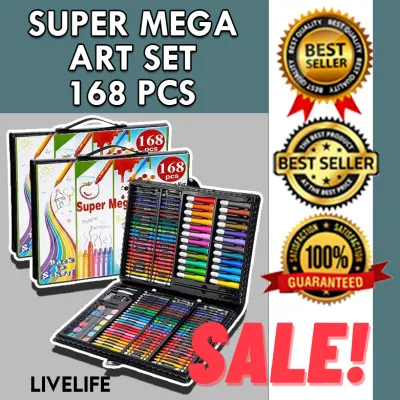
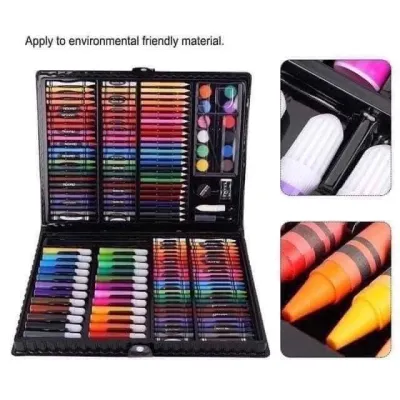
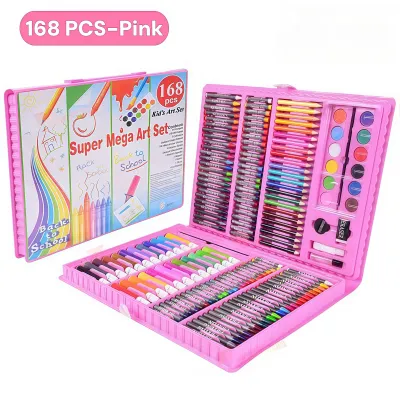
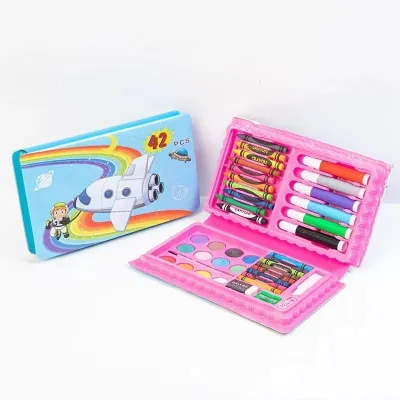
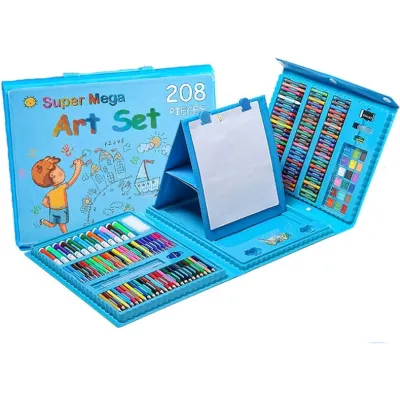
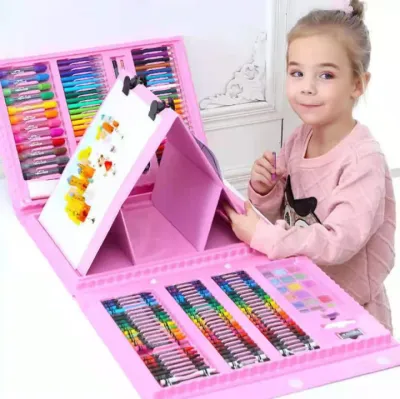
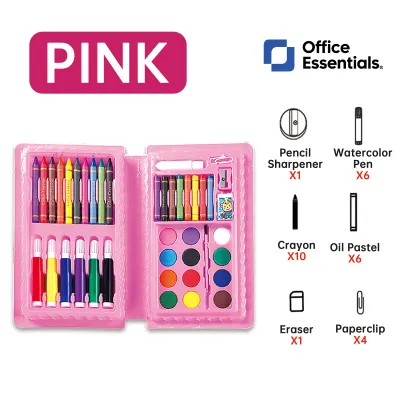
Prices are valid at publication and may change. Please refer to the product page for the latest price.
To apply these paints effectively, look for assorted brush sizes—ideally featuring a mix of flat brushes for broad washes and round brushes for detail work. A plastic mixing palette with deep wells and a collapsible water cup are also essential to keep the workspace clean. Finally, crafting and assembly tools like blunt-tip safety scissors and acid-free adhesive glue sticks must be included to support collage and paper-construction assignments.
Assessing the Quality of Paints, Brushes, and Drawing Tools
Evaluating the materials inside a mega art set is crucial to ensure they perform well under classroom conditions. Cheap paints often contain high amounts of chalky fillers, which lead to cracking and fading once dry. To distinguish student-grade from professional formulations, check the packaging labels for pigment concentration and lightfastness indicators; student-grade paints should still offer vibrant, blendable colors without a gritty texture.

Because smoothness, bleed resistance, and drying speed depend heavily on the exact combination of paint, ink, and paper, students should perform a quick trial on a scrap sheet before starting their main project to verify how the mediums interact.
Brushes are another area where quality varies wildly. Synthetic bristles, such as nylon, are highly recommended for school use because they maintain their shape, clean easily, and resist shedding better than cheap natural hair brushes. Ensure the metal ferrule holding the bristles is tightly crimped to the handle so it does not wobble during use.
For drawing tools, verify that the set offers a functional range of pencil hardnesses, such as HB for general writing and 2B or 4B for softer shading. Check that the pencil leads are centered within the wooden casing, as off-center leads break easily during sharpening.
Safety is paramount when students handle art supplies for extended periods. Always verify that all wet mediums, glues, and solvents carry recognized non-toxic safety seals, such as the AP (Approved Product) seal. This ensures the materials are safe for skin contact and do not release harmful fumes in enclosed classroom spaces.
Checking Paper Weight and Surface Compatibility
Even the best paints and markers will fail if they are used on the wrong surface. Many budget art sets include thin paper pads that buckle, warp, or bleed through immediately when wet. To avoid this, check the paper weight metrics included in the set, which are typically measured in grams per square meter (gsm).
For dry media like graphite, colored pencils, and oil pastels, a paper weight of 100 to 120 gsm is usually sufficient. However, wet media like watercolors and acrylics require much heavier paper—ideally 190 gsm to 300 gsm—to absorb moisture without warping or tearing.
Surface texture, or “tooth,” is another critical factor. Dry media like charcoal and pastels need a rougher texture to grab and hold the pigment particles. Conversely, markers and fine-liner pens require a very smooth surface to prevent the ink from feathering and to protect the delicate felt tips from wearing down prematurely.
Finally, consider the binding type of the included paper pads. Spiral-bound pads are excellent for keeping work intact and allowing the book to lay completely flat on small school desks. Glued pads allow for clean, easy tearing when submitting projects, while loose sheets are convenient for immediate use but require a dedicated portfolio folder to prevent creasing inside a school bag.
Evaluating Storage and Portability for School Use
An art set is only useful if it can survive the daily commute to and from school. In tropical climates with high humidity, like the Philippines, cardboard packaging can quickly soften, warp, and tear. A durable outer case made of impact-resistant hard plastic or treated wood is essential to protect the delicate supplies inside.
The internal organization of the case is just as important as the exterior. Look for sets with molded plastic trays where each pencil, pastel, and paint tube snaps securely into its own designated slot. Loose compartments allow items to roll around, which leads to broken pencil tips, cracked pastel sticks, and punctured paint tubes.
Additionally, evaluate the overall weight and physical dimensions of the closed case. The set must fit comfortably inside a standard school backpack alongside textbooks and notebooks. Heavy metal latches and a sturdy carrying handle are vital to prevent the case from accidentally bursting open and spilling supplies during a busy school day.
Spotting Filler Items vs. Practical Supplies
Many manufacturers artificially inflate the piece count of their mega art sets to make them seem like a better value. A “150-piece set” might actually contain 50 identical plastic paper clips, a flimsy ruler, and dozens of low-quality, dried-out markers. To get the best value, focus on the cost-per-useful-item rather than the total piece count.
Identify and discount redundant or highly specific items that students rarely use, such as single-use plastic stencils or multiple duplicate shades of the same low-quality crayon. Watch out for novelty inclusions like cheap modeling clay, which often dries out and hardens inside the packaging before the student even opens it.
Instead, prioritize sets that focus on high-quality, replenishable core consumables. A smaller, well-curated set of 50 high-quality tools is far more practical and cost-effective than a massive, low-grade kit filled with plastic fillers that will end up in the trash.
Frequently Asked Questions (FAQ)
Is a higher piece count always better for a school art set?
No, a higher piece count does not equal better quality. Manufacturers often use cheap filler items like paper clips, plastic stencils, and duplicate low-grade crayons to boost the advertised number of pieces. It is always better to choose a smaller set with high-quality, durable core tools—such as reliable pencils, rich paints, and sturdy brushes—that can be easily replenished as they are used up.
How do I know if the paints in a set are safe for younger students?
To ensure the paints are safe, look for recognized non-toxic safety certifications, such as the AP (Approved Product) seal, clearly printed on the outer packaging and individual tubes. Avoid sets that lack clear ingredient labeling or emit strong, chemical odors upon opening. For younger students, also verify that the paints are explicitly labeled as washable to prevent permanent stains on school uniforms and skin.
Community discussion
Share your experience or ask a question. Comments are reviewed before publication.