
Finding the ideal Snoopy binder notebook requires balancing adorable Peanuts aesthetics with practical daily functionality. Whether you are a student organizing lecture notes, a professional keeping track of meeting minutes, or a hobbyist journaling in a humid tropical climate, the right binder must withstand daily wear while providing a smooth writing experience. To make an informed purchase on local online marketplaces, you need to evaluate key specifications such as binder size, ring mechanism, paper quality, and cover durability. Paying close attention to these technical details ensures your notebook remains a reliable, long-term companion rather than just a cute desk accessory.
Understanding Binder Sizes and Ring Mechanisms
Selecting the right binder size is the first step in matching a notebook to your daily routine. Standard paper dimensions like A4, B5, and A5 serve distinct purposes. An A4 binder offers the largest writing area, making it excellent for detailed desk work or keeping extensive school subject notes, though its bulk can make it cumbersome to carry in a standard backpack. B5 is a highly popular intermediate size in the Philippines, offering a comfortable balance of ample writing space and portability for university students. A5 binders are compact and lightweight, making them a practical choice for daily journaling, quick to-do lists, or carrying in smaller bags.
Beyond the overall dimensions, the shape and size of the ring mechanism dictate how the notebook functions. O-ring binders are the most common, featuring circular rings that allow pages to turn smoothly, though the sheets tend to ride up on the curve, reducing the usable capacity. D-ring mechanisms, on the other hand, feature one straight edge that allows pages to stack flat against the side, maximizing sheet capacity and making it easier to write flat-lay near the margins. When browsing product listings on ecommerce platforms, always check the specified ring diameter—usually measured in millimeters—and the maximum sheet capacity to ensure the binder can hold your required volume of loose-leaf paper.
Products mentioned in this guide
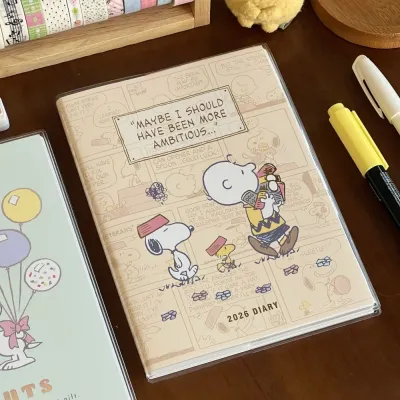
Prices are valid at publication and may change. Please refer to the product page for the latest price.
Evaluating Paper Quality and Pen Compatibility
The tactile experience of writing depends heavily on the paper tucked inside your Snoopy binder. Paper weight is measured in grams per square meter (GSM), a specification typically printed on the product packaging or detailed in the online description. Standard notebook paper often ranges from 70 GSM to 80 GSM, which is lightweight and suitable for basic ballpoint pens. However, if you prefer using dark gel pens, rollerballs, or fountain pens, look for thicker paper options of 100 GSM or higher to prevent ink from feathering or bleeding through to the reverse side.

In humid tropical environments, paper naturally absorbs moisture from the air, which can exacerbate ink feathering and slow down drying times. To ensure a clean writing experience, verify if the manufacturer specifies ink-resistant or high-density paper coatings. Additionally, consider how the ruling style aligns with your tasks. Lined paper is excellent for structured note-taking, while grid and dotted layouts provide flexible frameworks for bullet journaling, sketching, or organizing mathematical equations. Blank pages offer complete creative freedom, making them ideal for scrapbooking or unconstrained sketching.
Assessing Cover Materials and Functional Features
A binder’s cover protects your notes from physical damage and environmental factors like sudden tropical downpours or high humidity. Hardboard covers wrapped in printed paper offer a classic, rigid feel and excellent support for writing on your lap, but they can warp if exposed to moisture. Polyvinyl chloride (PVC) and polypropylene (PP) plastic covers are lightweight, highly flexible, and naturally water-resistant, making them easy to wipe clean after a commute. Polyurethane (PU) leather covers provide a premium, professional look with moderate water resistance, though they require occasional care to prevent peeling in humid climates.
Functional add-ons can significantly enhance your daily productivity and organization. Look for binders equipped with built-in pen loops, elastic band closures to keep the notebook secure in your bag, and internal pockets or card slots for storing loose receipts, sticky notes, or school IDs. Finally, because Snoopy is a globally recognized character, ensure you are purchasing a high-quality product by checking for official Peanuts licensing marks, holographic stickers, or authorized brand tags on the packaging, which generally indicate better manufacturing standards and material safety.
Building Your Pre-Purchase Checklist
Before clicking the buy button on your chosen online marketplace, running through a quick verification checklist can save you from the hassle of returns. First, confirm that the binder size (such as A5 or B5) matches your storage needs and fits comfortably in your daily bag. Second, verify the ring count—such as 20-hole for A5 or 26-hole for B5—as this directly impacts your ability to find compatible refill paper locally. Third, check the paper weight (GSM) to ensure it supports your favorite writing instruments without bleeding.
Refill compatibility is a critical factor for long-term usability. Standardize your choice around common hole configurations so you can easily purchase generic loose-leaf refills once the original Snoopy-themed pages are filled. Lastly, always review the seller’s return policy and customer feedback regarding packaging quality. Since binder rings can occasionally misalign during transit, choosing a seller with a reliable return or exchange policy ensures you can swap out the item if it arrives damaged.
Frequently Asked Questions (FAQ)
Can I use standard loose-leaf paper in a Snoopy binder notebook?
Yes, but you must match the exact size and hole configuration of your binder. For example, a standard B5 binder typically requires 26-hole loose-leaf paper, while an A5 binder requires a 20-hole format. Always check the ring spacing and hole count specified by the manufacturer before purchasing third-party refill packs to ensure they slide onto the rings without tearing or binding.
How do I prevent the binder rings from snagging or bending?
To maintain the alignment of your binder rings, always use the designated push-levers at the top and bottom of the spine to open and close them, rather than pulling the metal rings apart directly. Avoid overstuffing the binder beyond its recommended sheet capacity, as excess paper puts pressure on the joints, leading to gaps that can snag your pages when turning them.
Community discussion
Share your experience or ask a question. Comments are reviewed before publication.