
Buying an airdry clay with tools set is one of the most practical ways to explore sculpting, whether you are a beginner picking up a new creative outlet or an experienced crafter looking for a complete kit. These all-in-one packages promise convenience by bundling modeling compounds with shaping implements. However, the success of your creative projects depends heavily on the quality of the clay material itself, which can vary significantly between brands and price points.
To make a wise purchase, you must look beyond the sheer number of pieces in a set and carefully evaluate the clay’s physical properties. Understanding how the clay behaves under pressure, how it reacts to environmental factors, and how it cures ensures you select a kit that aligns with your crafting goals. By focusing on key material indicators, you can avoid the common frustrations of crumbly textures, warped figures, and broken tools.
Assessing Initial Texture and Workability
The physical state of the clay straight out of the packaging determines how easily you can mold, carve, and shape your designs. When reading product descriptions on online marketplaces, look closely at the terms used to describe the clay’s consistency. High-quality sets often highlight characteristics like “pliable,” “smooth,” or “stretchy,” which indicate a balanced moisture content. Conversely, terms like “ultra-lightweight” or “foam-like” point to specific material types that behave differently from traditional clay.
Products mentioned in this guide
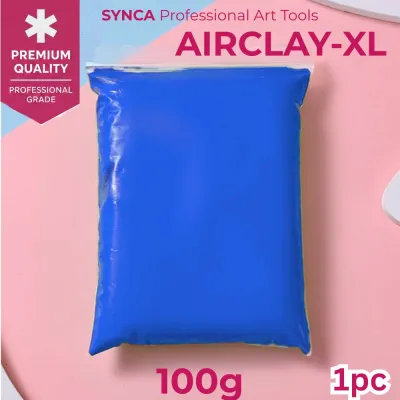
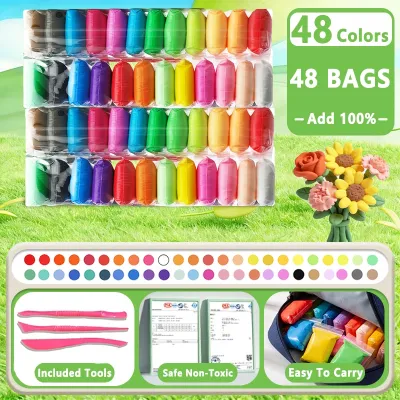
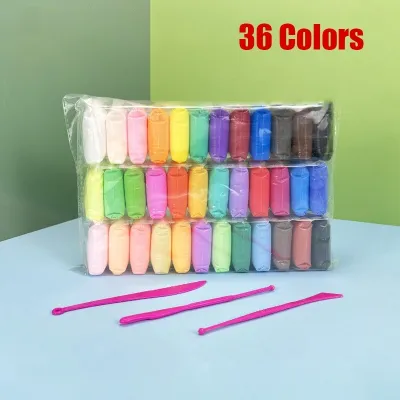
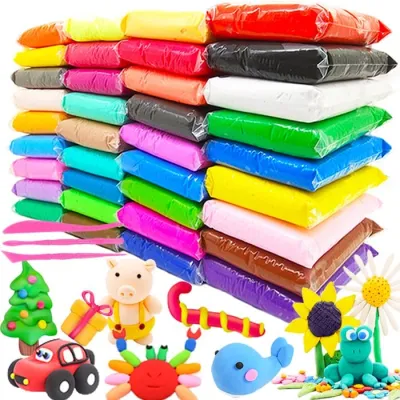
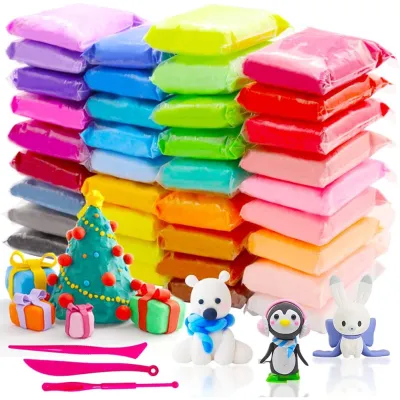
Prices are valid at publication and may change. Please refer to the product page for the latest price.
You will generally find two main categories of air-dry clay in these sets: lightweight foam-based clay and heavy stone- or resin-based clay. Lightweight clay is incredibly soft, fluffy, and easy to pull apart, making it highly popular in children’s craft kits. However, its spongy nature means it struggles to retain highly intricate details or sharp edges. Heavy stone-based or resin-infused clay feels much denser, mimicking traditional ceramic clay, and requires thorough kneading to become pliable. This heavier material is ideal for detailed sculpting, miniature figurines, and structural pieces, but it demands more physical effort to shape.
Unboxing your set presents the first opportunity to inspect the clay’s physical condition. Healthy air-dry clay should feel uniform, cool, and slightly damp to the touch, without any tough outer skin. If you notice hard edges, crust formation, or a crumbly texture upon opening a sealed bag, the material has likely suffered from air exposure during storage or transit. Excessive stickiness is another warning sign; clay that clings stubbornly to your fingers or leaves a thick residue is difficult to shape and may require a brief period of air-exposure or kneading to become workable.
Additionally, you must evaluate how the clay’s density aligns with the tools provided in the set. Budget-friendly kits often include lightweight plastic modeling tools, which are perfectly adequate for soft, foam-like clays but will bend or snap when pressed into dense stone-based clays. If you select a kit featuring heavy, professional-grade stone clay, verify that the set includes sturdy wooden or metal-tipped tools that can withstand the resistance of the denser material.
Understanding Drying Behavior and Shrinkage
Air-dry clay cures through the simple evaporation of its water or solvent content, meaning it does not require kiln firing or oven baking. Because evaporation is the driving mechanism, environmental factors play a massive role in how long your sculpture takes to dry. In tropical regions with high relative humidity, such as the Philippines, drying times can easily double compared to the standard 24-hour estimate printed on the packaging. A piece that might dry overnight in an arid climate may require two to three days to cure completely in a humid environment.

As the water evaporates from the clay body, the material naturally contracts, a phenomenon known as shrinkage. While lightweight clays experience minimal shrinkage, denser stone-based clays can shrink noticeably during the curing process. This contraction is a critical consideration if you are building your sculpture around a rigid internal support, such as a wire armature or a crumpled aluminum foil core. If the clay shrinks too tightly around an unyielding core, the tension will inevitably cause cracks to form on the surface.
To minimize the risk of cracking as your piece dries, you should follow a few low-risk preparation and drying steps. Always aim for a consistent thickness throughout your sculpture, as uneven areas will dry at different rates, leading to warping or structural stress. When joining two separate pieces of clay together, use the “score and slip” method—roughing up the joining surfaces with a tool and applying a small amount of water or wet clay paste—to ensure a secure bond. Never attempt to speed up the drying process by using hair dryers, placing the piece in a hot oven, or leaving it in direct sunlight, as rapid heating forces the outer layer to dry and shrink much faster than the moist interior, resulting in severe cracking.
Because formulations vary significantly between manufacturers, there is no universal rule for exact drying times. Always check the product label for specific instructions regarding drying conditions and recommended wait times before applying any decorative finishes.
Evaluating the Final Finish and Post-Processing
Once the clay has fully cured, its final surface texture dictates how you can paint, sand, and seal your creation. Standard air-dry clays typically dry to a matte, slightly chalky, and porous finish. This porosity is highly beneficial for paint adhesion, allowing acrylic paints, gouache, and even certain markers to grip the surface securely without peeling. However, highly porous clays will absorb moisture from water-based paints rapidly, which can cause the paint to dry incredibly fast or require multiple coats to achieve a vibrant, opaque color.
Protecting your finished project from environmental elements is crucial, especially in humid climates where moisture in the air can rehydrate unsealed clay over time, causing it to soften or lose its shape. To prevent this degradation, as well as to guard against dust accumulation and UV fading, you must apply a protective sealant. While basic craft sets rarely include high-grade varnishes or sealants, you can easily purchase compatible acrylic sealers, mod podge, or polyurethane varnishes separately. Applying a clear coat not only preserves the structural integrity of the piece but also allows you to choose your desired final aesthetic, whether matte, satin, or high-gloss.
It is vital to understand the structural and safety limitations of cured air-dry clay before planning your projects. Unlike kiln-fired ceramics, standard air-dry clay remains water-soluble and is inherently fragile. It is not waterproof, dishwasher-safe, or food-safe. Even if you apply a commercial sealant, the item should remain strictly decorative; never use air-dry clay to create functional mugs, plates, or bowls intended to hold food or liquids, unless both the clay and the sealant are explicitly certified as food-safe by their manufacturers.
Before purchasing a set, check the product details or user feedback to confirm if the cured clay can be sanded. High-quality stone-based clays can be gently sanded with fine-grit sandpaper once fully dry, allowing you to smooth out finger marks, seams, and imperfections for a professional, polished look. Lightweight foam clays, on the other hand, do not sand well and will simply tear or pill if subjected to abrasive papers.
Checking Safety Labels and Packaging Integrity
Safety should always be a primary consideration when choosing any art material, particularly if the set is intended for children or will be used in shared household spaces. Rather than relying on vague, unverified marketing buzzwords like “natural” or “eco-friendly,” look for recognized safety certifications on the packaging. Certifications such as the ACMI AP (Approved Product) seal or the CE (Conformité Européenne) mark indicate that the clay formulation has been evaluated by toxicologists and deemed safe for consumer use under normal conditions.
The integrity of the packaging is another crucial factor that directly affects the shelf life and usability of the clay. Because air-dry clay reacts immediately to air exposure, the individual clay blocks must be securely sealed. Look for sets where the clay is packaged in vacuum-sealed plastic wraps, thick foil pouches, or airtight, resealable plastic tubs. If the packaging is flimsy or lacks a proper seal, there is a high risk that the clay will arrive partially cured and unusable.
Always check the manufacturer’s age recommendations and safety warnings before handing a set over to younger crafters. Many sets include small parts, sharp wire-loop tools, or plastic cutters that present choking or puncture hazards for young children. Furthermore, certain clay formulations may contain preservatives or binding agents that are not suitable for toddlers who are still prone to putting hands or materials in their mouths.
Finally, keep in mind that air-dry clay has a limited shelf life, typically ranging from one to two years from the date of manufacture, even when stored in its original, unopened packaging. When purchasing a set, check for a printed manufacturing or expiration date. Opting for fresh stock ensures that the clay retains its optimal moisture levels and pliability, saving you from the disappointment of opening a brand-new kit only to find dried-out, stubborn blocks of clay.
Matching Clay Properties to Your Specific Projects
To get the most value out of your purchase, you should align the specific properties of the clay with the types of projects you plan to create. Different crafting goals require different material characteristics, and selecting the wrong type of clay can lead to frustrating results.
Fine Details and Miniature Sculpting If your goal is to sculpt highly detailed miniatures, delicate jewelry, or intricate figurines, you should look for a set that features dense, stone-based or resin-based clay. This material holds fine textures, sharp edges, and delicate tool marks exceptionally well. Because it shrinks very little and dries to a hard, durable finish, it allows for precise assembly of multi-part figures. Ensure the set includes fine-tipped detailing needles, ball styluses, and carving tools to help you work with this dense medium.
Children’s Crafts and Playtime For young children, casual school projects, or bulk modeling activities, a set containing lightweight, ultra-pliable foam clay is the superior choice. This clay is incredibly easy to stretch, roll, and shape without requiring intense hand strength. It is virtually mess-free, as it does not leave a dusty residue on hands or table surfaces. Look for sets that offer a wide variety of bright, pre-colored clay blocks, along with simple plastic rollers and cutters that are safe and easy for small hands to operate.
Decorative Household Items If you want to create functional-looking decorative pieces, such as jewelry dishes, ring cones, or small planters, you will need a clay that offers a balance of strength and smooth finishing. A medium-weight clay or a high-quality paper-based air-dry clay is ideal for these projects. Keep in mind that these items must remain strictly decorative and should not be exposed to standing water. Ensure you have a reliable sealer on hand to protect the finished pieces from ambient humidity, and verify that the set includes a rolling pin or smooth spacers to help you roll out even, flat slabs.
When evaluating the overall value of an airdry clay with tools set, do not be swayed solely by a high piece count. A kit that advertises fifty pieces might include forty identical, flimsy plastic molds and only a tiny amount of low-quality clay. Instead, prioritize sets that offer a generous volume of high-quality clay alongside a curated selection of durable, ergonomic tools that you will actually use for your chosen sculpting style. Budget options in local craft stores may range from ₱150 to ₱500, while more robust sets containing professional-grade tools and specialty clays can cost between ₱1,000 and ₱2,500.
Frequently Asked Questions (FAQ)
Can I make food-safe or waterproof items with air-dry clay from a basic set?
Standard air-dry clay is inherently porous and water-soluble, meaning it is not waterproof or food-safe. While applying a commercial sealer or varnish can provide a degree of water resistance—allowing you to wipe down decorative items with a damp cloth—it does not make the clay safe for food contact or prolonged exposure to liquids. Unless both the specific clay formulation and the sealant are explicitly certified as food-safe by the manufacturer, do not use craft sets to make functional mugs, plates, bowls, or utensils.
How do I know if the air-dry clay in a set has expired or dried out?
You can identify expired or dried-out clay by checking for several clear physical signs. If the clay feels stiff, exhibits hard lumps that do not break down with kneading, crumbles excessively, or shows a white, powdery crust on the surface, it has lost its moisture and is no longer usable. Fresh clay should be pliable and easily form a smooth ball without cracking. If you open a freshly unsealed package and find the clay is already dry or has a strong, sour odor, contact the retailer or manufacturer immediately to request a replacement.
Community discussion
Share your experience or ask a question. Comments are reviewed before publication.