
Finding the right art supplies for school can be a challenging task for parents and students alike. When an art teacher requests an oil pastel 18 colors set, it is because this specific size offers the ideal balance between color variety and portability. An 18-color set provides enough shades to teach fundamental color theory, blending, and shading without overwhelming a student’s desk or cluttering their school bag. However, not all oil pastels are created equal, and choosing the wrong set can lead to frustrating breakages, messy cleanups, and subpar art projects.
In a tropical climate like the Philippines, where high temperatures and intense humidity are daily realities, selecting the right oil pastel set requires careful consideration of physical properties. Art supplies stored in student backpacks are often subjected to long, warm commutes in jeepneys or buses, which can severely affect their texture and usability. Understanding how these environmental factors interact with the ingredients of oil pastels is the first step toward making a smart, cost-effective purchase that will last the entire school year.
Core Quality Indicators: Pigment, Texture, and Hardness
To understand how an oil pastel performs, it is helpful to look at its chemical composition. Unlike wax crayons, which are hard and do not blend easily, oil pastels are formulated with a mixture of pigments, non-drying oils, and a wax binder. The ratio of these ingredients directly dictates the pastel’s texture, hardness, and blending capabilities. A higher oil content results in a soft, buttery stick that glides effortlessly across the paper, while a higher wax content creates a firmer, more durable stick that resists breaking but may require more pressure to apply.
Products mentioned in this guide
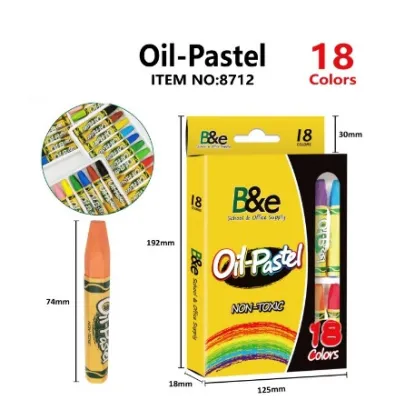
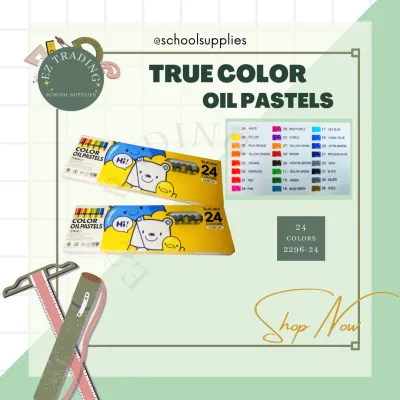
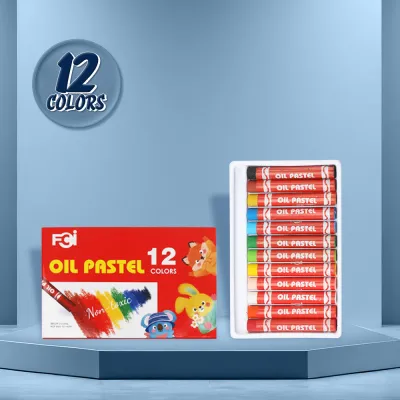
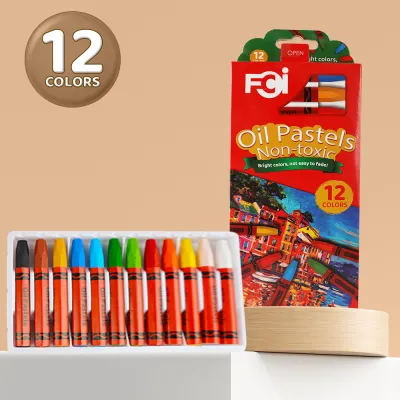
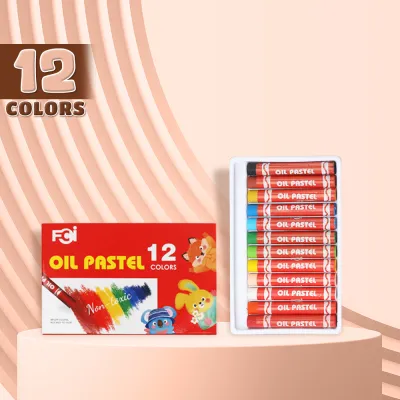
Prices are valid at publication and may change. Please refer to the product page for the latest price.
In the warm, humid environment of the Philippines, the climate plays a significant role in how these materials behave. Standard school classrooms may not always have air conditioning, and ambient temperatures can easily cause high-oil pastels to soften to the point of melting. If a student uses a pastel that has become too soft due to the heat, the stick can crumble under slight pressure, warp in shape, or transfer excessively thick, uncontrollable layers onto the paper. Conversely, pastels with too much wax can feel scratchy, dry, and fail to deposit enough pigment, leading to pale, uneven colors.
For school art classes, the ideal choice is a slightly firmer student-grade oil pastel. This formulation balances smooth laydown with structural durability, ensuring the sticks do not melt or snap easily inside a school bag. To evaluate the quality of a set before committing to a major project, students can perform a few simple, observable tests on a piece of scrap paper.
First, conduct a simple laydown test by drawing a solid line with moderate pressure. A high-quality pastel should deposit a smooth, opaque layer of color without leaving behind large, loose crumbs or exposing the paper underneath. Second, check for wax bloom, which is a white, cloudy film that can develop on the surface of high-wax pastels over time. While wax bloom does not ruin the pastel, it indicates a lower pigment-to-binder ratio. Finally, try layering two colors; the second color should glide over the first without scraping it off or lifting the underlying pigment.
School-Specific Features: Packaging, Cleanliness, and Paper Compatibility
Using oil pastels in a classroom environment introduces practical challenges that go beyond artistic performance. Students must transport their supplies daily, use them in crowded spaces, and clean up quickly before their next class. Therefore, the physical design of the packaging and the pastels themselves is just as important as the quality of the medium.

When comparing packaging types, rigid plastic cases with individual slots and secure latches are highly superior to flimsy cardboard boxes. Cardboard packaging degrades rapidly in high humidity, tears easily at the corners, and offers very little protection against physical impacts. If a cardboard box breaks open inside a backpack, loose pastels can easily stain textbooks, notebooks, and the interior of the bag. A sturdy plastic case keeps each stick securely in its designated slot, preventing them from knocking against each other and snapping during a bumpy commute.
Cleanliness is another critical factor for students, particularly when working in school uniforms. Look for oil pastels that are wrapped in individual paper sleeves. These sleeves serve a dual purpose: they prevent the warmth of the student’s fingers from melting the pastel stick during prolonged use, and they keep the pigment off the student’s hands. Some modern sets also feature a specialized protective coating on the pastels, allowing for clean handling even without paper wrappers.
Paper compatibility is a key technical consideration that affects both the final artwork and the ease of use. Oil pastels require a medium with sufficient texture, or “tooth,” to grab and hold the oil-based pigment. Standard school-issued sketchpads, which typically feature lightweight paper of around 80 to 100 gsm, are acceptable for basic drawing and light color laydown. However, if an art assignment requires heavy blending, layering, or the use of blending solvents, lightweight paper will quickly buckle, pill, or tear. For these advanced techniques, students should use heavier mixed-media paper or watercolor paper (at least 180 to 200 gsm) to ensure the surface can withstand the physical pressure of burnishing.
Lastly, safety must always be verified directly on the product packaging. Because students often handle pastels directly and may touch their faces or food before washing their hands, ensuring the product is non-toxic is paramount. Parents should look for recognized international safety certifications, such as the AP (Approved Product) seal from the Art and Creative Materials Institute (ACMI) or the CE mark. These labels guarantee that the toxicological formulation of the product has been evaluated and contains no materials in sufficient quantities to be toxic or injurious to humans, including young children.
Evaluating the Oil Pastel 18 Colors Palette: Utility and Blendability
An oil pastel 18 colors set is highly valued because it provides a versatile palette that is neither too limited nor too complex. However, the utility of the set depends entirely on which specific colors are included. A well-designed 18-color palette should offer a logical progression of shades that allows students to explore color mixing and complete a wide range of school assignments, from natural landscapes to portraits.
A balanced 18-color set must include a solid foundation of primary colors (red, blue, yellow) and secondary colors (orange, green, violet). To expand the mixing potential, the set should also feature essential intermediate shades, such as light blue, yellow-green, and pink. Earth tones are incredibly important for school art projects, so look for sets that include yellow ochre, burnt sienna, and dark brown. Finally, the set must contain neutrals: a deep black, a neutral grey, and at least one white stick, which is crucial for highlighting, tinting, and blending other colors together.
Avoid sets that pad their color count with too many neon shades, metallic colors, or nearly identical pastel tints. While these novelty colors might look appealing in the box, they have very limited practical use in standard school curricula and cannot be easily mixed to create other colors. A set filled with redundant shades ultimately limits the student’s ability to learn proper color relationships and blending techniques.
Blendability is the hallmark of a good oil pastel. When colors are applied to paper, they should mix smoothly without turning muddy or lifting the bottom layer. Students can test this by applying a patch of yellow, overlapping it with blue, and gently smudging the intersection with a finger or a blending tool. A high-quality set will produce a clean, vibrant green transition. If the colors resist mixing, slide around without adhering, or turn into a dull, greyish smudge, the binder formulation is likely poor.
Some 18-color sets include a colorless blender or a specialized blending tool, such as a paper stump (tortillon) or a silicon shaper. These tools are highly beneficial for students, as they allow for precise blending and gradient creation without getting pigment on the fingers. If the set does not include a blending tool, a white oil pastel can often serve as an excellent medium for blending two adjacent colors together, creating soft, seamless transitions.
Student-Grade vs. Artist-Grade: Making the Right Choice
When shopping for art supplies, buyers will quickly notice a wide price gap between student-grade and artist-grade oil pastels. Understanding the practical differences between these two categories is essential for making a cost-effective decision that aligns with the student’s actual needs and skill level.
Student-grade oil pastels are specifically engineered for classroom use, daily practice, and high-volume work. To make them affordable and durable, manufacturers use a higher proportion of wax binders and synthetic fillers, along with a moderate concentration of pigments. This composition makes the sticks firmer, less prone to breaking under heavy-handed use, and highly resistant to melting in warm environments. While they may not offer the extreme creaminess of professional sets, they are incredibly practical, easy to control, and very budget-friendly, typically costing between ₱100 and ₱300 for a complete 18-color set.
In contrast, artist-grade oil pastels are formulated with a very high concentration of premium, lightfast pigments and minimal binders, using high-quality non-drying oils. This results in an incredibly rich, buttery texture that behaves almost like oil paint on the paper. However, this extreme softness makes them highly fragile, prone to crumbling, and very sensitive to heat. They are also significantly more expensive, with ₱800 to ₱2,500+ price tags for an 18-color set. For standard school art classes, the advanced qualities of artist-grade pastels are not only unnecessary but can actually be a disadvantage, as the soft sticks are easily ruined in a warm classroom or a crowded backpack.
To help summarize these differences, the following table compares the two grades across key performance and practical dimensions:
| Feature | Student-Grade Oil Pastels | Artist-Grade Oil Pastels |
|---|---|---|
| Texture & Feel | Firmer, slightly waxy, holds shape well | Buttery, lipstick-like, highly blendable |
| Pigment Concentration | Moderate; contains more fillers and wax | High; pure pigments with minimal binders |
| Heat Resistance | High; resists melting in tropical climates | Low; can soften or melt in high heat |
| Durability | High; resistant to snapping or crumbling | Low; fragile and prone to breaking easily |
| Typical Price Range | ₱100 to ₱300 per 18-color set | ₱800 to ₱2,500+ per 18-color set |
| Best Suited For | School art classes, beginners, daily practice | Professional artists, advanced art majors |
By understanding these trade-offs, parents can confidently choose a student-grade set, knowing that it provides the durability and ease of use required for school projects while remaining highly economical.
Pre-Purchase Checklist for Online and In-Store Shopping
Before finalizing a purchase, whether at a local stationery store or on an e-commerce platform, running through a quick quality checklist can prevent common buying mistakes. Use these targeted verification steps to ensure the selected 18-color set is authentic, safe, and ready for classroom success:
- Confirm the Stick Dimensions: Check if the set features standard-sized sticks (typically 8 to 10 mm in diameter) or jumbo-sized sticks (12 to 15 mm in diameter). Standard sizes are ideal for older students who need to draw fine details, while jumbo sizes are better suited for early childhood art classes, as they are easier for small hands to grip and less likely to snap under heavy pressure.
- Check for the Manufacturing Date: Oil pastels contain non-drying oils, but if they are stored improperly in hot warehouses for several years, the oils can eventually separate or dry out. This leaves the pastels hard, scratchy, and impossible to blend. If shopping in-store, look for a manufacturing date on the packaging and avoid stock that has been sitting on shelves for years.
- Verify Safety Certifications: Always double-check the packaging for the AP Non-Toxic seal or the CE mark. Avoid purchasing unbranded or extremely cheap sets that lack these safety labels, as they may contain harmful chemical binders or industrial pigments that are unsafe for children.
- Inspect the Packaging Latch: If buying in-store, test the plastic case's latch to ensure it snaps shut tightly. If shopping online, read customer reviews to verify if other buyers have complained about flimsy latches that easily pop open inside school bags.
- Buy from Authorized Brand Stores: To avoid counterfeit art supplies, which are common on major online marketplaces, always purchase from official brand flagship stores or highly rated, reputable stationery distributors. Counterfeit sets often use inferior pigments that do not blend and may contain hazardous materials.
Frequently Asked Questions (FAQ)
How do I remove oil pastel stains from school uniforms?
Because oil pastels are made with non-drying oils and wax binders, standard water-based washing is usually ineffective on its own and can set the stain permanently. To treat a stain safely, first use a dull edge, like a plastic spoon, to gently scrape away any excess pastel from the fabric surface. Next, apply a small amount of grease-fighting liquid dish soap or a dedicated laundry stain remover directly to the spot. Let it sit for 10 to 15 minutes to break down the oils. Gently work the soap into the fibers with your fingers—avoid rubbing vigorously, as this can push the pigment deeper into the weave. Finally, rinse the area with warm water and wash the garment in the warmest water setting recommended on the clothing care label.
Can I use standard sketch paper for oil pastel blending?
Yes, standard school sketch paper is perfectly adequate for basic drawing, simple layering, and light blending techniques. However, standard sketch paper is typically lightweight (around 80 to 100 gsm) and has a relatively smooth surface. If a student attempts advanced techniques like heavy burnishing, multiple thick layers, or the application of blending solvents (such as baby oil), standard paper will quickly buckle, pill, or tear under the pressure. For heavy blending and layering, it is highly recommended to upgrade to a heavier, textured paper, such as mixed-media or pastel-specific paper (180 gsm or higher), which can hold multiple layers of pigment without tearing.
Community discussion
Share your experience or ask a question. Comments are reviewed before publication.