
Selecting the right fuse beads set requires evaluating bead size, color organization, pegboard durability, and material safety. Whether you are introducing a child to a creative hobby or diving into intricate pixel art, the quality of your starter kit directly impacts how easily the beads fit together, how evenly they melt, and how long the finished designs last.
By focusing on precise millimeter measurements, plastic compatibility, and heat-resistant accessories, you can avoid the common frustrations of warped boards, mismatched bead sizes, and unevenly melted projects. This guide breaks down the essential factors to consider so you can choose a set that aligns perfectly with your crafting goals.
Understanding Fuse Bead Sizes and Cross-Brand Compatibility
Fuse beads are categorized into three primary sizes, each tailored to different age groups, dexterity levels, and project scales. Choosing the correct size is the first step in ensuring a successful crafting experience.
Products mentioned in this guide
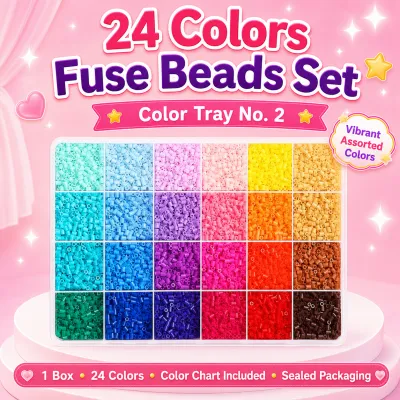
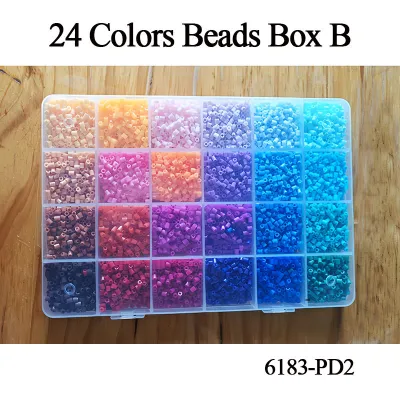
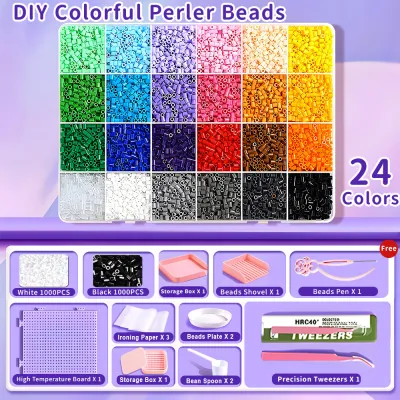
Prices are valid at publication and may change. Please refer to the product page for the latest price.
Mini Beads (Approx. 2.6mm)
Mini beads are designed for advanced crafters, older teens, and adults who want to create highly detailed designs. Because of their tiny 2.6mm diameter, these beads allow for intricate pixel art, delicate jewelry, small keychains, and complex shading that standard beads cannot achieve. However, working with mini beads demands excellent fine motor skills, steady hands, and good eyesight. You will need specialized, ultra-fine metal tweezers to place these beads onto their corresponding pegboards, as using your fingers is virtually impossible for detailed patterns.
Standard/Midi Beads (Approx. 5mm)
Standard or midi beads, measuring approximately 5mm in diameter, are the most popular and widely available size on the market. This size serves as the industry standard, offering a perfect balance between ease of handling and design detail. Midi beads are highly versatile, making them suitable for general 2D crafts, coasters, multi-layered 3D structures, and everyday accessories. They are comfortable to hold with plastic tweezers or bare fingers, making them the go-to choice for school projects, family craft nights, and beginners of almost all ages.
Jumbo/Maxi Beads (Approx. 10mm)
Jumbo or maxi beads measure around 10mm in diameter and are specifically engineered for toddlers and young children. These oversized beads help develop fine motor skills, hand-eye coordination, and color recognition without causing frustration. Because of their large size, they are easy for small hands to grasp and place on pegboards. The resulting designs are thick, chunky, and durable, making them ideal for simple shapes, ornaments, and early childhood developmental play.
Compatibility and Spacing
When purchasing a fuse beads set, it is crucial to understand that pegboards are manufactured with specific peg spacing tailored to one exact bead size. A pegboard designed for 5mm midi beads cannot accommodate 2.6mm mini beads or 10mm jumbo beads. Mixing different bead sizes on a single board is physically impossible because the pegs will either be too close together or too far apart.
Furthermore, mixing different brands of the same nominal size can lead to disappointing results. While two brands may both label their products as “5mm standard beads,” slight manufacturing variances can exist. One brand might produce beads that are 4.8mm, while another produces beads that are 5.1mm. These tiny fractions of a millimeter can cause some beads to sit loosely on the pegs while others are squeezed so tightly that they pop off.
Additionally, different manufacturers use different plastic formulations, such as Low-Density Polyethylene (LDPE) or Ethylene-Vinyl Acetate (EVA). These plastics have different melting points and shrinkage rates. If you mix brands with different melting properties in a single project, some beads may melt completely flat while others remain barely fused, resulting in weak joints, a highly textured, uneven finish, or structural failure. To ensure a uniform melt, always check the product labels for exact millimeter specifications and try to stick to a single brand for any individual project.
Evaluating the Core Components: Beads, Boards, and Accessories
A complete fuse beads set should provide high-quality components that make the crafting process smooth and enjoyable. Examining the specific items included in a kit will help you determine its overall value and usability.

Bead Count and Color Distribution
Do not judge a fuse beads set solely by the total bead count advertised on the packaging. A bucket containing 10,000 mixed beads might seem like an incredible bargain, but sorting through a massive pile of unsorted colors is incredibly tedious and time-consuming.
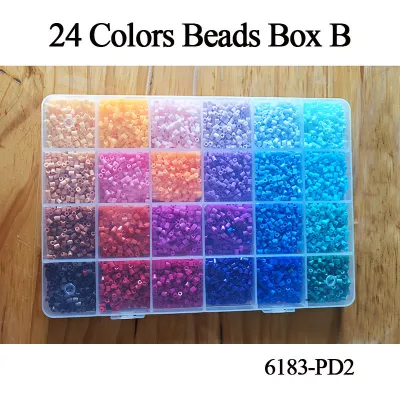
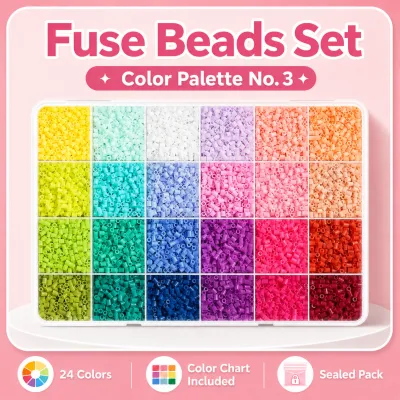
Instead, look for sets that offer sorted compartment trays. More importantly, evaluate the color distribution. A high-quality set should provide a practical balance of colors. You will need a generous supply of neutral base colors—especially black and white—for outlines, highlights, and backgrounds. A set that is overloaded with neon shades or rare pastel colors, while lacking basic primary colors and skin tones, will quickly leave you unable to complete standard patterns. Ensure the kit provides a generous allocation of the colors you plan to use most.
Pegboard Types and Reusability
Pegboards are the foundation of your designs, and their material quality is paramount. Look for rigid, clear pegboards made from heavy-duty, heat-resistant plastic like polystyrene. Clear boards are highly advantageous because they allow you to slide printed pattern templates directly underneath, serving as a visual guide as you place each bead.
Avoid thin, flexible, or single-use plastic templates, which are prone to warping. Warping is a common issue with low-quality pegboards; if a board bends or bows under the heat of the iron, the pegs will no longer sit flat, causing uneven heat transfer and ruined designs. For larger projects, look for square pegboards with interlocking edges. These allow you to connect multiple boards together like puzzle pieces, expanding your workspace to accommodate expansive, large-scale canvases.
Ironing Paper Quality
To fuse the beads together, you must apply a hot household iron over a protective barrier. A quality fuse beads set must include heat-resistant, non-stick ironing paper. The gold standard is specialized craft parchment paper or double-sided silicone-coated baking paper.
Never use standard printer paper, which can stick to the hot plastic and tear, leaving paper fibers permanently embedded in your finished design. Similarly, avoid wax paper; the wax coating will melt under the heat of the iron, transferring a sticky, ruined residue onto both your household iron and your beads, which prevents proper fusing.
Essential Accessories and Storage
An outstanding starter kit includes thoughtful accessories that elevate the crafting experience. Look for sets that include:
- Precision Tweezers: Ergonomic metal tweezers are essential for mini beads, while sturdy plastic tweezers are highly helpful for standard beads.
- Pattern Books: High-resolution, full-color pattern books or step-by-step design cards provide excellent inspiration and clear grids for beginners.
- Divided Storage Cases: Rigid plastic organizer boxes with secure, snap-lock latches keep your colors separated and prevent accidental spills.
Investing in a set with a durable, reusable storage box is far better than choosing a set packed in single-use plastic bags, as it saves you the hassle of buying aftermarket containers.
Matching the Set to Your Specific Crafting Goals
Your choice of a fuse beads set should align with your experience level, the types of projects you want to create, and your long-term crafting budget.
Pixel Art and Detailed 2D Designs
If your primary goal is to recreate retro 8-bit video game sprites, detailed portraits, or intricate coasters, you should prioritize precision and color range. Look for professional-grade sets featuring 2.6mm mini beads. These sets should offer a vast color gamut, including multiple shades of grey, brown, and primary colors to allow for smooth gradients and realistic shading. Ensure the kit includes several large, interlocking square pegboards so you can build expansive canvases without running out of space.
3D Structures and Functional Items
Creating three-dimensional objects—such as pencil holders, jewelry boxes, small toy houses, or decorative figures—requires a specific assembly strategy. Standard flat pegboards are used to create the individual interlocking pieces, but the design cards must be specifically tailored for 3D assembly.
Look for specialized sets that include 3D templates, interlocking hinge designs, or step-by-step structural guides. For functional items that will be handled frequently, you may also want to look for kits that recommend or include compatible, non-toxic craft adhesives to reinforce the joints, as relying solely on melted plastic connections may not provide enough structural integrity for heavy daily use.
Beginners and Young Crafters
For young children or those trying the craft for the very first time, simplicity is key to building confidence. Focus on starter kits that feature standard 5mm or jumbo 10mm beads.
Look for sets that include pre-shaped pegboards in fun, recognizable silhouettes like stars, hearts, animals, or vehicles. These shaped boards do not require complex counting or grid-following; crafters can simply fill in the shapes with their favorite colors. Kits that include color-coded pattern cards that slide directly under a clear pegboard are also highly recommended for frustration-free crafting.
Budgeting and Refill Strategy
When evaluating the cost of a fuse beads set, calculate the cost-per-bead value while keeping local pricing in mind. In the Philippines, a basic starter kit containing a few thousand beads, a couple of pegboards, tweezers, and ironing paper typically ranges from ₱300 to ₱600. Larger, comprehensive professional sets with organized storage cases can range from ₱1,200 to ₱2,500 or more.
To maximize your budget, a smart long-term strategy is to invest in a high-quality, comprehensive starter set first to acquire the essential tools, durable pegboards, and storage compartments. Once you have these reusable tools, transition to buying bulk, color-specific refill packs. Individual bags of 1,000 single-color beads generally cost between ₱80 and ₱150. Buying bulk refills of the specific colors you use most is far more economical than repeatedly purchasing complete starter sets, preventing the unnecessary accumulation of duplicate pegboards and tweezers.
Safety Boundaries, Age Guidelines, and Ironing Requirements
Because fuse bead crafting involves small parts and high heat, establishing clear safety protocols is essential for a safe and successful crafting session.
Age Grading and Choking Hazards
Fuse beads, particularly mini (2.6mm) and standard (5mm) sizes, pose a severe choking hazard to babies, toddlers, and pets. Always check the manufacturer’s age grading on the packaging before purchasing.
Standard sets are typically rated for children aged 6 and older, while mini bead sets are generally recommended for ages 12 to adult due to the dexterity required. Always store un-fused beads in tightly sealed, secure containers, and keep them completely out of reach of children under the age of 3. If you are crafting in a household with toddlers or curious pets, perform a thorough sweep of the floor after every session to catch any stray, dropped beads.
Ironing Safety and Ventilation
Fusing the beads is a high-heat process that must always be performed by an adult or under direct, close adult supervision. To fuse the beads safely and effectively, follow these guidelines:
- Use a Dry Iron: Set your standard household iron to a medium heat setting (typically the wool or silk setting, approximately 130°C to 150°C). Turn off the steam function completely. Water droplets or steam escaping from the iron can warp the plastic pegboards, cause the beads to pop off the pegs, or create uneven, bubbly patches in your design.
- Work on a Flat, Heat-Resistant Surface: Always iron on a stable ironing board or a flat table protected by a heat-resistant silicone mat. Never iron directly on glass, laminate, or plastic surfaces that can crack or warp under high heat.
- Ensure Proper Ventilation: Work in a well-ventilated room, especially when working on large projects that require prolonged ironing. While high-quality beads are made from safe plastics, melting any plastic can release mild odors that may cause discomfort in enclosed, unventilated spaces.
Verifying Material Safety
Do not assume a fuse beads set is safe based solely on its attractive packaging or brand popularity. Before making a purchase, physically inspect the product packaging or search the manufacturer’s official specifications to verify safety credentials.
Look for recognized international safety certifications, such as EN71 (European Toy Safety Standard) or ASTM D-4236 (Standard Practice for Labeling Art Materials for Chronic Health Hazards). These certifications guarantee that the plastic beads, dyes, and accessories are non-toxic, lead-free, and BPA-free. This verification is especially critical if the finished crafts will be handled frequently by young children, used as keychains, or worn directly against the skin as jewelry.
Frequently Asked Questions (FAQ)
Can I mix different brands of fuse beads in one project?
While you can physically place different brands of the same nominal size (such as standard 5mm beads) on the same pegboard, doing so is generally not recommended for high-quality projects. Different brands often use slightly different plastic formulations, which result in different melting temperatures and shrinkage rates. When ironed, some beads may melt quickly and spread out, while others remain rigid, leading to weak joints, structural warping, or an uneven, textured surface. For the best, most uniform results, stick to a single brand for each individual project. If you must mix brands, test a small batch on a scrap pegboard first to see how they melt together before committing to a large design.
What can I use if I run out of specialized ironing paper?
If you run out of the ironing paper included in your set, the only safe and effective household alternative is standard, uncoated baking parchment paper. Ensure the parchment paper is smooth, clean, and free of any printed patterns or wax coatings. Never use wax paper, as the wax will melt off under the iron and ruin both your appliance and your beads. Do not use aluminum foil, because aluminum conducts heat too aggressively, which can instantly scorch, overheat, and flatten your beads while potentially melting your plastic pegboard underneath. Avoid standard printer paper as well, as the paper fibers will fuse directly into the hot plastic, making it impossible to peel away without tearing and ruining the design.
How do I store fuse beads to prevent color fading or moisture damage?
To keep your fuse beads in pristine condition, store them in rigid, airtight plastic containers with divided compartments. Keep these containers in a cool, dry place away from direct sunlight, as prolonged exposure to ultraviolet (UV) rays can cause the vibrant plastic dyes to fade or discolor over time.
In warm, humid tropical environments, humidity control is especially important. High relative humidity can introduce moisture to the surface of the plastic beads. If moist beads are ironed, the trapped water will rapidly turn into steam, creating tiny air bubbles, pits, and structural weaknesses in your fused design. To prevent this, place a few rechargeable silica gel desiccant packets inside your airtight bead storage boxes to absorb any ambient moisture and keep your beads perfectly dry and ready for crafting.
Community discussion
Share your experience or ask a question. Comments are reviewed before publication.