
Choosing the right planner is not merely about picking an attractive cover; it is about finding an external hard drive for your brain. If your planning tool does not align with how you naturally process time, tasks, and ideas, it will likely end up abandoned in a drawer. Finding the ideal format requires matching your daily schedule density, cognitive habits, and organizational needs with a layout designed to support them.
The core decision comes down to how closely you need to manage your hours versus how much you rely on a high-level overview. Daily layouts offer hour-by-hour precision, while weekly spreads balance daily tasks with a broader view of the days ahead. Monthly planners provide a macro-level perspective of deadlines, whereas bullet journals offer blank canvas flexibility. By evaluating your daily routine, you can select an analog system that feels like a natural extension of your mind.
Diagnose Your Planning Style: What Do You Actually Need to Track?
Before browsing stationery aisles, diagnose your planning personality. Assess your typical day: Do you schedule by the hour, or do you simply need a list of tasks to complete by evening? If your days are filled with back-to-back meetings, class rotations, or strict time-blocked deep work sessions, you require a high-density format. If your schedule is self-directed and project-based, a broader weekly overview is more effective.
Products mentioned in this guide

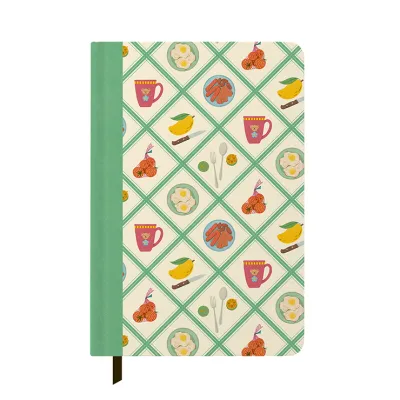
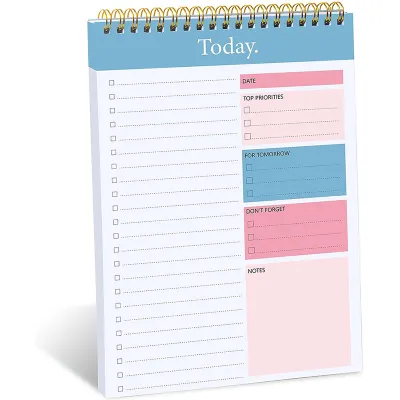
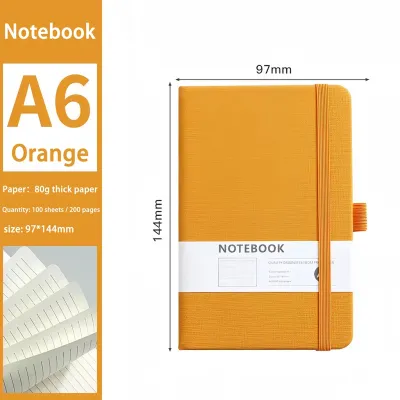
Prices are valid at publication and may change. Please refer to the product page for the latest price.
Consider your memory reliance and primary pain points. Are you overwhelmed by too many blank pages, or do you feel restricted by small, pre-printed boxes? If structure brings comfort, pre-printed daily or weekly layouts are ideal. If rigid lines make you feel confined, an open-format dotted notebook may be the solution.
Perform a digital-versus-analog check. A physical planner must offer distinct, tangible value over a standard phone calendar. Writing by hand improves memory retention and cognitive processing, helping you internalize your schedule more deeply than typing. An analog planner also provides a screen-free focus zone, shielding you from notifications and digital distractions.
To establish your starting point, use this core decision matrix:
- High-Detail Needs: Choose a daily format if you manage hourly appointments, detailed time-blocking, or extensive daily notes.
- Balanced Needs: Choose a weekly format if you need to track deadlines, manage moderate daily tasks, and maintain a clear view of the week's trajectory.
- High-Level Tracking: Choose a monthly format or a customizable bullet journal if you focus on long-term goals or want to design your own tracking systems.
Daily Planners: For Hour-by-Hour Precision and Heavy Task Loads
Daily planners allocate an entire page to a single day, offering unparalleled space for meticulous scheduling. This format is highly beneficial for individuals whose days are packed with time-sensitive commitments. Students managing shifting class schedules and professionals with back-to-back meetings find great value here. If you practice strict time-blocking—allocating specific hours of the day to dedicated tasks—a daily planner is almost mandatory.

Look for structural features that enhance daily productivity. A functional daily page should feature hourly or half-hourly time slots, typically running from early morning to evening. It should also include a dedicated “top three” priority section at the top of the page to keep you focused on critical outcomes, along with separate columns for miscellaneous notes or action items.
However, the daily format has practical drawbacks. Because they dedicate a full page to every day, these planners are physically bulky and heavy. There is also the psychological frustration of wasted pages; on slow weekends or rest days, blank pages can induce guilt. Maintaining a daily planner also requires a high level of daily commitment, as skipping days can make the system feel disconnected.
Choose a daily planner if:
- Your daily schedule is dictated by hourly appointments or strict time-blocking.
- You prefer to keep detailed meeting notes, daily journal entries, and task lists in a single space.
- You do not mind carrying a heavier, desk-sized book as part of your daily carry.
Weekly Planners: For Balancing Daily Tasks with a Big-Picture View
Weekly planners are the most popular compromise, presenting an entire seven-day week across a two-page spread. This layout is highly effective for professionals and students who need to monitor deadlines, milestones, and weekly goals without micromanaging every hour. Seeing the entire week at a glance allows you to pace your energy, distribute your workload evenly, and prepare for upcoming transitions.
The internal layout of a weekly planner dramatically changes how you interact with your schedule. You will generally choose between three main formats:
- Vertical Layouts: These columns divide each day vertically, often featuring light hourly markings. They are ideal for chronological scheduling, time-blocking, and visualizing how your time is distributed throughout the day.
- Horizontal Layouts: These present the days as horizontal blocks stacked across the spread. They are excellent for long-form writing, daily journaling, logging habits, or listing tasks that do not depend on a specific time of day.
- Two-Page Spreads: Often called the "weekly notebook" format, this layout places the days of the week on the left page and a full ruled or grid page on the right. This offers maximum writing space for weekly brainstorming, shopping lists, or project notes.
The primary limitation of the weekly format is space. If you consistently have more than five or six major tasks per day, or if you need to take extensive notes during daily meetings, the small daily boxes can quickly become cramped and illegible.
Before purchasing, try a quick, practical test. Sketch a vertical and a horizontal weekly layout on a sheet of scrap paper and use them to track your tasks for three days. This simple trial will immediately reveal whether you prefer column-based time tracking or row-based task writing.
Monthly Planners: For High-Level Goals, Deadlines, and Broad Tracking
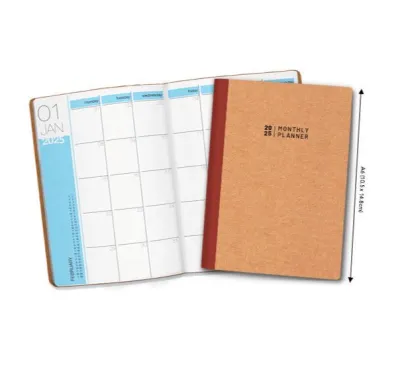
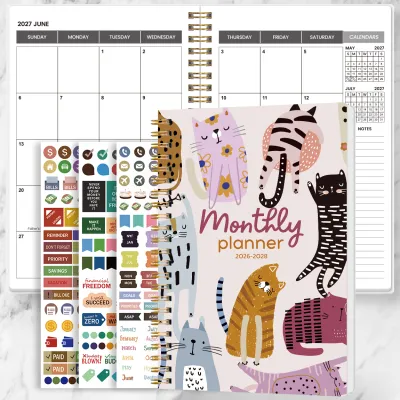
Monthly planners focus entirely on the macro view, dedicating a two-page grid spread to each month of the year. For minimalists or those with highly predictable routines, a standalone monthly planner is often all that is required. This format excels at tracking long-term projects, bill payment cycles, editorial content calendars, travel plans, or maintaining a master schedule of family, school, and work commitments.
Deciding between a standalone monthly planner and a supplementary one depends entirely on your workflow. A simple, ultra-thin monthly calendar is sufficient if your primary goal is to remember key dates and holidays without tracking daily to-do lists. However, if you manage active projects, you will likely need to pair your monthly planner with a digital task manager, a separate pocket notebook for daily brain dumps, or a weekly insert system. Using the monthly view as a master dashboard alongside a more detailed tool ensures you never lose sight of the big picture.
The obvious drawback of a monthly planner is its lack of space. It is virtually impossible to fit hourly meetings, detailed action steps, or meeting notes into a single calendar square. To maximize the utility of this format, look for monthly planners that include several blank note pages, dot-grid spreads, or dedicated goal-setting worksheets between each monthly calendar block. This extra space allows you to draft project outlines or track monthly habits directly alongside your calendar.
Bullet Journals: For Total Customization and Creative Freedom
The Bullet Journal (BuJo) method bypasses pre-printed templates entirely in favor of a blank, dotted, or grid notebook. This system is exceptionally well-suited for creative individuals, those whose scheduling demands change from week to week, and anyone who wants to consolidate their calendar, habit trackers, and personal journaling into a single notebook. The ultimate flexibility of a bullet journal allows you to design exactly what you need on any given day.
However, a realistic assessment of the required time investment is crucial. The highly decorated, watercolor-painted bullet journal spreads popular on social media can make the process seem intimidating. In reality, the core bullet journal system is a minimalist, rapid-logging tool that uses simple symbols to track tasks and events quickly. You do not need artistic skills; a clean, functional layout can be set up in minutes.
To start, you only need a few basic tools: a high-quality dotted or grid notebook, a reliable fine-liner pen, and an understanding of the core BuJo modules. These modules include the Index (to keep track of layouts), the Future Log (for long-term planning), the Monthly Log (a simple list of dates and tasks), and the Daily Log (for rapid-logging tasks as they occur).
Avoid a bullet journal if you lack the time to draw layouts or feel stressed by blank pages. If the sight of a blank page causes analysis paralysis, a pre-printed planner is a much safer and more supportive choice for your productivity.
Finalizing Your Choice: Paper, Size, and Binding Considerations
Once you have determined the ideal layout format, you must evaluate the physical specifications of the planner to ensure it fits your daily environment and writing instruments.
First, select the physical size based on your portability needs and workspace:
- A5 (148mm x 210mm): The industry standard. It provides ample writing space while fitting easily into most backpacks and bags.
- B5 (176mm x 250mm): A larger, desk-friendly size. This is ideal for those who leave their planners open on their desks all day.
- Pocket / A6 (105mm x 148mm or smaller): Designed for maximum portability, perfect for quick on-the-go logging.
Next, check paper quality and weight, measured in GSM (grams per square meter). Standard paper is typically 70 to 80 GSM, which is prone to ink bleed-through and ghosting. If you use gel pens, rollerballs, or fountain pens, look for paper that is 100 GSM or higher. In humid tropical climates like the Philippines, paper naturally absorbs ambient moisture over time. This moisture absorption can cause low-quality paper to feather or bleed easily; choosing a premium, higher-GSM paper ensures a smooth writing experience. Perform a small trial on an inconspicuous back page before writing extensively.
The binding style of your planner also dictates how comfortably you can write:
- Lay-Flat / Thread-Bound: Opens completely flat, allowing you to write comfortably across the center gutter.
- Spiral / Wire-O: Allows you to fold the planner back on itself to save desk space, though the coil can sometimes obstruct your hand.
- Disc-Bound: Uses individual discs so you can pull out, rearrange, or add custom pages and refills.
Finally, check the temporal alignment. Ensure you purchase either a calendar-year planner (January to December) or an academic-year planner, depending on your cycle. If buying imported planners, remember they will not feature local public holidays, so you must write in national holidays manually to avoid scheduling conflicts.
Frequently Asked Questions (FAQ)
Can I use a weekly planner if I have a very busy schedule?
Yes, you can use a weekly planner with a busy schedule by using strategic space-saving techniques. Instead of writing every minor task inside the daily weekly box, use a separate pocket notebook or digital app for raw daily brain dumps, reserving your weekly planner for major deadlines and key appointments. You can also use small sticky notes for temporary tasks, placing them over the weekly spread and discarding them once complete. Alternatively, choose a weekly layout that features a dedicated notes column or a blank page on the right side of the spread to handle overflow writing.
How do I stop abandoning my planner after a few weeks?
To maintain a planning habit, reduce friction by keeping your planner physically open on your desk where you can see it. Establish a low-barrier routine, such as spending 10 minutes every Sunday mapping out the upcoming week and 5 minutes each morning reviewing daily priorities. Most importantly, practice self-compassion: if you miss a few days, do not view it as a failure or try to backfill the blank space. Simply turn to the current date and resume planning.
Is a digital calendar better than a physical planner?
Neither tool is universally superior; they excel at different tasks. Digital calendars are unmatched for automated reminders, recurring events, and shared scheduling. Physical planners are superior for deep focus, memory retention, reducing screen fatigue, and creative brainstorming. Many successful planners utilize a hybrid approach: using a digital calendar for real-time alerts and appointments, while mapping out daily execution, goals, and habits in a physical paper planner.
Community discussion
Share your experience or ask a question. Comments are reviewed before publication.