
Finding the right planner is about matching a paper system to how your brain processes time and tasks. The ideal format depends on your daily schedule density, your need for structural guidance, and your writing habits. If your days are packed with hourly appointments, a daily planner keeps you on track. If you need to balance multiple projects across a week, a weekly planner offers the perfect bird’s-eye view. For those who want complete creative freedom and custom tracking, a bullet journal or dotted notebook is unmatched. The key to a sustainable planning habit is selecting a layout that accommodates your lowest-energy days, rather than an idealized version of your most productive self.
Assess Your Planning Habits and Daily Routine
Before investing in a new planner, diagnose your current organizational struggles. Many people buy a planner hoping it will completely transform their habits, only to abandon it when the layout conflicts with their lifestyle. Ask yourself what consistently goes wrong in your current routine. Are you missing deadlines, forgetting appointments, or feeling overwhelmed by daily tasks? If your main issue is forgetting scheduled commitments, you need a layout that prioritizes time and dates. If your struggle is managing long-term projects or tracking habits, you need a system with dedicated space for goals and reviews.
Next, evaluate the density of your typical schedule. A high-meeting, rigid workday requires a very different planning approach than a flexible, project-based week. If your day is carved into specific time slots, a granular daily layout will help you time-block your hours effectively. On the other hand, if your work revolves around self-paced tasks with weekly deadlines, a daily page can feel restrictive and unnecessarily empty. Forcing a low-density schedule into a highly structured daily planner often leads to empty pages, which can discourage you from continuing.
Products mentioned in this guide
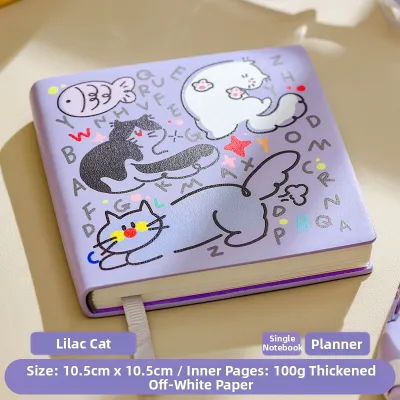
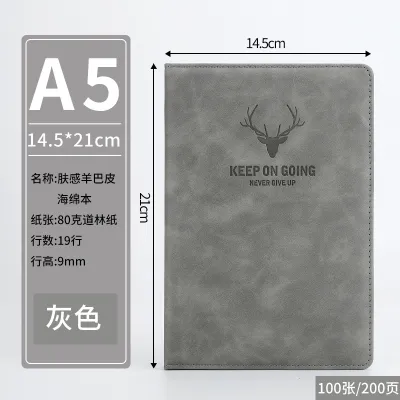
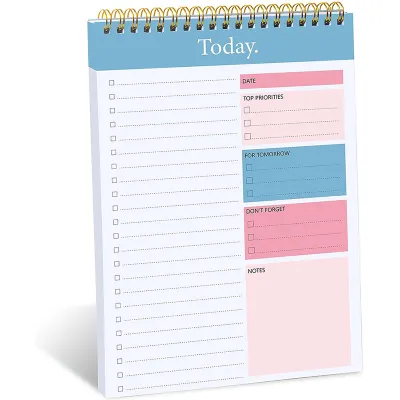
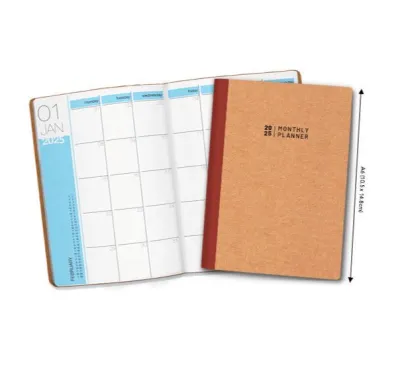
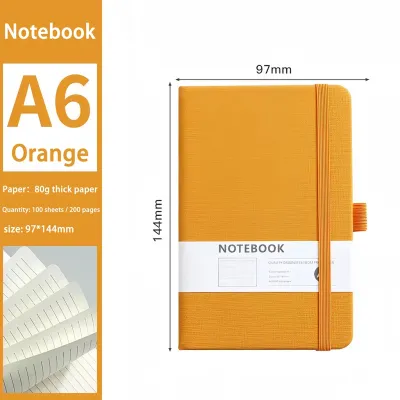
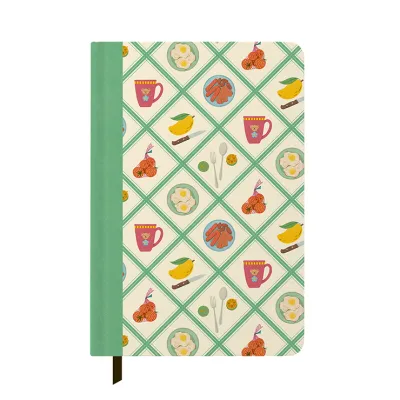
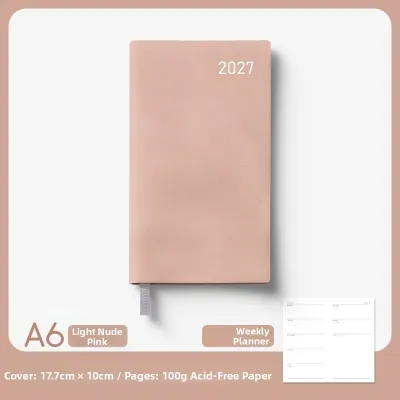
Prices are valid at publication and may change. Please refer to the product page for the latest price.
Finally, factor in your daily environment and lifestyle constraints. In the Philippines, high humidity levels can affect paper absorption and ink drying times, while a daily commute through heavy traffic or on public transit means every gram in your bag counts. If your planner travels with you to the office, school, or a local café, a heavy leather-bound daily planner might become a physical burden. Conversely, if your planner stays permanently on your desk, you can prioritize a larger, more substantial format without worrying about portability.
Match Your Routine to the Right Planner Format
Once you understand your habits and environmental constraints, you can match them to the specific benefits and trade-offs of the three primary planner formats.

Daily Planners for Detailed Scheduling
Daily planners dedicate an entire page to a single day, making them the ultimate tool for granular time management. This format is ideal for professionals, students, or freelancers who manage complex, packed schedules with multiple time-sensitive commitments. If you practice time-blocking—assigning every hour of your day to a specific task—the hourly intervals printed on a daily page provide the exact structure you need to visualize your day.
Beyond scheduling, daily layouts offer abundant space for auxiliary lists. You can easily fit your primary to-do list, notes from a sudden phone call, and dedicated trackers for meals, water intake, or daily gratitude on a single page. This eliminates the need to carry separate notebooks for different aspects of your life, keeping all daily information centralized.
However, the daily format comes with distinct trade-offs. Because they allocate a page to every day, these planners are physically bulkier and heavier than other styles, which can be a drawback if you are constantly on the move. They also require a high level of daily commitment. If you have quiet days with few tasks, you may find yourself staring at intimidating blank spaces, which can make you feel unproductive even when you are on track.
Weekly and Monthly Planners for Big-Picture Organization
Weekly planners display an entire week across a two-page spread, offering a balanced view of your upcoming days. This format is highly favored by individuals who need to manage overlapping deadlines, coordinate family schedules, or plan projects that span several days. Seeing Monday through Sunday at a single glance allows you to distribute your workload evenly and avoid overcommitting yourself on any single day.
One of the greatest advantages of a weekly layout is its inherent flexibility. If a task does not get completed on Tuesday, you can easily see where to shift it later in the week without feeling like you have failed. This format accommodates the natural ebb and flow of a busy week, making it far more forgiving than a daily planner. Weekly planners are also significantly slimmer and lighter, making them excellent companions for daily commutes.
Monthly planners, which are often integrated into weekly systems or used as standalone booklets, provide the ultimate high-level overview. They are perfect for tracking recurring bills, major project deadlines, travel dates, and long-term goals. While they lack the space for daily task lists, they are invaluable for keeping your long-term roadmap visible, ensuring you do not get so lost in daily chores that you forget your broader objectives.
Bullet Journals and Dot Grid Planners for Customization
The bullet journal system, typically built inside a dot grid notebook, offers complete freedom from pre-printed structures. This approach is perfect for creative thinkers, visual planners, and individuals whose organizational needs change from week to week. Instead of conforming to a pre-determined template, you create your own daily, weekly, or monthly spreads using a simple system of symbols, bullet points, and hand-drawn grids.
The primary benefit of a dot grid planner is its absolute adaptability. If you have a chaotic week that requires three pages of detailed planning, you can use them. If the following week is quiet and only requires a small list, you do not waste any paper. This format also easily accommodates specialized trackers for habits, moods, reading lists, and financial budgets alongside your standard calendar pages.
The trade-off for this infinite flexibility is the time and effort required to maintain it. Setting up your layouts from scratch requires a consistent time investment, which can feel like an extra chore if you are already busy. There is also a learning curve to mastering the system, and you will need to carry a few basic stationery accessories, such as a reliable pen, a small ruler, and perhaps some stencils or highlighters, to keep your layouts organized and legible.
Key Physical Specs to Check Before You Buy
After identifying your ideal layout, you must evaluate the physical specifications of the planner to ensure it can withstand a full year of daily use.
Paper quality and weight: The weight of the paper, measured in grams per square meter (GSM), is the most critical factor for a pleasant writing experience. For standard ballpoint pens, a paper weight of 70 to 80 GSM is usually sufficient. However, if you prefer using gel pens, fountain pens, highlighters, or brush pens, you should look for a planner with at least 100 to 120 GSM paper. High-quality, thicker paper prevents ink from bleeding through to the other side of the page or “ghosting” (where the shadow of the writing is visible on the reverse side). In the humid climate of the Philippines, paper can absorb ambient moisture, making it softer and more prone to ink feathering; choosing a higher GSM paper helps mitigate this issue.
Binding types: The binding determines how easily your planner opens and whether it can lie completely flat on your desk. Spiral and wire-o bindings allow the planner to open 360 degrees, which is incredibly convenient for writing on small desks or while holding the planner on your lap. However, metal coils can sometimes snag on clothing or get bent inside a packed bag. Thread-sewn or case-bound planners offer a more traditional, book-like feel and are highly durable, but you must verify that they are designed to “lay flat” when opened so you do not have to fight the spine while writing near the center margins.
Cover materials: Your choice of cover material should align with where and how you plan to use your notebook. Hardcovers, made from thick cardboard, book cloth, or heavy plastic, provide excellent protection for the pages inside and serve as a sturdy writing surface when a desk is unavailable. Softcovers, made from flexible cardstock, leatherette, or thin vinyl, are much lighter and easier to slide into tight bags, though they offer less protection against bent corners. If you commute frequently, look for a water-resistant cover material, such as polyurethane (PU) leather or treated canvas, to protect your schedule from sudden tropical downpours.
Size and portability: Planners come in several standard paper sizes, each suited to different use cases:
- A5 (148 x 210 mm): This is widely considered the ideal size for most users. It offers a generous writing area while remaining compact enough to fit comfortably in most backpacks, tote bags, and medium-sized purses.
- B5 (176 x 250 mm): Slightly larger than A5, this size is perfect for students who want to keep their academic schedules and lecture notes in one place, or for professionals who keep their planners permanently on their office desks.
- A6 or Pocket Size (105 x 148 mm): Extremely portable and lightweight, these are best for quick, on-the-go reminders, shopping lists, and basic scheduling, though they lack the space required for detailed daily tracking.
Signs You Need to Switch Your Current Planner
Even with careful selection, your lifestyle or workload may change mid-year, making your current planning system feel more like a burden than a help. Recognizing the signs of a mismatch allows you to pivot to a better system before you abandon planning altogether.
One clear signal of a mismatch is a consistent pattern of empty pages. If you find yourself skipping days or weeks because you do not have enough tasks to fill the pre-printed spaces, the layout is likely too detailed for your current lifestyle. This empty space can trigger feelings of guilt or anxiety, which discourages you from opening the book. Conversely, if you are constantly running out of space, squeezing notes into the margins, or using sticky notes to expand your pages, your current layout is too restrictive for your daily task volume.
If you experience these pain points, do not hesitate to transition to a different format. If your schedule has become less rigid, moving from a daily planner to a weekly layout can instantly relieve the pressure of empty pages. If you find yourself needing more space for creative brainstorming and project mapping, transitioning your system into a dotted notebook can give you the breathing room you need.
To practice sustainability and avoid wasting money on a brand-new planner mid-year, consider repurposing your current book before archiving it. If you have a daily planner with unused pages, you can use those blank sheets for brain dumps, meeting notes, travel planning, or creative sketching. If you are using a weekly planner, you can cover unused weekly spreads with blank paper or decorative stickers to turn them into journal entries or project trackers. This approach keeps your stationery functional, saves you from spending an extra ₱500 to ₱1,500 on a new notebook, and helps you transition smoothly to your next system.
Frequently Asked Questions (FAQ)
Can I use a regular notebook as a planner?
Yes, you can easily transform a regular notebook into a highly functional planner. Dotted or grid notebooks are particularly popular for this because the subtle patterns help you draw straight lines and construct calendars without the rigidity of pre-printed pages. The main advantage of using a standard notebook is the complete freedom to design layouts that match your exact needs, and it is often a highly cost-effective option. The trade-off is the time and effort required to manually write out dates, months, and weekly structures, which can become tedious if you prefer a ready-to-use system.
What is the best planner size for students?
For most students, the A5 size strikes the perfect balance between portability and writing space. It fits easily onto small lecture hall desks and slides into a backpack without adding unnecessary weight during daily campus commutes. However, if you have large handwriting or prefer to integrate your daily schedule with comprehensive lecture notes, assignment outlines, and project drafts, a larger B5 planner may be more suitable. B5 provides the extra horizontal space needed to organize complex academic schedules without feeling cramped.
How do I stop abandoning my planner halfway through the year?
The most effective way to maintain a planning habit is to lower your expectations and choose a layout that fits your lowest-energy days. Many people abandon their planners because they set overly ambitious goals, attempting to color-code every hour and fill every page with flawless handwriting. When life gets busy and they miss a few days, the resulting empty space feels like a failure, leading them to stop using the planner entirely. To build a lasting habit, accept that missed days are normal, keep your layouts simple, and focus on utility over perfection. If you skip a week, simply turn the page and start fresh without guilt.
Community discussion
Share your experience or ask a question. Comments are reviewed before publication.