
Sourcing authentic canadian cotton per kilo in the Philippines requires navigating a mix of traditional wholesale markets, online platforms, and direct textile importers. Buying this versatile fabric by weight is a highly cost-effective strategy for embroidery enthusiasts, local craft businesses, and sewing guilds alike. However, because the term “Canadian cotton” is often used loosely in the local market to describe various poly-cotton blends, knowing how to verify the material’s quality and where to secure genuine stock is vital for the success of your needlework projects.
Embroidery demands a stable, reliable canvas. Unlike garment construction where drape is the primary concern, needlework requires a fabric that can withstand the constant tension of a hoop and the repetitive piercing of needles and heavy threads. Selecting the wrong grade of fabric can lead to puckered stitches, distorted designs, and ruined hours of meticulous handiwork. This comprehensive guide will help you identify genuine Canadian cotton, locate the best local and online suppliers, and protect your bulk fabric investment from the challenging tropical climate of the Philippines.
Why Canadian Cotton Per Kilo is Ideal for Embroidery
In the Philippine textile market, “Canadian cotton” has become a popular term for a specific class of medium-to-heavyweight fabric known for its soft, brushed finish and balanced plain weave. While originally associated with imported bedding materials, embroidery artists have adopted it as an exceptional utility fabric. The material typically features a thread count ranging from 120 to 200 threads per square inch, providing a dense, uniform surface that supports both delicate surface embroidery and dense, heavy stitching like satin stitch or crewelwork.
Products mentioned in this guide
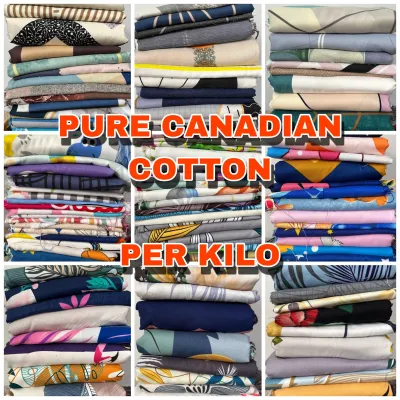
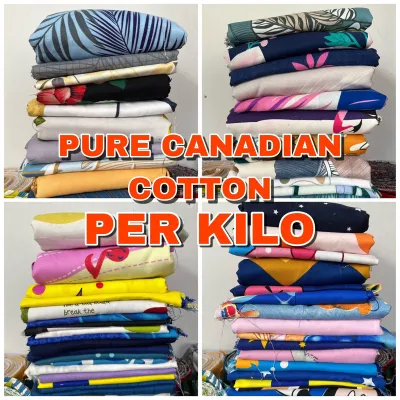
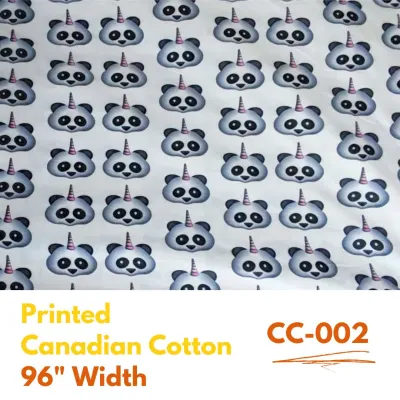
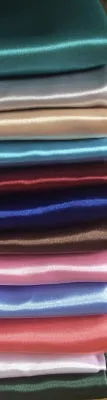
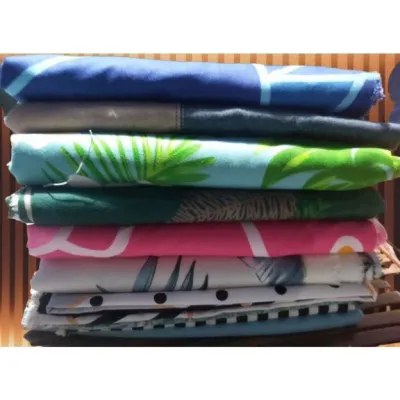
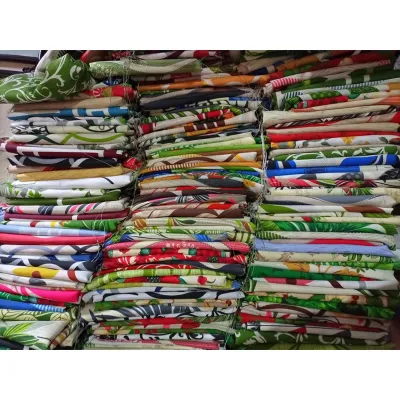
Prices are valid at publication and may change. Please refer to the product page for the latest price.
This structural integrity is what makes Canadian cotton so appealing to embroiderers. When you pull the fabric taut in an embroidery hoop, the balanced warp and weft threads distribute the tension evenly. This prevents the fabric from warping or pulling diagonally, which is a common issue with cheaper, lightweight poly-cotton blends. Furthermore, the slightly brushed surface of the fabric creates a soft texture that holds embroidery floss securely in place, preventing stitches from slipping or losing their definition over time.
Purchasing canadian cotton per kilo offers a massive economic advantage over buying fabric by the yard or meter. One kilogram of medium-weight Canadian cotton (with a standard width of 90 to 96 inches) typically yields approximately 2.5 to 3 meters of fabric. For high-volume creators, school home economics classes, or small businesses producing hand-embroidered tote bags, pillowcases, and table runners, buying by weight can reduce raw material costs by up to 30% to 40%. This makes bulk purchasing the logical choice for anyone looking to scale their production or manage a tight crafting budget.
The compatibility of Canadian cotton with various embroidery needles and threads is another major benefit. The weave is open enough to allow standard crewel needles (sizes 5 to 9) and multi-strand cotton floss to glide through smoothly, yet tight enough to prevent the needle from leaving visible, permanent holes. Whether you are practicing basic stem stitches or executing complex stumpwork, this fabric provides a forgiving, durable foundation that accommodates mistakes and unpicked stitches without fraying or tearing.
How to Verify Authenticity and Quality Before Buying
The popularity of Canadian cotton in the Philippines has unfortunately led to an influx of cheap synthetic counterfeits. Many low-cost sellers offer 100% polyester fabrics mislabeled as premium Canadian cotton. These synthetic fabrics are highly unsuitable for embroidery; they are slippery, prone to static, melt easily under a hot iron, and stretch unevenly under hoop tension. To protect your investment, you must know how to perform basic, observable quality checks before finalizing a bulk purchase.

Start with a tactile and visual inspection. Authentic Canadian cotton has a distinct, soft, matte finish with a slightly brushed feel. When you run your fingers across the surface, it should feel warm and natural, not slick, cold, or plasticky. Hold the fabric up to a bright light source to examine the weave. The threads should be uniform in thickness, with no large gaps, knots, or thin patches. A high-quality weave ensures that your embroidery needles will pierce the fabric consistently without hitting tough snags or falling into loose gaps.
If you are purchasing in bulk from a physical store or have requested a sample swatch from an online supplier, perform a simple burn test on a small, loose thread from the raw edge. Cotton is a natural plant fiber; when exposed to a flame, it should burn steadily, smell like burning paper, and leave behind a fine, crumbly gray ash. If the thread melts, shrinks away from the flame, produces black smoke, or leaves a hard, plastic bead, the fabric contains a high concentration of polyester or other synthetic fibers.
Another critical check for embroidery fabric is the colorfastness test, also known as checking for dye bleeding. Moisten a small patch of white cotton cloth with water and rub it vigorously against a colored section of the Canadian cotton. If any dye transfers to the white cloth, the fabric is unstable. Embroidering on fabric with unstable dyes is highly risky, as the colors can bleed into your expensive embroidery threads the first time you wash or block your finished piece.
Finally, test the fabric’s structural stability under tension. Secure a small piece of the fabric in an embroidery hoop and tighten the screw. Tap the center of the fabric; it should sound tight like a drum. Observe the edges near the hoop; if the fabric shows diagonal warping, excessive stretching, or immediate fraying at the cut edges, the weave is too loose for detailed needlework. Be wary of red flags such as unusually low prices (such as bundles sold far below ₱150 per kilo), chemical odors, or inconsistent dye lots within the same bulk package.
Recommended Sourcing Channels in the Philippines
Finding a reliable supplier for bulk Canadian cotton involves choosing the right sourcing channel based on your location, budget, and quality requirements. The Philippine market offers three primary avenues for purchasing fabric by weight, each catering to different types of buyers.
Online Marketplaces and Specialty E-Stores
For many crafters outside of Metro Manila, online marketplaces and specialized e-commerce platforms offer the most convenient way to purchase canadian cotton per kilo. Many established fabric wholesalers from textile hubs like Bulacan and Rizal operate digital storefronts, allowing you to browse hundreds of designs and solid colors from the comfort of your home. This channel is excellent for sourcing specific patterns or smaller bulk quantities without the need to travel.
When shopping online, navigating the platform safely is crucial. Always filter for sellers with high ratings (4.8 stars and above) and look for “Preferred” or “Mall” badges which indicate verified business operations. Do not rely solely on the seller’s product descriptions; instead, scroll down to the customer review section. Look for reviews that contain photographic or video evidence uploaded by local buyers. These real-world images will give you a much better idea of the fabric’s actual thickness, texture, and color accuracy than polished stock photos.
Before checking out your cart, send a direct message to the seller to clarify the specifications of the fabric. Ask for the exact width (usually 90 or 96 inches), the estimated grams per square meter (GSM), and whether the fabric will be delivered as a single, continuous cut or as pre-cut scraps. Because fabric bundles are heavy, confirm the shipping fees beforehand, as volumetric weight calculations can sometimes result in unexpectedly high delivery charges. Avoid unverified sellers on social media who demand direct bank transfers without secure payment gateways or clear return policies.
Local Fabric Districts and Wholesale Hubs
If you prefer a hands-on shopping experience and want to secure the lowest possible prices, visiting local fabric districts and physical wholesale hubs is unmatched. In Metro Manila, Divisoria remains the undisputed capital of textile sourcing. Streets like Ylaya and Tabora, along with the Tutuban Center, are packed with multi-generational fabric stalls offering massive rolls of Canadian cotton sold by the kilo or by the bolt. Here, you can physically feel the weight of the fabric, inspect the print quality, and negotiate discounts for larger orders.
Outside of Manila, the Taytay Fabric Market in Rizal is another massive hub, famous for its garment factories and wholesale fabric warehouses. Many warehouses in Taytay specialize in “kilo sale” fabrics, where you can dig through bundles of high-quality imported cotton remnants and overstocks. For those based in northern Metro Manila, the Kamuning Market in Quezon City offers a more organized, less crowded alternative with dedicated textile sections where custom cuts and wholesale weight purchases are readily available.
When planning a trip to these bustling markets, preparation is key. Bring a small, portable luggage scale to verify the weight of the fabric bundles before finalizing your purchase, as commercial scales in crowded stalls can sometimes be uncalibrated. Carry a reference swatch of your preferred fabric thickness and a list of the exact dimensions you need. Wear comfortable clothing, shop early in the morning to beat the heat and crowds, and always carry cash, as many traditional wholesale stalls do not accept digital payments or credit cards.
Direct Importers and Craft Supply Distributors
For professional embroiderers, boutique businesses, and craft guilds that require consistent, high-grade materials, sourcing directly from specialized textile importers and craft supply distributors is the ideal choice. These distributors focus exclusively on importing high-quality fabrics from textile mills in Taiwan, China, and Pakistan. They maintain strict quality control standards, ensuring that the fabric you receive is free from weaving defects, oil stains, and uneven dye lots.
Locating these specialized distributors usually requires a bit of networking. You can find them by joining local embroidery guilds, Philippine crafting communities, or specialized hobbyist forums online. Many of these importers do not operate retail storefronts; instead, they run warehouse operations in industrial zones and handle orders through direct business-to-business (B2B) inquiries, email, or scheduled warehouse visits.
While direct importers typically enforce higher minimum order quantities (MOQs)—often requiring you to purchase a minimum of 10 to 20 kilograms per color—the benefits are substantial. They provide official receipts, guaranteed dye-lot consistency across large orders, and detailed technical specifications (such as exact cotton-to-polyester ratios and GSM ratings). This level of consistency is invaluable if you are producing commercial lines of embroidered home decor where product uniformity is essential.
Comparing Sourcing Options for Bulk Purchases
Choosing the right sourcing channel involves balancing convenience, cost, and quality assurance. To help you make an informed decision, the table below compares the three primary sourcing channels in the Philippines across key buying dimensions.
| Sourcing Channel | Authenticity Guarantee | Price Flexibility per Kilo | Minimum Order Quantity | Physical Inspection | Delivery Convenience |
|---|---|---|---|---|---|
| Online Marketplaces | Moderate (Depends on seller ratings & reviews) | Low to Moderate (Fixed prices with occasional vouchers) | Very Low (Often starting at 1 kilo) | No (Relies on photos and sample swatches) | High (Door-to-door delivery nationwide) |
| Local Fabric Districts | Moderate to High (Requires manual verification) | High (Highly negotiable, especially for bulk cash purchases) | Low to Moderate (Usually sold by the bundle or roll) | Yes (Full tactile and visual inspection) | Low (Requires self-transport or booking third-party couriers) |
| Specialty Distributors | High (Direct mill sourcing and documentation) | Moderate (Volume discounts available for commercial orders) | High (Usually requires a minimum weight per color) | Yes (By appointment or through physical swatches) | Moderate (Arranged shipping or scheduled warehouse pickup) |
Each channel presents distinct trade-offs. Online marketplaces offer unmatched convenience, making them ideal for hobbyists who cannot travel or only need a few kilos of fabric. However, you sacrifice the ability to inspect the fabric before it arrives at your doorstep. Local fabric districts offer the lowest prices and immediate physical verification, but the shopping process requires significant physical effort, travel time, and logistics planning. Specialty distributors provide the highest quality guarantees and professional support, making them the best choice for businesses, though the higher minimum order requirements can be a barrier for casual crafters.
Tips for Ordering and Storing Bulk Cotton in a Tropical Climate
Buying fabric by the kilo is an excellent way to save money, but it requires careful planning and proper storage. Because cotton is an organic, biodegradable fiber, it is highly sensitive to environmental factors. In the tropical climate of the Philippines, where high humidity, heavy rainfall, and pests are constant challenges, improper storage can quickly ruin your bulk fabric investment.
Calculating Your Fabric Requirements
To avoid over-purchasing or running out of material mid-project, you must accurately calculate your fabric needs. One kilogram of standard 150 GSM Canadian cotton with a width of 90 inches yields approximately 2.9 meters of fabric.
To calculate your project requirements:
- Measure the length and width of your embroidery design.
- Add at least 3 to 4 inches of margin on all sides to allow for hooping, framing, and seam allowances.
- Calculate the total square meterage of your project cuts.
- Convert this area into weight based on the fabric's GSM rating, adding a 15% safety margin for cutting errors and test stitches.
Protecting Fabric from Humidity and Mold
The high relative humidity in the Philippines—frequently exceeding 80% during the wet monsoon season—is the primary enemy of stored cotton. When cotton fibers absorb moisture from the air, they become breeding grounds for mold and mildew. This leads to unsightly black spots, musty odors, and weakened fibers that tear easily under needle tension.
To prevent mold growth, never store your fabric bundles directly on concrete floors or against exterior walls, as moisture can easily seep through these surfaces. Keep your storage bins elevated on wooden pallets or metal shelving units.
Utilizing Airtight Storage and Desiccants
The most effective way to protect bulk cotton is to store it in heavy-duty, airtight plastic storage containers with secure, latching lids. Before placing the fabric inside, ensure it is completely dry.
Add several large packets of silica gel desiccants to each bin to absorb any residual moisture trapped inside. For long-term storage of white or light-colored fabrics, consider using vacuum-seal storage bags. These bags remove all air and moisture, providing an impenetrable barrier against environmental damage.
Pest Control and Inventory Management
Tropical pests such as silverfish, termites, and cockroaches are attracted to the starch and natural fibers in cotton. These pests can chew small holes through folded fabric, rendering large sheets of cotton useless for embroidery.
Keep your storage area clean, well-ventilated, and treated with pet-safe pest deterrents. Avoid using mothballs directly on the fabric, as the strong chemical odor can be incredibly difficult to wash out of cotton fibers; instead, use natural cedar blocks or dried lavender sachets placed outside the airtight containers.
Organize your bulk fabric inventory systematically. Label each storage bin with the purchase date, fabric weight, color, and supplier name. Store the bins in a cool, dark room away from direct sunlight. Prolonged exposure to UV rays can cause the exposed edges of folded fabric to fade or discolor, resulting in uneven color blocks when you unfold the fabric for your next embroidery project.
Frequently Asked Questions (FAQ)
Is Canadian cotton suitable for all types of embroidery?
Canadian cotton is highly suitable for surface embroidery, crewelwork, ribbon embroidery, and coarser counted-thread work due to its medium weight, stable weave, and soft texture. It provides an excellent, durable backing that easily supports heavy decorative stitches without sagging.
However, it is not ideal for highly delicate, sheer, or lightweight embroidery techniques, such as shadow work or fine whitework, which require translucent fabrics like linen, lawn, or organdy. Additionally, while its even weave is helpful, it is not a substitute for dedicated Aida cloth or high-count linen when executing precise, high-density cross-stitch patterns.
How do I calculate the exact kilo requirement for my cross-stitch project?
To calculate the weight requirement, first determine the total square meterage of fabric your project requires, including a 3-inch border on all sides for hooping and framing. Once you have the total area in square meters, multiply it by the fabric’s weight rating (GSM). For example, if your project requires 2 square meters of a 150 GSM Canadian cotton, you will need 300 grams of fabric.
Since wholesale suppliers sell by the kilo, you can easily determine what fraction of a kilo to order. Always add a 15% safety margin to your final calculation to account for fabric prep, potential fraying, and test stitching.
What should I do if the delivered cotton feels different from the sample?
If your bulk delivery of Canadian cotton does not match the sample swatch or the seller’s description, document the discrepancy immediately. Take high-resolution photographs and videos of the fabric, focusing on the weave density, any visible sheen (which indicates synthetic fibers), and the actual weight of the bundle on a scale.
Do not cut, wash, or stitch on the fabric, as modifying the material will void your eligibility for a return or refund. Contact the seller immediately through the platform’s official messaging system, present your documented evidence, and request a replacement or refund. If the seller is uncooperative, escalate the issue through the online marketplace’s dispute resolution channel or consult local consumer protection authorities.
Community discussion
Share your experience or ask a question. Comments are reviewed before publication.