
Quick Answer: Matching Your Planning Style to a Layout
Choosing the right planner layout for the 2026-2027 period depends entirely on how your brain processes time, tasks, and goals. If you manage packed hourly schedules, require space for daily journaling, or need to track detailed metrics, a daily spread provides the expansive room you need. For those who want to see their entire week at a glance, balancing moderate daily tasks with overall weekly goals, a weekly spread offers the ideal middle ground. If your primary goal is tracking high-level project milestones, bill payments, and broad deadlines while keeping daily details in a digital app, a monthly spread is the most efficient choice.
Assess Your Daily Routine and Detail Needs
Before purchasing a planner for the upcoming 2026-2027 cycle, take a close look at your daily routine and writing habits. Start by tracking your task volume for a typical week. If you find yourself writing down more than ten distinct tasks, appointments, or time-blocks per day, a compact layout will quickly become cluttered and difficult to read. Conversely, if you only have two or three major events per day, a large daily page may leave you with intimidating blank spaces that discourage consistent use.

Consider your physical writing style and the tools you prefer. Large, expressive handwriting or the use of thick gel pens and highlighters requires more physical space than fine-point pens and tiny print. If you enjoy incorporating habit trackers, mood logs, or daily gratitude lists directly into your planning routine, you will need a layout that accommodates these elements alongside your standard schedule.
Products mentioned in this guide
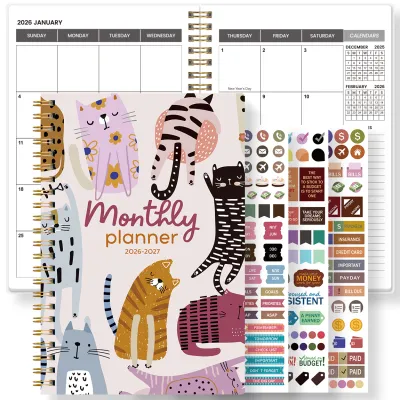
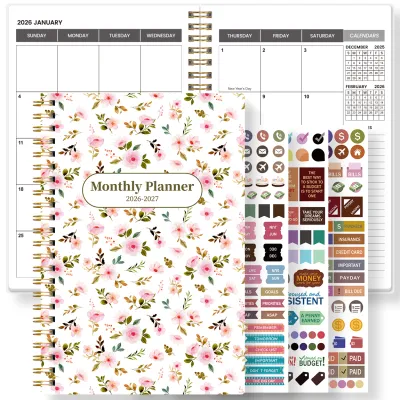
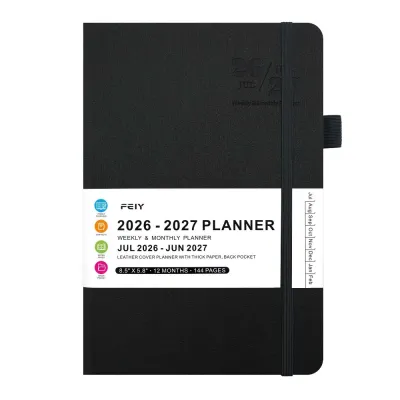
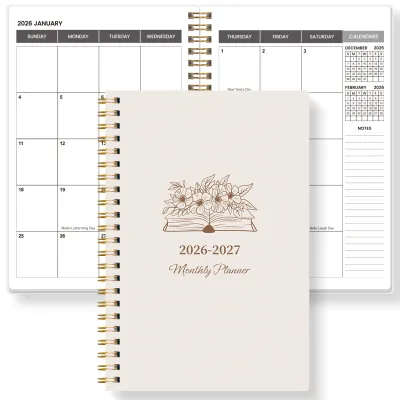
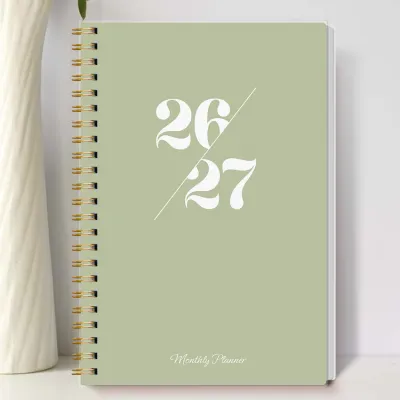
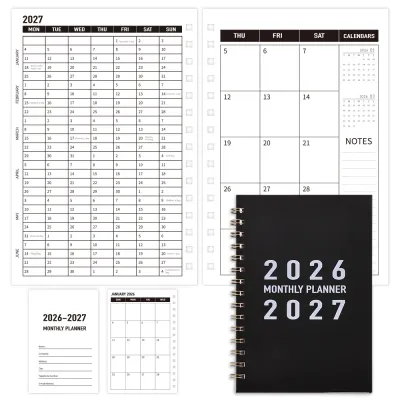
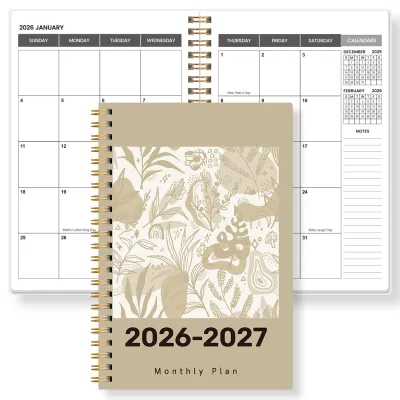
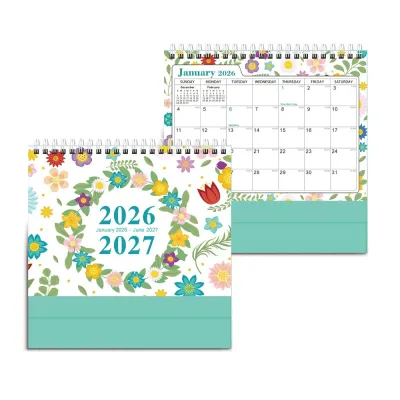
Prices are valid at publication and may change. Please refer to the product page for the latest price.
Finally, clarify your primary organizational objective. Are you looking for strict, minute-by-minute time management to keep your work hours structured? Or do you prefer a flexible list of tasks that you can tackle at your own pace throughout the week? Understanding whether you need a tool for active time-blocking, simple task-listing, or long-form reflection will immediately narrow down your layout options.
Daily Spread: For High-Detail and Hourly Tracking
A daily layout allocates an entire page (and sometimes two) to a single day, making it a highly effective tool for high-density scheduling. This format is suitable for professionals with back-to-back appointments, students managing complex class and study schedules, or anyone practicing strict time-blocking. The generous space allows you to map out your day hour by hour while leaving ample room for side notes, action items, and personal reflections.
However, this level of detail comes with distinct physical trade-offs. Because a daily planner requires over three hundred pages just for the daily spreads, these books are naturally bulkier and heavier. If you regularly commute on public transit or work from different locations, carrying a thick daily planner in your bag can become a physical burden. Additionally, if your schedule slows down or you miss a few days, the empty pages can create a sense of planning guilt or make the planner feel underutilized.
To decide if a daily spread is right for you, perform a quick check of your consistency. Ask yourself if you genuinely need hourly slots or dedicated reflection space on a daily basis. If your routine is highly repetitive or light on daily appointments, the structural overhead of a daily planner might lead to planner fatigue before the year is half over.
Weekly Spread: The Balance of Overview and Action
The weekly spread is a highly popular layout because it allows you to view your entire week across a two-page spread, helping you anticipate upcoming deadlines and balance your workload. When choosing a weekly planner, you will generally encounter two main formats: horizontal and vertical. Horizontal formats divide the pages into horizontal blocks, which are excellent for writing longer task descriptions or short journal entries. Vertical formats arrange the days in columns, which are highly suited for vertical time-blocking and mapping out hourly schedules.
This layout is ideal for managing a standard work or school week where tasks are moderate and predictable. It allows you to see how a delay on Tuesday might impact your deadlines on Friday, making it easier to adjust your plans dynamically. It provides a cohesive narrative of your week without requiring you to flip back and forth between individual daily pages.
The primary trade-off of a weekly layout is the limited space available for detailed notes. You must write concisely, prioritize your tasks carefully, and avoid cluttering the small daily boxes. If you have a habit of writing down every minor detail or enjoy long-form journaling alongside your planning, a standard weekly spread may feel restrictive and force you to seek external notebooks for your thoughts.
Monthly Spread: For Big-Picture Goals and Light Scheduling
A monthly spread presents the entire month across a two-page grid, offering a bird’s-eye view of your schedule. This layout is highly effective for tracking long-term deadlines, project milestones, travel plans, bill payments, and major social events. It allows you to see the shape of your month at a glance, helping you avoid overcommitting yourself during busy periods.
While excellent for high-level planning, a monthly-only layout has significant limitations. The small daily grids do not offer enough space for detailed daily to-do lists, hourly appointments, or comprehensive habit tracking. Attempting to squeeze a full day’s tasks into a single monthly calendar square will quickly result in an illegible mess, especially if you use wider pen tips.
A monthly spread works best when paired with another system. If you already rely heavily on digital calendars or task management apps for your daily workflow, a physical monthly planner can serve as an analog dashboard for your big-picture goals. However, if you prefer to keep all your daily action items on paper, a standalone monthly planner will likely prove insufficient for your needs.
Physical Checks Before You Buy Your 2026-2027 Planner
Once you have identified your preferred layout, you must evaluate the physical characteristics of the planner to ensure it fits your daily life.
Size and Portability: Consider where you will use your planner. An A5 size (approximately 148mm x 210mm) offers a balanced compromise between writing space and portability, fitting easily into most backpacks and work bags. If your planner will remain permanently on your desk, a larger B5 or A4 size provides maximum writing area. For those who plan on the go during busy commutes, a compact A6 or pocket-sized planner is highly portable but requires very neat, small handwriting.
Paper Quality and Ink Compatibility: The tropical climate and high humidity in the Philippines can affect how paper behaves. Humid air can make paper fibers more absorbent, which can increase ink feathering and prolong drying times for gel pens and fountain pens. Look for planners specifying high-quality, high-gsm (grams per square meter) paper—ideally 80gsm to 120gsm—to resist bleed-through and ghosting. Because smoothness and drying speed depend on your specific pen and paper combination, always perform a small test on an inconspicuous back page before committing to your favorite ink.
Binding Type: A planner must lie flat on your desk to allow comfortable writing, especially when you are writing near the center gutter of a weekly or monthly spread. Thread-bound (or Smyth-sewn) planners offer excellent lay-flat capability and durability. Spiral or wire-bound planners also lie flat and allow you to fold the book back on itself to save desk space, though the metal coils can sometimes get in the way of your hand while writing. Ring-bound systems offer the most flexibility, allowing you to add, remove, or rearrange pages as your planning needs change.
Frequently Asked Questions (FAQ)
Can I combine different layouts in one planner?
Yes, many planners on the market are hybrid systems that include multiple layouts. The most common configuration features a monthly overview at the start of each section, followed by weekly or daily pages. When choosing a hybrid planner, pay close attention to the page ratio and overall thickness. Ensure the primary layout you intend to use has the most prominent placement and that the book’s physical weight remains manageable for your daily carry.
What if my schedule changes halfway through the year?
If your routine shifts during the 2026-2027 period, you do not need to discard your planner. You can easily adapt your current layout using stationery accessories. For instance, if you have a weekly planner but suddenly need daily space for a busy project, you can insert sticky notes or loose-leaf paper into your weekly spreads. Alternatively, you can use a modular traveler’s notebook system or undated inserts, which allow you to swap out layouts as your scheduling demands evolve.
Community discussion
Share your experience or ask a question. Comments are reviewed before publication.