
Finding the right planner 2026 layout is a highly personal decision that dictates how effectively you manage your time, tasks, and mental load. The choice between daily, weekly, and monthly formats depends on your daily schedule density, how you process information, and your specific lifestyle needs. If you juggle hourly meetings, a daily layout offers the granular control you need. If you prefer to see your week at a glance to balance work and personal life, a weekly spread is ideal. For those tracking long-term milestones or using digital tools for daily tasks, a monthly grid provides the perfect high-level overview.
Assess Your Schedule Density and Planning Habits
Before purchasing your planner 2026, take a close look at your daily routine and how tasks arrive in your life. Do you have a high volume of time-sensitive appointments, or does your day consist of a few major tasks with flexible deadlines? If you find yourself constantly writing down micro-tasks, reminders, and meeting notes, your schedule density requires a layout with ample writing space. Conversely, if your primary goal is tracking project milestones, exam dates, or family events, a macro-level view will serve you better than blank hourly slots.
Consider your physical environment and mobility as well. In tropical climates where humidity can affect paper and covers, a planner that travels with you in a bag needs to be durable and lightweight. If you commute daily via public transit or move between air-conditioned offices and humid outdoor spaces, a bulky, heavy planner might become a burden. Decide whether your planner will live permanently on your desk as a stationary anchor or travel with you as a portable companion.
Products mentioned in this guide
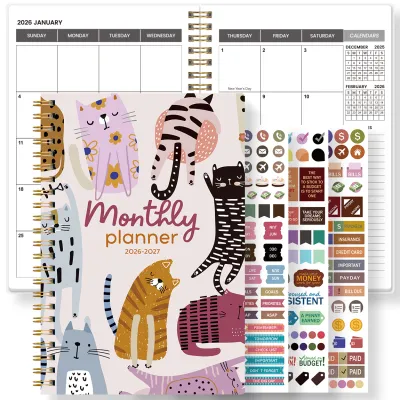
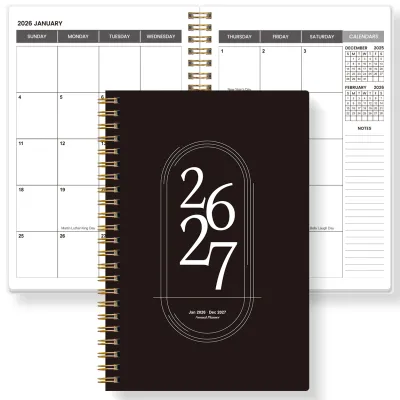
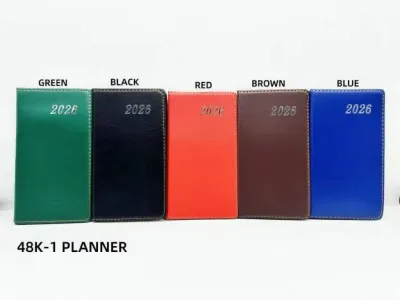
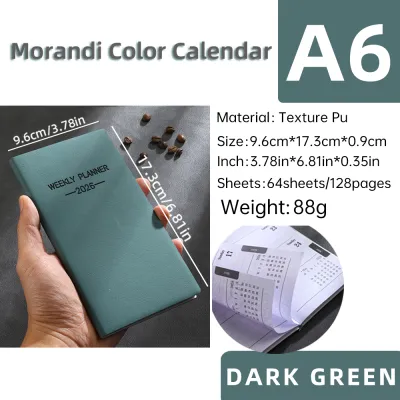

Prices are valid at publication and may change. Please refer to the product page for the latest price.
Daily Planners for Detailed Time-Blocking
Daily planners dedicate an entire page—sometimes two—to a single day, offering unparalleled space for meticulous organization. This layout is designed for high-volume schedulers, project managers, students with packed class schedules, and anyone who practices time-blocking. With hourly or half-hourly increments, you can map out your day from morning to night, leaving dedicated space for meeting notes, gratitude journaling, and detailed action items.

However, this level of detail comes with distinct trade-offs. Daily planners are inherently thicker and heavier, often requiring a larger desk footprint. Carrying a 365-page book in your daily bag can be physically taxing, especially if you prefer compact, lightweight accessories. Furthermore, if your schedule is relatively light, seeing large blocks of empty, unused space can feel discouraging or overwhelming. Choose a daily layout if your day-to-day life demands strict hour-by-hour tracking, extensive written notes, or a structured routine that keeps you grounded.
Weekly Planners for Balanced Task Management
Weekly planners are the most popular compromise, displaying an entire week across a two-page spread. This format allows you to see your weekly flow at a glance, making it easier to balance upcoming deadlines, mid-week appointments, and weekend plans. Weekly layouts generally fall into two categories: vertical columns, which are excellent for time-blocking and chronological scheduling, and horizontal blocks, which favor task-based lists and open-ended journaling.
The primary advantage of a weekly planner is its balance of structure and portability. You can coordinate your week without the physical bulk of a daily book, making it easy to slip into a standard tote or backpack. However, weekly spreads have clear limits. If you have more than five major tasks per day, or if you need to write down detailed meeting minutes and daily reflections, the small daily boxes will quickly overflow. Choose a weekly layout if you need to manage a mix of deadlines and appointments while maintaining a clear view of your weekly trajectory.
Monthly Planners for Big-Picture Goal Tracking
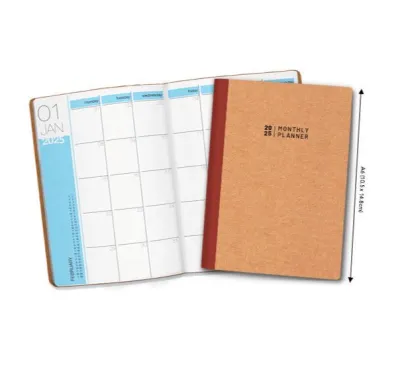
Monthly planners focus entirely on the macro view, featuring a series of two-page monthly grids followed by minimal note pages. This layout is highly effective for long-term project planning, tracking academic semesters, monitoring budget milestones, or keeping a simple habit tracker. Because they omit daily and weekly pages, monthly planners are incredibly slim, lightweight, and highly portable, making them easy to carry anywhere.
This format is particularly suitable for individuals who rely on digital calendars for their daily alerts and hourly schedules but want a physical space to map out big-picture goals. The main limitation is the complete lack of daily writing space. If you need to write out detailed daily to-do lists, track hourly appointments, or keep daily journals, a monthly grid alone will not suffice. Choose a monthly layout if your schedule is highly flexible, your daily tasks are managed digitally, or you simply need a bird’s-eye view of your year.
Quick Comparison: Daily vs. Weekly vs. Monthly Layouts
To help you finalize your decision, compare how each layout performs across key practical dimensions.
| Layout Type | Schedule Density | Portability | Space per Day | Best Use Case | Verify First |
|---|---|---|---|---|---|
| Daily | High (hourly appointments) | Low (heavy, thick book) | Very High (full page or more) | Time-blocking, detailed journaling | Spine durability and desk footprint |
| Weekly | Moderate (mix of tasks & events) | Medium (fits most bags) | Medium (small box or column) | Balancing weekly goals and meetings | Vertical vs. horizontal orientation |
| Monthly | Low (milestones & deadlines) | High (slim, lightweight) | None (grid box only) | High-level tracking, digital hybrid | Grid box size for handwriting style |
Neither may fit if your schedule is highly unpredictable, shifting rapidly between intense project phases and quiet weeks. In these cases, modular systems or undated planners offer the flexibility to scale your planning space up or down as needed.
Verify Physical Specs and Paper Compatibility
Once you have chosen your ideal layout, it is crucial to verify the physical specifications of the planner before making a purchase. Standard sizes like A5 (ideal for desks and medium bags), B6 (a balanced, highly portable option), and Personal size (highly compact) should be measured against your actual bag dimensions and desk space.
Paper quality is another vital consideration, especially when using liquid inks. In humid environments, paper can absorb moisture from the air, which alters how ink behaves. Look for paper with a higher weight, typically measured in grams per square meter (GSM). Paper between 80 GSM and 120 GSM generally offers better resistance to ghosting and bleed-through. If you prefer using fountain pens, gel pens, or heavy markers, verify the paper’s coating and drying speed through a small trial on a back page, as high humidity can prolong drying times and lead to smudging. Finally, consider the binding: spiral and disc-bound planners lay completely flat and allow you to fold the book in half, while stitched bindings offer a classic, durable book feel but may require some breaking in to lie flat.
Frequently Asked Questions (FAQ)
Can I combine different layouts in one planner?
Yes, many planners offer hybrid layouts that include a monthly overview followed by weekly or daily spreads. This design gives you the best of both worlds, allowing you to track long-term deadlines while managing daily tasks in detail. Alternatively, modular systems like disc-bound planners or traveler’s notebooks let you insert different refills, such as a monthly booklet alongside a daily layout.
However, combining multiple layouts increases the overall thickness and weight of your planner. A hybrid daily planner can easily exceed 400 pages, making it difficult to carry comfortably. Additionally, purchasing separate modular inserts can increase your total investment compared to a single pre-bound book, with premium systems ranging from ₱500 to over ₱1,500 depending on the cover material and paper quality.
What if my planning style changes halfway through the year?
If your schedule shifts mid-year, you do not need to discard your planner. You can adapt your current layout using supplemental tools. For example, if you have a weekly planner but suddenly need more daily space, you can add sticky notes or dashboard inserts to expand your writing area.
For those who anticipate major lifestyle changes, starting with an undated planner or a modular refill system is a practical choice. If you end up with unused daily or weekly pages, you can repurpose them for brainstorming, tracking project budgets, or creative journaling, ensuring that no part of your investment goes to waste.
Community discussion
Share your experience or ask a question. Comments are reviewed before publication.