
Choosing the right planner 2027 edition is more than an aesthetic decision; it is a commitment to a daily workflow. The most effective planner layout is one that mirrors your cognitive load, task density, and natural writing habits. If your layout conflicts with how your brain processes time, the planner will likely end up abandoned in a drawer before the first quarter of the year ends.
To find a system that reduces friction rather than creating it, you must first evaluate how you manage your time. By understanding your scheduling habits, choosing a layout that matches your routine, and verifying key physical specifications, you can select a tool that seamlessly integrates into your daily life.
Assess Your Scheduling Habits and Productivity Style
Before browsing cover designs or paper types, you must diagnose how you actually spend your days. Many people purchase a planner based on who they want to be rather than how they currently operate. To establish a realistic baseline, ask yourself a few practical questions about your daily routine.
Products mentioned in this guide
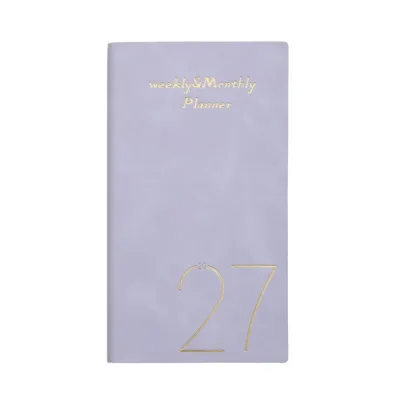
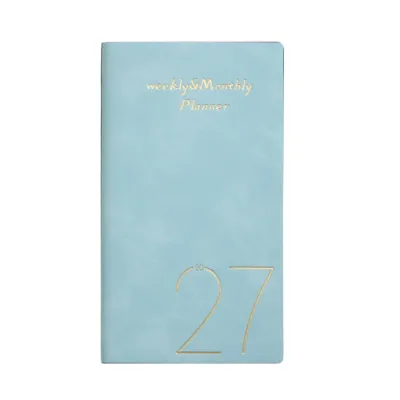
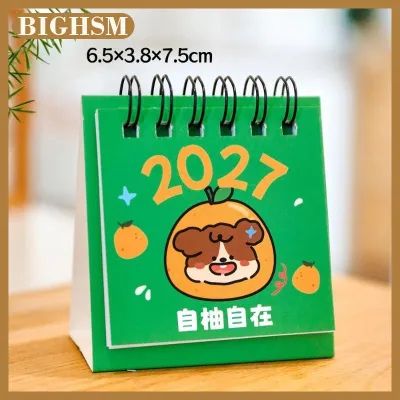
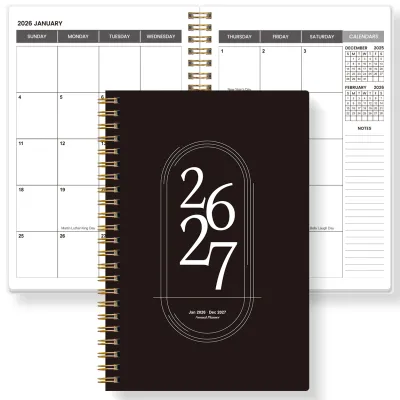
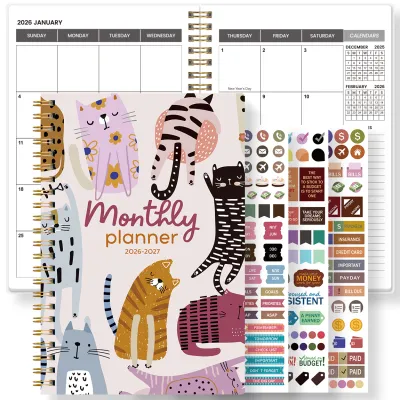
Prices are valid at publication and may change. Please refer to the product page for the latest price.
First, evaluate your daily appointment density. Do you have a calendar packed with back-to-back meetings, classes, or client consultations, or do you have large blocks of unstructured time? If your day is highly scheduled, you need a layout that accommodates specific hourly increments. If your day is self-directed, an open task list is far more valuable than a rigid timeline.
Next, consider your planning style. Do you prefer time-blocking, where every hour of the day is assigned a specific focus, or do you work best from a flexible to-do list? Think about whether you need space for daily reflections, gratitude journaling, and habit tracking, or if you simply need to jot down quick, highly actionable bullet points.
Finally, assess how predictable your schedule is. If you are a student or a corporate professional with a fixed routine, your planning needs will remain consistent week after week. If you are a freelancer, a creative, or a parent managing shifting family schedules, your days may be highly reactive and require a more adaptable format.
Based on your answers, you will generally fit into one of three productivity profiles:
- The Detail-Oriented Scheduler: You thrive on structure, manage high-density daily commitments, and prefer to plan your days down to the hour.
- The Big-Picture Strategist: You focus on weekly or monthly milestones, project deadlines, and high-level goals rather than hourly tasks.
- The Flexible Adapter: You have an unpredictable schedule, prefer list-based tracking, and need a system that allows you to skip days or weeks without wasting paper.
Recognizing these observable signals is the essential first step before committing to a specific layout for the upcoming year.
Match Your Routine to the Ideal 2027 Planner Layout
Once you have identified your productivity profile, you can map your habits to one of the four primary planner layouts. Each format serves a distinct cognitive style, offering unique advantages while requiring specific trade-offs.

Daily Layouts: For High-Density Schedules and Time-Blockers
A daily layout typically allocates one full page—and sometimes two—to a single day. This format is the gold standard for the Detail-Oriented Scheduler who needs to manage a high volume of tasks, meetings, and personal entries simultaneously.
These layouts often feature a printed timeline for hourly time-blocking alongside dedicated spaces for top priorities, general to-do lists, and notes. If you practice daily journaling, track complex health metrics, or manage multiple distinct projects every day, the generous writing space of a daily layout prevents your notes from feeling cramped.
However, this layout comes with a significant physical trade-off. Because a daily planner requires at least 365 pages, these books are inherently thick, heavy, and bulky. If you commute daily in transit or carry your planner in a shoulder bag, the added weight can be a physical burden. Choose a daily layout only if your diagnostic profile shows a consistent, non-negotiable need for granular, hour-by-hour tracking and you plan to keep the book primarily on a stationary desk.
Weekly Layouts: For Balanced Overviews and Daily Action
Weekly layouts present the entire week across a two-page spread. This is the most popular and versatile planner format, serving as an excellent middle ground for those who want to see their week’s trajectory at a glance while retaining space for daily tasks.
Weekly planners generally come in two main configurations, and your choice should depend on how you naturally write:
- Vertical Weekly Layouts: These divide the two-page spread into vertical columns for each day. They are ideal for visual planners who like to time-block, as many vertical layouts include hourly or half-hourly time markers.
- Horizontal Weekly Layouts: These present the days as horizontal blocks stacked down the pages. This format is highly suited for list-makers and narrative writers who prefer writing left-to-right in sentences rather than columns.
The primary benefit of a weekly layout is context. You can easily balance your Tuesday workload against your Thursday deadlines without flipping pages. While the writing space for each individual day is smaller than in a daily planner, it is usually more than sufficient for the average professional or student schedule.
Monthly Layouts: For Big-Picture Thinkers and Light Schedules
Monthly layouts consist of a series of two-page calendar grids, occasionally accompanied by a few pages for notes or goal-setting at the end of each month. This minimalist format is designed specifically for the Big-Picture Strategist.
This layout is ideal if you only need to track macro-level events, such as project milestones, travel dates, exam schedules, billing cycles, or birthdays. It is also an excellent option for those who manage their primary tasks digitally but want a physical, high-level overview of their year on their desk.
Do not choose a monthly layout if you require daily task lists or detailed scheduling. Attempting to squeeze a daily to-do list into a small 3×3 centimeter calendar box will quickly lead to illegible clutter. However, as a secondary planning tool or a lightweight tracker for highly unstructured, low-density schedules, the monthly layout is unmatched in its simplicity and portability.
Undated Layouts: For Flexible Routines and Zero-Pressure Tracking
Undated planners provide the structure of daily, weekly, or monthly templates but leave the date fields blank. You write in the dates manually as you go, which offers complete freedom over when and how you plan.
This format is the perfect match for the Flexible Adapter. If you experience “blank page guilt”—the psychological friction of opening a dated planner and seeing weeks of empty pages from a busy period where you forgot to write—an undated layout eliminates that stress. You can plan intensely for three weeks, take a fortnight off during a holiday, and resume on the very next page without wasting a single sheet of paper.
Undated planners are also highly economical for freelancers whose project volumes fluctuate, or for students who only need to plan during active academic semesters. The primary trade-off is the initial setup time. You must manually write or stamp the dates, which requires a small measure of patience before you can begin organizing your schedule.
Refine Your Selection with Physical Specifications
Once you have selected your ideal layout, you must evaluate the physical attributes of the planner. The physical construction of the book directly dictates how comfortable it is to write in and how well it survives daily wear and tear.
Size and Portability
Matching the physical dimensions of your planner to your daily environment is crucial. Standard paper sizes serve different use cases:
- A5 (148 x 210 mm): This is widely considered the sweet spot for most users. It offers ample writing space for weekly or daily layouts while fitting comfortably into most backpacks, totes, and work bags.
- B6 (125 x 176 mm) and A6 (105 x 148 mm): These compact, highly portable sizes are ideal for those who are always on the move. They are easy to slip into a small bag or even a large pocket, though they require small handwriting and concise bullet points.
- B5 (176 x 250 mm) or A4 (210 x 297 mm): These large formats offer maximum writing real estate. They are perfect for stationary desk work, complex project mapping, or artistic journaling, but they are generally too heavy and large for comfortable daily commuting.
Binding Types
How a planner is bound determines whether it lies flat on your desk and how easy it is to write near the margins:
- Spiral or Wire-O Binding: This binding allows the planner to lay completely flat and fold back on itself 360 degrees. It is incredibly practical for small workspaces or writing on your lap. However, the metal or plastic coils can sometimes snag on clothing or bag linings, and the rings can get in the way of your hand when writing near the center margin.
- Stitched or Thread-Bound (e.g., Smyth-Sewn): This traditional binding is highly durable and allows the book to lay flat when opened, provided the spine is broken in correctly. It offers a clean, professional aesthetic and prevents pages from falling out over time.
- Disc-Bound or Ring-Bound Systems: These binders allow you to insert, remove, and rearrange pages at will. They offer unparalleled customization, though the binding mechanisms are bulky and can make the planner heavier to carry.
Paper Quality and Compatibility
Paper performance depends entirely on the combination of your writing tools and the paper’s technical specifications. Do not assume a planner has high-quality paper based on brand reputation alone; instead, verify the paper weight, which is measured in grams per square meter (GSM).
Standard planners typically use paper ranging from 70 GSM to 80 GSM. This weight is perfectly adequate if you write exclusively with standard ballpoint pens. However, if you prefer wet gel pens, rollerballs, or fountain pens, thin paper will likely suffer from feathering (where the ink spreads along the paper fibers) and bleed-through (where the ink seeps through to the opposite side of the page).
For heavy gel pens or fountain pens, look for planners specifying 100 GSM to 120 GSM paper, or those featuring specialized, highly coated papers designed to resist ink penetration.
Additionally, consider your local environment. In highly humid tropical climates, paper naturally absorbs ambient moisture from the air over time. This absorbed moisture relaxes the paper fibers, making even decent paper more prone to ink feathering and slowing down ink drying times. If you live in a high-humidity area, prioritizing coated paper or slightly higher GSM options is a practical step to keep your entries clean and legible throughout the year.
Test and Finalize Your 2027 Planner Choice
Before investing in a premium 2027 planner, you can easily validate your choice with a low-risk trial. Rather than guessing if a specific layout will work, recreate it on a small scale first.
Take a few sheets of loose paper or a cheap notebook and hand-draw your target layout—whether it is a vertical weekly column, a horizontal block, or a daily time-blocking grid. Force yourself to use this makeshift layout strictly for three to five days. Note where you experience friction. Do you find yourself leaving half the daily page blank? If so, a weekly layout is likely a better fit. Do you find your weekly box overflowing with tasks by Tuesday afternoon? If so, you need the generous space of a daily layout.
When you are ready to make your final decision, follow this clear pathway:
- Diagnose your routine: Identify your schedule density, planning style, and productivity profile.
- Select your layout: Choose between Daily, Weekly, Monthly, or Undated based on your cognitive needs.
- Verify physical specs: Select the size, binding style, and paper weight (GSM) that match your daily carry habits and preferred writing instruments.
- Confirm compatibility: Check the manufacturer's label or official product description to ensure the paper and binding specifications match your expectations.
The best planner for the upcoming year is not the one with the most complex tracking features or the most popular design. The ideal tool is the one that fits naturally into your existing daily routine, reducing organizational friction and helping you focus on what matters most.
Community discussion
Share your experience or ask a question. Comments are reviewed before publication.