
To choose the right A4 mesh folder, you must match the folder’s closure type, material density, and structural reinforcement to your daily environment. Students need heavy-duty zippered closures to survive crowded backpacks, office workers require professional color-coding and semi-transparent visibility for desk efficiency, and commuters need lightweight, travel-friendly designs with moisture workarounds. Selecting the right a4 mesh folder involves balancing these specific functional demands against the unique challenges of your daily routine.
By understanding how different designs handle wear, moisture, and capacity, you can transition seamlessly between lecture halls, corporate boardrooms, and transit terminals. The ideal folder keeps your documents pristine, accessible, and organized without adding unnecessary bulk to your daily carry.
Why Choose an A4 Mesh Folder? Core Benefits for Document Storage
When evaluating filing options, the physical properties of the storage material dictate how well your documents survive daily handling. Traditional folders made of solid PVC, paper, or standard polypropylene (PP) often suffer from structural limitations. Paper folders tear and degrade when exposed to friction, while solid plastic folders can trap static electricity and cling to printed ink, occasionally lifting toner off the page. In contrast, mesh folders—typically woven from durable nylon or polyester fibers—offer a flexible, lightweight alternative that resists tearing while providing structural elasticity. This flexible weave allows the folder to expand slightly to accommodate uneven contents, such as a mix of papers, notebooks, and small stationery accessories, without warping the folder’s overall shape.
Products mentioned in this guide
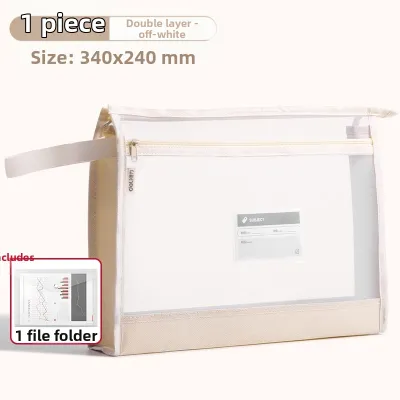
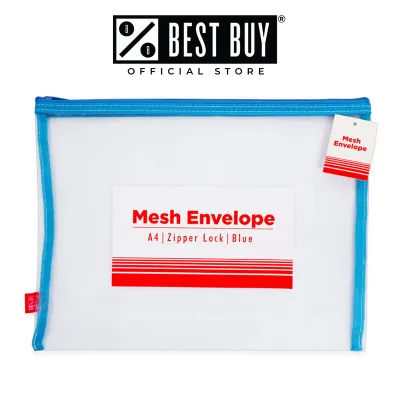
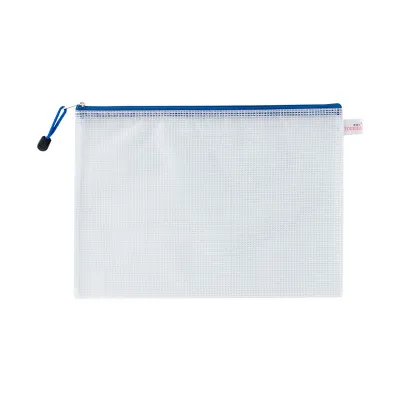
Prices are valid at publication and may change. Please refer to the product page for the latest price.
The semi-transparent nature of the mesh material strikes a practical balance between document security and rapid visual identification. Unlike opaque folders that require you to open every compartment to locate a specific file, mesh allows you to read major document headers, logos, or color-coded cover sheets directly through the material. This visibility saves valuable time during fast-paced transitions between classes or meetings. Furthermore, the lightweight construction of woven synthetic fibers ensures that adding multiple folders to your bag does not significantly increase your carrying load, which is a vital consideration for anyone managing a long daily commute.
In tropical environments like the Philippines, managing ambient moisture is a constant challenge for paper preservation. High relative humidity can cause air to become trapped inside airtight plastic folders, creating a microclimate where moisture accumulates. This trapped dampness often leads to limp, wavy paper, ink bleeding, or even mold growth over extended periods. The open-weave structure of a mesh folder allows for continuous airflow, preventing moisture from becoming sealed inside the compartment. While this breathability does not protect documents from direct liquid spills, it ensures that dry papers remain dry by allowing ambient humidity to escape naturally.
Selecting a folder specifically sized for A4 documents is critical for maintaining professional and academic standards. In the Philippines, A4 (210mm x 297mm) is the standard paper size for university handouts, corporate contracts, official letters, and government forms. Utilizing a folder that is too small forces you to fold or crease important documents, which can look unprofessional or damage official bar codes and signatures. An A4-specific mesh folder provides just enough clearance around the margins to keep your papers perfectly flat, ensuring that every printout remains pristine and ready for presentation.
Student Needs: Durability and Secure Closures for Daily Carry
The academic environment demands stationery that can withstand rigorous, unstructured handling. Students frequently transition between classrooms, libraries, and study spaces, often stuffing their study materials into crowded backpacks alongside heavy textbooks, laptops, water bottles, and umbrellas. In this high-friction environment, loose syllabi, printed research papers, and homework assignments are highly vulnerable to getting crushed, bent, or torn at the bottom of a bag. A dedicated folder acts as a protective shield, keeping loose sheets organized and separate from heavier personal items.

When selecting a folder for student use, the closure mechanism is the most critical factor governing document security. Zippered mesh folders are highly recommended for daily backpack carry because they completely seal the perimeter of the folder. This secure seal prevents loose papers, index cards, flash drives, and small stationery items from sliding out, even when the folder is stored vertically or upside down. In contrast, snap-button or envelope-style flaps offer faster access but leave the side corners exposed. This exposure makes it easy for small items to slip out or for dust and stray pencil shavings to enter the compartment.
To ensure a folder survives the entire academic year, you must look for specific durability indicators. High-quality mesh folders feature reinforced fabric edges, usually made from heavy-duty oxford cloth or thick nylon webbing, which are double-stitched to the mesh body. These reinforced borders prevent the edges from fraying under constant friction. Additionally, pay close attention to the zipper construction; a thick, metal zipper track with a secure pull-tab is far less likely to split or derail than a thin, heat-sealed plastic slider when the folder is packed to its maximum capacity.
The density of the mesh weave also plays a significant role in long-term durability. A tighter, finer weave is highly desirable for students because it creates a smoother, more puncture-resistant surface. Loose or wide-mesh weaves are easily snagged by the sharp tips of wooden pencils, mechanical pens, or the metal prongs of binder clips stored inside the same bag compartment. A fine mesh minimizes the risk of snagging, ensuring that your folder remains intact and free of unsightly holes throughout semesters of heavy use.
Office Needs: Organization, Color-Coding, and Professional Sorting
In a professional office setting, document management is less about surviving physical impact and more about maximizing workflow efficiency and maintaining a polished appearance. Office workers handle a diverse array of documents daily, including invoices, client contracts, meeting agendas, and marketing briefs. Managing these files requires a system that facilitates rapid sorting and retrieval, ensuring that you can locate the correct document instantly during a high-stakes meeting or presentation.
Using semi-transparent mesh folders allows professionals to implement an intuitive visual sorting system. Because the contents are partially visible, you can easily identify the nature of the documents inside without having to open the zipper. This transparency is particularly useful when storing documents with distinct cover pages, colorful headers, or printed titles. It allows you to confirm you have the correct file in hand with a single glance, reducing the cognitive load of managing multiple active projects simultaneously.
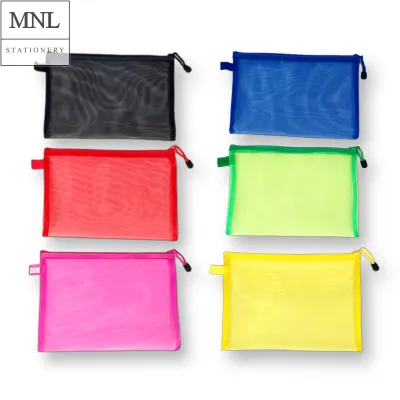
Color-coding is an exceptionally effective organizational strategy when paired with multi-packs of mesh folders. By assigning specific colors to different categories of work, you can streamline your desk organization and departmental routing. For example, you might use red folders exclusively for urgent invoices and billing, blue folders for active client contracts, and green folders for internal administrative memos. This color association allows you to scan your desk or filing cabinet and instantly assess your workload priorities based on the distribution of colors.
While functionality is paramount, the aesthetic design of your office stationery contributes to your professional image. Bright, neon-colored folders are excellent for school settings but can look out of place in a corporate boardroom. For client-facing meetings, look for mesh folders designed with sophisticated, neutral borders, such as charcoal gray, deep navy, or classic black. Some premium options feature faux-leather trims or minimalist matte finishes that convey a modern, organized, and professional sensibility without sacrificing the practical benefits of mesh construction.
Another practical feature to prioritize for office use is a flat-laying design. Folders that can open completely flat allow you to scan, photocopy, or reference documents without having to remove them entirely from the folder. This feature is highly convenient during collaborative sessions where multiple team members need to view or sign documents in quick succession. It minimizes handling, which in turn reduces the risk of accidental tears, smudges, or misplaced pages during busy workdays.
Travel and Commuting: Lightweight Packing and Moisture Management
For business travelers and daily commuters, every gram of weight added to a briefcase, laptop sleeve, or carry-on bag matters. Commuting through busy transit hubs or traveling for business trips requires a highly streamlined packing strategy. Heavy, rigid binders or bulky plastic expanding files add unnecessary weight and take up valuable volume in your luggage. A lightweight mesh folder provides a highly efficient solution, offering structured organization while adding virtually no physical weight to your gear.
However, the primary limitation of standard mesh is its lack of water resistance. During the rainy season, a sudden tropical downpour can easily saturate a standard backpack or tote bag, and water will pass directly through a standard mesh weave, ruining your documents. To manage this environmental risk, look for actionable workarounds. You can pair your mesh folder with clear plastic inner sleeves or sheet protectors for critical documents like passports, boarding passes, and original contracts. Alternatively, select specialized mesh folders that feature a solid, water-resistant backing panel or a laminated inner lining, which protects your files from damp surfaces and minor splashes.
For travelers who need to carry varying volumes of paperwork, expandable gussets are an invaluable feature. A standard flat mesh folder is ideal for holding up to 30 sheets of paper, but it can struggle with thicker stacks. An expandable design features pleated fabric sides that allow the folder to expand by two to three centimeters. This extra depth allows you to store thicker travel itineraries, multi-page hotel vouchers, printed maps, and even a slim notebook or tablet within a single, compact compartment.
Additionally, check for folders that include a dedicated front pocket or an external sleeve. When navigating airport security or transit gates, you need rapid access to your identification, transit cards, or boarding passes. An external pocket allows you to slide these frequently used items in and out quickly without having to unzip the main compartment. This small design detail significantly reduces friction during transit, keeping your essential travel documents secure yet instantly accessible.
Cross-Scenario Compatibility: Finding a Versatile Everyday Folder
If your daily routine spans multiple environments—such as a professional who also takes evening graduate courses, or a freelancer who splits time between a home office, client sites, and coffee shops—a highly versatile “hybrid” mesh folder is the most efficient choice. Instead of maintaining separate filing systems for different activities, you can invest in a high-quality, versatile design that transitions seamlessly between school, office, and travel use. This approach simplifies your organization and ensures you are always prepared, regardless of your location.
To find a folder that excels across all scenarios, look for specific hybrid features that balance durability, professional aesthetics, and practical utility. Opt for neutral colors like matte black, slate gray, or deep navy, which look sophisticated in an office yet remain practical for daily student carry. Prioritize robust construction details, such as high-quality metal zippers that slide smoothly, reinforced fabric base panels that resist wear when placed on rough surfaces, and a medium-density mesh that offers excellent visibility while remaining resistant to punctures.
+-----------------------------------------------------------------------------------------+
|                                 MESH FOLDER SELECTION MATRIX                            |
+-----------------------+---------------------------------+-------------------------------+
| Scenario              | Key Feature Priority            | Recommended Design            |
+-----------------------+---------------------------------+-------------------------------+
| Student / Daily Carry | Durability & Secure Closure     | Fine-weave mesh, reinforced   |
|                       |                                 | edges, heavy-duty zipper      |
+-----------------------+---------------------------------+-------------------------------+
| Office / Sorting      | Visual ID & Color-Coding        | Multi-color packs, neutral    |
|                       |                                 | trims, flat-laying design     |
+-----------------------+---------------------------------+-------------------------------+
| Travel / Commuting    | Lightweight & Quick Access      | Expandable gusset, external   |
|                       |                                 | pocket, water-resistant back  |
+-----------------------+---------------------------------+-------------------------------+
Before making a purchase, especially when shopping on online marketplaces, it is vital to verify the exact internal dimensions of the folder. Many product listings are labeled generically as “A4,” but these measurements often refer to the external dimensions of the folder. If the external width is exactly 210mm, the internal space will be too tight to accommodate standard A4 paper without bending the edges. To ensure smooth zipping and adequate clearance for your documents—or for documents already placed inside plastic sheet protectors—look for folders with internal dimensions of at least 240mm in width and 330mm in length. Taking a moment to verify these specifications will ensure your new folder fits your filing needs perfectly.
Frequently Asked Questions (FAQ)
Are mesh folders waterproof enough for rainy commutes?
Standard mesh folders are highly breathable but are not waterproof. Because of the open-weave design, water from heavy rain or spills will pass directly through the fabric. To protect your documents during wet commutes, you should place your critical papers inside clear plastic sheet protectors before putting them in the mesh folder, or select a folder design that features a solid, water-resistant backing panel to guard against damp surfaces.
How do I prevent small items like pens or USB drives from falling out?
Your ability to store small items securely depends entirely on the density of the mesh weave. Fine-mesh folders can safely hold larger accessories, but very small items or thin pencil tips can still slip through or snag wider weaves. To prevent loss or damage, secure loose pens, flash drives, and paperclips inside a small zippered pouch or use binder clips to attach them to your documents before zipping the main folder closed.
Community discussion
Share your experience or ask a question. Comments are reviewed before publication.