
Selecting the ideal Aquaflask size for your daily routine is a balancing act between staying properly hydrated and managing the physical weight you carry. In a tropical climate where high humidity increases your daily water needs, having cold water on hand is essential, but a bottle that is too bulky can quickly become a burden during your daily commute. The right choice depends on your daily access to clean refill stations, your primary mode of transportation, and your physical carrying capacity.
For most people navigating a standard office or school routine, the 32 oz capacity offers the ideal middle ground, providing ample hydration without requiring constant refills. If your daily commute involves crowded public utility vehicles or long walks, a lighter 18 oz or 24 oz model is much easier to manage. Conversely, those who spend hours outdoors, work long shifts, or engage in intense gym sessions will find that a 40 oz or larger bottle is necessary to sustain them when refill stations are out of reach.
Quick Reference: Matching Aquaflask Sizes to User Profiles
To help you make an immediate decision, the table below maps the most common Aquaflask capacities to typical user profiles, physical weights, and daily hydration scenarios.
Products mentioned in this guide
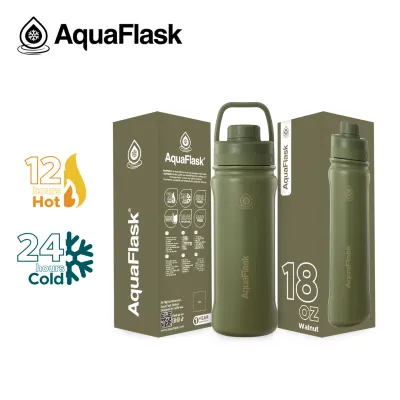
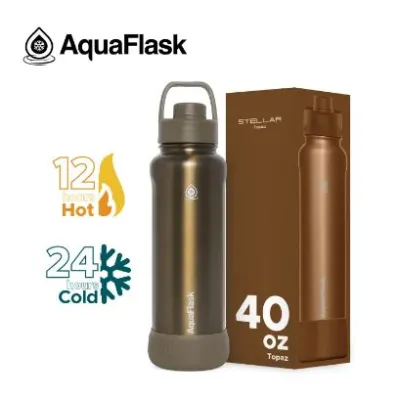
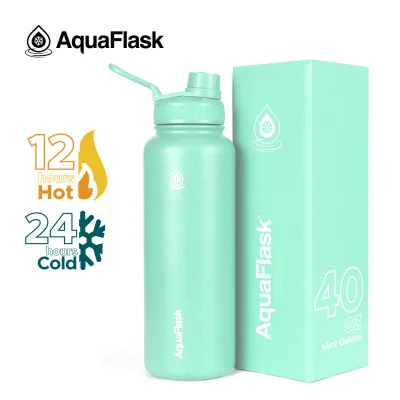
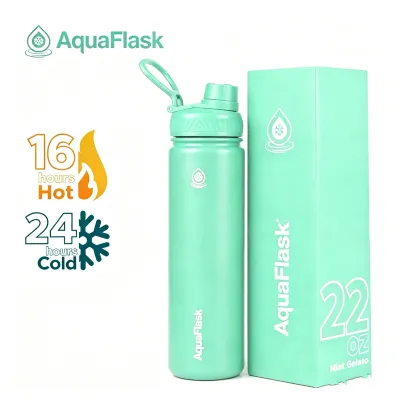
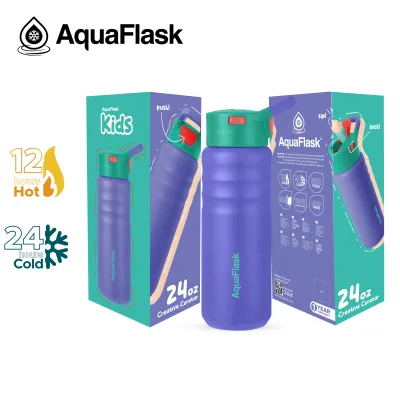
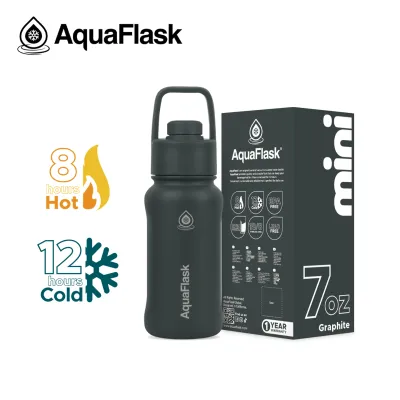
Prices are valid at publication and may change. Please refer to the product page for the latest price.
| Aquaflask Size | Liquid Capacity (Approx.) | Portability Level | Best Suited For |
|---|---|---|---|
| 18 oz | 530 ml | Very High | Young students, short errands, and minimalists with small bags |
| 24 oz | 710 ml | High | Daily commuters, office workers with nearby water dispensers, and light gym sessions |
| 32 oz | 950 ml | Moderate | College students, desk-bound professionals, and standard 8-hour workdays |
| 40 oz | 1,180 ml | Low | Athletes, outdoor workers, field engineers, and long road trips |
| 64 oz | 1,890 ml | Very Low | All-day outdoor events, camping, and environments with zero refill access |
Understanding Standard Aquaflask Capacity Tiers
Each capacity tier of double-walled vacuum-insulated bottles is designed with specific physical dimensions and volume limits. Understanding these differences allows you to choose a model that fits your lifestyle constraints rather than just your hydration goals.

18 oz to 24 oz: Light and Portable
The 18 oz and 24 oz sizes are engineered primarily for mobility. These smaller bottles are incredibly lightweight even when filled to capacity, making them effortless to carry in a hand strap, small tote bag, or the side pocket of a compact backpack. They are particularly well-suited for short trips, quick errands, or commutes on crowded trains and buses where space is at a premium.
The primary trade-off with this tier is the limited volume. An 18 oz or 24 oz bottle will run empty quickly if you do not have regular access to a water dispenser. If you find yourself in an office, classroom, or clinic where refilling your bottle multiple times a day is convenient, these portable sizes will serve you perfectly without adding unnecessary bulk to your daily load.
32 oz: The Daily Standard
The 32 oz Aquaflask is widely considered the standard choice for general daily use because it strikes an excellent balance between volume and portability. Holding nearly one liter of water, this size provides enough hydration to last through a standard morning or afternoon session without requiring a trip to the water station. It is highly favored by college students and office employees who want to minimize refill interruptions during their work hours.
While the 32 oz bottle is highly functional, it is noticeably wider and heavier than its smaller counterparts. It requires a sturdier backpack side pocket or a dedicated bag compartment. However, for most users, the benefit of having a substantial volume of ice-cold water readily available throughout a humid afternoon far outweighs the slight increase in physical bulk.
40 oz and Above: Heavy-Duty Hydration
Capacities of 40 oz and larger are designed for high-demand scenarios where clean drinking water is scarce or physical exertion is high. These heavy-duty bottles are excellent for outdoor sports, field work, long road trips, or individuals who must meet high daily water intake targets. They ensure that you have access to cold water for an entire day, even in remote locations.
The clear limitation of this tier is the significant weight and size. A fully filled 40 oz stainless steel bottle is heavy and can cause shoulder fatigue if carried in a tote bag over long distances. These larger models generally do not fit in standard cup holders or small backpack pockets, meaning you will need a specialized carrying sleeve, a large gear bag, or a dedicated handle to transport them comfortably.
Matching Bottle Capacity to Your Daily Routine
Your daily environment dictates how often you can refill your bottle and how much weight you can comfortably transport. Matching your Aquaflask to your specific routine prevents the frustration of carrying an overly heavy bottle or running out of water too quickly.
Office Work and Daily Commuting
For office professionals, desk space and commute logistics are the primary considerations. If your daily commute involves walking, taking jeepneys, or riding the LRT or MRT, a heavy bottle can quickly become an annoyance. A 24 oz or 32 oz Aquaflask is typically the most practical choice for this lifestyle, balancing weight during transit with desk-side utility.
At the office, a 32 oz bottle sits comfortably on a desk without taking up excessive space or risking tipping over easily. If your office pantry has a reliable water dispenser, a 24 oz bottle is also highly efficient, as it is slim enough to fit into most standard vehicle cup holders during your drive to work. This prevents the bottle from rolling around on the passenger seat or floorboard during sudden stops.
School and Campus Life
Students must factor in the overall weight of their backpacks, which are often already loaded with laptops, tablets, notebooks, and textbooks. Adding a heavy, fully filled water bottle can place unnecessary strain on a student’s back and shoulders. For younger students in primary or secondary school, an 18 oz or 24 oz bottle is highly recommended to keep their school bags manageable.
For college students who spend long hours walking across sprawling campuses, a 32 oz bottle is often preferred to stay hydrated between classes. However, it is vital to ensure that your backpack has durable, reinforced side pockets to support this weight. A heavy bottle in a loose pocket can easily slip out when you bend down to pick up a bag, potentially damaging the bottle’s vacuum seal upon impact.
Gym, Sports, and Outdoor Workouts
Physical exercise in a warm climate demands rapid and consistent rehydration. During an hour of high-intensity training, running, or playing sports like badminton or basketball, your body loses a significant amount of water through sweat. A small bottle will not suffice, making the 32 oz or 40 oz models the standard for active individuals.
When choosing a larger bottle for fitness routines, look for accessories that improve handling, such as silicone boots to prevent the bottle from sliding on gym floors or paracord handles for a secure grip. If your workout area lacks a nearby water fountain, carrying a 40 oz bottle ensures you can complete your entire training session without interrupting your momentum to search for a refill.
Physical and Practical Constraints to Check Before Buying
Before finalizing your purchase, you must evaluate several physical constraints that affect how a bottle integrates into your daily life. Ignoring these factors often leads to a bottle being left at home because it is too inconvenient to use.
- Bag Compatibility: Measure the physical dimensions of your bag's side pockets or interior compartments. A standard 32 oz Aquaflask has a base diameter of approximately 9 centimeters, which can overstretch elastic mesh pockets on smaller backpacks. Ensure your bag can accommodate both the height and width of your chosen size without putting strain on the zippers or fabric.
- Cup Holder Fit: Standard automotive cup holders, gym equipment slots, and bicycle cages are typically designed for containers with a diameter of 7.5 centimeters or less. While 18 oz and 24 oz bottles generally fit these spaces perfectly, 32 oz and 40 oz models are too wide. If you plan to use your bottle frequently in the car, verify your cup holder dimensions or consider purchasing an aftermarket cup holder expander.
- Weight Management: Water has a physical mass of approximately 1 gram per milliliter. When you combine the weight of the liquid with the double-walled food-grade stainless steel construction of the flask, a full 32 oz bottle weighs roughly 1.3 kilograms, while a full 40 oz bottle can exceed 1.6 kilograms. Consider whether carrying this weight in a shoulder bag or backpack is comfortable for your daily walks.
- Cleaning and Drying: Larger and deeper bottles require specific maintenance steps. A standard kitchen sponge will not reach the bottom of a 32 oz or 40 oz flask, meaning you must use a long-handled bottle brush to clean it effectively. In humid environments, deeper bottles also take longer to air-dry completely; always store your flask with the lid off in a well-ventilated area to prevent musty odors and bacterial growth.
Common Sizing Mistakes and How to Avoid Them
Many buyers make decisions based solely on the idea that “bigger is better,” which often leads to purchasing errors. Recognizing these common pitfalls will help you select a bottle that you will actually use every day.
- Buying Too Large for Daily Carry: It is common to purchase a 40 oz or 64 oz bottle with the intention of drinking more water, only to find it too heavy and cumbersome for daily transit. If a bottle does not fit comfortably in your bag or is too heavy to carry easily, you are highly likely to leave it at home, defeating the purpose of your investment.
- Ignoring the Base Diameter: Do not assume that all insulated bottles have a uniform shape. A 32 oz bottle has a significantly wider footprint than a 24 oz bottle. Always check the physical specifications of the bottle's base diameter before purchasing, especially if you rely on car cup holders, treadmill slots, or bicycle bottle cages.
- Underestimating Full Weight: When testing bottles in a physical store, they are always empty and feel deceptively light. Always remember to factor in the weight of the water when the bottle is filled to the brim, and evaluate whether your daily bag straps are padded enough to distribute that load comfortably.
Frequently Asked Questions (FAQ)
Can I put hot drinks in any Aquaflask size?
Yes, the double-wall vacuum insulation technology is identical across all Aquaflask sizes, allowing them to retain both hot and cold temperatures effectively. However, larger volumes of hot liquid will retain heat longer than smaller volumes due to a lower surface-area-to-volume ratio. When using your bottle for hot beverages, always check your lid style; sports lids with straws or flip caps are not designed for hot liquids, as steam pressure can cause hot liquid to spray out, and the heat may degrade the silicone seals. Use a standard wide-mouth screw cap for hot drinks.
How do I measure my bag for an Aquaflask?
To check if a specific Aquaflask size will fit your bag, use a ruler or measuring tape to find the depth and width of your bag’s side pocket or internal compartment. Compare these measurements directly against the manufacturer’s listed dimensions for the bottle’s total height (including the lid) and base diameter. For elastic side pockets, measure the pocket’s flat width when empty, and allow a margin of at least 1 to 2 centimeters of stretch to ensure you can insert and remove the bottle easily with one hand.
Is a 32 oz bottle too heavy for a child?
Yes, a fully filled 32 oz bottle is generally too heavy for primary and middle school children. Weighing over 1.2 kilograms when full, it can add significant, concentrated weight to a child’s backpack, potentially contributing to poor posture or back strain. For younger users, an 18 oz or 24 oz bottle is highly recommended, as these sizes are much easier for small hands to grip, fit standard school bag pockets securely, and encourage regular hydration without physical discomfort.
Community discussion
Share your experience or ask a question. Comments are reviewed before publication.