
Quick Answer: Which B5 Binding Fits Your Needs?
Choosing the right B5 notebook depends entirely on your daily writing environment, how you organize your thoughts, and whether you prefer a permanent archive or a modular system. The B5 size strikes a comfortable balance between the spaciousness of a large desk planner and the portability of a pocket journal. Because the paper dimensions remain constant across all formats, your decision rests purely on the binding mechanism and cover style.
- Spiral binding is ideal if you need a lightweight, flexible notebook that can fold back completely on itself for quick note-taking in tight spaces.
- Stitched binding suits those who prioritize a smooth, professional appearance, long-term durability, and a flat writing surface for formal archiving.
- Loose-leaf binding is the go-to option for maximum customization, allowing you to rearrange pages, insert dividers, and refill the binder over time.
Understanding the Build: Spiral, Stitched, and Loose-Leaf
To make an informed decision, it helps to understand how each binding type is constructed and how its physical design affects daily use.

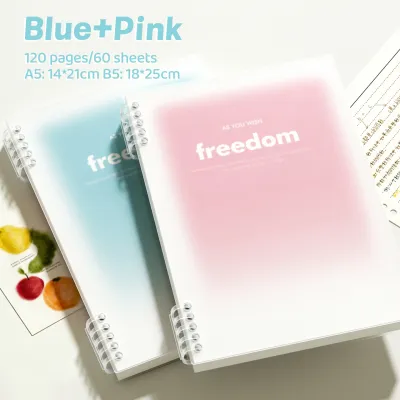
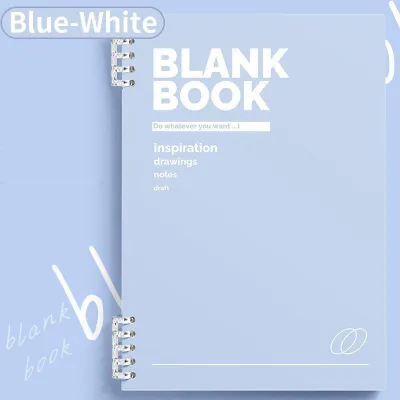
Spiral binding utilizes continuous wire or plastic coils threaded through a series of evenly spaced, pre-punched holes along the edge of the paper. This mechanical design allows the pages to rotate a full 360 degrees around the spine. While the paper size is standard B5, the outer coil adds a few millimeters of width to the notebook’s overall footprint.
Products mentioned in this guide
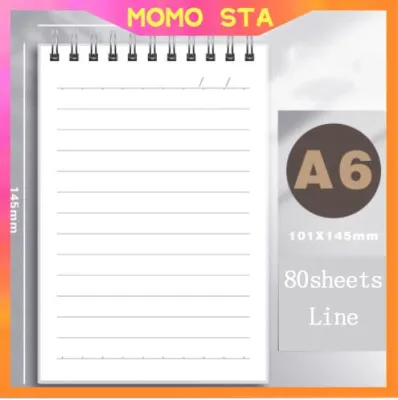
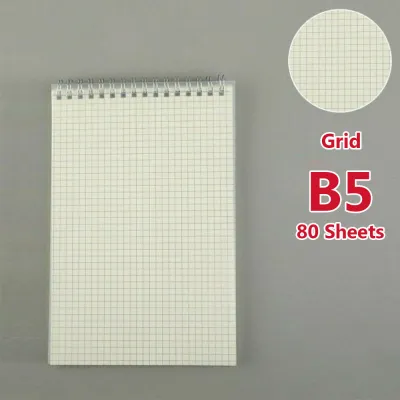
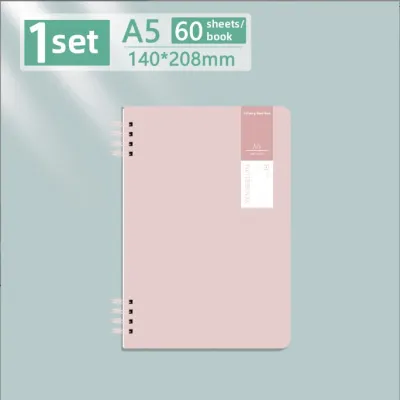
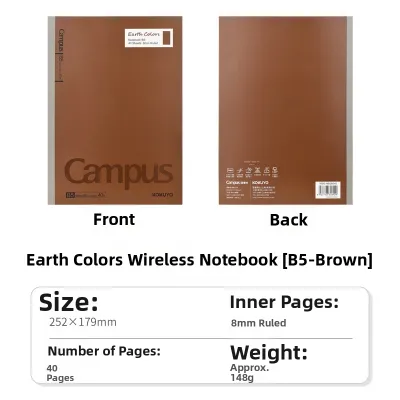
Prices are valid at publication and may change. Please refer to the product page for the latest price.
Stitched binding, often referred to as thread-sewn or book-bound, groups pages into small booklets called signatures. These signatures are sewn together with strong thread and typically reinforced with a layer of adhesive along the spine, creating a highly secure, traditional book structure. The cover—whether a flexible softcover or a rigid hardcover—is wrapped around the spine, keeping the edges flush and uniform.
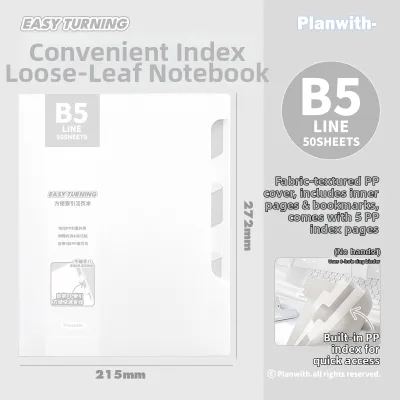
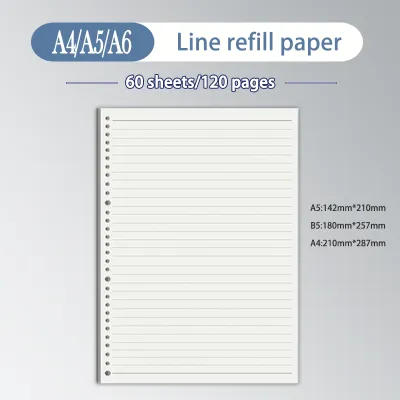
Loose-leaf binding functions like a compact binder, featuring a multi-ring mechanism made of metal or impact-resistant plastic mounted inside a durable cover. The B5 paper is pre-punched with a specific hole pattern (most commonly 26 holes) that aligns with the rings. This modular build allows you to open the rings to add, remove, or rearrange sheets at will. Because of the ring hardware and the protective cover overhang, loose-leaf binders have the largest physical footprint of the three types.
Comparing Lay-Flat Ability and Writing Comfort
The physical comfort of writing on a desk or on your lap is heavily influenced by how flat the notebook lies when opened.
Spiral notebooks offer exceptional flexibility. Because the pages rotate freely around the coil, you can fold the left side completely behind the right side. This halves the desk space required, making it highly convenient for cramped lecture halls, busy coffee shops, or commuting on public transit. Some modern designs feature soft plastic rings or a recessed coil that minimizes discomfort when your hand rests near the center.
A high-quality thread-sewn stitched spine allows the notebook to lay relatively flat, providing a seamless surface across a two-page spread. However, if the binding is too tight or uses excessive glue, the pages may resist staying open, creating a steep incline near the gutter. In humid environments, paper can absorb moisture, which sometimes increases page stiffness and causes stiff-covered stitched notebooks to snap shut unexpectedly. To verify lay-flat performance, look for “exposed stitch” or “lay-flat” specifications, or perform a quick manual test by opening the book to the center to see if it remains open without assistance.
The prominent metal or plastic rings in a loose-leaf binder can present a physical obstacle. If you are right-handed, the rings may obstruct your hand when writing on the left-side pages; if you are left-handed, the opposite occurs. To maintain writing comfort, many users prefer to open the rings, remove the sheet of paper entirely to write on a flat desk surface, and then snap it back into the binder once finished.
Assessing Durability, Page Capacity, and Refillability
Evaluating how well a notebook stands up to daily wear, how much content it can hold, and whether it can be reused is essential for long-term satisfaction and cost efficiency.
Spiral and stitched notebooks have a fixed page count that cannot be altered. If you buy a 120-page stitched notebook, that is your hard limit. Loose-leaf binders, conversely, offer adjustable capacity. You can choose a slim binder with small rings for a lightweight setup, or a thicker binder with larger rings to hold hundreds of sheets, dividers, and plastic pockets.
Each binding style has distinct structural vulnerabilities. Metal spiral coils can snag on clothing or bend out of shape inside a crowded bag, making it difficult to turn pages smoothly. Stitched spines are highly durable but can crack or lose pages if forced open too aggressively or if the adhesive degrades in hot, humid tropical climates. Loose-leaf binders are robust, but cheap ring mechanisms can misalign over time, causing pages to catch or slip out when turned.
Loose-leaf systems offer a distinct financial advantage. Instead of purchasing an entirely new notebook when you run out of space, you only need to buy packs of B5 refill paper. This allows you to invest in a high-quality, durable binder cover once and reuse it for years, saving ₱ over the long run. Stitched and spiral notebooks must be replaced entirely once filled, though stitched books remain the preferred choice for permanent, unalterable archives where page security is paramount.
Evaluating Portability and Everyday Carry
How you transport your notebook to school, the office, or a local cafe plays a major role in which binding type will serve you best.
Loose-leaf binders are generally the heaviest and bulkiest option. The internal ring mechanism, combined with the wider, thicker covers needed to protect the rings, adds noticeable weight to your backpack or messenger bag. Stitched notebooks are highly streamlined, offering the most compact footprint for a given page count. Spiral notebooks fall in the middle, remaining relatively lightweight but slightly wider due to the coil.
When packing a bag quickly, the smooth, uniform edges of a stitched notebook slide effortlessly alongside laptops and folders. Spiral coils, particularly wire ones, have a tendency to catch on loose threads, headphone cords, or mesh pockets. If you carry a spiral notebook, choosing one with a plastic coil or keeping it inside a protective sleeve can prevent damage to both the notebook and your other belongings.
In humid tropical climates, paper is susceptible to warping and edge curling. Hardcovers, which are common on stitched notebooks and loose-leaf binders, provide excellent structural protection against moisture and rough handling. Many spiral notebooks feature flexible plastic or cardstock covers; while lightweight, these offer less protection, meaning the corners of your B5 pages may bend or fray if the notebook is tossed loosely into a crowded bag.
Final Decision Framework: Which B5 Notebook to Buy
To choose the right B5 notebook for your specific routine, match your writing habits and environment to the following criteria.
Choose a Spiral Notebook if:
- You frequently write on your lap, on small desks, or while standing, and need a notebook that can fold completely in half.
- You prefer a lightweight, straightforward tool for quick daily logs, scratchpad calculations, or temporary lecture notes.
- You want an affordable option and do not mind replacing the entire notebook once the pages are filled.
Choose a Stitched Notebook if:
- You want a clean, professional aesthetic suitable for business meetings, formal journaling, or permanent archiving.
- You write across two-page spreads and require a smooth, uninterrupted surface with minimal gutter interference.
- You carry your notebook daily in a packed bag and want to avoid snagging other items on external coils or rings.
Choose a Loose-Leaf Binder if:
- You like to organize, categorize, and rearrange your notes by subject, date, or project using index dividers.
- You want to integrate printed handouts, syllabus sheets, or plastic pockets directly alongside your handwritten notes.
- You want to make a one-time investment in a durable cover and save ₱ over time by purchasing only B5 refill paper.
Verify First if:
- Ink and Paper Compatibility: To check for bleed resistance, feathering, and drying speed, perform a small trial stroke with your preferred pen on a back page. Smoothness and ink absorption depend heavily on the exact combination of your pen's tip, ink type (gel, water-based, or oil-based), and the paper's specific coating.
- Ring and Coil Materials: For loose-leaf binders, verify whether the rings are metal or plastic, and ensure the opening mechanism operates smoothly. For spiral notebooks, look for snag-free coil ends to protect your bags and clothing.
- Hole Compatibility: If choosing loose-leaf, confirm the exact hole count (typically 26 holes for B5) to ensure any refill paper you buy matches your binder perfectly.
Frequently Asked Questions (FAQ)
Can I use standard hole-punched paper in any B5 loose-leaf binder?
Not automatically. B5 loose-leaf paper is not universally standardized in its hole configuration. The most common standard for B5 binders is the 26-hole system, which is widely used across Asia and available in local stationery shops. However, some specialized binders use a 2-hole, 9-hole, or even a 20-hole ring mechanism. Before purchasing bulk refill paper or a new binder, always count the rings on your binder or check the manufacturer’s packaging specifications to ensure the hole pattern matches exactly.
Does the binding type affect paper bleed-through?
No, the binding mechanism itself has no direct impact on whether ink bleeds through or feathers on the page. Bleed-through is entirely determined by the paper’s manufacturing characteristics, specifically its weight (GSM), fiber density, and surface sizing or coating. A 70 GSM sheet in a stitched notebook will bleed just as easily as a 70 GSM sheet in a spiral or loose-leaf notebook when exposed to wet inks. To prevent bleed-through, focus on selecting high-quality paper designed for your specific writing instrument, regardless of how those pages are bound together.
Community discussion
Share your experience or ask a question. Comments are reviewed before publication.