
Finding the right pen is a highly personal decision that directly impacts your writing comfort, speed, and overall neatness. To choose the ideal Baoke pen model, you must align the pen’s ink formulation, tip size, and physical design with your unique writing pressure, hand speed, and typical paper choices. Whether you are a student preparing for long essay exams, a professional signing official documents, or an artist sketching detailed layouts, understanding these core variables ensures your pen performs reliably without skipping, smudging, or causing hand fatigue.
Diagnose Your Writing Mechanics and Daily Needs
Before browsing specific pen models, take a moment to analyze how you write. Heavy-handed writers who press firmly onto the page require a robust tip, such as a stainless steel alloy ball point, to prevent the tip from bending or wearing down prematurely. Conversely, if you have a light, rapid writing style, you will benefit from a highly responsive ink delivery system that flows effortlessly with minimal contact pressure, allowing your hand to glide across the page without strain.
Your primary use case sets the baseline for the ink’s finish and opacity. For daily note-taking in school or the office, a fast-drying ink is essential to keep up with rapid thoughts and prevent accidental smudging as your hand moves across the page. For professional document signing, you need a deep, dark, and highly opaque ink that looks authoritative and scans clearly. For artistic sketching or hand lettering, you might prioritize line variation and rich pigment saturation over pure drying speed.
Products mentioned in this guide
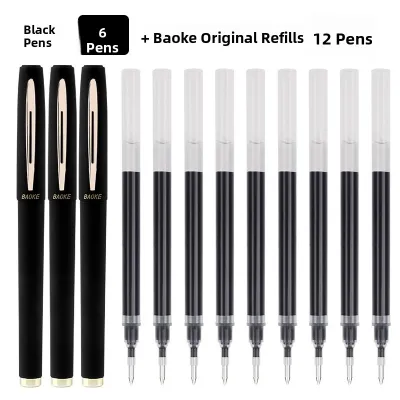
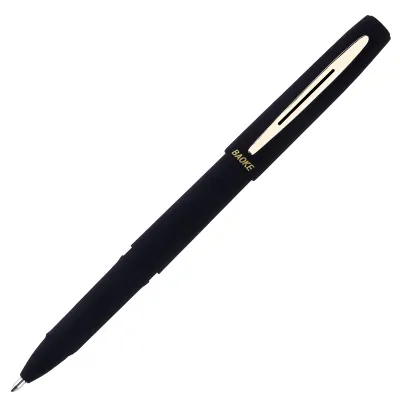
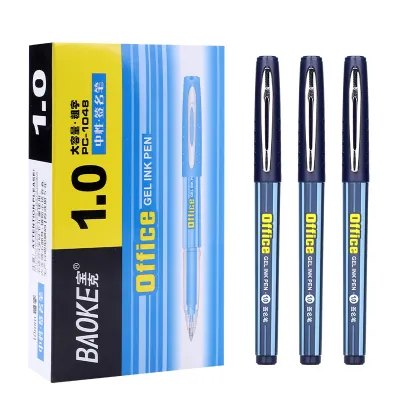
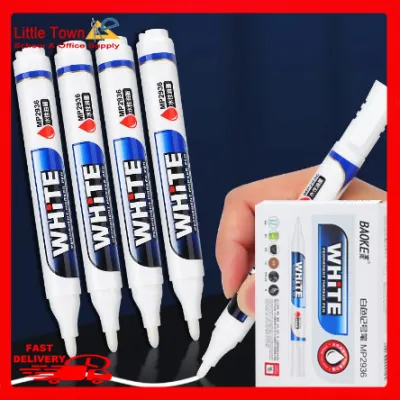
Prices are valid at publication and may change. Please refer to the product page for the latest price.
The paper you use plays a massive role in how any pen performs. In warm, humid tropical climates, paper fibers naturally absorb ambient moisture from the air, making them softer and more porous. This environmental factor can cause standard inks to feather, spread, or bleed through to the back of the page. If you frequently write on thin, low-grade paper or in humid environments, you must select a pen with a finer tip or a highly controlled ink flow to maintain clean, sharp lines.
Because the smoothness, bleed resistance, and drying speed of any pen depend entirely on the exact combination of ink formulation and paper material, you should perform a simple scratch test. Draw a series of rapid loops on a scrap piece of your daily notebook or planner paper, then immediately swipe your finger across the lines to observe the drying speed. To check for bleed resistance, flip the page over to inspect if the ink has saturated through the fibers. This hands-on verification prevents you from purchasing a pen that feathers on your specific paper.
Match Baoke Ink Formulations to Your Output Needs
Baoke offers several distinct ink formulations, each designed for specific writing tasks and paper types. Gel ink is highly popular for its smooth, vibrant lines and excellent balance of opacity and control. Because gel ink uses a water-based suspension containing suspended pigments, it flows smoothly while remaining thick enough to prevent excessive bleeding on standard notebook paper, making it an excellent choice for daily journaling and color-coded notes.

Liquid ink, or rollerball ink, provides an incredibly fluid and effortless writing experience. The ink has a lower viscosity, allowing it to flow rapidly from the reservoir to the paper with almost zero friction. However, because liquid ink is highly fluid, you must verify its drying speed and bleed resistance on your preferred paper. Left-handed writers, in particular, should look for quick-drying liquid ink models to avoid smearing the wet ink as their hand glides over the freshly written text.
For legal documents, official signatures, and archival records, pigment-based or permanent inks are the standard choice. These formulations are engineered to resist water, fading, and chemical washing once fully dry. If your daily routine involves signing contracts, filling out government forms, or writing in journals you wish to preserve for decades, choosing a Baoke model equipped with water-resistant pigment ink ensures your writing remains legible and secure against accidental spills or environmental exposure.
Water resistance and erasability are also highly dependent on the paper’s surface coating. For pigment-based inks, you can verify water resistance by letting a test line dry for five minutes, then applying a single drop of water to the page. If the ink remains sharp and does not run, the combination is suitable for official documents. For erasable gel ink models, always test the friction eraser on a small corner first, as heavily textured or thin paper can tear under the heat generated by the eraser.
Select the Ideal Tip Size and Nib Shape
The size and shape of the pen’s tip dictate the line width, character definition, and overall legibility of your writing. Fine and extra-fine tips, typically ranging from 0.38mm to 0.5mm, are ideal for individuals with small, compact handwriting or those who need to make detailed annotations in tight margins. These precise tips allow you to write complex characters or intricate mathematical symbols without the lines merging into an illegible blur.
Medium tips, generally measuring between 0.7mm and 1.0mm, are the traditional choice for standard daily writing. A medium tip delivers a broader, wetter line that glides smoothly across the paper, offering a highly satisfying tactile feel and excellent legibility from a distance. This size is highly recommended for general office work, filling out standard forms, and writing letters where speed and smooth ink delivery are prioritized over micro-precision.
Broad and specialty nibs, including brush tips and chisel tips, cater to expressive writing, calligraphy, and bold signage. A brush tip allows you to vary your line width dynamically by adjusting the pressure of your stroke, making it perfect for artistic lettering and traditional calligraphy. Chisel tips, often found in highlighters and marker pens, provide clean, structured lines that are excellent for emphasizing key text or creating bold, structured headings in your planner.
Verify Ergonomics and Packaging Specifications
Beyond ink and tip size, the physical construction of the pen determines how comfortable it will feel during extended writing sessions. Pay close attention to the barrel diameter and grip material. A soft, rubberized grip can significantly reduce finger fatigue and prevent slipping, especially in warm weather when hands may sweat. If you have larger hands, a slightly wider barrel can prevent cramping, while a slim barrel is often preferred for quick, short notes.
Always inspect the packaging labels and product specifications before making a purchase. Look for clear indications of refill compatibility, ink capacity, and manufacturer-recommended storage conditions. Opting for models with easily accessible, standardized refills ensures that you can continue using your favorite pen barrel long after the initial ink supply runs dry, reducing waste and saving money over time. With budget-friendly refills often priced around ₱20 to ₱40 on online marketplaces, maintaining your favorite pen is highly economical.
The pen’s balance and capping mechanism also affect its daily usability and portability. Retractable pens with a click mechanism are highly convenient for quick, one-handed operation on the go, making them ideal for busy professionals and students. On the other hand, capped pens offer a more secure seal that prevents the ink from drying out prematurely and protects your shirt pockets or bag linings from accidental ink stains.
Frequently Asked Questions (FAQ)
How do I prevent my Baoke gel pen from skipping or drying out?
To maintain a consistent ink flow, store your gel pens horizontally or with the tip pointing downward. This keeps the ink in constant contact with the ball and feed mechanism, preventing air pockets from forming inside the cartridge.
Always ensure the cap is clicked securely in place or the retraction mechanism is fully disengaged immediately after you finish writing. Leaving the tip exposed to the air, even for short periods, can cause the ink at the tip to dry and clog the ball mechanism.
Additionally, avoid leaving your pens in areas exposed to extreme heat or direct sunlight, such as inside a parked car or near a sunny window. High temperatures can alter the viscosity of the gel ink, leading to leaks, separation, or premature drying.
Can I use Baoke refills in other pen brands?
Refill compatibility depends entirely on the physical dimensions of the cartridge, including its total length, barrel diameter, and the specific shape of the tip housing. While some Baoke refills follow standard international formats, others are designed exclusively for proprietary Baoke pen bodies.
Before attempting to swap refills, compare the empty cartridge from your current pen directly with the specifications printed on the Baoke refill packaging. Checking the precise shape of the plastic collar near the tip is crucial, as even a tiny variation can prevent the pen from clicking or cause ink to leak inside the barrel.
To guarantee the smoothest writing experience and prevent accidental leaks, it is generally recommended to use official Baoke refills inside their matching Baoke pen bodies. This ensures the spring tension, tip clearance, and ink flow are perfectly calibrated.

Community discussion
Share your experience or ask a question. Comments are reviewed before publication.