
Choosing the right blue gel pen tip size is a balancing act between your natural handwriting size, your writing speed, and the type of paper you use daily. If you write in small, compact letters or need to squeeze detailed notes into tight planner grids, an ultra-fine 0.38mm tip keeps your characters sharp and legible without ink blobbing. For general, everyday writing on standard school or office paper, a 0.5mm tip offers a balanced middle ground, delivering a smooth glide and a highly readable line. If you have large, expressive handwriting, sign official documents frequently, or simply enjoy a rich, dark blue line, a bolder 0.7mm tip provides a fluid and highly saturated writing experience.
Decoding Gel Pen Tip Sizes: 0.38mm, 0.5mm, and 0.7mm
Gel pen tip sizes are measured by the diameter of the metal ball at the tip, but the actual line left on the page can vary based on ink formulation and paper absorption. A 0.38mm tip produces an incredibly thin, needle-like line that is excellent for high-precision tasks. Because the ball is so small, it deposits a minimal amount of gel ink, which means the line dries almost instantly but can feel slightly high-feedback or scratchy on rough paper surfaces.
Stepping up to a 0.5mm tip increases the surface area of the ball, allowing more ink to lubricate the writing path. This size strikes a comfortable balance, offering a noticeably smoother glide across the page while still maintaining a clean, defined line that does not easily bleed. It is the standard configuration for many popular blue gel pens found in local office supply stores.
Products mentioned in this guide
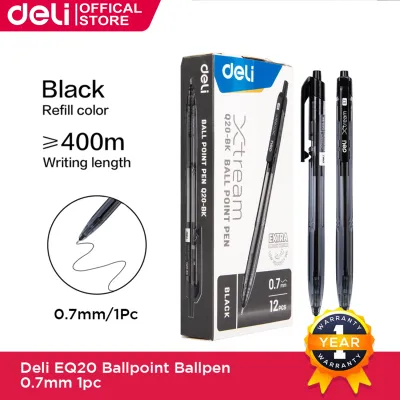
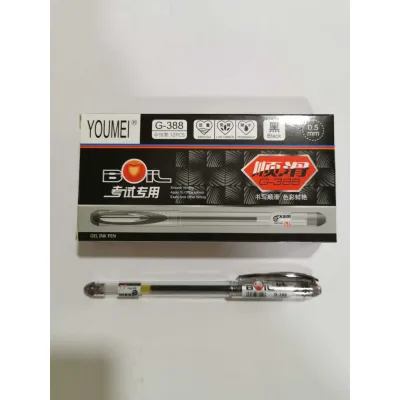
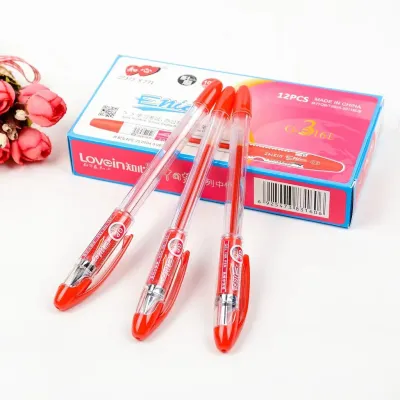
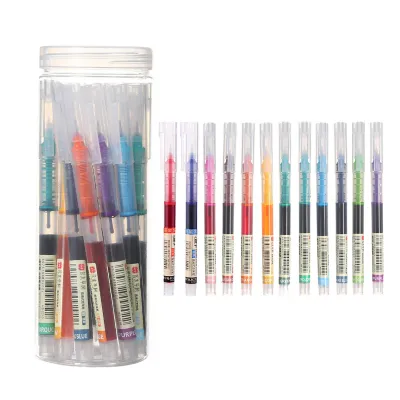
Prices are valid at publication and may change. Please refer to the product page for the latest price.
A 0.7mm tip is considered bold in the gel pen category, laying down a rich, saturated blue line that stands out dramatically on white or cream paper. The writing experience is exceptionally smooth, as the generous ink flow cushions the tip against the paper. However, because different manufacturers use varying tolerances and ink viscosities, a 0.5mm pen from one brand might write almost as boldly as a 0.7mm pen from another, making a quick test stroke on your preferred paper highly recommended.
Matching Tip Size to Your Handwriting Scale
Your natural handwriting size is the most reliable guide for choosing a tip size that keeps your writing legible over time. If your letters are naturally small, compact, or highly detailed, a 0.38mm tip is highly suitable. Using a broader tip for tiny handwriting often causes the loops of letters like “e,” “a,” and “o” to fill with ink, turning your words into illegible blue spots.

For those with average-sized handwriting—where lowercase letters are roughly two to three millimeters tall—the 0.5mm tip is usually the most comfortable fit. It provides enough ink to make your writing look full and consistent without crowding your letters or causing adjacent strokes to merge. This balance makes it a safe default choice if you are buying pens in bulk for school or office use.
If you have large, sweeping, or fast handwriting, a 0.38mm or even a 0.5mm tip might feel like it is skipping or starving for ink as you rapidly move across the page. A 0.7mm tip thrives under these conditions, keeping pace with fast hand movements by laying down a continuous, unbroken line of blue ink. The broader line matches the scale of larger letters, ensuring your writing looks confident and easy to read from a distance.
Selecting the Right Tip for Daily Tasks and Use Cases
The environment in which you write should also dictate your choice of tip size. For detailed note-taking, filling out compact daily planners, or writing marginalia in textbook margins, space efficiency is paramount. A 0.38mm blue gel pen allows you to fit multiple lines of text within a single grid square, making it indispensable for students, engineers, and planners who need to maximize page real estate.
For general office documents, standard journaling, and school assignments, a 0.5mm tip is the workhorse of the stationery world. It produces a line that is easily readable under standard office lighting and fits neatly within standard ruled notebooks. It is also highly versatile for filling out official forms where space is limited but clarity is required.
When it comes to signing contracts, writing headings, or engaging in creative lettering, a 0.7mm tip is the ideal tool. The bold blue ink creates a professional, authoritative signature that is difficult to replicate and stands out clearly on photocopied documents. It is also excellent for drafting quick mind maps or bullet journal headers where visual hierarchy is important.
Paper Compatibility and Ink Flow Checks
Gel ink is water-based, which means its performance is heavily influenced by the quality and weight of the paper you use. Broader tips like the 0.7mm deposit a significant volume of wet ink onto the page. On thin, low-quality paper—such as cheap newsprint or standard 70 gsm copy paper—this excess ink can easily bleed through to the other side, making it difficult to write on both sides of the sheet.
Feathering is another common issue when using broader tips on highly absorbent paper. The ink spreads outward along the paper fibers, turning sharp letters into fuzzy, blurry shapes. If you frequently write on standard office paper or cheap school notebooks, a 0.38mm or 0.5mm tip will help control this spreading, keeping your lines crisp and clean.
Drying time is a critical factor, especially in warm, humid tropical climates like the Philippines, where moisture in the air can delay ink evaporation. A 0.7mm tip leaves a wet pool of ink that requires several seconds to dry, increasing the risk of accidental smudging if you close your notebook too quickly or run your hand across the page. If you need to write quickly and close your book immediately, verifying the dry time of your chosen pen on your specific paper is a necessary step before committing to a larger tip size.
Frequently Asked Questions (FAQ)
Is a 0.5mm gel pen considered fine or medium?
In the gel pen category, a 0.5mm tip is generally classified as a standard or medium-fine tip, whereas in ballpoint pens, 0.5mm is often labeled as extra-fine. This difference exists because gel ink flows much more freely than oil-based ballpoint ink, resulting in a slightly wider line for the same physical tip size. It is always best to check the manufacturer’s specific sizing chart or test the pen in-store, as naming conventions can vary slightly between brands.
Which blue gel pen tip size is best for left-handed writers?
For left-handed writers, a 0.38mm or 0.5mm tip is usually the most practical choice. Because these finer tips deposit less ink onto the page, the line dries much faster, significantly reducing the chance of your hand smudging the wet ink as it moves from left to right. If you prefer the smoothness of a 0.7mm tip, look for pens specifically labeled with quick-drying ink formulas and test them on your preferred paper to ensure the ink sets before your hand passes over it.
Community discussion
Share your experience or ask a question. Comments are reviewed before publication.