
Finding the right art supplies for your child can feel like a balancing act. On one hand, you want to encourage their self-expression, school success, and creative development. On the other hand, you want to avoid the headache of permanent stains on clothes, furniture, and walls. For decades, crayola washable markers have been the go-to solution for parents seeking a balance between vibrant color payoff and stress-free cleanup. But with so many options lining the shelves of local bookstores and online marketplaces, choosing the right pack requires more than just picking the largest box. Selecting the best marker variant involves matching the tip size, ink type, and format to your child’s physical development, age, and specific project needs.
Quick Match: Choosing the Right Variant for Everyday Activities
The core appeal of crayola washable markers lies in their formulated water-based ink, which is designed to wash easily from skin and most machine-washable fabrics. This means children can focus entirely on their art, while parents can worry less about accidental messes. However, different creative tasks and developmental stages require different tools.
To make your decision easier, here is a quick-reference guide mapping common activities to the ideal marker variant:
Products mentioned in this guide
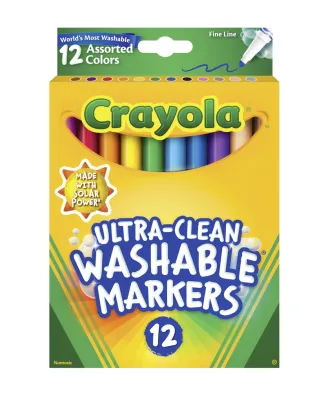
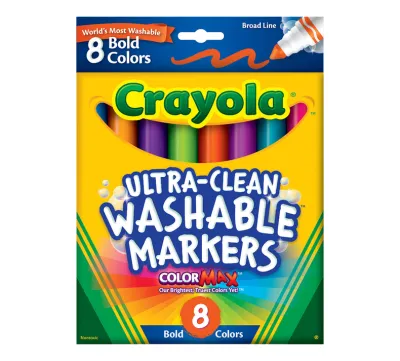
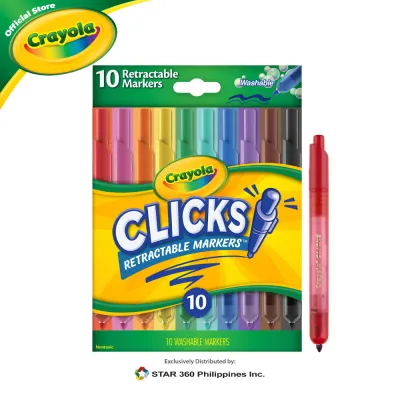
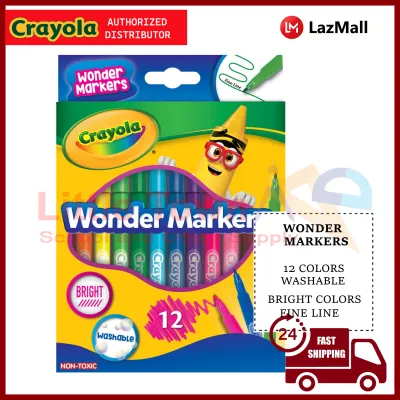
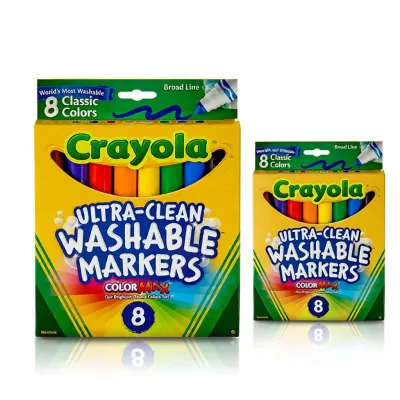
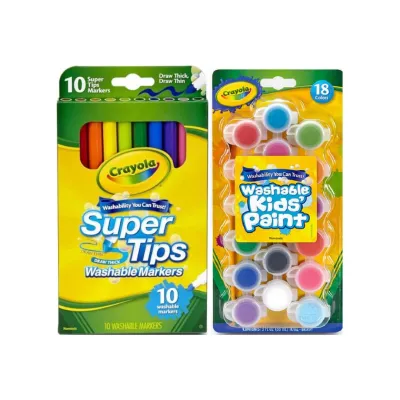
Prices are valid at publication and may change. Please refer to the product page for the latest price.
- Toddler Scribbling and Large Coloring Books: Jumbo or Broad Line washable markers. These feature thick barrels that are easy for small hands to grasp and sturdy tips that resist heavy downward pressure.
- Daily Schoolwork, Writing, and Detailed Drawing: Fine Line or Cone tip washable markers. These allow for precise lines, neat lettering, and detailed coloring in school notebooks or science diagrams.
- Special Art Projects and Crafts: Specialty washable variants, such as Neon, Metallic, or Glitter markers. These add texture, shine, and high-contrast effects to posters, holiday cards, and creative school presentations.
- Travel, Car Rides, and On-the-Go Activities: Mini Twistables or Pip-Squeaks. These compact formats are easy to pack, feature break-resistant designs, and often eliminate the hassle of lost caps.
Ultimately, the best choice depends on your child’s age, fine motor skills, and the drawing surfaces they will use. Understanding these factors will help you choose a set that supports their creativity without causing unnecessary frustration.
Decoding Tip Sizes: Finding the Right Crayola Washable Markers for Your Child
Broad Line and Jumbo Tips for Early Learners
For toddlers and preschoolers, holding a writing instrument is a physical milestone. Children in this age group typically use a palmar grasp, gripping the marker with their entire fist rather than their fingers. Jumbo and Broad Line markers feature thick, cylindrical barrels designed specifically to accommodate this early grip. The larger diameter reduces hand fatigue and allows young artists to control their strokes more easily as they scribble and explore basic shapes.

Another major advantage of these early-learner markers is the durability of their nibs. Young children often press down with significant force, which can easily ruin delicate fine-tip markers. Broad Line and Jumbo tips are engineered with sturdy, rounded fibers that resist fraying and are structurally reinforced to prevent the tip from being pushed back into the barrel. This ensures the markers can withstand the enthusiastic, heavy-handed coloring typical of early childhood.
These thick tips are best suited for projects with large surface areas. Whether your child is filling in giant coloring books, working on large sheets of butcher paper spread across the floor, or helping make a simple poster, the broad nibs lay down a generous amount of ink quickly. This immediate visual reward keeps young children engaged and helps them learn color recognition and spatial awareness.
Fine Line and Cone Tips for Detailed Schoolwork
As children enter primary school, their fine motor skills mature, transitioning from a fist grip to a precise tripod grasp. At this stage, they require markers that offer control and precision. Fine Line markers feature slender, pointed nibs that deliver consistent, thin lines. These are ideal for writing, outlining drawings, labeling maps, and coloring intricate designs where broad markers would smudge across boundaries.
For children who need a single tool that can do it all, Cone tip markers (often found in classic Broad Line packs) offer exceptional versatility. The conical shape allows for dual-purpose drawing: holding the marker upright produces a fine, precise line, while tilting it at an angle utilizes the side of the cone to sweep wide, bold strokes across the page. This adaptability makes them excellent for older kids who need to transition quickly between writing titles and coloring in large diagrams.
When selecting precision markers for schoolwork, it is wise to check the barrel design and tip material. Older children often spend longer hours on homework and school projects, so a comfortable, lightweight barrel is essential to prevent finger cramping. Additionally, look for tips made of dense, high-quality polyester fibers that maintain their shape over time, ensuring that fine lines remain sharp and do not bleed into fuzzy, thick strokes after a few weeks of use.
Specialty Washable Inks: When to Use Neon, Metallic, and Glitter
While standard colors are perfect for everyday coloring, specialty washable markers can elevate school poster contests, holiday crafts, and personal art journals. However, these unique formulations behave differently than standard water-based inks, and understanding their properties will help you manage expectations and get the best results.
Neon and Brights: These high-visibility markers are excellent for making titles stand out, highlighting key information in study guides, or creating high-contrast drawings. They perform exceptionally well on white paper and poster boards. It is worth noting, however, that the fluorescent pigments used in neon inks can sometimes bind more tightly to porous surfaces. While they are still classified as washable, cleaning them from untreated wood or highly textured fabrics may require a second wash cycle or a gentle scrub with soap and warm water compared to standard colors.
Metallic and Glitter: Perfect for holiday card-making, personalized gifts, and adding a touch of shimmer to school projects. These markers contain tiny reflective particles suspended in the ink. Because of these suspended particles, the ink is thicker and has a higher water content, which means it requires a longer drying time. This is especially true in humid environments, such as during the rainy season in the Philippines, where moisture evaporates slowly. To prevent the paper from warping, buckling, or tearing under the moisture, always advise your child to use heavy cardstock or high-GSM paper rather than thin notebook sheets.
Color Max / Multicolor: These specialty markers are designed to draw in multiple shades or change colors when a special “eraser” marker is applied over them. While they provide hours of creative entertainment and are fantastic for low-stakes coloring, they are generally not suitable for standard schoolwork or precise labeling. The color shifts can make writing difficult to read, so it is best to keep these in the home art bin rather than the school pencil case.
Regardless of the specialty effect, parents should always verify the specific “washable” or “ultra-clean” label on the packaging. Some specialty lines, particularly those with heavy glitter, may leave behind physical, shiny residue on fabrics or skin even after the colored pigment itself has been completely washed away.
Pack Counts and Formats: Stocking Up for Home or the Classroom
Choosing the right pack size and physical marker format is a balance between your budget, storage space, and how often your child uses art supplies. Having the right amount of markers on hand keeps creative sessions running smoothly without cluttering your home.
Small Packs (4 to 10 counts): These compact sets are highly practical and budget-friendly, typically costing under ₱250. They are the perfect size to slide into a school pencil case, ensuring your child has the essential colors needed for daily classroom tasks without adding unnecessary weight to their backpack. They are also an excellent, low-risk way to test a new tip style or specialty ink before investing in a larger set.
Medium to Large Packs (12 to 24 counts): This range is the ideal sweet spot for a dedicated home art station. A 12- or 24-pack provides a rich spectrum of shades—including various greens, blues, and skin tones—allowing for realistic coloring and creative freedom. These sets are perfect for standard coloring books, weekend art projects, and comprehensive school posters.
Bulk and Classpacks (50+ counts): If you have multiple children, run a homeschooling setup, or organize frequent playgroups, buying in bulk is highly economical. Classpacks often come with handy cardboard organizers that make sorting and clean-up easy. When managing large quantities, remember to store the markers horizontally. Storing them vertically can cause gravity to pull the ink away from the tip (causing it to dry out prematurely) or flood the nib (leading to messy, oversaturated pools of ink when first used).
Format Variations: Beyond standard capped markers, consider alternative physical designs. Twistables feature a durable plastic barrel with a twistable core, eliminating the need for sharpening and preventing children from losing caps. They are highly break-resistant, though they deposit a slightly waxier, lighter layer of color. Pip-Squeaks are miniature markers designed with short, chunky barrels that fit perfectly into small hands. They are highly portable, making them a favorite choice for keeping children entertained during family trips, flights, or restaurant visits.
Managing Expectations: Washability, Paper Compatibility, and Drying Time
To get the most out of your purchase and avoid messy surprises, it is important to understand the practical limits of washable markers and how they interact with different materials.
Defining Washability: While Crayola’s washable formulations are highly effective, they are not magic. The “washable” claim is specifically tested and guaranteed for skin and standard, machine-washable clothing (such as cotton and polyester blends). It does not guarantee easy removal from porous, unsealed, or highly textured surfaces. If your child accidentally draws on unfinished wood, matte-painted walls, wallpaper, silk, or porous stone countertops, the ink can penetrate deep into the fibers or pores, leaving a permanent stain. Always supervise younger children and consider using protective plastic tablecloths during art time.
Paper Compatibility and Bleed-Through: Marker bleed-through is a physical reaction between the paper fibers and the liquid ink. Washable markers use water-based inks that flow generously to ensure they wash out of fabrics easily. When used on thin, low-GSM (grams per square meter) paper, such as standard school intermediate pads or cheap copy paper, the excess moisture easily saturates and penetrates the fibers, bleeding through to the next page. To prevent this, encourage your child to use sketchpads with a paper weight of at least 100 to 120 GSM, or simply place a thick piece of scrap cardboard or a plastic sheet underneath the drawing page to protect the table beneath.
Drying Time and Smudging: Because water-based inks rely on evaporation to dry, they inherently take longer to set than alcohol-based or permanent markers. In warm, humid tropical climates like the Philippines, evaporation is naturally slower, meaning drawings stay wet for a few extra moments. This poses a particular challenge for left-handed children, whose hands naturally drag across the page as they write or draw from left to right. To minimize smudging, suggest that left-handed artists use Fine Line markers, which deposit less wet ink, and teach them to work from the top of the page downward.
Maintenance and Storage: Proper care can significantly extend the lifespan of your markers. Always instruct your child to recap the markers immediately after use, pushing the cap firmly until they hear a distinct, satisfying “click” that signals an airtight seal. If a marker is accidentally left uncapped and dries out, do not throw it away immediately. Because the ink is water-based, you can often rehydrate it. Check the manufacturer’s care instructions; a common, safe method is to gently dip the very tip of the dried marker in warm water for a few seconds, replace the cap, and let it sit vertically tip-down for a few hours to draw the moisture back through the core. Never use rubbing alcohol, vinegar, or harsh household chemicals, as these will ruin the ink’s chemical balance and permanently damage the marker.
Frequently Asked Questions (FAQ)
Are Crayola washable markers safe for toddlers who chew on them?
Standard Crayola washable markers carry the AP (Approved Product) seal from the Art and Creative Materials Institute, certifying that they are non-toxic and safe if accidentally ingested in small amounts. However, while the ink and plastic materials are non-toxic, the physical markers—especially the caps and smaller parts of mini variants like Pip-Squeaks—present a potential choking hazard for children under three years old. For toddlers, always choose larger jumbo variants and ensure they are supervised by an adult during play.
Why do washable markers sometimes bleed through standard notebook paper?
Washable markers are formulated with water-based inks that flow generously from the nib to ensure the pigments can easily wash out of fabrics and skin. When this highly liquid ink is applied to thin, low-GSM paper (like standard school notebooks or newsprint), the paper fibers quickly become oversaturated, allowing the moisture and color to seep through to the other side. To prevent this bleed-through, it is highly recommended to use thicker paper, such as cardstock or dedicated drawing pads, or to place a protective blotter sheet directly behind the active page.
Community discussion
Share your experience or ask a question. Comments are reviewed before publication.