
Selecting the ideal Deli erasable pen model requires matching your handwriting style, paper preferences, and daily routine with the specific technical characteristics of thermo-sensitive ink. Whether you are a student organizing lecture notes, an office professional managing dynamic schedules, or a bullet journal enthusiast designing intricate layouts, the right pen can transform your workflow. The ideal model is not a one-size-fits-all solution; instead, it depends on choosing between a fine 0.38mm to 0.5mm tip for precision or a bolder 0.7mm tip for smooth flow, alongside selecting either a convenient retractable click-mechanism or a capped design that preserves ink over long periods.
In the Philippines, where high humidity and tropical temperatures are daily realities, understanding how these specialty writing instruments perform is essential. Deli has established itself as a highly accessible, reliable stationery brand in local bookstores and online marketplaces, offering a diverse lineup of erasable gel pens. By evaluating how these pens behave on different paper types and under varying environmental conditions, you can make an informed purchase that ensures clean, smudge-free, and legible writing every time.
Understanding Thermo-Sensitive Ink and Usage Boundaries
Thermo-sensitive ink relies on a fascinating chemical process to achieve its erasable magic. Unlike traditional pencil graphite, which is physically lifted from paper fibers by an eraser, or standard gel ink, which permanently bonds with paper, erasable ink remains on the page but changes its physical state. The ink contains microscopic capsules housing three key components: a color dye, a color developer, and a temperature-sensitive transmission agent. When you rub the built-in rubber eraser tip against the paper, the friction generates localized heat, typically reaching around 60 degrees Celsius. This heat triggers the transmission agent to prevent the dye and developer from binding, rendering the ink completely transparent and giving the illusion of a clean erase.
Products mentioned in this guide
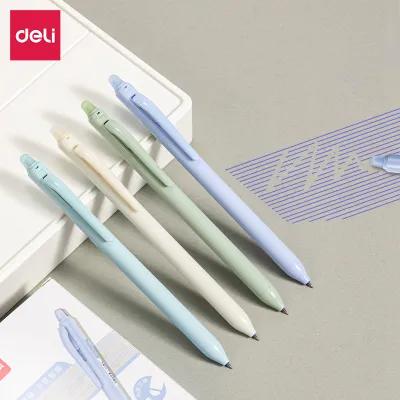
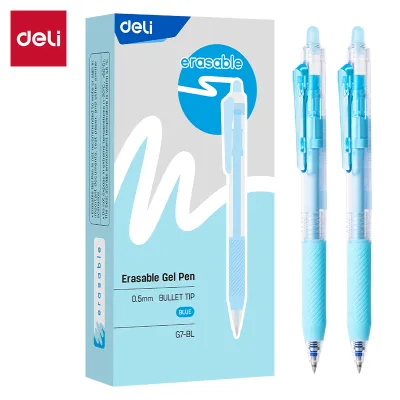
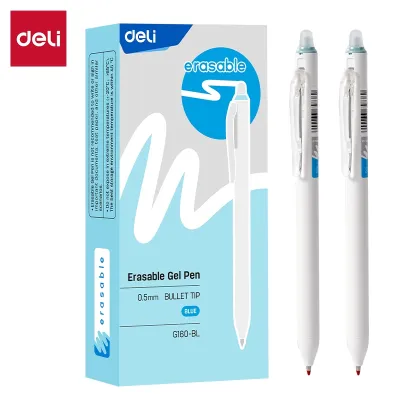
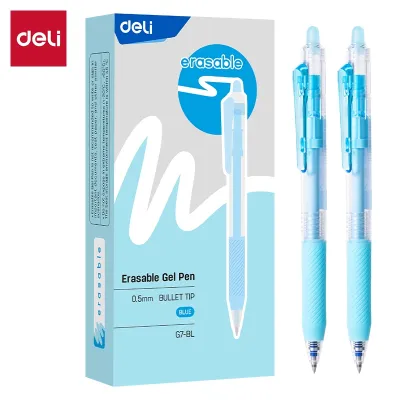
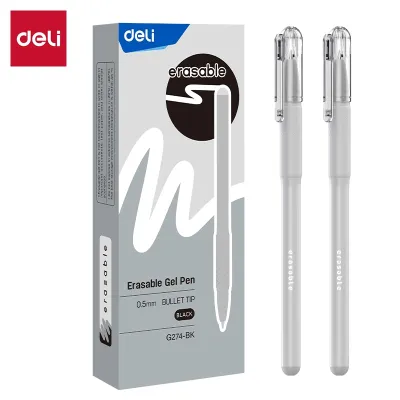
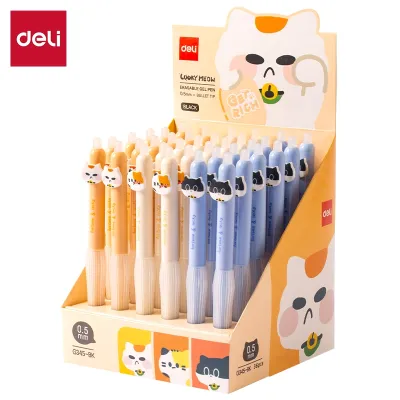
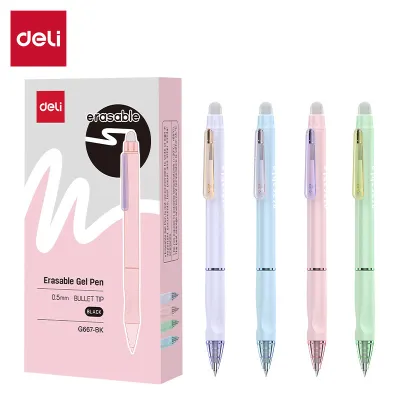
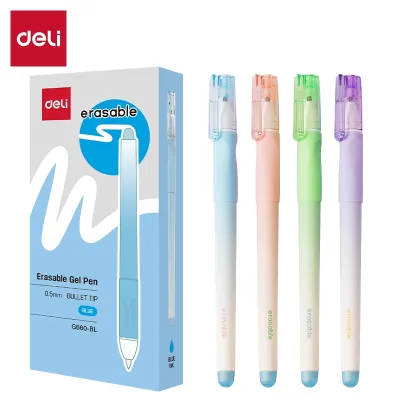
Prices are valid at publication and may change. Please refer to the product page for the latest price.
Because this erasing mechanism relies entirely on temperature rather than physical removal, users must observe strict boundaries regarding where and how they use these pens. You must never use erasable pens for signing legal documents, checks, business contracts, land titles, or official government forms. Similarly, they are highly unsuitable for official school examinations, board exams, or any archival records. If an official document signed with thermo-sensitive ink is scanned in a high-heat flatbed scanner, left near a warm office printer, or subjected to administrative processing heat, the signature can vanish entirely, creating severe legal and administrative complications.
In a tropical climate like the Philippines, temperature vulnerability is a critical daily consideration. If you leave your notebook or planner inside a hot car parked under direct sunlight in Manila, or on a desk near a sunny window, the ambient temperature can easily rise high enough to make your written notes fade or disappear completely. Conversely, because the chemical reaction is reversible, exposing the faded paper to extreme cold—such as placing it inside a home freezer or refrigerator compartment at temperatures below -10 degrees Celsius—will cause the pigment to crystallize and reappear. However, the restored ink may not look as crisp as the original writing; it often returns with a slightly hazy, ghost-like outline or faint discoloration.
For these reasons, the ideal use cases for Deli erasable pens are temporary, flexible, and casual writing tasks. They are exceptionally well-suited for daily school lecture notes, math homework drafts, bullet journaling layouts, temporary weekly planners, brainstorming sessions, and solving crossword puzzles or Sudoku. In these scenarios, the ability to quickly correct mistakes without messy correction tape or crossed-out lines outweighs any risks associated with temperature-induced fading.
Choosing the Right Tip Size for Your Writing Style
The tip size of your Deli erasable pen directly dictates the tactile feedback, ink consumption, and visual layout of your writing. Selecting the correct tip size involves evaluating your handwriting scale, the amount of pressure you apply while writing, and the specific paper medium you use most frequently.

Fine Point (0.38mm – 0.5mm) for Detailed Notes
Fine point Deli erasable pens, typically ranging from 0.38mm to 0.5mm, are engineered for precision and detail. If you have small, compact handwriting, these ultra-fine tips allow you to write legibly without your letters merging into illegible blobs. They are the ideal choice for students solving complex mathematical formulas, engineering students drawing intricate diagrams, or professionals filling out tight grids in compact pocket planners and personal diaries. The thin line ensures that even the smallest subscripts and symbols remain distinct and readable.
However, writing with a fine point requires a careful assessment of your paper texture. Because the metal tip of a 0.38mm or 0.5mm pen has a very small surface area, it can feel relatively scratchy or “toothy” when used on rough, fibrous, or low-quality paper, such as budget newsprint or thin school intermediate pads. This friction can sometimes cause the pen to skip or collect loose paper fibers in the nib, which restricts the ink flow. For the best writing experience with fine tips, pair them with smooth, high-density paper that allows the delicate metal point to glide effortlessly.
One of the most significant advantages of fine point erasable pens is their rapid drying speed. Because these tips lay down a very thin, controlled layer of water-based gel ink, the moisture evaporates almost instantly upon contact with the page. This rapid drying drastically reduces the risk of accidental smudging, making fine points highly recommended for left-handed writers whose hands naturally drag across recently written lines, as well as for fast-paced note-takers who need to flip notebook pages immediately during lectures.
Medium to Bold Point (0.7mm and above) for Smooth Flow
Medium to bold point Deli erasable pens, which generally measure 0.7mm and above, are designed for users who prioritize a rich, highly lubricated, and effortless writing sensation. If you have large, expansive handwriting or prefer writing in flowing cursive, a bolder tip provides the necessary ink volume to keep up with your hand’s natural speed. The larger ball bearing in the tip creates a thick cushion of ink between the metal nib and the paper, resulting in a buttery-smooth glide that minimizes hand fatigue during long writing sessions, such as journaling or drafting essays.
The trade-off for this exceptionally smooth flow is the volume of ink deposited onto the paper. Bolder lines lay down a significantly wetter layer of thermo-sensitive gel ink, which naturally requires a longer drying time—often several seconds—before it is safe to touch or attempt to erase. If you rub the eraser over a freshly written 0.7mm line too quickly, you will smear the wet pigment across the page, leaving a stubborn, dark smudge that is incredibly difficult to clean. Left-handed writers should exercise caution with bolder tips to avoid smearing the wet ink with their palms.
When shopping for Deli pens, always inspect the physical packaging or the pen barrel for the exact millimeter (mm) specification. While a package might be labeled with generic terms like “medium” or “fine,” these classifications can vary slightly between different product batches, manufacturing lines, or regional distributions. Checking the precise decimal measurement ensures you receive the exact line width you expect, avoiding the disappointment of a pen that writes either too thick or too thin for your personal style.
Evaluating Ink Colors, Opacity, and Paper Contrast
The visual appeal and readability of your notes depend heavily on the ink color, its inherent opacity, and how it contrasts with your chosen writing surface. Deli offers a wide range of color options, from standard utility shades to vibrant creative sets, each with unique performance characteristics.
Standard ink colors—namely black, blue, and red—are the workhorses of school and office environments. Blue and black are ideal for body text, providing a professional appearance that is easy on the eyes during long reading sessions, while red is perfect for highlighting corrections, marking errors, or drawing attention to critical deadlines. For creative projects, bullet journaling, and mind mapping, Deli also provides multi-color sets featuring pastel, neon, or metallic shades. These creative colors allow for beautiful visual hierarchies and color-coded organization systems that make studying more engaging.
However, users transitioning from standard permanent gel pens to erasable models must manage their expectations regarding ink opacity. Because thermo-sensitive ink relies on complex microcapsules containing color dyes and temperature-sensitive agents, the pigment concentration is naturally lower than that of traditional permanent inks. Consequently, erasable black ink often appears as a dark charcoal gray rather than a deep, pitch-black shade, and erasable blue ink may look slightly more translucent or pastel-toned. This lighter appearance is a normal characteristic of the technology and does not indicate a defective pen.
To ensure maximum readability, always test your chosen ink colors on a scrap piece of the exact paper you plan to use. Darker ink colors generally provide excellent contrast on white or off-white paper, but they can look dull or faded on cream-colored or yellowed pages. Conversely, light pastel or neon shades may look stunning in the barrel but can lack sufficient contrast on standard white notebook paper, making them difficult to read under dim study lights. Testing the contrast beforehand prevents eye strain and ensures your notes remain highly legible.
Another critical factor to consider is the risk of bleed-through and ghosting, particularly when using heavily saturated colors or broader 0.7mm tips. When wet gel ink saturates thin paper fibers, it can seep through to the other side (bleed-through) or remain visible as a shadow (ghosting), rendering the reverse side of the page unusable. To prevent this, verify the paper weight, which is measured in grams per square meter (GSM). For standard note-taking with erasable pens, a paper weight of at least 70 GSM to 80 GSM is recommended, while multi-color journaling and heavy layering require 100 GSM or higher to maintain clean, double-sided pages.
Comparing Retractable and Capped Pen Formats
The physical design of your pen influences its portability, ease of use, and how well the ink is preserved over time. Deli offers erasable pens in both retractable (click) and capped formats, each catering to different writing environments and user habits.
Retractable (Click) Pens for Everyday Carry
Retractable Deli erasable pens utilize a click-mechanism to extend and retract the writing tip, offering unmatched convenience for users on the move. The primary advantage of this design is its effortless, one-handed operation. With a simple press of the clicker, you can begin writing instantly, making these pens highly practical for students moving quickly between university classrooms, medical professionals taking rapid notes during hospital rounds, or busy commuters jotting down ideas on a clipboard. Because there is no separate cap to drop or lose, you never have to worry about a misplaced part rendering your pen useless.
However, the retractable design carries specific maintenance considerations, particularly when carried in bags or pockets. If a retractable pen is tossed loosely into a backpack, pencil case, or shirt pocket, other items can easily press against the clicker, accidentally extending the tip. This can lead to unsightly ink stains on your clothing or bag lining, and it can damage the delicate metal nib if it collides with hard objects. To prevent this, consider choosing models with stiff pocket clips that secure the pen in an upright position, or store them in a dedicated pen slot.
Furthermore, retractable pens rely on internal spring mechanisms that may not provide a completely airtight seal when the tip is retracted. If a retractable pen is left unused for several weeks, the volatile water-based solvents in the thermo-sensitive gel ink can slowly evaporate through the tiny gaps around the opening. This can lead to the ink drying out near the tip, causing annoying skipping, scratchiness, or “hard starts” when you eventually try to write. To maximize the lifespan of a retractable model, ensure the tip is fully retracted after every single use, and try to use the pen regularly to keep the ink flowing.
Capped Pens for Long-Term Ink Preservation
Capped Deli erasable pens feature a traditional removable cap that snaps securely over the writing tip, prioritizing ink preservation and long-term reliability. The standout benefit of a capped design is its superior airtight seal. When the cap is clicked firmly into place, it creates a highly effective barrier against air exposure, virtually eliminating ink evaporation. This makes capped pens the absolute best choice for occasional writers, home office setups, or stationery enthusiasts who maintain a large collection of pens and may leave specific colors unused for months at a time.
Despite their excellent sealing capabilities, capped pens require mindful handling to avoid common practical pitfalls. The most obvious risk is losing the cap in busy environments, such as crowded lecture halls or cluttered office desks. Without the cap, the exposed tip will dry out rapidly, rendering the pen unusable. Additionally, to maintain consistent ink flow and prevent air pockets from forming inside the ink cartridge, it is highly recommended to store capped pens horizontally in a drawer or flat pencil case. Storing them vertically tip-up can cause the ink to settle away from the nib, while storing them tip-down can sometimes lead to minor pooling inside the cap.
An interesting design feature of capped Deli erasable pens is the placement and size of the built-in rubber eraser. In many capped models, a larger, more prominent, and highly durable eraser tip is integrated directly onto the top of the cap, or positioned on the rear end of the pen barrel. Because this eraser is not part of a moving click-mechanism, it provides a very stable, rigid surface area that allows you to apply consistent friction over larger sections of text. This makes capped models exceptionally comfortable for heavy editing and extensive rewriting tasks.
Quick Selection Guide: Matching Features to Your Use Case
To help you quickly identify the ideal Deli erasable pen configuration for your daily routine, the following comparison table maps common user profiles to recommended specifications.
| User Profile | Recommended Tip Size | Ideal Ink Colors | Preferred Format | Key Verification Points |
|---|---|---|---|---|
| Student | 0.5mm | Blue, Black, Red | Retractable (Click) | Verify the availability of compatible Deli ink refills; check that the barrel features a comfortable rubberized grip for long writing sessions. |
| Bullet Journaler | 0.38mm – 0.5mm | Multi-color sets, Pastels | Capped | Check the packaging for acid-free ink claims to protect paper longevity; ensure your journal paper is at least 80 GSM to prevent ghosting. |
| Office Professional | 0.5mm – 0.7mm | Black, Dark Blue | Retractable (Click) | Look for professional, minimalist barrel designs; verify that the pocket clip is sturdy and made of durable plastic or metal. |
| Puzzle / Crossword Enthusiast | 0.7mm | Black, Blue | Capped | Choose models with a prominent, flat eraser tip on the cap for stable, heavy erasing; verify that the ink flows smoothly on newsprint. |
As summarized in the table, finding the “best” Deli erasable pen is entirely dependent on the unique intersection of your handwriting size, the quality and weight of the paper you use, and your need for daily portability. By checking these specific product labels and physical features before purchasing, you can ensure your chosen pen fits seamlessly into your lifestyle.
Paper Compatibility and Erasing Best Practices
Achieving a clean, residue-free erase without damaging your writing surface requires a basic understanding of paper compatibility and proper erasing techniques. Not all papers are created equal, and how they interact with thermo-sensitive ink plays a massive role in your overall satisfaction.
For the cleanest erasing results, always write on smooth, coated, or standard medium-weight notebook paper (typically between 70 GSM and 90 GSM). High-quality, smooth paper fibers allow the thermo-sensitive gel ink to sit evenly on the surface without penetrating too deeply. In contrast, rough, highly porous, or recycled papers—such as budget construction paper, newsprint, or cheap sketchpads—have loose, absorbent fibers that trap the ink pigment deep within the sheet. When you attempt to erase on these rough surfaces, the built-in rubber tip cannot generate uniform friction across the trapped pigment, often leaving a faint, permanent shadow or a messy, half-erased stain.
The technique you use to erase is just as important as the paper itself. To erase cleanly, hold the paper flat with one hand to prevent it from wrinkling, and rub the built-in rubber tip over the text using moderate, rapid, back-and-forth strokes. The goal is to generate localized friction-heat, not to physically scrape the ink away. Avoid applying heavy downward pressure, as pushing too hard can easily tear thin paper sheets, stretch and weaken the paper fibers, or leave a shiny, burnished spot that refuses to accept new ink when you try to rewrite over the corrected area.
Timing is another crucial factor that many users overlook. Always allow the thermo-sensitive gel ink to dry completely—which usually takes between three to five seconds depending on the tip size and paper type—before attempting to erase any mistakes. If you rub the eraser over wet or partially dry ink, you will physically smear the wet pigment across the page, creating a dark, messy smudge. Once smeared, the pigment becomes incredibly difficult to erase cleanly, as it spreads over a wider surface area and sinks deeper into the paper fibers.
Lastly, maintain the cleanliness of your pen’s built-in rubber eraser tip to ensure optimal performance. Over time, during heavy editing or sketching sessions, the rubber tip can accumulate microscopic ink residue, graphite dust from pencils, or oils from your hands. If you rub a dirty eraser tip onto a clean page, you risk transferring these dark smudges back onto your work. To prevent this, make it a habit to wipe the rubber tip firmly on a scrap piece of clean paper or a slightly damp microfiber cloth whenever you notice it looking discolored. Keeping the eraser clean ensures that every correction remains completely invisible.
Frequently Asked Questions (FAQ)
Can I use a hairdryer to erase large sections of Deli erasable ink?
While applying high heat from a hairdryer will indeed make large sections of Deli erasable ink turn invisible, this method carries significant practical risks. The intense, unfocused heat from a hairdryer can easily warp thin paper pages, melt the adhesive bindings of notebooks, or cause plastic folders to deform. Furthermore, because the heat spreads rapidly across the page, you run a high risk of accidentally erasing adjacent notes or drawings that you intended to keep. It is highly recommended to use the built-in rubber eraser tip for targeted, precise corrections, and to reserve heat application only for intentional, full-page artistic techniques on heat-safe, heavy cardstock.
Why did my erased Deli pen writing reappear in the refrigerator?
The reappearance of erased writing in cold temperatures is due to the chemical nature of thermo-sensitive ink, which is never physically removed from the paper. When you rub the eraser over the ink, the friction-heat merely alters the molecular structure of the pigment, rendering it transparent. When the paper is exposed to freezing temperatures—such as inside a household refrigerator or freezer compartment—the chemical reaction reverses, causing the pigment to crystallize and become visible once again. This reversible characteristic is precisely why erasable pens must never be used for permanent records, legal signatures, or financial documents.
How should I store Deli erasable pens to prevent them from drying out?
To maximize the lifespan and performance of your Deli erasable pens, store them horizontally in a drawer, pencil case, or desk organizer. Horizontal storage keeps the gel ink in constant, even contact with the writing nib, preventing air bubbles from forming inside the cartridge and ensuring immediate ink flow when you start writing. Additionally, keep your pens far away from direct sunlight, radiators, hot electronic devices, or the glove compartment of a car. Prolonged exposure to high ambient temperatures can prematurely degrade the thermo-sensitive pigments, cause the ink to separate inside the barrel, or dry out the gel medium entirely.
Community discussion
Share your experience or ask a question. Comments are reviewed before publication.