
Finding the right document organizer is the difference between a streamlined, stress-free workflow and a chaotic mountain of misplaced papers. Whether you are managing household bills, school modules, legal contracts, or corporate files, the ideal storage solution depends on your specific handling habits, document volume, and workspace constraints. In the Philippines, this decision is further shaped by local paper standards—where long legal-size documents are as common as standard A4—and tropical environmental factors like high humidity, which can quickly degrade low-quality stationery.
To choose the correct organizer, you must look beyond aesthetic appeal and evaluate functional specifications such as material durability, expansion capacity, and ease of retrieval. A mismatched organizer often leads to bent document corners, torn edges, or a system that is simply too tedious to maintain, eventually resulting in papers piling up on your desk again. By diagnosing your paper habits first, you can select a tool that integrates naturally into your daily routine and preserves your important documents for years to come.
Quick Diagnostic: Match Your Paper Habits to the Right Organizer
Before investing in filing supplies, identifying your primary paper-handling behavior will instantly narrow down your choices. Different tasks require different structural designs, and matching your daily workflow to the correct category prevents the frustration of using an inefficient system. Use the following behavioral profiles to identify your starting point:
Products mentioned in this guide
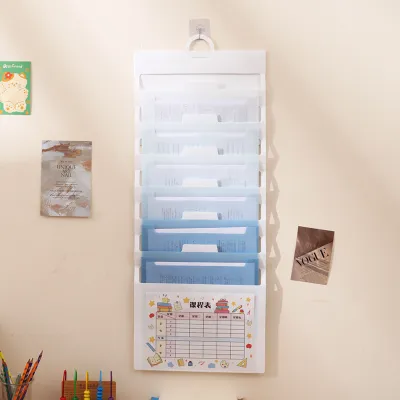
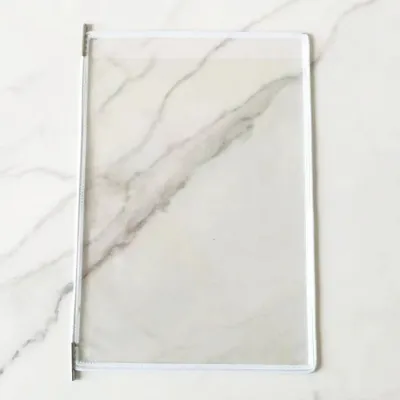
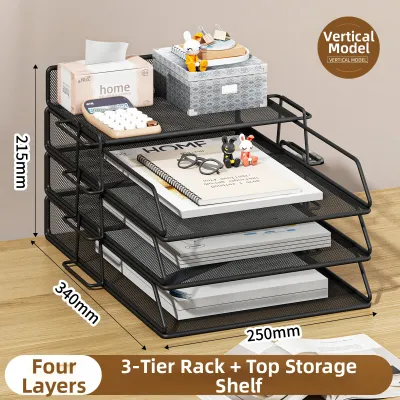
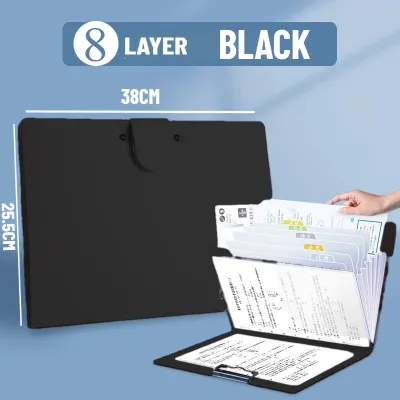
Prices are valid at publication and may change. Please refer to the product page for the latest price.
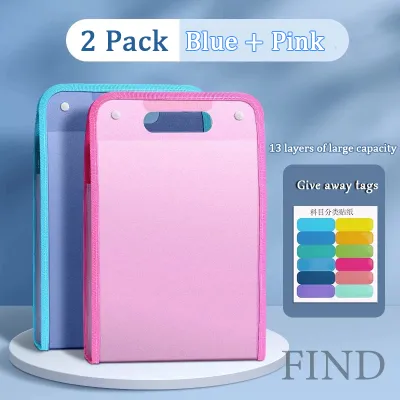
- Daily Commuters and Students: If you frequently carry active worksheets, lecture notes, or project briefs between home, school, or external meetings, look for a slim expanding file or a ring binder. These options keep loose papers secure and flat inside a backpack or tote bag.
- Active Project Managers: If you handle incoming invoices, daily mail, or ongoing client files that require constant visibility and quick retrieval throughout the day, a desktop sorter or tiered tray is your best option. It keeps high-priority papers within arm's reach without cluttering your desk surface.
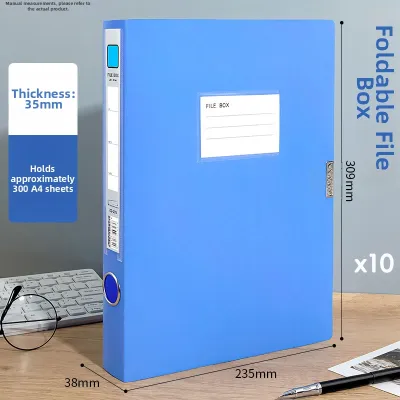
- Long-Term Archivists: If you need to store tax records, land titles, birth certificates, or completed project histories that you rarely need to access but must keep safe, opt for a heavy-duty folder box or a system of hanging file folders.
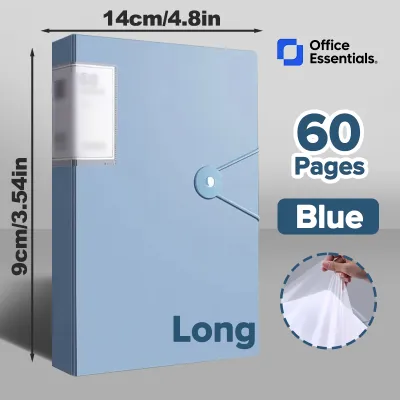
- Reference Book and Manual Users: If you manage documents that must be read in a specific sequence, updated page by page, or displayed to clients, a ring binder with plastic sheet protectors provides the necessary structure and protection.
Assess Your Document Volume and Access Frequency
The sheer volume of your paperwork and how often you need to retrieve it are the most critical factors in determining your organizer’s capacity and enclosure type. Document workflows generally fall into two distinct categories: active files and archival records. Understanding where your papers belong on this spectrum prevents you from buying an organizer that is either too small or overly cumbersome to open.

Active papers are low-volume but high-frequency documents, such as monthly utility bills, active school assignments, or current project drafts. Because you need to access these papers multiple times a week, they should be stored in open, easily accessible organizers. Placing active files inside deep, lidded boxes or multi-layered filing cabinets creates friction; the extra steps required to open and file them often lead to papers being left in loose piles on your desk. For these items, open desktop trays or shallow vertical sorters are ideal because they allow you to drop in or pull out pages in a single motion.
Archival papers, on the other hand, represent high-volume, low-frequency storage. These include documents like past tax filings, academic diplomas, medical records, and historical business receipts. Because you may only need to access these files once or twice a year, security and environmental protection are far more important than instant accessibility. Archival organizers must be fully enclosed to shield papers from dust, light, and ambient moisture. High-capacity expanding files with secure lids or sturdy folder boxes with tight-fitting covers are excellent for keeping these bulky records compressed and protected over long periods.
To determine the capacity you actually need, perform a simple physical measurement of your current paper stack. Grab the papers you intend to organize and stack them neatly on a flat surface. Measure the height of the stack with a ruler:
- Under 2 centimeters (approx. 150 sheets of standard 70gsm paper): A standard flat folder, a slim 1-inch ring binder, or a low-capacity desktop tray is sufficient.
- 2 to 5 centimeters (approx. 150 to 400 sheets): A mid-sized expanding file or a 2-inch D-ring binder is required to prevent bulging and page damage.
- Over 5 centimeters (400+ sheets or multiple thick booklets): You require a heavy-duty folder box, a multi-pocket accordion file with a wide bottom gusset, or a dedicated vertical magazine file.
Evaluate Portability and Workspace Constraints
Your physical environment and daily mobility dictate whether you need a stationary storage system or a portable, travel-friendly organizer. Buying a heavy, rigid organizer when you constantly work on the go leads to unnecessary physical strain, while using a flimsy, travel-oriented folder for permanent desk storage can result in a messy, unstable workspace.
If your work is primarily stationary, you must evaluate your available desk footprint and drawer depth. In many modern home offices or shared corporate workspaces, desk surface area is at a premium. If your desk is small, horizontal stacking trays can quickly consume your entire workspace. In these scenarios, vertical storage solutions—such as vertical desktop sorters or magazine files—are significantly more efficient. They utilize vertical air space rather than horizontal desk space, leaving you with more room for your laptop, mouse, and writing materials. Additionally, if you plan to store your organizers inside a desk drawer or a filing cabinet, measure the internal depth and height of the drawer beforehand to ensure the organizer’s tabs or lids do not block the drawer from closing.
For mobile professionals and students, portability and security are the primary concerns. Commuting in urban areas like Metro Manila involves navigating crowded public transit and unpredictable tropical weather. A portable document organizer must be lightweight, rigid enough to protect papers from being bent inside a packed bag, and completely secure. Look for slim expanding files with secure elastic cord closures, snap buttons, or full-zipper enclosures to ensure loose sheets do not slide out during transit. Furthermore, water-resistant plastic outer shells are highly recommended to protect your documents from sudden rain showers or accidental liquid spills inside your bag.
Compare the 4 Main Types of Document Organizers
Each type of document organizer is engineered for a specific style of paper management. To make an informed purchase, you must understand the unique structural advantages, limitations, and key selection criteria of the four primary categories available on the market.
Expanding Files (Accordion Folders)
Expanding files, commonly known as accordion folders, feature multiple internal pockets that expand outward, allowing you to categorize loose sheets within a single, self-contained unit. They are highly efficient for organizing documents by chronological order (such as monthly bills), subject matter, or project phases.
- Key Selection Criteria: When choosing an expanding file, inspect the bottom and side gussets. A quality file should have reinforced fabric or plastic gussets that expand evenly, allowing the folder to stand upright on its own when filled. Check the closure mechanism; elastic bands offer flexibility for overstuffed files, while plastic snap buttons provide a more rigid, secure lock. Ensure the internal dividers have clear, readable tab inserts so you can label each section accurately.
Binders and Ring Files
Binders and ring files are designed for documents that must be kept in a strict, sequential order or frequently flipped through like a book. They are ideal for training manuals, presentation portfolios, recipe collections, and academic study guides where pages are continuously added, removed, or reorganized.
- Key Selection Criteria: Pay close attention to the ring mechanism. D-ring binders are generally superior to standard O-ring binders because the straight edge of the D-ring allows pages to lie flat and stack neatly on one side, reducing the risk of tearing the punched holes. Verify the ring capacity: a 1-inch binder typically holds up to 200 sheets, while a 2-inch binder can accommodate up to 400 sheets of standard paper. Ensure you have a compatible hole punch, or pair the binder with clear plastic sheet protectors to avoid punching holes in original documents.
Folder Boxes and Magazine Files
Folder boxes and vertical magazine files are heavy-duty, high-capacity containers designed to sit on shelves, desks, or inside cabinets. They excel at holding bulky items that cannot be easily hole-punched or categorized in standard folders, such as thick catalogs, bound reports, magazines, and dense archival folders.
- Key Selection Criteria: Structural rigidity is the most important factor for these organizers. Cheap, thin cardboard boxes will quickly buckle, warp, or sag under the weight of heavy paper stacks. Opt for thick, high-density plastics or reinforced, heavy-duty paperboard. If you choose folder boxes designed for hanging files, verify that the internal rails are smooth and rigid, allowing the metal hooks of your hanging folders to slide effortlessly without falling off the tracks.
Desktop Sorters and Trays
Desktop sorters and letter trays are open-access organizers designed to manage your daily, active workflow. They keep high-priority documents visible and organized, preventing the common problem of “out of sight, out of mind” that occurs when active tasks are hidden away in closed files.
- Key Selection Criteria: Choose between horizontal trays and vertical dividers based on your workflow. Horizontal trays are excellent for sorting papers by process stage (e.g., "Incoming," "To Sign," "Completed"), but they require a larger desk footprint. Vertical sorters are better for sorting folders, notebooks, and mail in a compact space. Ensure the slot widths are wide enough to accommodate thicker items like bound notebooks, legal folders, or mail packets without snagging the edges when you pull them out.
Crucial Sizing and Material Checks Before You Buy
Before finalizing your purchase, there are two critical, often-overlooked factors that can render a document organizer completely useless: paper size compatibility and material durability under local environmental conditions.
First, you must verify the exact internal dimensions of the organizer against the paper sizes you actually use. While standard A4 paper (210 x 297 mm) is widely used globally, the Philippines heavily relies on “Long” bond paper, which is equivalent to US Legal or Folio size (8.5 x 13 inches or 216 x 330 mm). Many imported document organizers are designed strictly for A4 or US Letter sizes. If you attempt to store local legal-sized documents in an A4-only expanding file or binder, the top edges of the papers will stick out, preventing the file from closing and leaving the documents exposed to bending, tearing, and dust. Always check the product specifications explicitly for “Legal Size” or “Folio Size” compatibility if you handle government forms, school worksheets, or legal contracts.
Second, consider the impact of the tropical Philippine climate on different organizer materials. High relative humidity can cause rapid degradation of stationery supplies. Untreated, porous cardboard organizers absorb moisture from the air, causing them to soften, warp, sag, and eventually develop mold or mildew, which can permanently stain and ruin your papers. For long-term storage in non-airconditioned rooms, opt for moisture-resistant plastics like polypropylene (PP) or powder-coated metal mesh. If you prefer binders, inspect the metal ring mechanisms; look for rust-resistant coatings or stainless steel fittings to ensure the rings continue to open and close smoothly without leaving rust stains on your pages. Furthermore, if you use plastic pockets or sheet protectors, verify that they are labeled “acid-free” or “copy-safe” to prevent the plastic from chemically bonding with and lifting the toner off your printed documents over time.
Frequently Asked Questions (FAQ)
How do I organize mixed paper sizes like A4 and Legal in one system?
To manage mixed paper sizes efficiently without damaging your documents, always size up your organizer to match the largest paper format in your collection. Invest in legal-sized expanding files, folder boxes, or hanging folders, which can easily accommodate both standard A4 and longer legal sheets side by side. Avoid using standard A4 binders for legal papers, as you would have to fold the bottom edges of the longer sheets or punch non-standard holes, which ruins the document’s professional appearance and structural integrity.
Is it better to use plastic or mesh organizers for a humid workspace?
For highly humid environments, solid polypropylene (PP) plastic is generally the safest choice for sensitive paper storage because it acts as a complete moisture barrier and can be easily wiped clean of dust and mold. If you prefer the modern look of metal mesh desktop organizers, ensure they feature a high-quality, powder-coated or rust-resistant finish. Uncoated or cheaply painted metal mesh will rapidly oxidize in humid conditions, leading to rust flaking that can permanently stain and degrade your important papers.
Community discussion
Share your experience or ask a question. Comments are reviewed before publication.