
Finding the right documents organizer box is a matter of matching your daily workflow, document volume, and physical space to the correct structural design. Rather than searching for a single universal container, evaluating the four primary styles—stackable, drawer-style, compartmentalized, and binder-holder—against your specific retrieval habits will reveal the most efficient setup for your home or office.
Identify Your Document Storage Requirements
To build an efficient filing system, you must first analyze the physical characteristics of your paperwork and the environment where it will live. Document volume and weight are the primary factors that dictate the required structural strength of your organizer. Standard copy paper is relatively light in small quantities, but a full box of tax forms, legal documents, or heavy cardstock can easily bow or crack a flimsy plastic container.
Access frequency is another critical variable that separates active files from archival storage. If you need to retrieve a document multiple times a day, placing it in a sealed box at the bottom of a stack will quickly disrupt your productivity. Conversely, long-term archives that you only access once a year do not need to occupy valuable desktop real estate.
Products mentioned in this guide
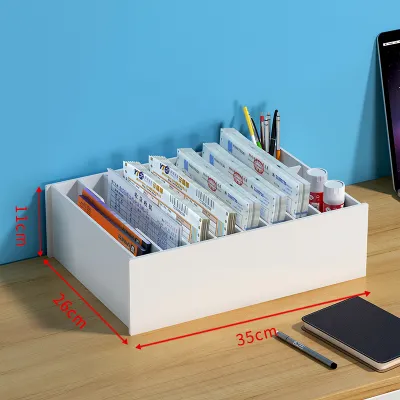
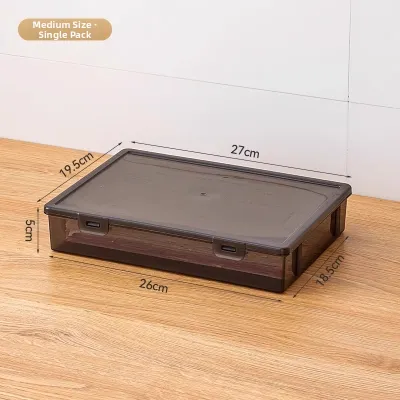
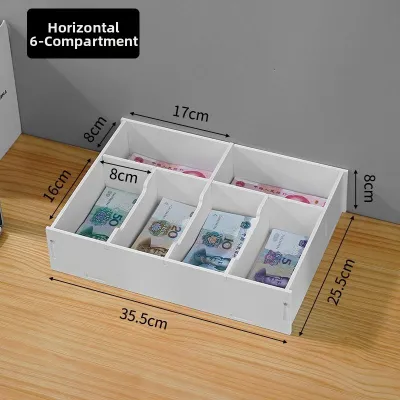
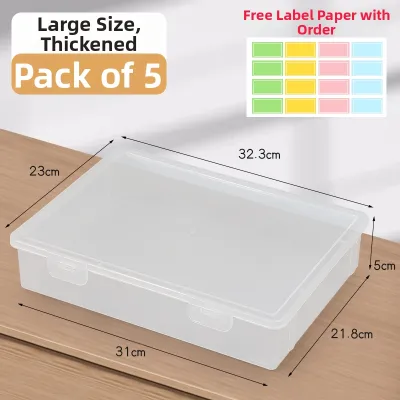
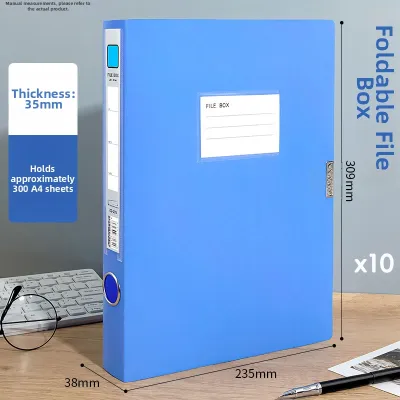
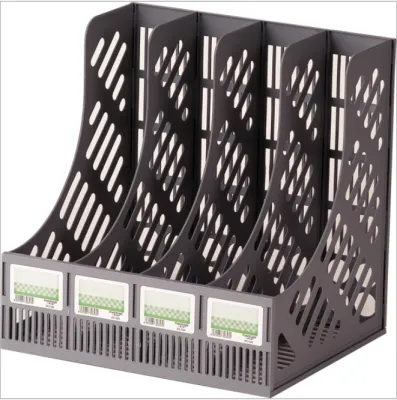
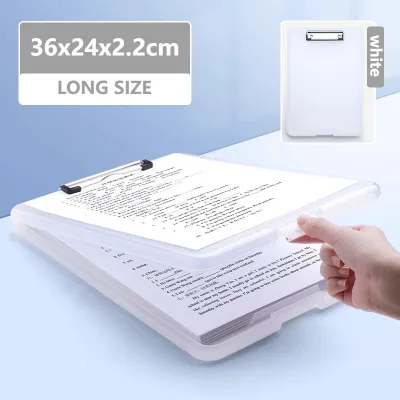
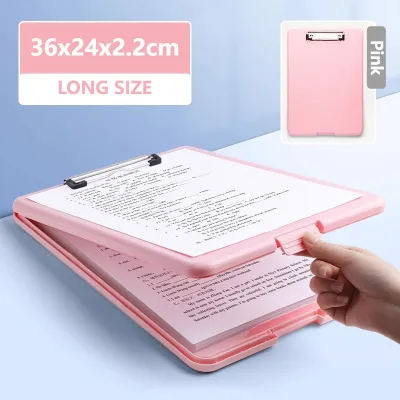
Prices are valid at publication and may change. Please refer to the product page for the latest price.
Physical space constraints in your home or office will establish the maximum footprint and height limits for your storage setup. Before browsing online marketplaces, measure your desk, shelves, or cabinets to ensure your chosen container will fit comfortably. In tropical climates like the Philippines, where seasonal humidity can soften paper fibers, choosing the right material and placement is essential to prevent your documents from sagging or warping over time.
Compare Common Documents Organizer Box Styles
Different organizational challenges require distinct physical structures. While stackable boxes, drawer-style units, compartmentalized sorters, and binder-holders all keep paper off your desk, they serve entirely different roles in a filing system. Regardless of the style you choose, remember that material thickness and joint construction ultimately determine the load capacity and longevity of the unit.

Stackable Boxes for High-Volume Archiving
Stackable boxes are the traditional choice for high-volume, long-term archiving. This style is best for infrequently accessed files, such as tax records from previous years or completed project folders, because it allows you to maximize vertical shelf space in tight areas. By stacking containers upward, you minimize the horizontal footprint required for deep storage.
When selecting stackable units, always verify the interlocking lip depth and base stability. A shallow lip or a flexible plastic base can cause a tall stack to lean or tip over when fully loaded with heavy paper. Look for reinforced corners and lids that snap securely to ensure the stack remains stable even under a full load.
The primary trade-off of this style is accessibility. Retrieving a file from the bottom box requires unstacking every container above it, which makes stackable boxes highly inefficient for daily active sorting. If you find yourself unstacking boxes more than once a week, it is time to transition those active files to a more accessible style.
Drawer-Style Units for Daily Desk Access
Drawer-style units are designed for active, high-frequency desk use. They are best for daily paperwork, incoming mail, and active client files because they keep your desk surface clear while maintaining quick, concealed access to your documents. Pulling out a drawer requires minimal effort and keeps sensitive information out of sight.
When evaluating drawer units, test the smoothness of the drawer glides and check the internal depth. The drawer must accommodate standard folder lengths and tab heights without bending or catching on the frame. If the drawer binds or requires two hands to pull open, it will quickly become a source of frustration.
Keep in mind that drawer-style units generally require a larger horizontal footprint on your desk or shelf compared to vertical sorters. Additionally, overfilling a drawer can cause papers to slide over the back edge, jamming the mechanism and potentially tearing your important documents.
Compartmentalized Sorters for Active Project Management
Compartmentalized sorters feature multiple open slots or shelves, making them ideal for active project management and rapid document routing. This style is best for sorting incoming and outgoing mail, organizing student assignments, or separating different phases of an active project on your desktop. The open design allows you to slide papers in and out instantly.
Before choosing a compartmentalized sorter, confirm that the slot width and height match your specific paper sizes. If the slots are too narrow, you will be forced to fold or crease your documents to make them fit. Look for units with adjustable dividers so you can customize the compartment sizes as your project needs change.
The main limitation of open compartmentalized sorters is exposure. Because the tops and fronts are open, documents are vulnerable to dust, spills, and environmental humidity. This open structure also limits the overall capacity per slot, as overstuffing will cause papers to spill out or sag.
Binder-Holders for Heavy Reference Materials
Binder-holders, often referred to as magazine files or upright organizers, are designed specifically for heavy reference materials. This style is best for storing thick ring binders, reference manuals, catalogs, and heavy books that would otherwise warp or crush standard open boxes. They keep these bulky items upright and organized on your shelf.
To handle concentrated, uneven weight, a quality binder-holder must feature reinforced side panels and a non-slip base pad. Without these features, a heavy binder can easily tip the holder sideways, creating a domino effect on your bookshelf. Look for sturdy plastics, heavy-duty chipboard, or metal mesh constructions.
While excellent for bound materials, binder-holders are highly inefficient for storing loose sheets of paper or thin manila folders. Loose papers will slide down, curl at the bottom, and become difficult to retrieve, meaning this style should be reserved strictly for bound or structured items.
Key Specifications to Check Before Buying
To ensure your new documents organizer box integrates seamlessly with your existing office supplies, you must verify several key physical specifications before making a purchase. Always measure the internal dimensions of the organizer and compare them directly against your largest folders or binders. Relying solely on external dimensions can lead to disappointment, as thick walls, drawer glides, and internal dividers often reduce the actual usable space.
Next, check the manufacturer’s weight limits and material thickness. A box designed for lightweight letters may buckle under the weight of heavy legal-size folders. If you plan to store dense, high-volume archives, prioritize materials like heavy-duty corrugated cardboard with double-walled construction, or thick, impact-resistant plastics.
Finally, inspect the edge finishing and joint construction of the organizer. Smooth, rounded edges prevent paper from snagging or tearing during frequent retrieval, and they protect your hands from scratches. For plastic units, look for clean seams without sharp molding flash; for wooden or cardboard units, ensure the joints are securely glued or reinforced with metal rivets.
Space and Setup Tips for Your Chosen Organizer
Proper placement of your document organizers not only improves your daily workflow but also ensures physical safety and stability in your workspace. Always place heavy, archive-style stackable boxes on lower shelves or closer to the floor. This keeps the center of gravity low, preventing top-heavy shelves from tipping over and making it safer to lift heavy boxes when retrieval is necessary.
For active daily tasks, group your compartmentalized sorters and drawer units within arm’s reach of your primary work zone. Placing these active organizers near your desk allows you to route incoming paperwork immediately, preventing clutter from accumulating on your main writing surface.
If you are using drawer-style units, remember to leave adequate clearance in front of and above the organizer. Ensure there are no desk accessories or computer monitors blocking the full extension of the drawers. If you place a drawer unit on a shelf, verify that the shelf above it provides enough clearance so you can easily reach inside the open drawer without scraping your knuckles.
Frequently Asked Questions (FAQ)
Can I mix different styles of organizer boxes on the same shelf?
Yes, mixing different styles is an excellent way to create a customized filing system, provided you follow basic safety rules. You can use visual uniformity—such as choosing organizers of the same color or material—to keep your workspace looking cohesive while using different structures for different tasks. However, never stack non-interlocking styles together, and avoid placing heavy drawer units or binder-holders on top of lightweight, stackable boxes, as this can cause the lower containers to collapse.
How do I prevent paper from warping inside a compartmentalized sorter?
To prevent paper from warping or curling, ensure that each slot is wide enough for documents to slide in flat without any forced bending. In humid environments, loose papers are highly susceptible to moisture absorption, which causes them to curl. To protect your documents, keep open-top sorters away from direct sunlight, open windows, and high-humidity areas, and consider using plastic sheet protectors or folders inside the slots to provide extra structural support.
Community discussion
Share your experience or ask a question. Comments are reviewed before publication.