
Selecting the right Doloha acrylic marker set requires matching the physical characteristics of the pen—such as its nib shape, ink delivery system, and color selection—to the specific demands of your creative medium. Whether you are detailing smooth river stones, painting on stretched canvas, or decorating glassware, the success of your project depends on how the water-based acrylic ink interacts with the surface. In the tropical climate of the Philippines, environmental factors like high humidity and ambient heat also play a significant role in how quickly the ink dries, flows, and cures. By understanding these variables, you can choose a set that minimizes clogging, prevents bleeding, and ensures vibrant, long-lasting results.
Core Specifications to Evaluate in Doloha Marker Sets
Nib Types and Line Control
The nib is the primary point of contact between the marker and your medium, directly dictating the level of detail and coverage you can achieve. Doloha marker sets typically feature different nib configurations, including extra-fine (often 0.7mm to 1mm), medium bullet (2mm to 3mm), and flexible brush tips. Extra-fine nibs, usually made of rigid plastic or dense synthetic fibers, are designed for precise outlines, intricate mandalas, and fine lettering. Medium bullet tips offer a balance, making them suitable for filling in medium-sized shapes and drawing bold lines. Brush tips provide variable line widths based on the pressure applied, which is highly useful for calligraphy and organic shading. When working on rough surfaces like unpolished wood or textured stone, rigid fiber nibs may fray over time, so verifying if a set includes durable or replaceable tips is a key consideration.
Ink Capacity and Barrel Design
The physical size of the marker barrel determines both its ink capacity and its ergonomic comfort during extended creative sessions. Slimmer, pen-style markers are lightweight and easy to maneuver, making them comfortable for detailed sketching and hand lettering. However, their smaller reservoirs hold less ink, meaning they may run dry quickly on large-scale projects. Conversely, thicker, jumbo-style markers house a larger volume of acrylic paint, making them more economical for covering broad areas. For artists undertaking extensive canvas paintings or mural work, choosing larger barrel sizes prevents the interruption of running out of a primary color mid-project.
Products mentioned in this guide
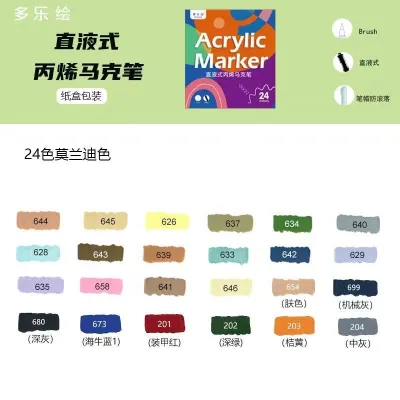
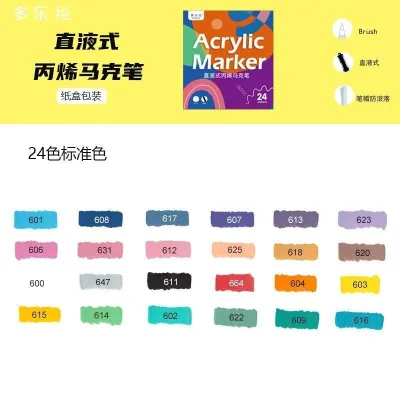
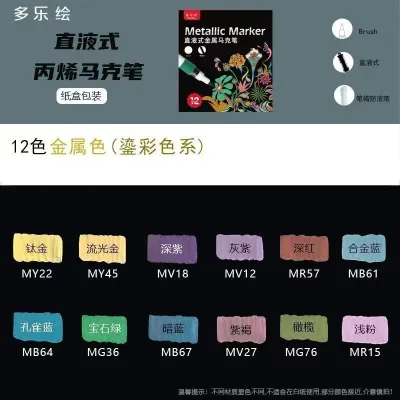
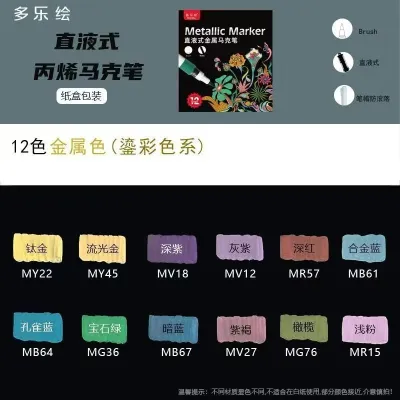
Prices are valid at publication and may change. Please refer to the product page for the latest price.
Color Range and Pigment Variations
Doloha marker sets are packaged in various color assortments, ranging from basic primary palettes to specialized collections. Standard sets provide essential colors that form the foundation of most artwork, allowing for straightforward color schemes. Pastel sets offer softer, desaturated tones that are highly popular for modern illustrations, journaling, and nursery decor. Metallic sets, featuring gold, silver, and bronze shades, utilize specialized pigments that reflect light, making them excellent for holiday decorations or high-contrast designs on dark paper. Neon sets provide highly vibrant, fluorescent hues that stand out under specific lighting conditions. When selecting a set, consider the opacity of these pigments; lighter pastel and neon shades may require multiple coats to achieve full coverage over dark or textured backgrounds.
Matching Marker Sets to Specific Art Projects
Rock Painting and Detailed Crafts
Rock painting demands an ink formulation that is highly opaque and a nib that can withstand rough, uneven surfaces. For this application, fine or extra-fine bullet nibs are highly suitable, as they allow you to navigate the natural contours of the stone and execute detailed patterns. Because natural rocks are highly porous, they tend to absorb liquid rapidly, which can lead to dull colors if the ink is too thin. Selecting a marker set with high pigment density ensures that the paint sits on top of the stone rather than soaking in completely. To achieve the best results, it is advisable to wash the rocks thoroughly to remove dirt and dust, which can easily clog the marker nibs. Applying a light base coat of white acrylic paint or gesso can also help the marker colors appear more vibrant and prevent the stone’s natural dark tone from showing through.

Canvas Art and Large-Scale Painting
Canvas presents a woven, textured surface that requires a steady, generous flow of ink. For large-scale canvas art, medium bullet, chisel, or brush nibs are preferred over extra-fine tips, as they allow you to cover broad areas without wearing down the nib or exhausting the ink supply prematurely. When working on canvas, artists often look to blend colors to create gradients or soft transitions. While water-based acrylic markers dry relatively quickly, blending can be achieved by working wet-on-wet—applying a second color immediately adjacent to the first while both are still wet—or by using a damp synthetic brush to soften the edges. In the Philippines, the prevailing high humidity can slightly extend the wet window of the ink, giving you a brief additional moment to blend colors before they set. However, this also means you must allow extra drying time between layering contrasting colors to prevent the wet layers from bleeding into one another.
Glass, Ceramic, and Non-Porous Surfaces
Decorating non-porous surfaces like glass, glazed ceramics, and polished plastics requires careful attention to ink adhesion. Because these materials do not absorb paint, the acrylic ink relies entirely on surface tension and chemical bonding to stay in place. Before applying any marker, the surface must be thoroughly degreased using isopropyl alcohol to remove fingerprints and oils. When choosing a Doloha set for these projects, verify the manufacturer’s label for explicit compatibility with glass and ceramics. On non-porous items, the dried ink remains susceptible to scratching or peeling unless it undergoes a curing process. Depending on the specific product instructions, this may involve air-curing the item for several days or heat-setting it in a household oven at a specified temperature. Always check the packaging for these exact parameters, as improper heating can crack the glass or discolor the paint.
Building Your Shortlist: What to Verify Before Purchase
Reviewing Surface Compatibility Labels
Before purchasing a Doloha acrylic marker set, carefully read the product description and packaging labels to confirm that the ink formulation matches your intended medium. Manufacturers typically classify markers as either multi-surface or specialized. Multi-surface markers are versatile and designed to work on paper, wood, metal, stone, and plastic. However, if your project involves a highly specific material, such as fabric or outdoor terracotta, look for labels that explicitly mention these surfaces. Fabric applications, for instance, often require heat-setting with an iron to remain wash-fast, while outdoor items require ink with high UV resistance to prevent fading under intense tropical sunlight.
Checking Drying, Curing, and Sealing Instructions
Drying time and curing time are two distinct phases in the life of acrylic ink. Drying refers to the evaporation of water, leaving the paint dry to the touch, which typically happens within minutes. Curing is the chemical process where the acrylic polymers fully cross-link and bond to the surface, which can take anywhere from 24 hours to several days. In humid environments, this curing process can be significantly delayed. Before starting a project, check the manufacturer’s instructions for recommended drying intervals between coats and the total curing time required before the item can be handled or exposed to moisture. If the project is intended for functional use, such as a ceramic mug, verify if the ink is labeled as dishwasher-safe after heat-setting, or if it is strictly intended for decorative, hand-wash-only items.
Evaluating Bundle Value in ₱
When comparing different Doloha marker sets on local ecommerce platforms, evaluate the overall value by calculating the cost per marker in Philippine Pesos (₱). A larger set of 48 or 60 markers may have a higher upfront cost but often offers a lower price per pen compared to a 12-pack. However, a larger set is only a better value if you intend to use the majority of the colors. Examine the color list to ensure the set contains essential shades like black, white, and primary colors, which are used most frequently, rather than an excess of highly specific pastel or metallic shades that may sit unused. Additionally, check if the manufacturer or local stationery suppliers offer individual replacement markers or replacement nibs. Being able to replace a single dried-out black marker without purchasing an entire new set is a major factor in long-term cost efficiency.
Frequently Asked Questions (FAQ)
Do acrylic markers require a sealant for outdoor or high-wear projects?
Yes, outdoor or high-wear projects generally require a protective sealant to preserve the artwork. While water-based acrylic ink is highly water-resistant once fully cured, continuous exposure to rain, humidity, and UV rays will eventually cause the paint to fade, peel, or chip. Before applying a sealant, check the marker manufacturer’s instructions to ensure compatibility, as some solvent-based spray sealants can dissolve or smear acrylic ink. It is highly recommended to apply a clear, UV-resistant acrylic spray sealer in thin, even coats, allowing each layer to dry completely. Always perform a test application on a small scrap piece of the same material to verify that the sealer does not react negatively with the marker ink before coating your finished project.
How can I prevent the marker nibs from drying out or clogging?
To maximize the lifespan of your acrylic markers, always store them horizontally when not in use. Horizontal storage ensures that the pigment particles and the liquid binder remain evenly distributed throughout the barrel, preventing the tip from becoming either flooded with paint or dried out. Always recap the markers tightly immediately after use; you should hear a distinct click, indicating an airtight seal that prevents moisture loss. If a nib becomes clogged with dried paint or dust from rough surfaces, do not discard the marker. Many acrylic markers feature removable nibs that can be gently pulled out, rinsed under warm water to dissolve dried paint, dried thoroughly with a paper towel, and reinserted. Once reinserted, gently pump the marker on a scrap piece of paper to prime the ink flow again.
Community discussion
Share your experience or ask a question. Comments are reviewed before publication.