
Choosing the right writing and drawing tools can transform how you study, organize your schedule, or express your creativity. Among the many stationery brands gaining traction in the Philippines, ENMY has become a popular choice for students, planners, and hobbyists looking for reliable performance without a high price tag. However, because the brand offers several distinct marker configurations—ranging from translucent highlighters to flexible dual-tip brush pens—selecting the wrong type can lead to frustrating ink bleeds, ruined notebook pages, or frayed tips.
Finding your ideal match requires looking beyond aesthetic pastel barrels and examining how different ink formulations, tip structures, and paper types interact under local conditions. In tropical environments where ambient humidity can slow down ink drying times, understanding these technical differences is key to keeping your notes clean and smudge-free. By matching your daily tasks to the correct tip and ink combination, you can build a highly functional stationery collection that serves your specific workflow.
Quick Diagnostic: Identify Your Primary Marker Task
Before investing in a multi-color set, take a moment to evaluate your daily writing habits and creative goals. Selecting the wrong marker type often results in unused colors or pens that do not perform well on your preferred paper. Use this quick diagnostic list to identify your primary task and find your starting point:
Products mentioned in this guide
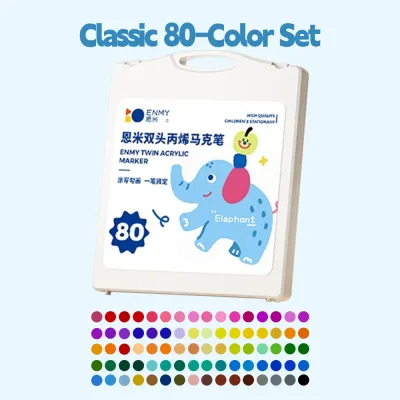
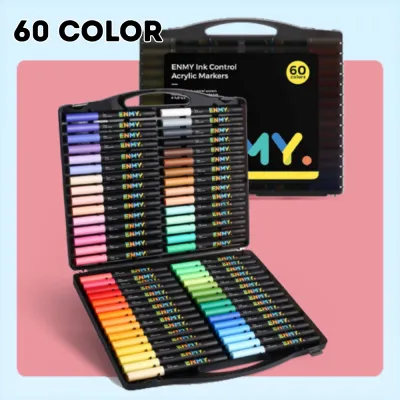
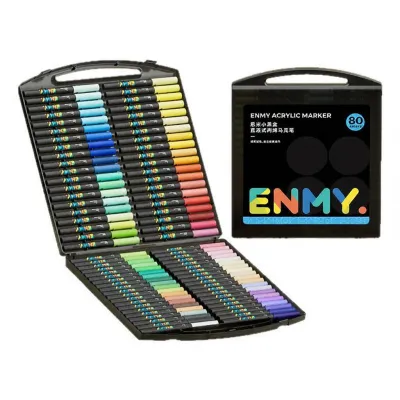


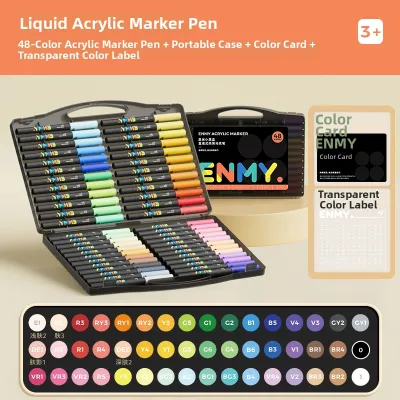
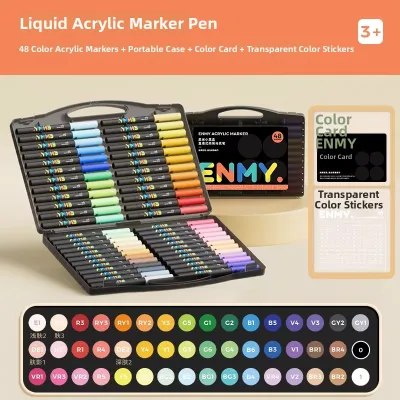
Prices are valid at publication and may change. Please refer to the product page for the latest price.
- Textbook study and document review: If your main goal is to emphasize key terms, review printed handouts, or color-code lecture notes, you need highlighters with broad, translucent chisel tips.
- Calligraphy, headers, and creative planning: If you want to create elegant hand-lettered titles, fill out bullet journal spreads, or draw decorative elements, look for dual-tip markers that offer a flexible brush tip on one end and a fine tip on the other.
- Detailed sketching, outlining, and daily writing: If you focus on precise line work, intricate mandalas, or neat, small-print journaling, choose fine liners with rigid metal-clad or plastic tips.
Focusing on your primary daily task prevents you from overspending on massive color sets when a few targeted shades would serve you better. Once you establish your dominant use case, you can explore the specific physical and chemical properties of each marker category to ensure a seamless writing experience.
Exploring the Core ENMY Marker Categories
The ENMY product lineup is designed to address different stages of the writing and drawing process, with each category featuring distinct physical tip designs and ink behaviors. Understanding these core categories helps you select a tool that matches your physical writing style and technical requirements.

Highlighters for Studying and Document Review
Highlighters are engineered primarily for text emphasis, featuring a distinct chisel-tip design that allows you to lay down a broad, flat stroke of color over printed or handwritten text. The standard chisel tip typically measures between 3.0mm and 4.0mm at its widest angle, which matches the height of standard textbook fonts, while the pointed edge can be used for thin underlines.
The primary functional requirement of any highlighter is ink transparency, ensuring that the underlying text remains perfectly legible even after multiple passes of color. Many ENMY highlighters utilize water-based pigment or dye inks that provide bright, consistent color without obscuring your notes.
When choosing highlighters for school or office work, check the product packaging for “quick-dry” or “smudge-resistant” labels. In highly humid conditions, such as the Philippine rainy season, ink drying times can double on coated papers; therefore, testing the highlighter over your favorite gel pen on a scrap sheet is the best way to verify compatibility before marking up important documents.
Dual-Tip Markers for Bullet Journaling and Lettering
Dual-tip markers offer exceptional versatility by combining two distinct tip sizes and shapes into a single pen body, reducing the number of tools you need to carry in your pencil case. Typically, one end features a flexible fiber brush tip designed for sweeping strokes, while the opposite end houses a fine bullet or plastic tip (usually around 0.4mm to 0.8mm) for structured writing.
The brush tip is highly responsive to changes in hand pressure, allowing you to transition smoothly from thin upstrokes to thick downstrokes, which is essential for modern calligraphy and decorative headers. The fine tip on the other end ensures you can immediately switch to writing detailed daily tasks or drawing grid lines without reaching for another pen.
Before purchasing dual-tip markers, it is critical to verify the ink base listed on the packaging, as ENMY produces variants with different formulations. Water-based dual-tip markers are excellent for standard journaling because they rarely bleed through thick paper and allow for subtle watercolor blending when used with a water brush. Alcohol-based dual-tip markers, conversely, offer highly vibrant, streak-free coverage but will easily bleed through standard notebook paper, making them better suited for dedicated art pads.
Fine Liners for Detailed Outlining and Daily Writing
Fine liners are precision instruments designed for users who require consistent, thin line widths for technical drawing, sketching, or small handwriting. Unlike flexible brush tips, fine liners feature a rigid tip—often made of hard plastic or porous fiber encased in a protective metal collar—that maintains its shape regardless of the angle or pressure applied.
These pens typically come in precise tip sizes ranging from ultra-fine 0.3mm to a bolder 1.0mm, making them ideal for drawing intricate geometric patterns, outlining watercolor illustrations, or writing in tight planner grids. The metal-clad design helps guide the tip smoothly along plastic rulers and stencils without shaving off the fiber tip.
While fine liners are highly durable, their lifespan depends heavily on your writing habits and paper selection. Applying excessive physical pressure can force the delicate tip back into its metal sleeve or cause the fiber to fray prematurely, especially when used on rough, highly textured paper. For the smoothest writing experience, pair fine liners with ultra-smooth, high-density paper and maintain a light, relaxed grip.
Matching Your Specific Workflow to the Right Variant
Selecting the perfect marker is not just about choosing a category; it is about matching the tool to your specific environment, daily tasks, and the paper you use. Different workflows present unique challenges, from paper bleed-through to color blending requirements.
School and Office Notes
For high-volume note-taking on standard school intermediate pads or budget-friendly notebooks, your primary concern is preventing ink from bleeding through to the back of the page. Standard school paper in the Philippines is often lightweight (typically 50 GSM to 70 GSM), which easily absorbs wet inks and causes feathering.
To keep your notes legible on both sides of the page, prioritize highlighters and fine liners that use water-based inks, which sit on top of the paper fibers rather than soaking deeply into them. Avoid alcohol-based markers entirely for this workflow, as they are designed to penetrate paper fibers and will ruin the pages underneath. If you must use a highlighter on thin paper, opt for pastel or mild color sets, as lighter pigments are less visible from the reverse side even if slight ghosting occurs.
Bullet Journaling and Planning
If your workflow revolves around creative planning, weekly spreads, and mood trackers, you require a balance of aesthetic flexibility and structural neatness. Dual-tip markers are the ideal choice here, allowing you to sketch colorful layouts and write daily tasks with a single tool.
However, bullet journals often suffer from “ghosting”—where the shadow of the writing is visible on the other side of the page—if the paper is too thin. To prevent this, match your markers with a notebook that features thick, high-quality paper, ideally 100 GSM to 160 GSM dot-grid paper. Water-based dual-tip markers perform beautifully on these heavier papers, allowing you to layer colors for shading without risking bleed-through.
Art and Illustration
For creative projects, illustration, and hand-drawn designs, you need markers that offer superior blending capabilities and rich color saturation. This is where specialized art-grade markers, particularly those with alcohol-based inks, become necessary.
Alcohol-based inks dry almost instantly and can be layered repeatedly to create smooth gradients, realistic shadows, and streak-free color blocks. However, because alcohol ink is highly fluid, it will bleed through almost all standard papers, including heavy notebook pages. To achieve professional results, you must use dedicated marker paper, heavy cardstock, or bleed-proof marker boards designed to hold alcohol ink without absorbing excessive amounts of product.
Rather than purchasing massive 80-color sets immediately, start with a basic 12-color or 24-color palette. A smaller, well-curated set is much easier to organize, fits comfortably in a standard pencil case, and allows you to master color blending and layering before investing in specialized shades.
Essential Specs and Paper Compatibility to Verify Before Buying
To avoid buyer’s remorse, always check the technical specifications printed on the packaging or listed in online store descriptions before making your purchase. Paying attention to these physical details ensures your new markers will perform exactly as expected on your chosen medium.
- Ink Type Verification: Always read the label to confirm whether the ink is water-based, alcohol-based, or pigment-based. Water-based inks are low-odor, highly resistant to bleed-through, and perfect for everyday paper. Alcohol-based inks are highly blendable and permanent but require thick, specialized paper. Pigment-based inks offer the highest water resistance and archival quality, making them ideal for fine liners used alongside watercolors.
- Paper Adaptation and Humidity: Claims of "smudge-proof" or "bleed-free" performance are highly dependent on the paper you use. In the humid climate of the Philippines, paper naturally absorbs moisture from the air, which can cause inks to spread or dry more slowly than they would in dry conditions. Always perform a small, discreet bleed test in the back of your notebook before starting a major project to see how the ink behaves on that specific paper batch.
- Tip Material and Size: Match the tip size to your handwriting scale. If you write very small, a 0.3mm or 0.4mm fine liner will keep your letters sharp and legible, whereas a 1.0mm bullet tip might cause your loops to fill in with ink. For lettering, look for durable nylon or synthetic fiber brush tips, which retain their springiness over time compared to cheaper felt alternatives.
- Storage and Maintenance: Proper storage is crucial for extending the life of double-ended pens. Always store dual-tip markers horizontally on your desk; storing them vertically can cause the ink to pool in the bottom tip, leaving the top tip dry and unusable. Always press the caps firmly until you hear a distinct "click" to prevent air exposure from drying out the ink.
Frequently Asked Questions (FAQ)
Can I use ENMY dual-tip markers on regular printer paper?
Yes, you can use them on standard 70 GSM or 80 GSM printer paper, but your experience will depend entirely on the ink formulation. Water-based dual-tip markers will work for basic writing, though applying heavy layers of ink may cause the thin paper to warp, wrinkle, or feather slightly. If your dual-tip markers are alcohol-based, they will rapidly bleed through standard printer paper and may stain the desk underneath. To prevent damage, always place a protective plastic sheet or a piece of scrap cardboard behind your printer paper before you begin coloring.
How do I prevent my markers from drying out in a humid climate?
While tropical humidity prevents paper from being bone-dry, marker evaporation is driven by exposure to moving air and heat rather than ambient humidity. To keep your markers from drying out, always snap the caps back on immediately after use—never leave them uncapped while studying or planning. Store your markers horizontally in a cool, shaded drawer or pencil case, keeping them away from direct sunlight, open windows, and hot electronics. If a water-based marker tip feels slightly dry, scribbling lightly on a damp paper towel can sometimes draw the remaining ink back to the tip.
Community discussion
Share your experience or ask a question. Comments are reviewed before publication.