
Selecting the right folder is more than just grabbing the first plastic or cardboard binder you see on an office supply shelf. If you choose a storage solution that does not match your document volume, frequency of access, or local climate conditions, you risk damaging important papers, losing critical receipts, or wasting time searching through unorganized stacks. To build an efficient filing system, you must first understand the structural differences between ring binders, sleeve folders, expanding files, and presentation folders.
Assess Your Specific Filing and Storage Requirements
To find the ideal storage solution, start by diagnosing your current document pile. Ask yourself three questions: How many pages do you need to store? How often will you need to retrieve or update these pages? What is the physical nature of the documents themselves? A thick stack of reference manuals requires a completely different storage style than a single, delicate birth certificate or a handful of small thermal tax receipts.
Failing to match the folder to your daily workflow leads to common filing pain points. If you choose a folder without a secure closure for loose papers, documents will inevitably slip out during transit. If you force too many pages into a low-capacity folder, the seams will split, and the pages will become wrinkled or torn. On the other hand, using a heavy ring binder for a simple ten-page client presentation is bulky and looks unprofessional.
Products mentioned in this guide
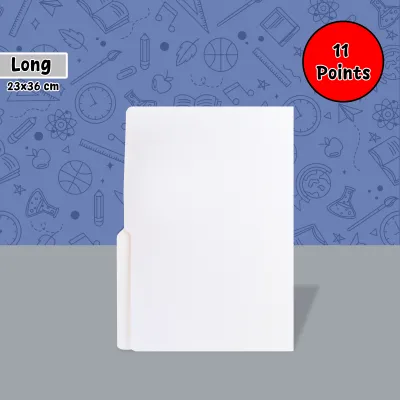

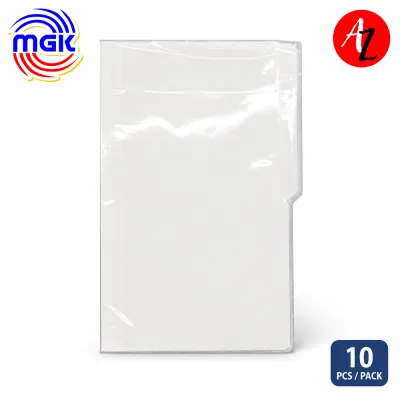
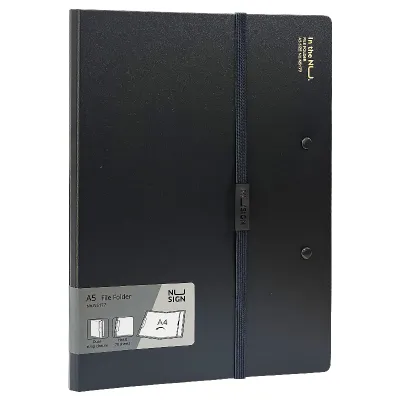
Prices are valid at publication and may change. Please refer to the product page for the latest price.
Another critical step is measuring your standard paper size before purchasing any storage product. In the Philippines, offices and schools commonly use three distinct paper standards: Letter size (8.5 by 11 inches, often called “short”), A4 size (8.27 by 11.69 inches), and Legal size (8.5 by 13 inches, often called “long”). Placing a long legal-sized document into an A4 folder will leave the top edge of the paper exposed to dust, bending, and moisture. Always check the folder’s internal dimensions to ensure your documents fit entirely within its protective borders.
Match Your Diagnosis to the Right Folder Type
Once you have audited your documents and measured their sizes, you can match your needs to the correct folder type. Each category of folder is engineered for a specific balance of capacity, accessibility, and protection.

Ring Binders for High-Volume and Frequent Updates
Ring binders are the ultimate choice for high-volume document storage where pages must be added, removed, or rearranged frequently. They are highly suited for training manuals, school study notes, project portfolios, and active business registries. Because the pages lie flat when the binder is open, they are highly comfortable for reading and editing.
When selecting a ring binder, pay close attention to the ring mechanism. Binders typically feature either O-rings or D-rings. O-ring mechanisms are mounted to the spine, which means pages curve around the rings; this can cause paper jamming or tearing if the binder is filled to capacity. D-ring mechanisms are mounted to the back cover, allowing pages to lie completely flat and straight. A D-ring binder can hold up to 25% more sheets than an O-ring binder of the same ring diameter.
Before committing to a ring binder, verify how you plan to secure the pages. Standard paper must be hole-punched to fit onto the rings, which alters the document permanently. If you are storing original documents that cannot be punched, you must budget for compatible plastic punch pockets (sheet protectors) to hold the pages safely inside the binder.
Sleeve Folders for Non-Destructive Protection
Sleeve folders, commonly referred to as clear books or display folders, are designed specifically for delicate, valuable, or unalterable documents. If you need to store academic transcripts, diplomas, marriage certificates, land titles, or historical photographs, a sleeve folder provides excellent protection without requiring any hole-punching or folding.
These folders feature built-in plastic pockets that shield paper from dust, fingerprints, and spills. You can choose between top-loading and side-loading sleeves. Top-loading sleeves are the most common and work well when folders are stored upright on bookshelves. However, if you plan to carry your folders in a backpack or store them flat in a desk drawer, side-loading sleeves are highly effective at preventing documents from sliding out of the pockets.
For long-term archival storage, check the chemical composition of the plastic sleeves. Ensure the product is labeled as acid-free and archival-safe, typically made of polypropylene. Basic clear books are highly affordable, often starting under ₱100, while heavy-duty archival options can range up to ₱500 or more. Low-quality PVC plastic sleeves can degrade over time, releasing chemicals that cause ink to lift off the paper and stick to the plastic, permanently ruining your original documents.
Expanding Files for Sorting Loose Papers and Receipts
If your filing pile consists of loose, varied documents that do not need to be bound in any specific order, an expanding file (also known as an accordion file) is the most practical solution. This style is highly suited for organizing monthly utility bills, tax receipts, medical records, or loose school worksheets. Instead of binding the paper, you simply drop each document into its designated compartment.
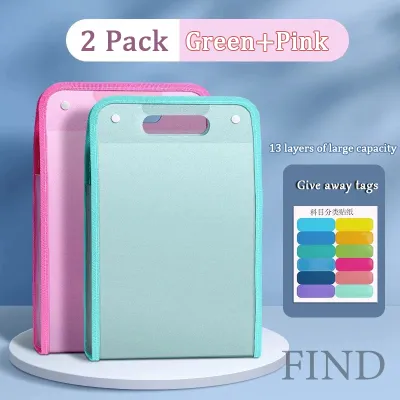
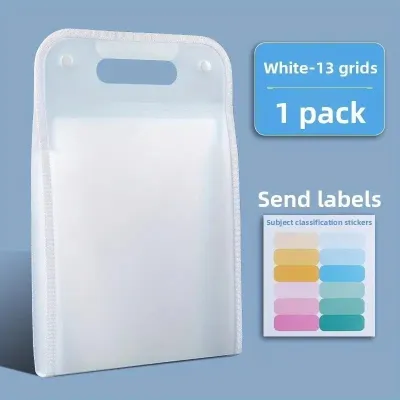
Expanding files are categorized by the number of internal pockets they offer. For monthly organization, a 12-pocket or 13-pocket expanding file is ideal, allowing you to dedicate one pocket to each month of the year. For simpler categorization, a 5-pocket or 7-pocket file is lightweight and easy to carry.
Because expanding files are often used for transport, the closure mechanism is a vital feature to check. Look for sturdy elastic bands, snap buttons, or plastic buckles that keep the outer flap tightly closed. A weak closure can allow small items, such as thermal cash register receipts or business cards, to slip out of the sides during your daily commute.
Presentation Folders for Professional Handouts
Presentation folders are designed for external communication where a polished, professional appearance is the primary goal. These folders are the industry standard for client proposals, job interview portfolios, conference handouts, and real estate sales pitches. They are not meant for bulk storage, but rather for curating a small, high-impact selection of documents.
The capacity of a presentation folder is deliberately limited, typically holding between 10 and 20 sheets of paper. They usually feature two interior pockets to hold loose sheets securely, along with die-cut slits on the inside pockets to hold a standard business card. This ensures your contact information remains front and center when a client opens the folder.
When choosing a presentation folder, consider the material finish to match the formality of the event. Heavy cardstock with a matte finish offers a modern, elegant look, while a glossy finish makes colorful graphics and logos stand out. For high-humidity environments, thin polypropylene presentation folders are also available, offering water resistance while maintaining a clean, professional profile.
Protecting Paper Documents in Humid Climates
Storing paper documents in tropical climates presents unique environmental challenges. High humidity levels, common throughout the year, can cause paper to absorb moisture from the air. This moisture leads to paper curling, pages sticking together, ink bleeding, and the growth of destructive mold and mildew. Cardboard and paper-based folders are particularly vulnerable, as they absorb moisture from the environment and hold it against your documents.
To protect your files from humidity, opt for folders made of water-resistant materials like polypropylene (PP) plastic. Unlike cardboard, PP plastic does not absorb moisture, making it an excellent barrier against humid air and accidental liquid spills. If you must use cardboard binders, ensure they are stored in climate-controlled rooms with consistent air conditioning or dehumidification.
Proper physical storage habits are equally important for mold prevention. Always store your filled folders upright on shelves rather than stacking them flat in heavy piles, which traps moisture between the pages. Leave a small gap between folders to allow air to circulate freely. Avoid placing your filing shelves directly against concrete exterior walls, which can sweat and transfer moisture during heavy rainy seasons. Additionally, never store folders directly on cold concrete floors where condensation naturally pools.
For long-term archiving in storage boxes, place several silica gel packets inside the container to actively absorb ambient moisture. While it may be tempting to seal important documents inside completely airtight plastic bags, doing so without a moisture absorber can trap humid air inside, creating a greenhouse effect that accelerates mold growth and paper decay.
Maintain and Optimize Your Filing System Over Time
An organized filing system is only effective if it is maintained consistently over time. To prevent your folders from becoming cluttered, implement a clear and uniform labeling system. Use color-coded adhesive tabs or printed spine labels to identify the contents of each folder at a glance. This simple habit saves you from having to pull multiple binders off the shelf just to find a single document.
Schedule periodic reviews of your filing system to keep it manageable. Once or twice a year, dedicate time to purging outdated documents. Recycle expired utility bills, old drafts, and duplicate printouts that are no longer needed. This frees up physical space and ensures your active folders only contain relevant, up-to-date information.
Recognize the warning signs that indicate your physical filing system has reached its capacity. When you notice bulging pockets, bent metal rings that no longer close properly, or split plastic seams, it is time to upgrade. Instead of forcing more papers into an overloaded folder, transition older, inactive records to heavy-duty archival boxes or scan them to create secure digital backups.
Frequently Asked Questions (FAQ)
Can I use a ring binder for documents that cannot be hole-punched?
Yes, you can easily use a ring binder for non-punchable documents by inserting them into clear plastic sheet protectors. These plastic sleeves are pre-punched with holes along the edge, allowing you to slide your delicate documents inside safely. This method keeps your papers completely intact while still utilizing the high organization and capacity of a standard ring binder.
How do I prevent paper from molding inside plastic folders?
To prevent mold, ensure that all papers are completely dry before placing them inside plastic sleeves or folders. Store your folders in a well-ventilated room with active airflow, and avoid damp areas like unventilated closets or basements. Adding a small silica gel packet to your storage boxes or shelves will also help absorb excess moisture and keep your documents dry.
Community discussion
Share your experience or ask a question. Comments are reviewed before publication.