
Selecting the ideal GMarker Korea writing or highlighting tool requires matching the marker’s ink formulation and tip structure to your specific paper type and creative goals. In the tropical climate of the Philippines, where high humidity can prolong ink drying times and increase the risk of smudging, choosing the correct stationery tool is essential for clean, professional results. Whether you are organizing a daily planner, practicing modern calligraphy, or highlighting key passages in a textbook, understanding how these markers interact with different mediums will ensure your work remains crisp and vibrant.
By evaluating the physical characteristics of each marker type, you can avoid common pitfalls such as ink bleeding, tip fraying, and premature drying. This guide breaks down the core categories of GMarker Korea products, aligns them with practical daily activities, and provides a clear framework for verifying product specifications and authenticity before you make a purchase.
Understanding GMarker Korea's Core Marker Categories
To build a reliable stationery collection, you must first understand the structural differences between the three primary tip designs offered by GMarker Korea: brush tips, fine liners, and chisel tips. Brush tips feature a flexible, tapered nib that mimics the behavior of a traditional paintbrush, allowing you to transition smoothly from thin lines to broad strokes simply by varying your hand pressure. Fine liners utilize a rigid, metal-clad plastic collar that supports a micro-fine fiber tip, ensuring a highly consistent line width that is ideal for technical drawing and detailed writing. Chisel tips, commonly found on highlighters, present a flat, angled edge that can produce both wide blocks of color for covering entire lines of text and thin lines for precise underlining.
Products mentioned in this guide
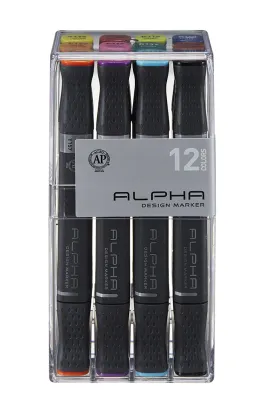
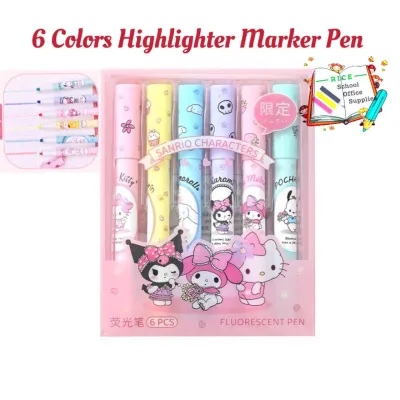
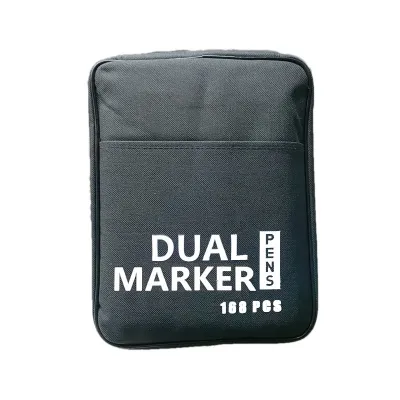
Prices are valid at publication and may change. Please refer to the product page for the latest price.
Beyond the physical shape of the tip, the chemical composition of the ink dictates how the marker behaves on paper. Water-based inks are the standard for everyday journaling and highlighting because they rely on water as the primary solvent, which prevents the ink from easily bleeding through standard notebook paper. However, in humid environments, water-based inks require a few extra seconds to dry completely, making them susceptible to smudging if touched too quickly. Alcohol-based inks, on the other hand, dry almost instantaneously because the alcohol solvent evaporates rapidly, making them excellent for smooth color blending and layering in artistic illustrations. The trade-off is that alcohol-based inks easily penetrate standard paper fibers, requiring thick, heavy-duty cardstock or specialized marker paper to prevent severe bleed-through.
Understanding these categories helps you distinguish between dedicated highlighters, coloring markers, and everyday writing pens. Highlighters are formulated with translucent, low-saturation pigments designed to sit on top of printed text without obscuring it. Coloring markers feature highly saturated dyes or pigments meant for solid coverage and vibrant artistic displays. Everyday writing pens prioritize consistent ink flow and quick-drying properties to keep up with rapid note-taking without skipping or pooling on the page.
Matching Markers to Your Specific Use Cases
Aligning the specific capabilities of your writing instruments with the physical demands of your tasks is the most effective way to achieve clean, professional results. Using the wrong marker for a task not only compromises the visual quality of your work but can also permanently damage the marker tips or ruin your paper.

Journaling and Bullet Journaling
Successful bullet journaling relies on a balance of structured layouts, clear text, and subtle visual organization. For creating precise grids, tracking charts, and detailed doodles, fine liners are the most reliable choice. A fine liner with a tip size between 0.3mm and 0.5mm provides the necessary precision to write neatly within small grid squares without the ink spreading or feathering into the paper fibers.
When it comes to color-coding and highlighting key dates, mild or pastel highlighters are far superior to traditional fluorescent options. These softer hues draw the eye to important tasks without creating visual clutter or distracting from your handwriting. Because standard journal pages typically range from 80gsm to 100gsm, using mild water-based highlighters minimizes the risk of ghosting, which is the distracting shadow of writing visible on the reverse side of the page.
Before committing to a specific marker for your journal, always verify the paper compatibility of your notebook. If your journal features thin, lightweight paper, stick exclusively to water-based fine liners and light pastel highlighters. If you prefer to use heavier artistic markers, ensure your journal contains paper with a weight of at least 120gsm to 160gsm to handle the increased ink saturation.
Art, Illustration, and Calligraphy
Creative projects like hand lettering and illustration demand tools that offer dynamic line variation and smooth color transitions. Brush markers are the premier choice for calligraphy because their flexible nibs respond directly to the angle and pressure of your hand. By applying downward pressure on the downstroke and releasing pressure on the upstroke, you can create the classic contrast between thick and thin lines that defines modern script.
When selecting brush markers for extended art sessions, evaluating nib durability and ink flow consistency is critical. High-quality nylon brush tips are highly resilient, retaining their sharp point and springiness even after repeated use on textured paper. Consistent ink flow ensures that your strokes remain solid and saturated from start to finish, preventing dry patches or sudden ink pools that can disrupt your artwork.
To achieve professional gradients and shading, check the manufacturer labels for blending capabilities and layering limits. Water-based brush markers can be blended easily using a colorless blender pen, a damp brush, or by touching two marker tips together to transfer color. Be mindful of the paper’s limits, as excessive layering on standard paper can cause the surface fibers to pill and tear.
Office Highlighting and Everyday Note-Taking
For professional and academic environments, efficiency, speed, and reliability are the primary requirements of any writing tool. Chisel or wedge-tipped highlighters are the industry standard for document review because their wide, flat edge perfectly matches the height of standard printed text. This allows you to highlight entire sentences in a single, swift motion, streamlining your study or editing process.
In fast-paced note-taking scenarios, prioritizing quick-drying inks is essential to prevent smudging. This is particularly important for left-handed writers, whose hands naturally glide over freshly written text as they move across the page. Opting for water-based pigment inks that dry rapidly on standard copy paper ensures that your notes remain legible and professional.
Ergonomic barrel design is another crucial factor to consider for long writing sessions. Markers with triangular barrels or soft, rubberized grip sections encourage a relaxed hand posture, reducing muscle fatigue and cramping during multi-hour lectures or meetings. Lightweight barrels with secure, easy-to-remove caps help maintain a smooth workflow without unnecessary interruptions.
Key Specifications to Check Before Buying
To ensure you purchase the correct GMarker Korea products for your specific setup, you should systematically evaluate several physical and chemical specifications. First, assess the tip material and shape, as these factors directly influence line consistency and durability. Polyester tips are highly rigid and hold their shape exceptionally well over time, making them ideal for chisel-tip highlighters that require sharp, clean edges. Nylon brush tips offer superior flexibility and springiness, allowing for expressive calligraphy, while metal-clad plastic tips protect fine liners from bending under heavy writing pressure.
Next, review the ink formulation listed on the product packaging, focusing on whether it is water-based, pigment-based, or dye-based. Pigment-based inks contain microscopic solid color particles that sit on top of the paper, offering excellent water resistance and lightfastness, which prevents your writing from fading over time. Dye-based inks consist of fully dissolved colorants that penetrate deep into the paper fibers, yielding incredibly vibrant and bright colors, though they are more susceptible to water damage and fading if exposed to direct sunlight.
| Ink Type | Primary Solvent | Water Resistance | Bleed Risk on 80gsm | Best Use Case |
|---|---|---|---|---|
| Water-Based Pigment | Water | High (once dry) | Very Low | Archival journaling, fine detailing |
| Water-Based Dye | Water | Low | Low | Pastel highlighting, everyday notes |
| Alcohol-Based Dye | Alcohol | High | High | Art illustration, professional blending |
Inspect the physical construction of the marker, paying close attention to the barrel design and cap sealing mechanisms. A high-quality cap should feature an airtight click-lock system or an internal silicone seal to prevent the solvent from evaporating, which is especially important in warm, tropical climates. Additionally, check if the marker model is refillable or if the nibs are replaceable, as these features offer long-term cost savings and reduce environmental waste.
Finally, always read the product labels for specific paper weight and texture recommendations. Smooth, high-density paper (such as hot-pressed or marker paper) prevents ink bleeding and protects delicate brush tips from abrasive wear. Textured paper (such as cold-pressed watercolor paper) is excellent for wet blending techniques but will cause fiber tips to wear down or fray much faster if used for standard writing.
Where to Buy and How to Verify Authenticity
To ensure you are purchasing genuine GMarker Korea products rather than low-quality counterfeits, you must be selective about where you shop. In the local market, the safest option is to purchase directly from authorized e-commerce flagship stores on major online marketplaces or from reputable, well-established local stationery physical retailers. These sellers maintain direct supply chains, ensuring that the products are stored in temperature-controlled environments that preserve ink quality.
When your package arrives, perform a physical inspection of the packaging details to verify its authenticity. Genuine GMarker Korea products feature crisp, high-resolution printing on the packaging, with clear, legible text and no spelling errors or blurred logos. Many authentic sets include holographic security stickers, unique batch codes printed on the marker barrels, and cleanly molded plastic caps that fit securely with a distinct clicking sound.
Comparing the retail price in ₱ against standard market benchmarks is another highly effective way to spot counterfeit listings. While authorized retailers occasionally run promotional sales, a listing that offers a large set of markers for a fraction of the standard retail price (such as a full professional set for under ₱150) is a strong indicator of a counterfeit product. Investing in genuine markers ensures consistent ink performance, non-toxic formulations, and durable tips that will not ruin your expensive journals or sketchbooks.
Frequently Asked Questions (FAQ)
How do I prevent my brush markers from fraying?
To maximize the lifespan of your brush markers, always store them horizontally when not in use. Horizontal storage ensures that the ink pigments and solvents remain evenly distributed throughout the barrel, preventing the brush tip from drying out or becoming oversaturated. If stored vertically with the tip pointing up, the ink will drain away from the nib, causing it to dry and harden; if stored tip-down, the ink can pool, leading to leaking and oversaturation.
Additionally, avoid applying excessive downward pressure directly onto the point of the brush tip. When writing or coloring, hold the marker at a 45-degree angle and use the side of the brush nib to create broad strokes, rather than pushing the tip straight down into the paper. Always cap the marker immediately after use, listening for the secure click that confirms an airtight seal, to prevent the ambient air from drying out the delicate fibers.
Can I use GMarker highlighters on thin paper without bleeding?
Yes, you can use GMarker highlighters on relatively thin paper, provided you select the correct ink formulation and apply proper highlighting techniques. Opt for mild, water-based dye inks rather than heavy, highly saturated fluorescent inks, as water-based mild formulations are specifically designed to minimize bleed-through and ghosting on standard paper weights.
Before working on important documents or textbooks, always perform a quick test on an inconspicuous area, such as a back page or a scrap piece of the exact same paper. To minimize ink saturation, adjust your highlighting speed; a swift, single pass deposits a controlled amount of ink that dries quickly. Avoid pausing at the end of a line or making multiple overlapping passes over the same word, as this saturates the paper fibers and causes the ink to seep through to the other side.
Community discussion
Share your experience or ask a question. Comments are reviewed before publication.