
Choosing the right weekly planner is less about finding a universally perfect notebook and more about aligning the page structure with how your brain organizes tasks, time, and thoughts. When your planner’s layout matches your cognitive style, keeping up with your schedule becomes an intuitive habit rather than a daily chore. Conversely, a mismatched format often leads to empty pages and abandoned organization systems by mid-year.
KINBOR has earned a dedicated following in the stationery community for offering highly functional, aesthetically pleasing planners with diverse page designs. Because the brand provides several distinct weekly formats, selecting the right one requires a clear understanding of how you process your weekly agenda. Whether you are balancing a busy corporate schedule in a bustling city, managing university coursework, or documenting personal memories, there is a specific layout designed to support your workflow. By analyzing the structural differences between vertical, horizontal, and hourly formats, you can confidently select the ideal companion for your daily writing routine.
Compare the Main KINBOR Weekly Layout Structures
To choose the best planner, you must first understand how each layout allocates its visual real estate. KINBOR weekly planners generally fall into three structural categories, each distributing the days of the week differently across a two-page spread.
Products mentioned in this guide
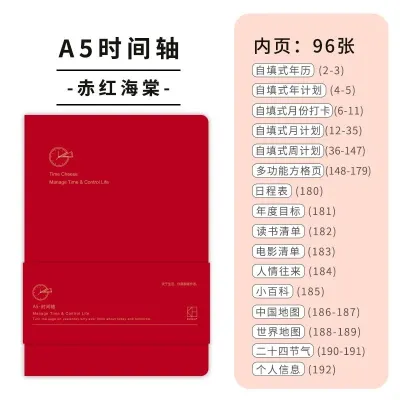
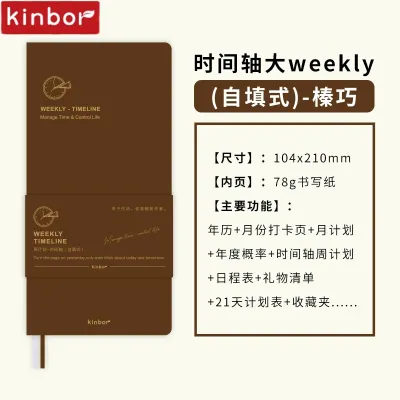

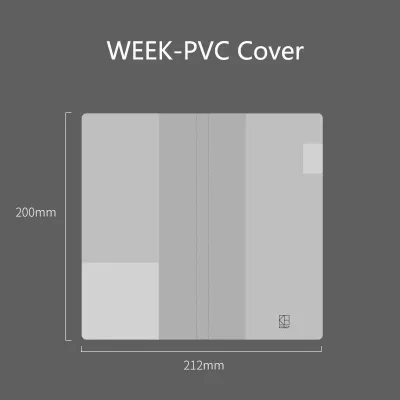
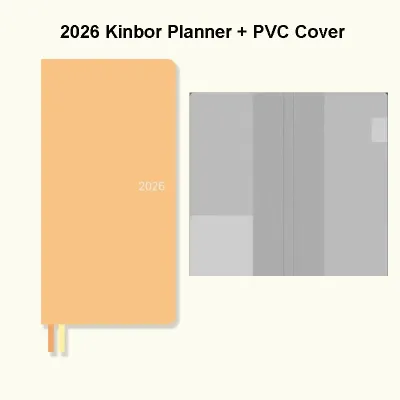
Prices are valid at publication and may change. Please refer to the product page for the latest price.
Vertical Layout Characteristics
In a vertical weekly layout, the two-page spread is divided into vertical columns, with each column representing a single day. Typically, Monday through Wednesday or Thursday occupy the left page, while the remaining days of the week fill the right page. This structure allows your eyes to scan from left to right to see the progression of the week, while individual daily details are read from top to bottom. The vertical columns provide a natural column-based flow that is highly efficient for listing tasks sequentially. Many vertical designs also include a dedicated sidebar or a small blank section at the bottom of each column for weekly goals, habit trackers, or miscellaneous notes.
Horizontal Layout Characteristics
The horizontal layout is the traditional diary format, where the two-page spread is divided into horizontal rows. Each day of the week is allocated a wide, rectangular block stretching across the page. This format reads like a book, from left to right and top to bottom. Because the writing space is wide rather than tall, it naturally accommodates longer sentences, narrative journaling, and sequential event tracking. If you prefer writing in full sentences or tracking a few key events per day without needing to structure them by the hour, the horizontal row format offers a familiar and comfortable canvas.
Hourly Layout Characteristics
An hourly layout is a specialized variation of the vertical column structure. Each daily column is printed with a subtle timeline, featuring hourly or half-hourly increments (such as 8:00 to 20:00). This design is built specifically for time-blocking, where you map out exactly when each task or meeting will occur. The visual timeline makes it immediately obvious when you have open gaps in your schedule or when you are overcommitted. It eliminates the abstraction of a simple to-do list by forcing you to assign a specific physical space and time duration to every responsibility.
Blank or Dotted Integration
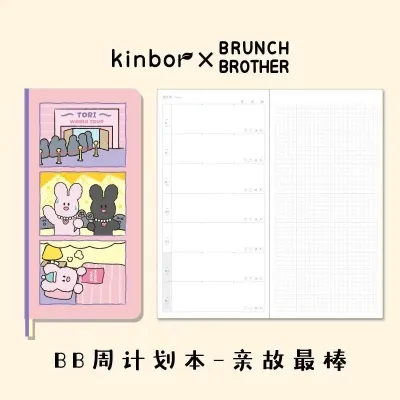
Many KINBOR weekly planners utilize a hybrid layout, often referred to as the “weekly plus memo” format. In this setup, the left page contains a horizontal weekly schedule (usually dividing the page into seven small rows), while the entire right page consists of a blank, grid, or dotted memo space. This design bridges the gap between structured planning and freeform note-taking. The left side keeps your essential appointments and deadlines visible, while the right side provides an open canvas for mind-mapping, sketching, brainstorming, or writing down extensive meeting notes that do not fit into a daily box.
Match the Layout to Your Personal Planning Style
Once you understand the structural options, the next step is to evaluate your daily routine, responsibilities, and cognitive preferences to find your matching style.

Time-Blocking and Appointment Management
If your days are dictated by back-to-back meetings, class schedules, client appointments, or strict project deadlines, an hourly or highly structured vertical layout is your best option. Professionals, freelancers, and students with rigid schedules benefit from seeing their day divided into time slots. This layout helps prevent scheduling conflicts and allows you to practice realistic time management. When you can physically see a two-hour block allocated for a project, you are less likely to schedule distracting tasks during that period.
Task-Oriented and Checklist Planning
If your daily life is defined by what you need to accomplish rather than when you need to do it, a horizontal or column-based vertical layout without timestamps is ideal. This style suits individuals who manage ongoing projects, household chores, or self-paced study schedules. You can use the daily spaces to write down bulleted checklists, crossing off items as you complete them throughout the day. The horizontal layout is particularly excellent for tracking daily habits, such as water intake, exercise, or reading progress, as you can easily draw small tracking grids within each daily row.
Journaling and Flexible Note-Taking
For those who view their planner as a creative outlet, memory keeper, or sketchbook, the hybrid “weekly plus memo” layout is unmatched. This format is highly favored by the scrapbooking and journaling community. You can use the structured weekly side to note down major life events, weather, or daily highlights, while using the dotted or grid page on the right for creative expression. Here, you can paste photos, washie tape, and stickers, or write reflective journal entries about your week. This layout ensures that on busy weeks where you have little time to journal, your planner still functions as a basic schedule, while on quieter weeks, you have plenty of room to create.
Hybrid Workflows
If your life demands a mix of scheduling, task management, and creative writing, you can adapt a single KINBOR layout to serve multiple purposes. For instance, you can divide a standard vertical column into three distinct zones using thin washi tape or hand-drawn lines: the top zone for scheduled appointments, the middle zone for daily to-do lists, and the bottom zone for personal reflections or meal tracking. Alternatively, you can implement a color-coding system using mild highlighters or functional stickers. Assign one color to work tasks, another to personal errands, and a third to family commitments. This visual separation allows you to use a simple layout for complex, multi-faceted lives without needing to carry multiple notebooks.
Verify Physical Specs and Paper Compatibility Before Buying
Before finalizing your purchase on your preferred online marketplace, it is crucial to verify the physical specifications of the planner to ensure it fits your lifestyle and writing instruments.
Size and Portability
KINBOR planners come in various standard stationery sizes, including A5, B6, and A6 (often referred to as pocket size). Consider where you will do most of your writing. If your planner is meant to sit permanently on your office desk, a larger A5 size provides maximum writing space and allows you to see your entire week in detail. However, if you are constantly on the move, commuting through busy transit systems, or traveling, a compact B6 or A6 planner is much easier to slip into a backpack or tote bag. Be sure to check the exact dimensions listed on the product page to avoid purchasing a book that is too heavy or too small for your handwriting.
Paper Compatibility and Bleed-Through
Because KINBOR planners are designed for writing, paper quality is a major consideration. The brand typically uses smooth, lightweight paper that keeps the planner slim and portable. However, ink performance can vary depending on the writing tools you prefer. If you enjoy using fountain pens, dark gel pens, or heavy markers, you should verify the paper’s resistance to ghosting (where the writing is visible on the back of the page) and feathering (where the ink spreads into the paper fibers).
In tropical climates with high humidity, such as the Philippines, paper can naturally absorb ambient moisture from the air. This moisture absorption can sometimes prolong ink drying times or make the paper more susceptible to bleed-through. To ensure a clean writing experience, it is highly recommended to perform a small pen test on the back pages of your new planner before committing to your main weekly spreads. If you experience minor ghosting, switching to a fine-point ballpoint pen or a fast-drying gel pen can easily resolve the issue.
Binding Style and Lay-Flat Capability
For a comfortable writing experience, especially when writing near the center gutter of a two-page spread, the planner must be able to open completely flat. Look for descriptions that specify thread-bound, stitch-bound, or lay-flat binding. Planners with rigid, glued spines can be difficult to write in because they constantly try to swing shut, forcing you to hold the pages down with one hand. A true lay-flat binding allows you to write smoothly across both pages, maximizing the usable surface area of your weekly layout.
Additional Inserts and Features
Finally, review the product description for supplementary pages that can enhance your planning routine. Many KINBOR editions include monthly overview calendars at the beginning of the book, which are essential for long-term project planning and tracking birthdays or holidays. Other editions may feature yearly goal-setting pages, habit-tracking matrices, or dedicated contact lists. Additionally, check if the planner cover includes practical features like built-in pen loops, card slots, or storage pockets for holding loose receipts, stickers, and notes. Taking a few minutes to verify these details ensures that your chosen planner will fully support your organizational needs for the entire year.
Frequently Asked Questions (FAQ)
Can I use different KINBOR layouts in the same year?
Yes, many stationery enthusiasts successfully run multi-planner systems to keep different areas of their lives organized. For example, you might use a structured hourly KINBOR planner strictly at your desk for professional meetings and project deadlines, while keeping a separate horizontal or hybrid weekly planner at home for personal journaling, habit tracking, and creative memory keeping. If you want to experiment with different layouts mid-year without wasting pages, look for undated KINBOR inserts on your preferred ecommerce platform. Undated planners allow you to start, pause, or switch layouts whenever your workflow changes, giving you complete flexibility over your organizational system.
Do KINBOR weekly planners include monthly overview pages?
Most standard KINBOR weekly planners do include monthly overview pages, but the exact layout and inclusion of these pages depend on the specific edition and product line. In most yearly editions, you will find a block of monthly calendars grouped together at the front of the book, followed by the weekly spreads. This setup allows you to map out big-picture deadlines and monthly events before diving into daily details. However, some minimalist or slim pocket editions may omit monthly pages to save space and reduce weight. To ensure you get the exact features you need, always read the detailed page-count specifications and look at the interior layout photos provided on the online marketplace listing before making your purchase.
Community discussion
Share your experience or ask a question. Comments are reviewed before publication.