
Finding the perfect writing instrument is more than just a matter of grabbing the first pen you see on a bookstore shelf. For students, professionals, and journal enthusiasts, a pen is an extension of their daily thoughts, requiring a balance of comfort, speed, and reliability. In a busy school or office environment, the right pen prevents hand fatigue and keeps your notes clean, legible, and highly professional.
Pentel has established itself as a household name in the stationery world, offering a diverse lineup of pens designed for different writing styles. Choosing the right model requires looking closely at how you write, the paper you use daily, and the specific ink technology that powers each pen. Whether you need a fast-drying gel pen that won’t smudge, a creative hybrid pen for colorful journaling, or a traditional ballpoint for signing official carbonless documents, there is a specific Pentel model tailored to your needs.
To make the best choice, you must understand how Pentel’s core ink technologies behave under different conditions. By matching your physical writing habits with the correct tip size and grip style, you can find a pen that feels effortless to use every single day.
Products mentioned in this guide
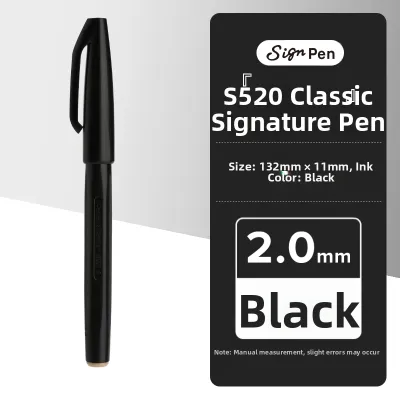
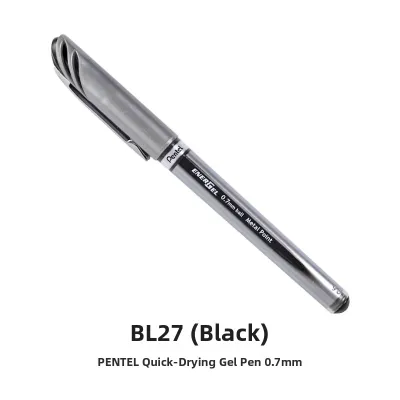
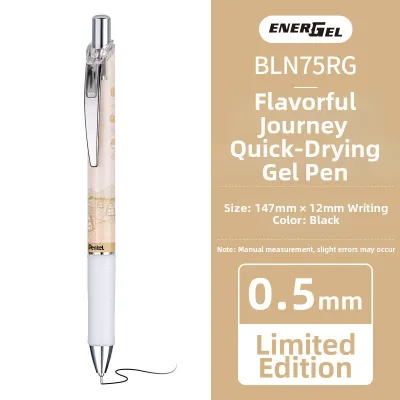
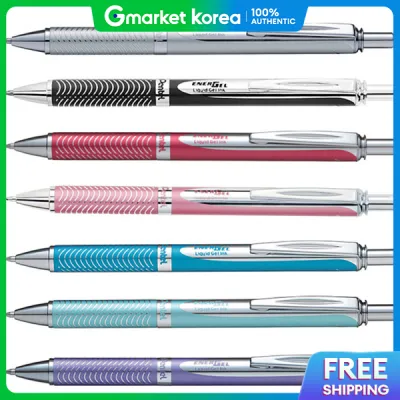
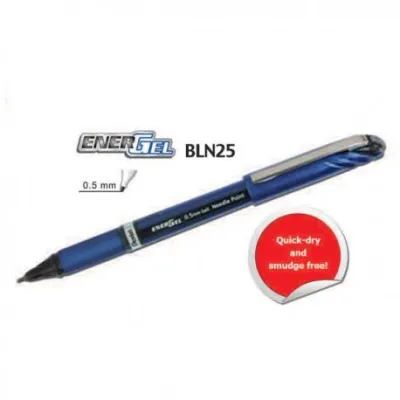
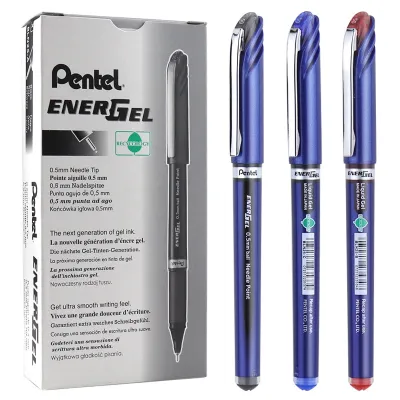
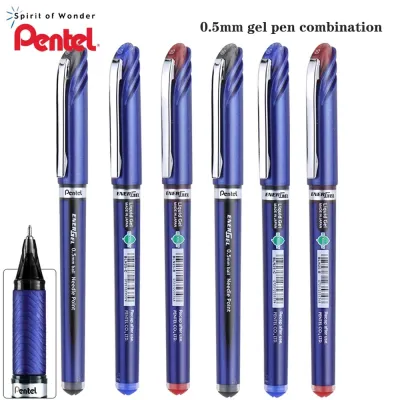
Prices are valid at publication and may change. Please refer to the product page for the latest price.
Understanding Pentel’s Core Ink Technologies
The performance of any pen is primarily determined by its ink formulation. Pentel categorizes its writing instruments into three distinct ink technologies: liquid gel ink, hybrid ink, and traditional oil-based ink. Each category behaves differently in terms of flow rate, drying speed, opacity, and how it interacts with various paper surfaces.
In everyday conversation, the term “ballpen” is often used as a catch-all phrase for any pen with a rotating ball at the tip. However, stationery manufacturers draw a clear distinction between traditional oil-based ballpoints, liquid gel rollerballs, and hybrid ink pens. Pentel organizes its product lines around these specific ink behaviors so that users can select the exact performance profile they need.
The first category, represented by the famous EnerGel line, utilizes liquid gel ink. This technology combines the best qualities of liquid ink (vibrant color and effortless flow) with the stability of gel ink. The ink is thixotropic, meaning it becomes temporary liquid under the shear stress of the rotating ball at the tip, flowing incredibly fast and requiring almost zero physical pressure to leave a bold, opaque line. Because of its fast-drying formula, it is highly favored by those who write quickly, though it tends to consume ink faster than other types.
The second category is hybrid ink, which powers models like the Pentel Hybrid series. Hybrid ink is engineered to bridge the gap between gel and traditional oil-based inks. It features a lower viscosity than standard oil ink, allowing for a much smoother glide, yet it retains a controlled flow that prevents the heavy bleed-through often associated with pure gel. This formulation is excellent for creative tasks, decorative journaling, and color-coded notes.
The third category is traditional oil-based ink, found in classic standard ballpens like the Pentel R.S.V.P. This ink is thick, highly viscous, and incredibly efficient, allowing a single cartridge to last for months of heavy writing. Oil-based ink is highly resistant to environmental factors and adheres exceptionally well to low-cost, thin, or glossy papers. While it requires slightly more writing pressure, it offers unmatched reliability for official documentation.
When selecting an ink type for critical or long-term archival projects, always verify the specific product label or manufacturer specifications. While oil-based inks generally offer excellent longevity and water resistance, exact formulations can vary by model, tip size, and production batch.
Top Pentel Ballpen Recommendations for Everyday Writing
To help you navigate the extensive Pentel catalog, we have organized the top recommendations into three distinct categories based on their ink technology and primary use cases.

Best for Smoothness and Fast-Drying: Pentel EnerGel Series
For writers who prioritize a frictionless glide and vibrant, saturated lines, the Pentel EnerGel series is the premier choice. The standout models in this family include the EnerGel RTX (retractable), the budget-friendly EnerGel Kuro, and the elegant EnerGel Philography, which features a premium metal body. These pens are widely recognized for their exceptional ergonomic design, featuring latex-free rubber grips that cushion the fingers and reduce physical strain during long writing sessions.
The primary advantage of EnerGel’s liquid gel ink is its incredibly fast drying speed. The ink penetrates the paper fibers quickly, which virtually eliminates the annoying smudges that often plague left-handed writers or fast note-takers. This effortless flow makes it an outstanding tool for college students taking rapid lecture notes or professionals brainstorming during intense meetings, as it allows the hand to move as fast as the mind.
However, this high-performance flow comes with a couple of practical trade-offs. EnerGel liquid gel ink is consumed at a much faster rate than traditional oil-based inks, meaning you will need to replace the refills more frequently. Additionally, because the ink is highly liquid, it can occasionally feather or smudge if used on highly coated, glossy, or non-porous paper surfaces where the ink cannot easily sink into the fibers.
- Ideal User: Students, creative writers, left-handed individuals, and anyone who prefers a bold, highly visible line with minimal hand fatigue.
- Price Range: Generally affordable to mid-range (approximately ₱70 to ₱180 for standard plastic models, with premium metal alloy bodies costing ₱500 or more).
Best for Versatility and Creative Notes: Pentel Hybrid Options
If you are looking for a pen that balances the smooth, rich output of a gel pen with the controlled, efficient delivery of a traditional ballpoint, the Pentel Hybrid series is an exceptional choice. Hybrid ink is formulated to keep a lower viscosity than standard oil ink, providing a smooth writing experience without the excessive wetness or bleed-through that can ruin thin notebook pages.
Pentel has utilized this versatile ink technology to create specialized creative tools, such as the Pentel Hybrid Dual Metallic gel pens. These models produce shimmering, dual-toned colors that shift depending on the angle of the light and the color of the paper. This makes them incredibly popular for bullet journaling, personalizing planners, sketching, and crafting detailed, color-coded study guides. Another reliable model is the Hybrid Technica, which uses a tungsten carbide ball to deliver a highly consistent, skip-free line.
The main trade-off with the Hybrid series is local availability. While you can easily find standard EnerGel or basic ballpoints in almost any local stationery store or office supply shop, specialized Hybrid models and their specific refills may require a trip to a larger specialty art store or an official online brand store.
- Ideal User: Bullet journalers, planners, artists, and professionals who want smooth, colorful lines without high ink consumption or bleed-through.
- Price Range: Mid-range (typically ₱80 to ₱150 per pen, often sold in multi-color sets for creative projects).
Best for Reliability and Official Documents: Standard Pentel Ballpens
When absolute reliability, document permanence, and long-lasting performance are your top priorities, standard oil-based Pentel ballpens are unmatched. The most famous representative of this category is the Pentel R.S.V.P., alongside classic models like the Pentel Superb and the Pentel Feel (which utilizes Pentel’s low-viscosity Vicuña oil ink). These pens feature durable, transparent plastic barrels that allow you to monitor ink levels easily, and they are built to withstand rugged daily use.
The thick, oil-based ink used in these standard ballpens is exceptionally stable. It resists fading over time and is highly water-resistant once dry, making it the ideal choice for signing contracts, filling out legal forms, or writing official records. Furthermore, because the ink is highly viscous, these pens are uniquely suited for writing on multi-part carbonless copy paper, such as delivery receipts, official invoices, or government forms, where physical pressure is required to transfer the writing to underlying sheets.
The trade-off for this extreme reliability is the physical writing experience. Standard ballpoint pens require more downward hand pressure to keep the ball rolling smoothly compared to liquid gel options. Over extended writing sessions, this extra effort can lead to hand fatigue. Additionally, oil-based pens can occasionally skip or accumulate small blobs of ink at the tip, which requires a quick wipe with a scrap piece of paper.
- Ideal User: Office administrators, field workers, logistics personnel, and anyone who needs a dependable pen that won't dry out if left uncapped and works on cheap or carbonless paper.
- Price Range: Very budget-friendly (typically ₱35 to ₱75, making them highly economical for bulk office purchases).
Matching Your Writing Habits to the Right Model
Choosing the right Pentel pen involves evaluating your physical writing habits, the environment where you work, and the specific materials you use daily. By analyzing these factors, you can narrow down your choices to the perfect model.
Left-Handed Writers
Left-handed writers face the constant challenge of their hand dragging across freshly written text. To avoid messy ink smudges on both your paper and your hand, look for fast-drying ink formulas. The Pentel EnerGel series in a fine tip size, such as 0.5mm, is highly recommended. The finer tip deposits less wet ink onto the page, allowing the fast-drying formula to set almost instantly before your hand can glide over it.
Heavy vs. Light Pressure
Your natural hand pressure plays a significant role in pen performance and comfort. If you have a heavy writing grip and press down hard on the page, standard oil-based ballpens or sturdy hybrid models are your best bet. These pens feature robust metal tips that can easily withstand heavy pressure without bending or leaking. Conversely, if you write with a very light touch, choose an EnerGel model. The liquid gel ink flows effortlessly under the lightest pressure, preventing you from having to strain your hand to get a clear line.
Paper Type Considerations
The quality of the paper you write on should dictate your choice of pen. If your daily tasks involve writing on thin, low-gsm school pad paper, cheap copy paper, or glossy thermal receipts, standard oil-based ballpens are ideal. They do not bleed through thin sheets and adhere well to glossy surfaces. If you primarily write in high-quality, thick notebooks, journals, or sketchbooks, the rich, vibrant flow of EnerGel or Hybrid pens will perform beautifully without bleeding through.
Needle Tip vs. Conical Tip
Pentel offers two primary tip styles: needle tip and conical tip. Needle tips consist of a single, slim metal tube that holds the writing ball, offering excellent visibility of the page—ideal for precise drawing, rulers, or detailed math equations. Conical tips are shaped like a cone and are structurally sturdier, making them much better suited for heavy-handed writers who might otherwise bend or damage a delicate needle tip.
Grip and Ergonomics
If you write for hours at a time, pay close attention to the pen’s barrel design and grip material. In warm, humid tropical climates, fingers can easily sweat and slip on hard plastic barrels. Selecting a model with a latex-free, textured rubber grip—such as the EnerGel RTX—provides a secure, comfortable hold that prevents slipping and reduces the physical effort needed to control the pen.
What to Verify Before Buying Your Pentel Pen
Before you make your final purchase, taking a few moments to verify the specifications of your chosen Pentel pen will ensure you get the exact performance you expect.
Tip Size Selection
Pentel pens come in several standard tip sizes, which are always printed clearly on the packaging or the pen barrel itself. A 0.5mm needle or metal tip is perfect for fine, detailed writing, mathematical formulas, or fitting lots of text into tight planner grids. A 0.7mm tip is the industry standard for general note-taking, offering a perfect balance of line visibility and drying speed. For bold signatures, certificates, or expressive writing, a 1.0mm broad tip provides a rich, thick line.
Refill Compatibility
To make your stationery choices more economical and environmentally friendly, plan to refill your pens rather than throwing them away. Always check the specific refill code printed on the ink cartridge inside your pen. For example, most EnerGel pens use the LR7 (0.7mm) or LR5 (0.5mm) refills, while standard ballpens might use the BKL7 or KF8 refills. Keep in mind that gel and oil-based refills are engineered differently and are generally not cross-compatible, even if they appear to be the same physical length.
Authenticity Checks
Due to the popularity of Pentel pens, counterfeit products can occasionally appear on online marketplaces and e-commerce platforms. To ensure you are buying genuine Pentel products, always inspect the packaging for crisp, clear printing, accurate spelling, and sharp barcodes. When shopping online, prioritize authorized stationery distributors, well-known local bookstore chains, or official brand flagship stores. Genuine Pentel pens will always feature smooth mechanical operations, consistent ink flow, and high-quality construction.
Frequently Asked Questions (FAQ)
Are Pentel EnerGel pens suitable for left-handed writers?
Yes, Pentel EnerGel pens are widely considered some of the best gel pens for left-handed writers. The liquid gel ink is formulated to dry incredibly fast upon contact with the paper, which minimizes the risk of your hand smudging the text as you write. For the absolute best results, choose a finer tip size like 0.5mm or 0.7mm to reduce the volume of wet ink on the page.
Can I use standard oil-based refills in an EnerGel pen body?
No, it is highly recommended to avoid mixing different ink types and pen bodies. Pentel pen bodies and their internal spring mechanisms are precisely engineered to accommodate the specific viscosity and tip design of their matching refills. Putting an oil-based refill into an EnerGel body can cause fit issues, mechanical failure, or ink leaking. Always match the exact refill code printed on your original ink cartridge.
How do I prevent my gel pen from drying out in a humid climate?
While high humidity is common in tropical environments, gel pens are actually most vulnerable to drying out when exposed to dry, air-conditioned drafts or direct heat. To preserve the liquid consistency of the gel ink, always click the pen closed or replace the cap immediately after writing. Store your pens horizontally when not in use, and keep them away from direct sunlight, hot vehicles, or air-conditioning vents.
Community discussion
Share your experience or ask a question. Comments are reviewed before publication.