
Choosing the right pen tip size can transform your daily writing experience, especially when using a high-precision gel pen like the Pilot G-Tech. Whether you are taking rapid notes in a humid lecture hall, filling out compact planner grids, or sketching detailed diagrams, the line width you select directly impacts both legibility and comfort. Finding the ideal balance between the ultra-fine 0.3mm, the versatile 0.4mm, and the smooth 0.5mm depends on your handwriting size, paper choices, and personal tolerance for tactile feedback.
Quick Answer: Conditional Guide to Choosing Your Tip Size
Your ideal tip size is determined by your primary writing tasks and how much physical feedback you prefer from your pen.
- Choose the 0.3mm tip if you have micro-handwriting, work with highly detailed technical drawings, or regularly fill in tiny planner grids and pocket notebooks.
- Choose the 0.4mm tip if you want a balanced, everyday writing instrument that handles standard notebook paper while maintaining clean, sharp lines.
- Choose the 0.5mm tip if you have larger, bolder handwriting, prefer a fast and smooth glide with minimal paper resistance, or write under high-pressure, rapid conditions.
If you are transitioning from a standard ballpoint pen, starting with a slightly broader tip like the 0.4mm or 0.5mm is highly recommended. Finer tips require a lighter hand and a more vertical writing angle, which can take some time to get used to if you are accustomed to pressing down hard on the page.
Products mentioned in this guide
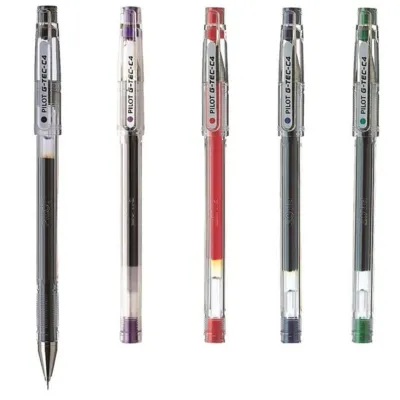
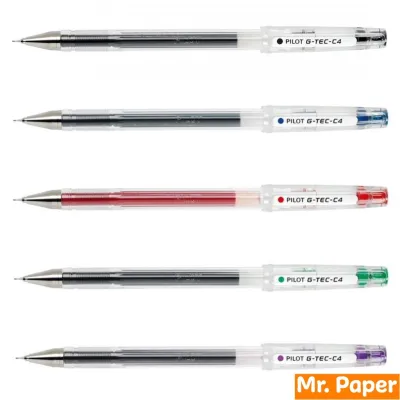
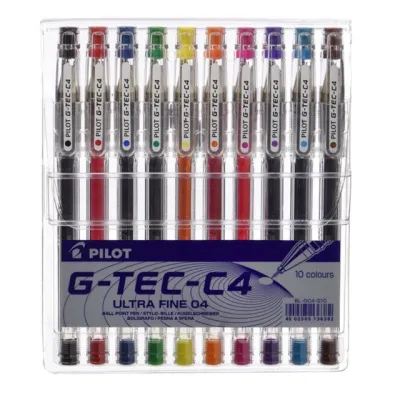
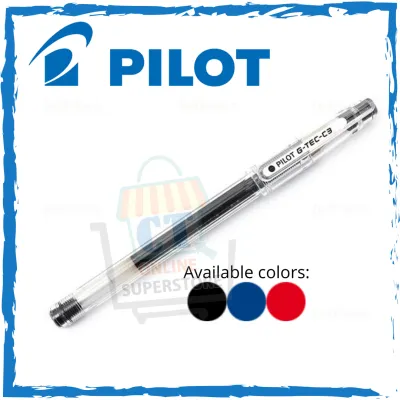
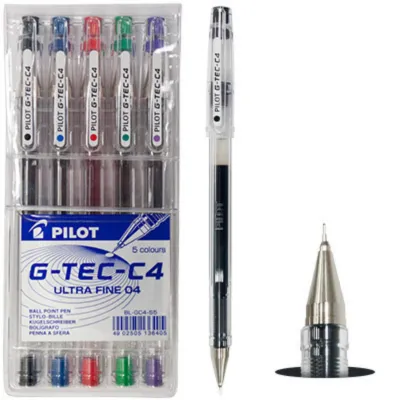
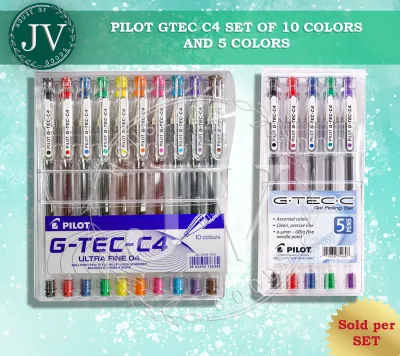
Prices are valid at publication and may change. Please refer to the product page for the latest price.
Core Characteristics and Expected Feedback by Size
Each tip size in the G-Tech lineup is engineered for a specific style of writing, offering distinct physical feedback and ink behavior. Understanding these characteristics helps you anticipate how the pen will feel in your hand before you make a purchase.

The 0.3mm Extra Fine Tip
The 0.3mm version is designed for absolute precision. It produces an incredibly thin, needle-like line that allows you to write legibly even in spaces smaller than a matchbox. Because the metal collar and ball are so minute, this tip provides the highest level of tactile feedback, often described as a “toothy” or slightly scratchy sensation. It requires a delicate touch and performs best when held at a relatively high angle to the paper surface.
The 0.4mm Fine Tip
Serving as the middle ground of the family, the 0.4mm tip balances the extreme precision of the finer model with the smoother flow of a larger point. It delivers a clean, highly legible line that does not crowd standard college-ruled notebook pages. The tactile feedback is noticeably softer than the 0.3mm, making it a comfortable choice for extended writing sessions, such as taking lecture notes or journaling.
The 0.5mm Medium/Fine Tip
The 0.5mm tip is the smoothest option in this specific range, offering a generous ink flow that glides effortlessly across most paper types. It minimizes friction, making it excellent for fast, cursive writing and bold signatures. While the line is thicker, it remains remarkably sharp compared to standard gel pens of the same size, though it may feel too broad for exceptionally small planners or tight margins.
Actual line width and smoothness are not fixed; they are highly dependent on your writing pressure and the texture of your paper. A heavy hand will make any of these tips feel scratchier and produce a slightly thicker line as more ink is forced onto the page.
Matching Tip Size to Your Handwriting and Daily Tasks
To narrow down your choice, observe your natural writing habits and the specific tasks you perform every day. Matching the pen to your existing style is much easier than trying to force your hand to adapt to a new tool.
Measuring Your Handwriting Scale
Take a ruler and measure the average height of your lowercase letters, such as “a,” “e,” or “o,” on a typical page of your handwriting.
- Under 2 millimeters: Your handwriting is highly compact. The 0.3mm tip is the most suitable option to prevent the loops of your letters from filling with ink and becoming illegible blobs.
- 2 to 4 millimeters: This is the standard size for most writers. The 0.4mm tip provides the perfect balance, keeping your letters distinct without looking too faint.
- Over 4 millimeters: Your writing is bold and spacious. The 0.5mm tip will complement your natural stroke width, ensuring your words look solid and authoritative on the page.
Task-Specific Demands
Different professional and academic tasks require different tools. For financial logging, accounting ledgers, or architectural sketching where numbers and lines must fit into tiny, precise columns, the 0.3mm tip is indispensable.
For general journaling, creative writing, or daily office work, the 0.4mm tip offers a versatile experience that handles diverse tasks without fatigue. If you are a student writing essay exams under tight time limits, the lower friction of the 0.5mm tip allows your hand to move quickly across the page without cramping.
Writing Speed and Pressure
Your physical writing style plays a massive role in how the ink behaves. Fast writers benefit from the consistent, rapid ink delivery of the 0.5mm tip, which keeps up with quick strokes without skipping. If you tend to press down heavily on the paper, a finer 0.3mm tip can dig into the fibers, causing paper snags and inconsistent ink flow. Adjusting to a lighter grip is essential if you want to enjoy the benefits of the extra-fine sizes.
Paper Compatibility and Ink Behavior Checks
The interaction between gel ink and paper is highly sensitive, especially in tropical climates where high humidity can affect drying times and paper absorption. Before committing to a specific tip size, consider the types of paper you use most frequently.
Bleed-Through and Feathering
Gel ink is water-based, meaning it can soak into low-quality or highly absorbent paper, causing the ink to spread outward (feathering) or show through on the back of the page (bleed-through). Because the 0.3mm tip deposits a minimal amount of ink, it is highly resistant to both issues, making it excellent for thin exam pads or standard office copy paper. The 0.5mm tip deposits more ink, which may require thicker, high-quality paper to prevent messy bleeding.
Tooth and Texture
The texture of your paper—often referred to as its “tooth”—interacts directly with the metal tip of the pen. Smooth, coated papers allow all three sizes to glide effortlessly. However, if you frequently write on rough, recycled, or highly textured paper, a 0.3mm tip can feel uncomfortably scratchy as it catches on the uneven surface. In contrast, the 0.5mm tip is much more forgiving on textured sheets, rolling smoothly over minor imperfections.
Drying Time Observation
In humid environments, gel ink takes longer to dry, which can lead to accidental smudging. You can perform a simple test to evaluate this behavior:
- Write a single line of text on your preferred notebook paper.
- Wait exactly three seconds, then run your finger gently across the ink.
- Observe if the ink smudges or remains crisp.
Finer tips like the 0.3mm dry almost instantly because they lay down a very thin layer of ink, making them ideal for left-handed writers who tend to drag their hand across fresh text. The 0.5mm tip may require a few extra seconds to dry completely, especially on smooth, non-porous paper.
How to Test and Verify Your Choice Before Buying
If you have the opportunity to visit a local stationery store, taking a few minutes to test the pens in person can save you from purchasing a size that does not suit your hand.
In-Store Testing Checklist
When testing pens at a stationery counter, avoid simply scribbling random circles. Instead, perform these specific tests on a sample pad:
- Write a dense block of text: Write three or four sentences at your normal speed to see if the ink flows consistently without skipping.
- Draw continuous loops: Draw a series of tight, connected cursive "e" and "l" shapes to check if the line remains unbroken during rapid directional changes.
- Draw parallel straight lines: Draw quick horizontal and vertical lines to evaluate how the tip handles different angles of contact.
Evaluating the Feedback Threshold
Pay close attention to how your hand feels during the test. A small amount of tactile feedback is normal for fine pens, but if the 0.3mm tip feels like it is actively scraping or cutting into the paper, it may cause hand fatigue during long writing sessions. If you find the feedback distracting, stepping up to the 0.4mm or 0.5mm will provide a much more comfortable, fluid experience.
Checking Refill Availability
Before finalizing your decision, check the availability of refills in your local market or preferred online marketplaces. Opting for a tip size that has widely available refills is both cost-effective and environmentally friendly. While the 0.3mm and 0.5mm sizes are incredibly popular, ensure that your chosen size is consistently stocked so you do not find yourself with an unusable pen body when the ink runs out.
Frequently Asked Questions (FAQ)
Can I use the same refills for different Pilot G-Tech tip sizes?
Yes, the standard plastic refills for the classic G-Tech series are generally interchangeable within the same pen body design. This means you can purchase a 0.3mm pen body and later insert a 0.4mm or 0.5mm refill if your writing preferences change. Always verify the specific model name on your pen barrel and check the refill packaging to ensure physical compatibility, as specialized or multi-pen versions of the G-Tech line may use different refill dimensions.
Why does my 0.3mm Pilot G-Tech skip or scratch on certain papers?
Skipping and scratching are usually caused by a combination of writing angle, pressure, and paper texture. Because the 0.3mm ball is extremely small, holding the pen at a very low, slanted angle can cause the metal collar of the tip to scrape against the paper instead of letting the ball roll freely. To resolve this, try holding the pen more vertically, reducing your writing pressure, and avoiding highly textured or fibrous papers that can clog the delicate tip with loose fibers.

Community discussion
Share your experience or ask a question. Comments are reviewed before publication.