
Choosing the right rotring technical pen depends on your specific workflow, maintenance tolerance, and budget. These precision instruments have been the gold standard for architects, engineers, and illustrators for decades, but each model serves a distinct purpose. The Rapidograph is engineered for high-precision, continuous architectural drafting due to its airtight capillary cartridge. The Isograph offers creative flexibility and easy cleaning for illustrators who switch line weights frequently. The Tikky Graphic serves as an affordable, low-maintenance disposable option for students and casual sketchers.
Diagnose Your Drafting and Illustration Needs for a Rotring Technical Pen
Before investing in a high-end technical pen, you must evaluate your primary use case. Precision architectural and engineering drafting demands continuous ink flow, absolute line consistency, and extreme accuracy. For these applications, a pen must perform flawlessly over long hours of drawing on tracing paper or vellum.
Art illustration and comic inking present different challenges. Illustrators often require frequent nib changes to vary line weights and need a pen that is easy to clean when using highly pigmented inks. The ability to quickly swap nibs or refill ink from a bottle can significantly impact creative flow and long-term operating costs.
Products mentioned in this guide
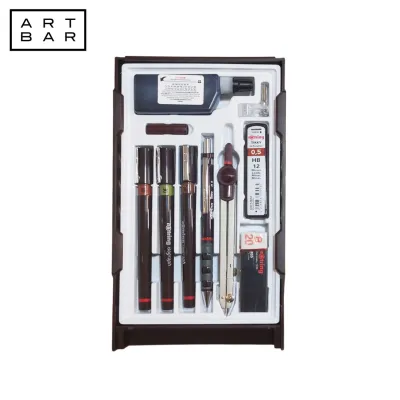
Prices are valid at publication and may change. Please refer to the product page for the latest price.
Casual technical sketching and student use call for a different balance. Students in the Philippines, particularly those in architecture or engineering programs, often need a reliable tool that fits a tighter budget. For these users, low maintenance and affordability are more critical than the extreme durability of professional-grade steel nibs.
To find your ideal match, consider this self-diagnosis checklist:
- Usage Frequency: Do you draw daily, or do you only need a technical pen for occasional projects?
- Line Width Variety: Do you require a single consistent line weight, or do you need to switch rapidly between ultra-fine and thick lines?
- Maintenance Commitment: Are you willing to spend 10 to 15 minutes flushing out dried pigment ink, or do you prefer a grab-and-go tool?
Choosing the wrong model often leads to frustration. A professional pen left unused for weeks will clog, while a student-grade pen may fail to deliver the crisp, razor-thin lines required for final presentation boards. Assessing your habits first prevents unnecessary expenses and ensures a smooth drawing experience.
Rotring Rapidograph: For Precision Architectural Drafting
The Rotring Rapidograph is the quintessential tool for professional drafting. Its defining engineering feature is the screw-on capillary cartridge system. Unlike traditional technical pens, each Rapidograph cartridge includes its own ink helix. This means that every time you replace the cartridge, you get a brand-new, clean ink helix, which virtually eliminates the risk of chronic clogging from old ink buildup.

This system provides superior airtightness. The screw-on mechanism seals the ink reservoir completely, preventing the ink from drying out during long drafting sessions. In the tropical climate of the Philippines, where high humidity can sometimes affect ink behavior, the Rapidograph maintains a remarkably consistent and controlled flow.
The ideal user for the Rapidograph is the professional architect, engineer, or cartographer. These users require uninterrupted ink flow for highly detailed, large-scale technical drawings. The pen is designed to be held vertically, allowing the gravity-fed steel wire inside the tubular nib to regulate the ink flow perfectly on drafting film or tracing paper.
However, the Rapidograph has notable limitations. The complex disassembly process makes thorough cleaning and nib replacement more time-consuming than other models. Because the ink helix is built into the cartridge, you cannot easily use bottled ink, forcing you to rely on proprietary Rapidograph cartridges.
Furthermore, the Rapidograph carries a higher initial cost. In local specialty stationery shops and online marketplaces, a single Rapidograph pen typically costs between ₱1,800 and ₱2,800 depending on the nib size. This makes it a significant investment that is best suited for professionals who will use it daily.
Rotring Isograph: For Illustrators and Frequent Maintenance
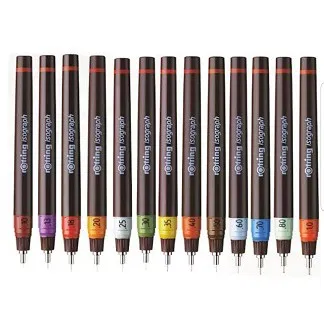
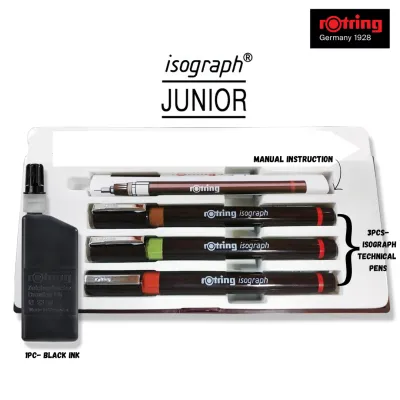
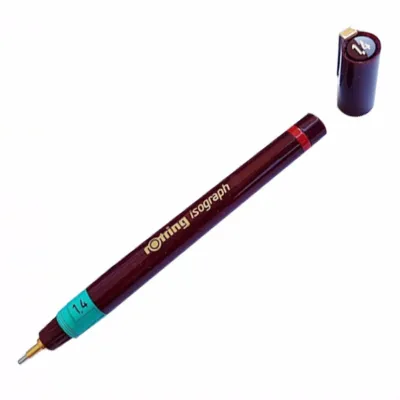
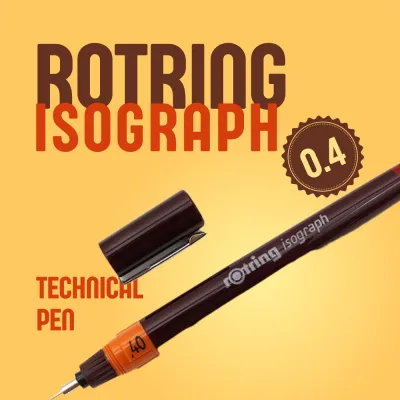
The Rotring Isograph is the preferred choice for creative professionals who prioritize easy maintenance and flexibility. Its core engineering feature is the push-on capillary cartridge and refillable ink reservoir. The nib section can be easily pulled apart from the pen body without unscrewing complex parts, allowing for rapid disassembly.
This design makes the Isograph incredibly easy to clean. Illustrators and comic artists who use heavy, highly pigmented inks can quickly flush out the nib and reservoir to prevent pigment buildup. The push-on system also allows users to swap nib sizes rapidly during a drawing session without dealing with messy screw threads.
The ideal user for the Isograph is the illustrator, graphic designer, or comic artist. These creators frequently switch between different line weights and require a pen that can be refilled from an ink bottle. Using bottled drawing ink is highly economical, significantly reducing the long-term cost of ownership compared to buying proprietary cartridges.
Despite its flexibility, the Isograph has some limitations. The push-on seal is slightly less airtight than the Rapidograph’s screw-on system. If left uncapped or unused for extended periods, the ink inside the Isograph may dry out faster. This requires more frequent routine maintenance to keep the ink flowing smoothly.
In terms of pricing, the Isograph is positioned similarly to the Rapidograph, generally retailing between ₱1,500 and ₱2,500 in the Philippines. However, the ability to refill the pen with bottled ink makes it a more cost-effective option for high-volume users over time.
Rotring Tikky Graphic: For Students and Casual Technical Sketching
The Rotring Tikky Graphic is designed as an accessible, low-commitment entry point into the world of technical pens. Unlike its professional siblings, the Tikky Graphic features a lightweight plastic body and a simplified, non-refillable ink system. It utilizes a fiber tip encased in a metal collar rather than a delicate steel wire-stabilized tubular nib.
This model is the ideal choice for architecture or design students, hobbyists, and professionals who only occasionally need a technical pen. It requires zero maintenance; there is no ink to refill and no nib to flush. It is a highly convenient grab-and-go tool for quick sketches, field notes, annotations, or rough layouts.
In the Philippines, the Tikky Graphic is highly popular among university students due to its affordability. Retailing for approximately ₱150 to ₱250, it allows students to practice technical drawing techniques without the fear of damaging an expensive professional instrument.
However, the Tikky Graphic has clear limitations. The build quality and ink flow consistency do not match the professional-grade Rapidograph or Isograph. The fiber tip will wear down and spread over time, especially when used on rough paper, which gradually alters the line width.
Because the ink system is entirely disposable, the pen must be discarded once the ink runs out. This makes it unsuitable for final, high-precision presentation drawings or heavy daily professional use where absolute line consistency is mandatory.
Evaluate Maintenance, Ink Systems, and Nib Sizes
Understanding the differences in ink systems, maintenance expectations, and nib sizes is crucial for a successful long-term ownership experience. The ink systems of these three models dictate how you will manage consumables. The Rapidograph uses specialized screw-in cartridges, the Isograph utilizes a refillable reservoir or push-in cartridges, and the Tikky Graphic is entirely disposable.
Maintenance is the most common pain point for technical pen users. Technical drawing inks are pigment-based and water-resistant, meaning they contain solid particles that can solidify and permanently clog the microscopic capillary tubes if left to dry. Isograph users will find routine flushing easier because the pen disassembles quickly, whereas Rapidograph users must be meticulous with cleaning to avoid permanent clogs.
In the humid Philippine climate, paper can absorb ambient moisture, which affects how ink behaves. On damp paper, technical ink may feather or bleed more easily. Storing your paper in a dry place and using smooth, non-porous media will help maintain the crispness of your lines.
Selecting the right nib size is another critical decision. Rotring pens follow ISO standard line widths, ranging from an ultra-fine 0.1mm to a thick 2.0mm. For general drafting and illustration, a starter set of 0.3mm, 0.5mm, and 0.7mm nibs is highly recommended, as this combination covers fine detail, medium outlines, and bold borders.
Ultra-fine nibs, such as the 0.1mm and 0.2mm sizes, require exceptionally smooth paper and a very light hand. The microscopic steel wire inside these nibs is highly delicate. Applying too much pressure or dropping the pen can easily bend the wire, ruining the nib instantly.
Match the Right Rotring Model to Your Workflow
To finalize your decision, map your diagnosed needs directly to the correct Rotring model. Choose the Rapidograph if you are a professional drafter or architect who demands uncompromising line precision, works in long continuous sessions, and prefers a clean cartridge-changing system.
Choose the Isograph if you are an illustrator, designer, or artist who values easy cleaning, frequent nib swaps, and the cost savings of using bottled drawing ink.
Choose the Tikky Graphic if you are a student, hobbyist, or casual sketcher who needs a low-cost, maintenance-free tool for quick layouts and everyday writing.
Before making your purchase, always verify the exact nib size and ink compatibility on the packaging. Technical pens are highly specialized tools, and ensuring you have the correct consumables for your specific model is essential for optimal performance.
Frequently Asked Questions (FAQ)
Can I use standard fountain pen ink in a Rotring technical pen?
No, you should never use standard fountain pen ink in a Rotring technical pen. Fountain pen inks are formulated differently and often contain dyes or solubilizers that do not provide the high opacity and waterproof qualities required for technical drawing. More importantly, some fountain pen inks contain shellac or larger pigment particles that will permanently clog the microscopic capillary tubes of a technical pen.
To protect your investment, only use specialized, pigment-based technical drawing inks, such as Rotring’s own drawing ink. These inks are formulated to flow smoothly through ultra-fine nibs without drying instantly inside the capillary system, ensuring consistent performance and preventing permanent damage.
How do I safely unclog a dried Rotring pen nib?
To safely unclog a dried nib, start by disassembling the pen and soaking the nib section in warm water or a dedicated technical pen cleaning fluid. Let it soak for several hours or overnight to dissolve the dried pigment ink. Gently agitate the nib in the water to help loosen the particles.
Never use excessive force, metal needles, or wire to clear the capillary tube. The microscopic wire inside the nib regulates ink flow and is incredibly delicate; poking it with a hard object will permanently bend or break it, rendering the pen useless. If soaking does not work, use a specialized technical pen pressure bulb to gently flush water through the nib assembly.
What type of paper works best with Rotring technical pens?
Rotring technical pens perform best on smooth, non-porous papers such as tracing paper, vellum, or smooth bristol board. These surfaces allow the metal nib to glide effortlessly without catching, ensuring a consistent line width and preventing paper fibers from getting trapped in the capillary opening.
Standard copy paper or rough sketchbooks should be avoided. These papers are highly absorbent, which causes the pigment ink to feather or bleed, and their rough texture can quickly wear down or damage the delicate metal nibs over time. For the best results, especially in humid environments, always select high-quality, smooth-surfaced media.
Community discussion
Share your experience or ask a question. Comments are reviewed before publication.