
Choosing the right Sakura Pigma Micron size depends on your specific artistic style, the scale of your canvas, and how you handle line weight. Fine nibs suit intricate detailing and technical drafting, while medium to broad nibs excel at bold outlines and graphic illustrations. In the Philippines, where tropical humidity can affect ink drying times and paper absorption, understanding how different nib sizes interact with your chosen medium is essential for achieving clean, professional results. By matching your drawing habits with the correct nib specifications, you can prevent common issues like paper scratching, ink bleeding, and premature nib wear.
To make an informed choice, you must first evaluate how you apply pressure and the types of paper you use. Different art styles demand different ink delivery rates, and the physical construction of each nib size dictates how it performs under pressure. Taking the time to analyze your technique ensures you select a pen that complements your natural hand movements rather than fighting against them.
Diagnose Your Line Weight and Technique Needs
Before purchasing any drawing pens, it is helpful to identify your primary artistic techniques and line requirements. If your work involves intricate detailing, cross-hatching, or stippling, you will naturally require a much finer line than an artist who focuses on bold, graphic comic outlines or expressive hand-lettering. Take a moment to look at your current portfolio or sketchbook to identify whether you prefer a uniform, consistent line weight or dynamic line variation that changes with hand pressure.
Products mentioned in this guide
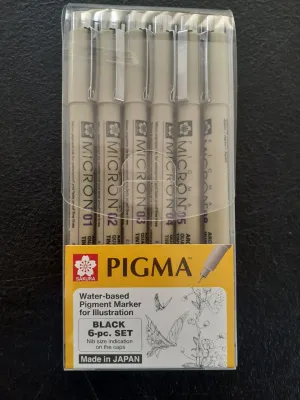
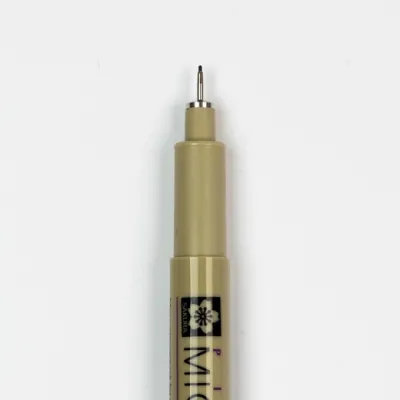

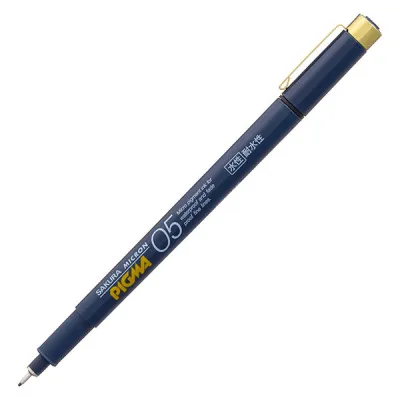
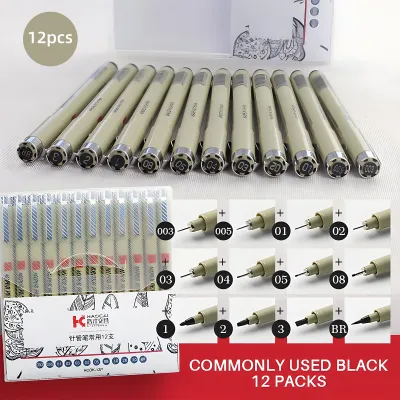
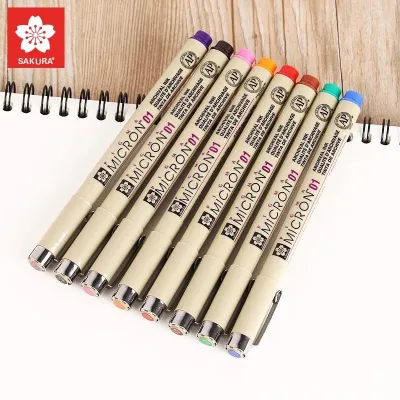
Prices are valid at publication and may change. Please refer to the product page for the latest price.
Different art styles dictate specific line weights. For instance, Zentangle and detailed mandala art rely heavily on ultra-fine, consistent lines to create complex geometric patterns without crowding the design. Manga and comic illustration, on the other hand, often require a mix of fine lines for facial features and much thicker, bolder lines for outer character silhouettes to create a sense of depth and dimension.
The physical scale of your typical canvas also plays a major role in your decision. Working in a compact pocket journal or a small sketchbook demands ultra-fine lines to keep details from merging into a solid blob of ink. Conversely, if you regularly illustrate on large poster boards, watercolor sheets, or mixed-media canvases, fine lines will get lost, requiring you to spend excessive time coloring in shapes or thickening outlines.
Environmental factors also influence your technique. In warm, humid climates, paper fibers naturally absorb moisture from the air, making them slightly softer and more receptive to ink spread. If you tend to draw slowly with a heavy hand, this moisture can cause lines to appear thicker than intended. Recognizing these variables helps you establish a baseline for the exact line weights your style demands.
Match Official Nib Sizes to Your Artistic Techniques
Sakura Pigma Micron pens use a numbering system on their caps and barrels that corresponds to specific line widths, though these numbers do not represent direct millimeter measurements. To make an accurate selection, you must verify the exact millimeter widths printed on the packaging or the pen body. This ensures your technical layouts and drawings match your exact scaling requirements.

Ultra-fine and fine designations, such as the 003 (0.15 mm), 005 (0.20 mm), and 01 (0.25 mm), are engineered for micro-detailing, technical drawing, and tight hatching. These sizes allow you to render incredibly delicate textures, facial features in small-scale portraits, and precise architectural layouts. Because the metal sleeves supporting these plastic nibs are extremely thin, they require a light touch. Applying too much pressure can bend the tip or push it back into the collar, so these sizes are highly suitable for artists with a controlled, gentle drawing style.
Medium and broad designations, including the 03 (0.35 mm), 05 (0.45 mm), and 08 (0.50 mm), serve as the workhorses for general sketching, bold outlines, and graphic illustrations. The 05 size is widely considered the standard utility pen for writing and outlining because it balances visibility with control. These thicker nibs are physically sturdier, making them highly resilient against rough paper textures and heavier hand pressure. If your style relies on clean, solid borders or comic-book style linework, these medium sizes provide the necessary ink flow to cover ground quickly.
For dynamic line variation, calligraphy, and expressive lettering, brush tip variants offer a flexible fiber tip that responds directly to your hand pressure. The flexibility indicated on the product label allows you to transition from a hairline stroke to a broad sweep in a single movement. Additionally, graphic sizes like the 1.0 mm, 2.0 mm, or 3.0 mm flat or bullet tips are excellent for filling in large areas of solid black without exhausting your finer detailing pens.
Always cross-reference your diagnosed techniques with the intended use cases printed on the pen packaging. If you are working on technical drafting where line consistency is required, stick strictly to the calibrated fine line sizes. If you are creating expressive illustrations, mixing a fine size for details with a brush pen for shading will yield the most dynamic visual depth.
Test Paper Compatibility and Observe Ink Behavior
The interaction between your pen tip and your paper surface determines the final quality of your artwork. Before starting a major project, check the paper weight, sizing, and surface texture of your sketchbook or illustration board. Sizing refers to the chemical treatment applied to paper during manufacturing to control water absorption; highly sized papers resist ink penetration, keeping lines crisp, while poorly sized papers act like blotting sheets.
To ensure optimal results, perform a visual test on a scrap piece of your chosen paper. Draw a series of quick parallel lines, slow deliberate curves, and solid dots. Observe how the ink behaves: does the line remain crisp, or does it feather outward into the paper fibers? Watch for pooling at the end of your strokes, and note how many seconds it takes for the ink to dry completely. In humid tropical environments, drying times can double, so patience is required before erasing pencil guidelines.
Additionally, check the back of the paper for ghosting or bleed-through. Thin journal pages or low-gsm sketchbooks often allow darker inks to show through to the other side, which can ruin double-sided layouts. If you observe significant ghosting, you may need to switch to a thicker paper stock or reduce your nib size to limit the volume of ink deposited on the page.
If your visual test reveals excessive bleeding or feathering, you may need to adjust your nib size selection. A paper that causes a 03 pen to bleed out to the width of an 08 requires you to downsize to a 005 to achieve the desired line weight. Alternatively, if you find that a fine nib scratches the surface of a heavily textured cold-press watercolor paper, switching to a smoother hot-press paper or upgrading to a sturdier 05 or 08 nib will prevent paper fibers from clogging the delicate plastic tip.
Build a Cost-Effective Micron Toolkit for Your Workflow
Building a practical collection of drawing pens does not require buying every single size available. Instead, determine if a single versatile size or a multi-pen set is more practical for your current projects and budget. If you are a student or hobbyist working with a budget of around ₱500, purchasing a curated three-pack of essential sizes is often more cost-effective than buying individual pens.
Prioritize essential sizes that cover the majority of your daily drawing or lettering tasks to avoid unnecessary spending. For most illustration styles, a combination of an 01 (for fine details and textures), an 05 (for main outlines and writing), and an 08 or Brush pen (for borders and dark fills) creates a highly versatile toolkit. This trio allows you to handle almost any project scale without leaving gaps in your line-weight hierarchy.
Plan your replacement cycles by observing how quickly different nib sizes wear down. Fine nibs have delicate plastic tips that naturally wear down or fray when used on rough, textured papers, even if plenty of ink remains in the barrel. If you frequently work on toothy mixed-media paper, expect to replace your 005 and 01 pens more often than your robust 08 or brush pens, and budget your stationery expenses accordingly.
Frequently Asked Questions (FAQ)
How do I know when my Pigma Micron pen is running out of ink?
You can identify ink depletion through both visual and tactile feedback during use. The most common sign is a fading line opacity, where the rich, solid black ink begins to look like a dry, translucent gray. You may also notice skipping or inconsistent ink flow, especially during quick, continuous strokes. Additionally, inspect the physical tip under good lighting; if the line is faint but the pen still feels wet, the plastic collar or felt tip may simply be frayed, split, or pushed inward from excessive pressure, indicating it is time for a replacement.
Can I use Pigma Micron pens over watercolor or marker washes?
Yes, you can layer these pens with wet media, provided you follow the correct sequence and allow for adequate drying times. Always verify the ink’s stated water resistance on the manufacturer’s label. To prevent smearing, it is highly recommended to apply your watercolor or alcohol marker washes first, let the paper dry completely, and then draw your ink lines on top. If you must ink first, perform a test on a small, hidden area of your paper to ensure the ink has cured long enough—often requiring several minutes in humid conditions—so it does not lift or reactivate when wet media is brushed over it.
Community discussion
Share your experience or ask a question. Comments are reviewed before publication.