
Selecting the right highlighter is more than just picking a color; it is about finding a tool that matches your reading pace, paper quality, and organizational style. The iconic flat-bodied Stabilo Boss highlighter has long been a staple on desks across the Philippines, from bustling offices in Manila to study tables in university dorms. With several design lines, sizes, and color palettes available, finding the perfect match requires looking closely at how you work. Whether you are highlighting dense legal codices, organizing a bullet journal, or reviewing printed spreadsheets, matching the right variant to your specific paper and workflow will prevent smudging, reduce eye strain, and keep your notes clean. By understanding the physical differences and ink behaviors of each line, you can make an informed decision that enhances your productivity.
Understanding the Core Stabilo Boss Form Factors and Design Lines
The physical design of your writing instrument directly impacts how comfortable it is to use over long sessions and how easily it fits into your daily carry. The Stabilo Boss family is primarily divided into two distinct form factors: the classic full-sized model and the compact travel-friendly version.
The classic Stabilo Boss Original features the signature flat, rectangular barrel that has defined the brand for decades. This design is highly stable on flat surfaces, preventing the highlighter from rolling off your desk during intense study sessions. Its larger body houses a generous ink reservoir, making it the preferred choice for heavy-duty highlighting tasks where longevity is key. The wide flat sides also provide a comfortable resting place for your thumb and fingers, reducing hand fatigue during long hours of reading. Additionally, the classic model is refillable, making it a more sustainable choice for those who go through high volumes of ink.
Products mentioned in this guide
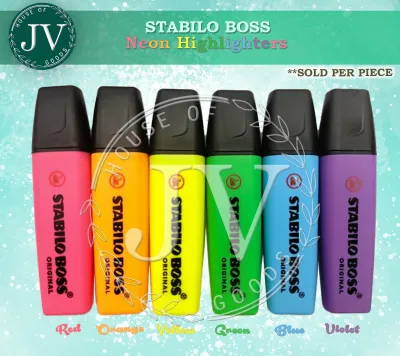
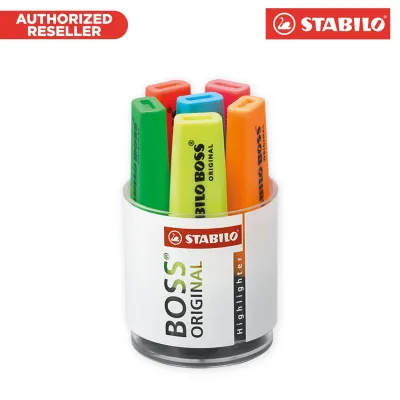
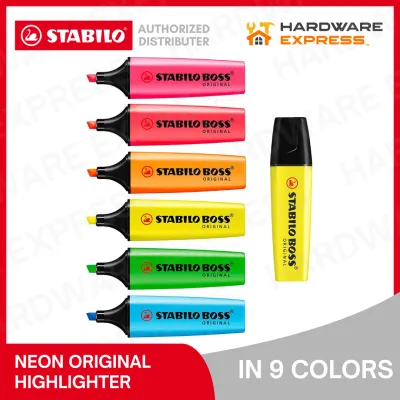
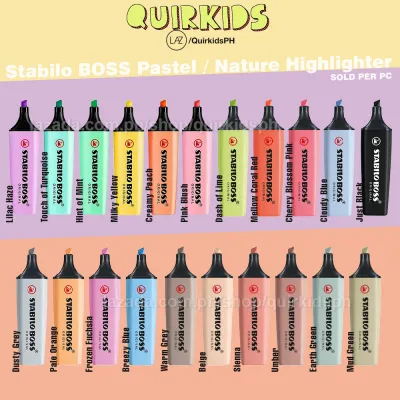
Prices are valid at publication and may change. Please refer to the product page for the latest price.
In contrast, the Stabilo Boss Mini offers a scaled-down version of the classic design. These pocket-sized highlighters are highly portable, fitting easily into small pencil cases, planner pockets, or even uniform pockets. While they contain less ink than their full-sized counterparts, they utilize the same high-quality water-based ink and chisel tip, making them excellent for quick annotations on the go. They often feature fun, illustrated designs on the barrel, making them popular for younger users or those who appreciate a touch of personality in their stationery. However, because of their smaller size, they do not support the same refill systems as the original line.
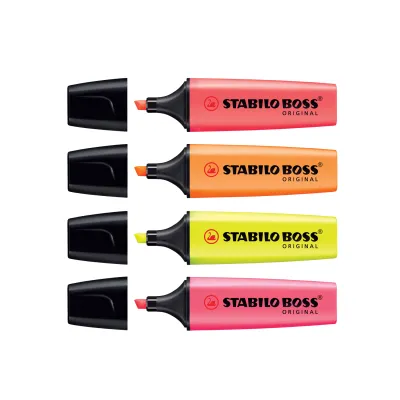
Beyond physical size, the aesthetic lines are categorized by their visual impact. The traditional fluorescent line features high-visibility, neon shades designed to draw immediate attention to key terms. These are ideal for rapid scanning, indexing, and creating high-contrast visual cues on standard printed documents. The bright pigments are formulated to stand out even under dim lighting conditions, ensuring your marked text remains highly legible.
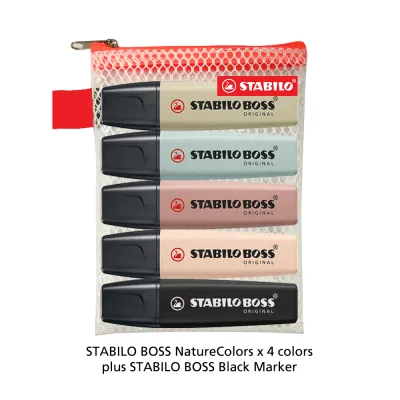
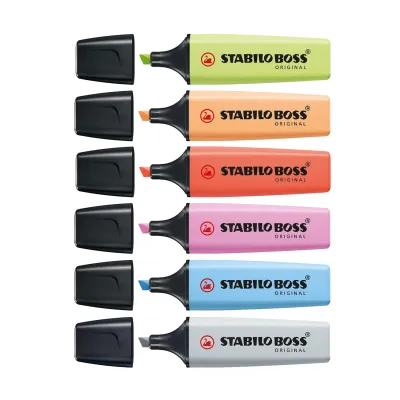
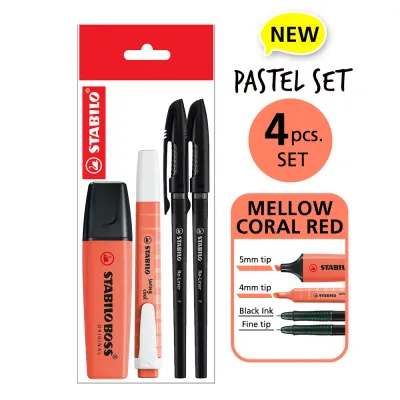
On the other hand, the Pastel and Design editions offer muted, low-glare tones. These softer shades are designed to soothe the eyes during extended reading sessions and integrate seamlessly into creative layouts. Because color assortments, limited-edition prints, and packaging configurations can vary by production batch and retail location, it is always wise to inspect the exact contents listed on the packaging before making your purchase to ensure you get the specific shades you need for your color-coding system.
Matching Highlighter Variants to Your Daily Tasks
Different tasks demand different visual cues and paper interactions. Choosing a highlighter variant based on your primary activity ensures that your notes remain legible and your paper intact.

Studying and Textbook Annotation
For academic preparation, particularly when reviewing dense textbooks or preparing for board exams, high-visibility fluorescent colors are highly effective. The bright neon yellow, green, and orange variants allow your eyes to quickly locate key definitions and formulas during rapid review sessions. When color-coding complex academic texts, using a standard-sized fluorescent set helps establish a clear visual hierarchy—such as yellow for main concepts, pink for vocabulary, and green for examples. The larger ink capacity of the classic barrel ensures you will not run out of ink mid-chapter, providing a reliable tool for long study marathons. Furthermore, neon colors are highly effective when scanning photocopied materials where the print quality might be slightly faded.
Office Work and Document Review
In a professional office setting, document review often involves standard copy paper, which can be prone to ink absorption and bleed-through. For these tasks, pastel or muted variants are highly suitable. These softer tones provide sufficient emphasis without making printed text difficult to read underneath. Additionally, pastel inks generally contain different pigment concentrations that can minimize visual fatigue during long hours under fluorescent office lights. If you frequently review double-sided printed documents, a lighter pastel shade reduces the likelihood of the ink ghosting through to the opposite side of the page, keeping both sides clean and readable. This is particularly useful when handling financial statements or legal briefs where clarity is paramount.
Journaling and Creative Planning
For bullet journaling, planner layouts, and creative lettering, the aesthetic appeal of your tools is just as important as their functionality. Pastel variants and curated dual-tone sets are the preferred choice for creative enthusiasts. These shades allow you to create beautiful, cohesive color schemes in your planner without overpowering your handwriting or fine-liner drawings. They can also double as light watercolor washes or lettering markers when applied with creative techniques. Because journal paper varies widely in weight and texture, these softer tones offer a delicate touch that complements hand-drawn layouts without bleeding through high-quality paper. They allow you to highlight headers and create decorative borders that look clean and professional.
Key Selection Criteria: Tip Size, Ink Properties, and Ergonomics
To ensure your chosen highlighter performs reliably under daily use, you should evaluate several physical and chemical characteristics against your specific stationery setup.
Tip Size and Line Width
The standard Stabilo Boss chisel tip is designed for versatility, offering two distinct line widths depending on how you hold the marker. Typically, the broad side of the chisel tip produces a 5mm line, which is ideal for covering standard printed text blocks in one smooth stroke. The narrow point of the chisel tip produces a 2mm line, perfect for underlining individual words, writing small margin notes, or highlighting thin lines of text in compact planners. Before purchasing, check the tip specifications to ensure they align with the font sizes and line spacings of your primary reading materials. This dual-width capability eliminates the need to carry multiple markers for different text sizes.
Ink Properties and Paper Compatibility
The water-based ink used in these highlighters is formulated to resist drying out even when left uncapped for several hours. However, ink performance is highly dependent on the paper medium. In humid tropical climates, paper can absorb ambient moisture, which may slow down ink drying times and increase the risk of feathering or bleeding. It is highly recommended to perform a small test patch on an inconspicuous corner of your notebook or textbook. Observe how quickly the ink dries and check if it smudges your underlying pen ink, especially if you use gel pens or fountain pens. This simple check prevents ruined notes and keeps your work smudge-free.
Ergonomics and Grip
The flat, wide barrel of the classic model provides a unique grip that differs significantly from traditional round markers. This shape allows for precise control over the angle of the chisel tip, ensuring clean starts and stops on the page. However, users with smaller hands or those who prefer a traditional pen-like grip may find the flat shape takes some getting used to. Consider the weight distribution and how the cap posts on the back of the highlighter. A secure, click-fit cap is essential to prevent accidental ink stains in your bag and to keep the tip protected from dust and debris during transport. A well-designed cap also ensures the marker remains airtight when not in use.
Purchasing Guide and Pre-Purchase Checks
Acquiring authentic stationery is crucial for experiencing the intended ink quality, smooth flow, and longevity of your highlighters.
When shopping, always source your writing instruments from authorized stationery retailers, official brand stores, or reputable online marketplaces. Counterfeit highlighters are common in the market and often feature inferior ink formulas that dry out quickly, bleed excessively through paper, or emit strong chemical odors. Authentic products will feature clear branding, crisp barcode prints, and consistent plastic molding. Purchasing from trusted sources also ensures you have access to genuine customer support and return policies if a product is defective.
Upon receiving your highlighters, conduct a quick physical inspection. Check that the packaging seal is intact and inspect the chisel tip for any signs of fraying, discoloration, or dryness. If you are purchasing individual loose markers from a physical store, try to test the ink flow on a scrap piece of paper to ensure the tip is fully saturated and free from contamination. This is especially important for pastel shades, which can sometimes show color variations if exposed to extreme temperatures during storage.
If you are unsure which color palette or form factor will work best with your specific notebooks and study guides, avoid buying large multi-color sets immediately. Instead, purchase a single unit or a small trial pack of two or three colors. This allows you to test the ink’s drying speed, color saturation, and bleed resistance on your actual study materials before investing in a comprehensive desk set. It is a cost-effective way to build your collection without wasting resources on shades you may not use.
Frequently Asked Questions (FAQ)
How do I revive a dried-out Stabilo Boss highlighter?
Stabilo Boss highlighters feature built-in anti-dry-out technology that allows them to remain uncapped for up to four hours without drying out. However, if a highlighter is left uncapped for longer periods or stored incorrectly, the tip may dry out. To attempt to revive it, ensure the cap is clicked on tightly and store the highlighter vertically with the tip pointing downward for several hours to allow the ink to flow back to the nib. If the chisel tip has become permanently frayed, clogged with paper fibers, or if the internal ink reservoir is completely depleted, the unit should be replaced or refilled using compatible official refill systems where available. Avoid dipping the tip in water, as this can dilute the water-based ink and ruin the color consistency.
Are pastel highlighters less visible on dark or colored paper?
Yes, pastel highlighters are formulated with semi-opaque, soft pigments that rely on a light background to provide contrast. When used on dark, colored, or highly textured paper, these pastel shades may lose their vibrancy and fail to stand out. For colored paper or dark-themed journals, traditional fluorescent highlighters or specialized metallic markers generally offer better visibility. Always test your highlighters on a small, hidden area of your colored paper first to verify that the contrast level meets your reading and organizational needs. This ensures your color-coding system remains functional across all your stationery mediums.
Community discussion
Share your experience or ask a question. Comments are reviewed before publication.