
Selecting the right mechanical pencil often comes down to a balancing act between line precision and lead durability. The Uni DelGuard series has earned a strong reputation among students, artists, and professionals for solving the age-old frustration of snapping pencil leads. However, choosing the ideal model requires looking closely at the three primary lead diameters available: 0.3mm, 0.5mm, and 0.7mm. While the core shock-absorbing technology remains consistent across the entire lineup, each size alters the writing experience, line density, and overall durability.
Your choice should align with your natural writing pressure, the size of your handwriting, and the specific tasks you perform daily. A student rushing through exam sheets on thin paper will have different needs than a designer sketching layouts or an engineer writing complex formulas in tight margins. By understanding how each DelGuard variant handles these demands, you can select a tool that feels like a natural extension of your hand.
Understanding the DelGuard Mechanism Across All Sizes
The defining feature of the Uni DelGuard is its patented double-spring mechanism, which is engineered to protect the lead from breaking regardless of how you write. Unlike standard mechanical pencils that leave the lead vulnerable to sudden shifts in pressure, the DelGuard active system responds dynamically to your hand movements. This protection operates in two distinct directions to cover both vertical and diagonal writing forces.
Products mentioned in this guide
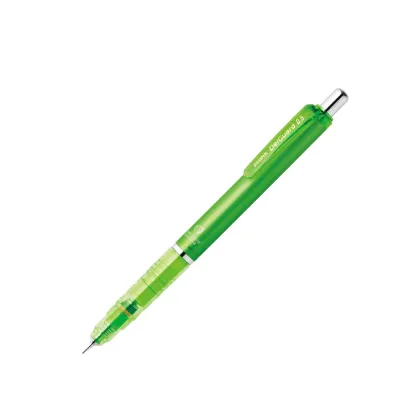
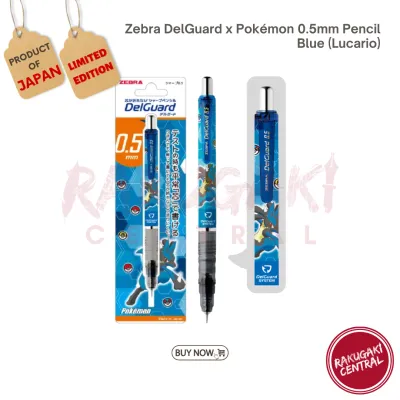
Prices are valid at publication and may change. Please refer to the product page for the latest price.
When you apply direct downward pressure, an internal vertical spring absorbs the force, allowing the lead to retreat slightly upward into the barrel. Conversely, when you write at an angle and apply diagonal pressure, a secondary lateral spring pushes a protective metal sleeve forward from the tip to shield the exposed lead. This dual-action suspension ensures that the lead is constantly guarded during rapid, continuous writing sessions.
While the mechanism is highly effective, it is important to understand its physical boundaries. The DelGuard system is designed to protect the lead during normal writing, but it cannot override the fundamental physical limits of very thin graphite. If you extend the lead too far—typically more than three clicks—or apply extreme, intentional force, the lead can still snap. The mechanism works best when you let the protective sleeve do its job at a standard extension height.
In terms of build and ergonomics, the standard DelGuard models feature a lightweight plastic body with a textured grip section. The lower portion of the barrel is transparent, allowing you to observe the springs compressing and the metal sleeve extending as you write. This lightweight design reduces hand fatigue during long writing sessions, making it a comfortable choice for daily use in classrooms and offices.
0.3mm DelGuard: Best for Precision and Fine Details
The 0.3mm DelGuard is the ultimate precision instrument in the lineup, tailored specifically for those who work on a small scale. If you have micro-handwriting, fill out compact planners, or regularly write complex mathematical equations and scientific symbols, this ultra-fine tip is unmatched. It allows you to fit an incredible amount of legible text into tight spaces, such as the margins of a textbook or small grid journals.

This size is also highly favored for technical drafting and detailed illustration work where clean, thin lines are non-negotiable. Because the line width remains consistently narrow, you do not have to worry about your writing blurring together or losing definition. It provides a crisp, sharp rendering that makes detailed diagrams and intricate characters look exceptionally neat.
However, using a 0.3mm pencil requires a mindful adjustment in your writing habits. Even with the DelGuard suspension system active, 0.3mm lead is inherently delicate and has a sharp, needle-like profile. If you write with a heavy hand, the fine tip can dig into softer paper fibers, creating a scratchy sensation. This is particularly noticeable on low-grade paper or in humid environments where paper tends to absorb moisture and soften.
To get the best experience from the 0.3mm model, you should maintain a lighter grip and controlled pressure. Additionally, sourcing refills for 0.3mm pencils can sometimes be more challenging than for standard sizes. Local stationery stores may carry a more limited selection of lead hardness options in this diameter, meaning you may need to plan ahead or search online marketplaces to keep your pencil supplied.
0.5mm DelGuard: The Balanced Choice for Daily Writing
For the vast majority of users, the 0.5mm DelGuard represents the ideal middle ground. It is the industry standard for mechanical pencils, offering a highly versatile balance between clean line definition and structural durability. Whether you are taking lecture notes, journaling, drafting essays, or filling out standard office forms, the 0.5mm variant delivers a reliable and smooth writing experience.
The 0.5mm line is thick enough to remain highly visible on all types of paper, yet thin enough to accommodate average to small handwriting sizes without crowding the letters. It glides more smoothly across the page than the 0.3mm variant, offering less resistance and a reduced tendency to catch on the paper grain. This makes it the safest choice if you want a dependable, all-purpose writing tool.
Another significant advantage of the 0.5mm model is the unmatched availability of lead refills. You can find 0.5mm lead in virtually any school supply store, local bookstore, or online shop. This widespread availability also extends to a massive variety of lead hardness grades, from hard and light (such as H or 2H) to soft and dark (such as B, 2B, or 4B), allowing you to customize your writing experience easily.
Because the 0.5mm lead has a larger surface area than the 0.3mm, it wears down at a moderate, predictable rate. The DelGuard mechanism works exceptionally well with this size, making lead breakage an incredibly rare occurrence during normal writing. It is the perfect entry point into the DelGuard family and the most practical option for everyday tasks.
0.7mm DelGuard: Ideal for Heavy Pressure and Sketching
If you naturally apply heavy downward pressure when you write, or if you prefer a bold, dark line, the 0.7mm DelGuard is your best match. This thicker lead diameter is robust and highly resistant to breaking, even without mechanical assistance. When paired with the DelGuard dual-spring system, the 0.7mm model becomes virtually unbreakable under normal writing conditions.
This variant is highly suited for fast-paced environments where you cannot afford to write delicately. During timed exams, rapid brainstorming sessions, or outdoor note-taking, the 0.7mm DelGuard allows you to write with speed and confidence. You can press down firmly without any fear of the lead snapping, resulting in fewer interruptions and a more fluid thought process.
Beyond standard writing, the 0.7mm size is an excellent hybrid tool for quick sketching, layout drafts, and shading. Artists and designers appreciate the thicker line for blocking out shapes and creating bold outlines. The broader tip also allows for a wider range of line weight variation depending on the angle at which you hold the pencil.
However, the 0.7mm model does have clear limitations when it comes to fine detail work. If you have very small handwriting, the bold lines can quickly merge, making your notes difficult to read. Additionally, because the thicker lead deposits more graphite onto the page, there is a higher potential for smudging, especially if you use softer lead grades like 2B on standard paper in warm, humid climates.
Decision Framework: Choosing Your Ideal DelGuard Size
To determine which Uni DelGuard model is right for your desk, you should evaluate three primary factors: your natural writing pressure, your typical handwriting size, and the type of paper you use most frequently. Balancing these elements will guide you to the size that minimizes hand strain and maximizes writing efficiency.
If you write with a light touch, prefer ultra-fine lines, and regularly work with tight grids or small margins, the 0.3mm model is highly recommended. If you want a hassle-free, versatile pencil for general note-taking and want the widest selection of easily accessible refills, the 0.5mm model is the smartest choice. If you write heavily, prefer bold lines, or use your pencil for both writing and sketching, the 0.7mm model will provide the durability you need.
Use the following comparison table to quickly map your writing habits to the correct DelGuard model:
| Lead Size | Handwriting Size | Writing Pressure | Primary Use Cases | Refill Availability |
|---|---|---|---|---|
| 0.3mm | Very Small / Micro | Light to Gentle | Math formulas, marginal notes, fine detailing | Limited / Specialty |
| 0.5mm | Average to Small | Moderate / Normal | Daily note-taking, journaling, general office work | Excellent / Widely Available |
| 0.7mm | Large / Bold | Heavy / Firm | Quick sketching, bold writing, rapid brainstorming | Good / Common |
Sourcing Refills and Maintaining Your Mechanical Pencil
To ensure your Uni DelGuard continues to perform reliably over time, proper maintenance and correct consumable selection are essential. Always verify the lead diameter of your pencil before purchasing refills. The size is clearly printed on the pencil’s barrel and packaging; attempting to feed 0.5mm lead into a 0.3mm or 0.7mm model will cause immediate jamming and can permanently damage the internal clutch.
When choosing lead refills, consider both the diameter and the hardness grade. For general writing in the Philippines, an HB or B grade offers a great balance of darkness and smooth gliding. If you find your writing smudges easily due to high humidity, switching to a slightly harder grade like HB can help keep your pages clean. Always store your spare lead refills in their original plastic cases to protect them from moisture and accidental breakage.
If you experience a lead jam, do not force the click mechanism, as this can compress the broken fragments further inside the tip. Instead, carefully unscrew the front metal cone of the pencil. Gently remove any exposed broken lead pieces from the clutch mechanism. You can use a thin clearing pin (often found on the underside of mechanical pencil erasers) or a spare piece of rigid wire to clear the pathway before reassembling the tip.
Lastly, pay attention to the small eraser housed under the top cap. This eraser not only serves as a quick correction tool but also acts as a physical plug to keep the spare leads inside the storage chamber. If you wear the eraser down completely, replace it promptly or ensure the metal cap is securely in place to prevent your spare leads from falling out and breaking inside your bag or pencil case.
DelGuard Selection and Care (FAQ)
Can I use 0.5mm lead in a 0.7mm DelGuard pencil?
No, you cannot mix lead sizes. Mechanical pencils are engineered with highly precise internal brass or plastic clutches that are calibrated to grip one specific lead diameter. If you attempt to load 0.5mm lead into a 0.7mm pencil, the clutch will not be able to hold the thinner lead, causing it to slip back into the barrel or fall out of the tip completely. Conversely, forcing a larger lead into a smaller pencil will jam the mechanism.
Does the DelGuard system completely prevent lead breakage?
While the DelGuard dual-spring mechanism dramatically reduces lead breakage under normal writing conditions, it does not make the lead entirely unbreakable. The system is designed to protect the lead at standard writing angles and reasonable pressure levels. If you extend the lead excessively (more than three clicks), drop the pencil directly on its tip, or apply extreme, intentional force, the graphite can still snap beyond the mechanism’s ability to compensate.
Community discussion
Share your experience or ask a question. Comments are reviewed before publication.