
Choosing the right Writech ballpen variant requires aligning your daily writing tasks with the specific combination of tip size, ink formulation, and barrel ergonomics that matches your hand. Because writing preferences are highly subjective, there is no single pen that excels in every scenario. Instead, finding the ideal match involves understanding how different pen designs interact with your writing speed, paper choices, and physical comfort.
By evaluating the mechanical and physical characteristics of each variant, you can select a tool that enhances your handwriting legibility and minimizes hand strain. Whether you are taking rapid notes in a fast-paced lecture, detailing a personal journal, or signing official documents, matching the pen’s specifications to your environment ensures a seamless writing experience.
Understanding Writech Ballpen Variants: Tip Sizes and Ink Types
The performance of any ballpen is fundamentally determined by the relationship between its tip size and the viscosity of its ink. Writech offers a range of configurations designed to balance line precision with ink flow. Selecting the correct combination prevents common writing frustrations such as skipping, smudging, or ink bleeding through the page.
Products mentioned in this guide
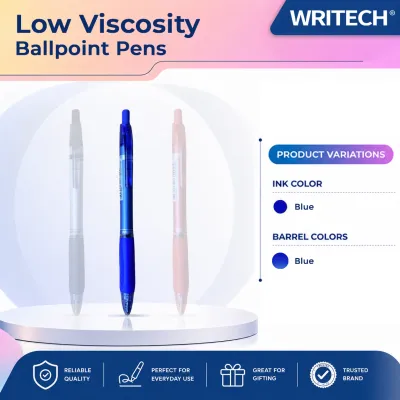
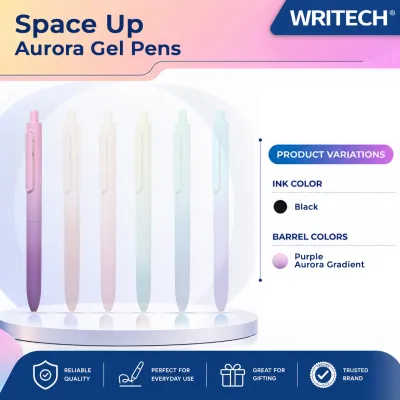
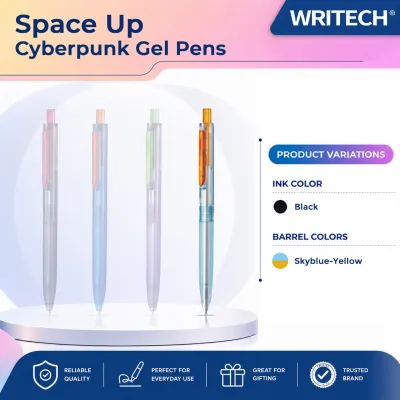
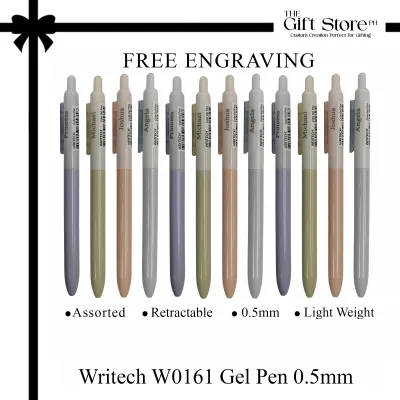
Prices are valid at publication and may change. Please refer to the product page for the latest price.
Tip sizes generally fall into three categories: ultra-fine (0.38 mm), fine (0.5 mm), and medium (0.7 mm to 1.0 mm). Fine and ultra-fine tips restrict the volume of ink deposited onto the paper, producing crisp, narrow lines. This precision is highly beneficial for individuals with small, compact handwriting or those working within tight grid layouts, such as pocket planners and ledger sheets. However, because smaller tips have less surface area contacting the paper, they can sometimes feel slightly feedback-heavy or scratchy on rough, textured sheets.
Conversely, medium and broad tips allow the internal ball to roll more freely, delivering a generous, continuous flow of ink. This results in an incredibly smooth glide across the page, making them excellent for rapid, cursive writing where speed is prioritized over minute detail. The trade-off is that broader tips lay down more wet ink, which requires sturdier paper to prevent the line from spreading or feathering.
Ink formulation is the second critical variable to consider. Writech variants typically utilize gel, hybrid, or traditional oil-based ballpoint inks, each behaving differently under various environmental conditions:
- Gel Ink: Formulated with a water-based suspension, gel ink offers exceptionally vibrant, high-contrast colors and a fluid writing experience that requires almost zero downward pressure. However, because of its high water content, gel ink takes longer to dry. In warm, humid tropical climates, this drying time can be further extended, increasing the risk of accidental smudges if the page is closed too quickly.
- Traditional Ballpoint Ink: Utilizing a thick, oil-based paste, traditional ballpoint ink is highly resistant to water and dries almost instantly upon contact with the paper. It rarely bleeds through even the thinnest notebook pages, making it highly reliable for everyday utility. The high viscosity does mean you must apply slightly more downward pressure to write, which can contribute to hand fatigue during long sessions.
- Hybrid Ink: This formulation combines the low-viscosity smoothness of a gel with the rapid-drying, water-resistant properties of oil-based ink. It offers a balanced middle ground, gliding effortlessly while drying quickly enough to prevent smearing on standard office paper.
To optimize your writing, match these ink characteristics to your paper stock. Standard copy paper (around 70 to 80 gsm) handles hybrid and ballpoint inks exceptionally well without ghosting. If you prefer heavy, coated journal pages (100 gsm or higher), gel inks can be used safely to achieve rich, saturated lines without the risk of bleeding through to the reverse side.
Matching Barrel Design and Grip to Your Writing Habits
While ink and tip size dictate how the pen writes on paper, the physical construction of the barrel determines how the pen feels in your hand. Ergonomics play a vital role in preventing physical fatigue, especially during extended writing sessions at school or work.

Barrel materials influence both the weight and the balance point of the pen. Lightweight plastic barrels are highly maneuverable and put minimal strain on the wrist, making them ideal for students who must write continuously for hours. On the other hand, weighted metal or composite barrels shift the center of gravity closer to the paper. This added weight can actually assist your writing by using gravity to press the tip down, reducing the amount of muscular effort required from your fingers to maintain a solid line.
Similarly, the design of the grip section directly affects your control over the pen. Rubberized or textured grips provide essential traction, preventing your fingers from slipping down toward the nib. This is particularly useful in warm environments where humidity or perspiration can make smooth plastic surfaces slippery. Contoured grips guide your fingers into a traditional tripod hold, which can improve writing posture, though writers with non-traditional grips may find smooth, cylindrical barrels more accommodating to their natural hand placement.
Practical design features also dictate daily usability. Retractable click mechanisms offer convenient, one-handed operation, making them excellent for quick, intermittent note-taking throughout the day. Capped pens, while requiring two hands to open, provide a superior seal that prevents the ink tip from drying out when left unused for longer periods. Additionally, a sturdy pocket clip is invaluable for securing your pen to a notebook cover or shirt pocket, ensuring it remains accessible during a busy daily commute.
Decision Matrix: Which Variant Fits Your Use Case?
To simplify your selection, consider how different combinations of tips, inks, and barrels align with specific daily writing scenarios. Use the following profiles to identify the configuration that best matches your primary tasks.
Scenario A: Fast Note-Taking and Students
For students and professionals who need to capture information quickly during lectures or meetings, efficiency and comfort are paramount. The ideal configuration for this scenario is a lightweight plastic barrel paired with a 0.7 mm hybrid ink tip and a retractable click mechanism.
This setup minimizes hand fatigue during multi-page writing sessions while ensuring the ink dries fast enough to allow rapid page-turning. The retractable design eliminates the risk of losing a cap in a crowded lecture hall, and the medium tip ensures a smooth, uninterrupted glide across standard notebook paper.
Scenario B: Detailed Journaling and Planners
If your primary writing tasks involve detailed journaling, bullet planning, or maintaining a compact diary, precision and visual clarity are your main priorities. The recommended variant is a 0.38 mm or 0.5 mm fine-tip gel pen featuring a contoured grip.
The fine tip allows you to write legibly within small grid lines and margins without your letters blending together. High-contrast gel ink provides sharp, dark lines that make your entries easy to read, while the contoured grip offers the precise control needed for neat, deliberate print or calligraphy.
Scenario C: Professional Document Signing and Executive Use
For signing contracts, writing formal correspondence, or using a pen in a professional business setting, the tool should project reliability and elegance. An executive profile consists of a weighted metal barrel, a capped design, and a 0.7 mm smooth hybrid or premium black gel ink.
The physical weight of a metal barrel provides a stable, controlled feel that lends confidence to your signature. A capped design offers a classic, formal aesthetic suitable for boardrooms, while the rich, dark ink ensures that signed documents look clean, professional, and authoritative.
Scenario D: Left-Handed Writers
Left-handed writers face a unique physical challenge: because they push the pen across the page from left to right, their writing hand immediately follows the freshly laid ink. To prevent smudging, left-handed writers require a specialized setup consisting of a fast-drying hybrid ink, a 0.5 mm tip, and a comfortable rubberized grip.
The fast-drying hybrid formulation is essential to ensure the ink sets before the side of the hand slides over it. A slightly finer 0.5 mm tip limits the volume of wet ink on the page, further reducing the chance of smearing, while the rubberized grip provides a secure hold as the pen is pushed rather than pulled.
What to Check Before Buying a Writech Ballpen
Before finalizing your purchase, taking a few moments to verify the specifications of your chosen Writech variant will ensure that the pen performs exactly as expected and fits seamlessly into your daily routine.
First, carefully inspect the manufacturer’s packaging for exact technical specifications. Do not rely solely on the color of the pen’s barrel or cap; instead, look for the precise tip measurement printed in millimeters (such as 0.5 mm or 0.7 mm) and the specific ink classification (gel, hybrid, or ballpoint). This ensures you do not accidentally purchase a slow-drying gel pen when you intended to buy a fast-drying hybrid.
Second, consider the long-term cost and sustainability of the pen by checking refill compatibility. Verify whether the pen model accepts standard international refills or requires proprietary Writech cartridges. Knowing the correct refill model number beforehand makes it much easier to source replacements online or at local stationery shops, preventing your favorite pen barrel from becoming useless once the initial ink supply runs out.
If you are shopping at a physical stationery store, take advantage of any available tester pens. Hold the pen in your natural writing position to evaluate its balance and weight distribution. Click the retractable mechanism a few times to ensure it operates smoothly, and run your fingers over the grip section to confirm that the texture feels comfortable against your skin.
When purchasing from online marketplaces, pay close attention to the seller’s return and exchange policies. Because you cannot physically test the pen before it arrives, ensure that the platform allows for returns or replacements in the rare event that the pen suffers from ink flow issues or structural damage during transit. Reading recent customer reviews on the ecommerce platform can also provide valuable insights into the real-world performance and reliability of the specific variant you are considering.
Frequently Asked Questions (FAQ)
How do I prevent my Writech ballpen ink from drying out?
To maintain consistent ink flow and prevent premature drying, store your gel and hybrid pens horizontally or tip-down when not in use. This keeps the ink in constant contact with the internal ball mechanism, preventing air pockets from forming. Always ensure that caps are clicked firmly into place or that retractable tips are fully withdrawn inside the barrel to shield the nib from air exposure. Additionally, keep your pens away from direct sunlight, radiators, or hot vehicles, as extreme heat can dry out the ink formulation and cause the barrel to leak.
Can I use Writech ballpen refills in other pen brands?
Refill compatibility is determined by the exact physical dimensions, length, diameter, and tip housing shape of the cartridge, rather than the brand name alone. While some Writech refills conform to standard international sizes and can fit into other compatible barrels, others are designed specifically for proprietary Writech models. Always compare the physical shape of your empty cartridge with the replacement refill before attempting to install it. Never force an incompatible refill into a pen barrel, as this can damage the internal spring mechanism or lead to ink leakage.
Community discussion
Share your experience or ask a question. Comments are reviewed before publication.