
Selecting the ideal Xuedele marker or highlighter for your daily tasks requires matching the ink formulation and nib design to your specific paper types and environmental conditions. Because writing instruments interact differently with various paper weights and textures, there is no single option that excels in every scenario. Instead, finding the right fit involves evaluating how the ink behaves under local climate conditions, such as high humidity, and identifying which nib shapes align with your writing style. By understanding these technical specifications, you can select a stationery set that enhances your productivity without causing messy smudges or ruined pages.
In tropical climates like the Philippines, ambient humidity and temperature play a significant role in how ink dries and settles on paper. High humidity can prolong the drying time of water-based inks, while dry, air-conditioned environments can accelerate the evaporation of ink from poorly sealed markers. Understanding these environmental factors, alongside the physical characteristics of your paper, will help you make an informed decision that prevents common issues like feathering, bleeding, and premature drying.
Understanding Xuedele Ink Types and Paper Compatibility
The foundation of any marker’s performance lies in its ink chemistry, which dictates how the fluid binds to paper fibers and how quickly it sets. Xuedele products generally utilize water-based, alcohol-based, or oil-based inks, each designed for distinct applications and paper types. Water-based inks are the most common for standard highlighting and note-taking because they use water as the primary solvent, resulting in low odor and minimal bleed-through on standard paper. However, because water evaporates slowly in humid conditions, these inks may require a few extra seconds to dry completely on coated or high-gloss pages.
Products mentioned in this guide
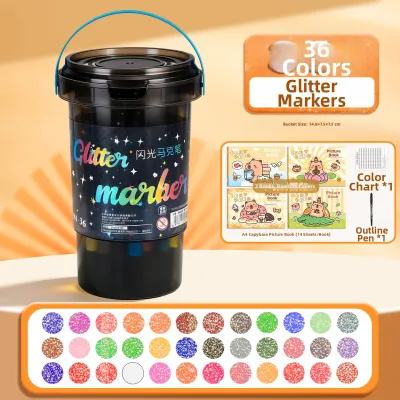
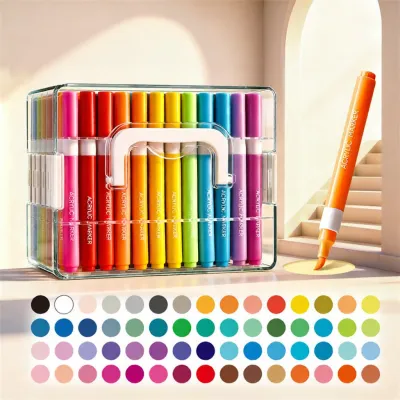
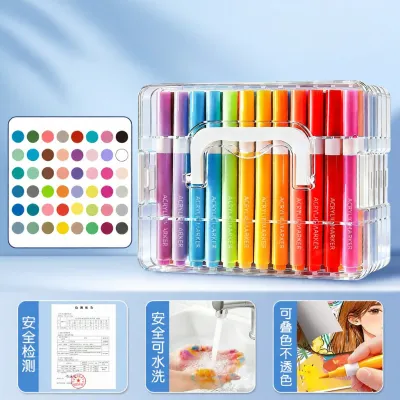
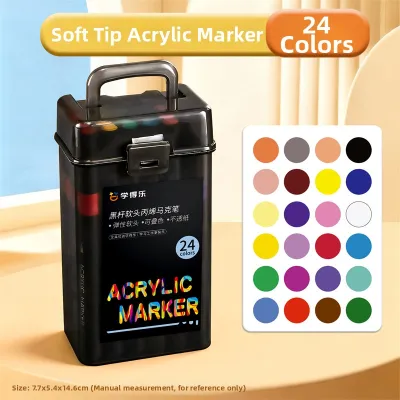
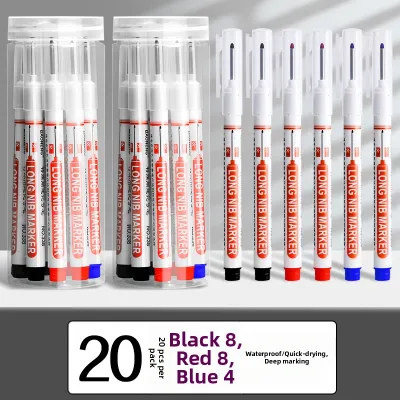
Prices are valid at publication and may change. Please refer to the product page for the latest price.
Alcohol-based inks, frequently found in dual-tip art markers, dry almost instantly because alcohol evaporates rapidly. This quick-drying property makes them highly favored by left-handed writers who struggle with smudging. The trade-off is that alcohol-based inks are highly penetrative; they easily soak through standard 70 GSM copy paper or thin notebook pages, causing significant bleed-through on the reverse side. To use alcohol-based markers successfully, you must pair them with thick, bleed-resistant paper, typically 120 GSM or higher, or use a protective backing sheet to shield subsequent pages.
Oil-based inks offer excellent permanence and water resistance, making them suitable for marking non-paper surfaces like plastic, metal, or laminated folders. On standard paper, however, oil-based inks can create a greasy halo or feather outward along the paper fibers. When selecting a Xuedele marker, always inspect the product packaging or online specifications to identify the ink base. Matching the ink chemistry to your paper’s weight and texture is the most effective way to ensure clean, legible lines without compromising the integrity of your documents.
Matching Xuedele Features to Your Daily Use Cases
To get the most value from your stationery, you must align the physical features of the marker—such as the nib shape, color saturation, and ink flow—with your primary daily activities. Different tasks demand different tool characteristics, and choosing a marker optimized for your specific workflow will prevent hand fatigue and improve visual organization.

Studying and Textbook Annotation
For students managing dense textbooks and long study sessions, the primary goal of highlighting is to emphasize key concepts without creating visual clutter. Traditional fluorescent highlighters can sometimes be too bright, leading to eye strain during late-night review sessions. Opting for pastel or mild color palettes is an effective alternative; these softer hues draw attention to important terms while keeping the underlying printed text perfectly legible.
Tip selection is equally critical when navigating narrow textbook layouts. A classic chisel tip is highly versatile for this task, as it allows you to draw broad lines over entire words when held flat, or thin underlines using the sharp point. If your textbooks feature tight line spacing or narrow margins, a fine-tip highlighter or a dual-tip option with a chisel on one end and a fine bullet tip on the other provides the precision needed to avoid accidentally highlighting adjacent lines. Additionally, look for smudge-resistant formulas that will not smear inkjet-printed text or standard ballpoint pen ink when layered.
Journaling and Creative Planning
Journaling and bullet planning require tools that support both expressive writing and structured layouts. If your daily routine includes hand lettering, calligraphy, or decorative borders, markers featuring flexible brush tips are highly suitable. These tips mimic the behavior of a paintbrush, allowing you to create variable line widths simply by adjusting the downward pressure you apply. Consistent ink flow is essential here to ensure that strokes remain solid and vibrant from start to finish.
When working in creative journals, color blending and layering are often necessary to achieve gradient effects or depth. However, repeated strokes over the same area can saturate the paper, leading to pilling—a process where the paper fibers break apart and form small clumps. To prevent this, verify that the marker ink is formulated for smooth layering and pair it with high-quality, high-GSM journal paper. Checking the paper’s resistance to ghosting (where the ink color is visible as a shadow on the back of the page) ensures that your creative designs do not ruin the usability of the next sheet.
Office Work and Document Marking
In a fast-paced office environment, speed, clarity, and tool reliability are paramount. When reviewing contracts, flagging compliance issues, or marking physical files, high-visibility fluorescent colors are often preferred because they immediately draw the eye to critical signatures or action items. These bright tones ensure that urgent notes are not overlooked during quick document scans.
For precise marginal annotations, compact editing marks, or detailed underlining in financial spreadsheets, fine-liner markers with rigid plastic or metal-clad tips are ideal. These tips maintain their shape under pressure, delivering consistent, ultra-thin lines that fit easily within small grid cells or tight margins. Furthermore, because office markers may sit unused in a desk drawer or pen cup for extended periods, pay close attention to cap seal integrity. A well-designed, airtight click-cap prevents the solvent from evaporating, ensuring the marker is ready to write instantly even after weeks of storage.
Essential Specifications to Verify Before Checkout
Before finalizing your purchase on any online marketplace, conducting a thorough check of the product specifications will help you avoid common buying mistakes. Start by examining the nib material and construction. Fiber nibs are common and cost-effective, but low-quality fiber can fray quickly under heavy pressure, destroying the precision of a chisel or bullet tip. For long-term durability, look for high-density polyester or acrylic nibs, which resist splitting and maintain their sharp edges over time. If you are planning for long-term use, check if the specific Xuedele model supports replaceable nibs or refillable ink cartridges, which reduce waste and lower your overall stationery expenses.
Next, cross-reference the manufacturer’s performance claims with independent user feedback. While product descriptions often promise instant drying times and complete water resistance, real-world performance depends heavily on the paper used. Browse the review sections of online stores to find customer-uploaded photos or videos demonstrating bleed tests and smudge trials on standard copy paper. Pay close attention to reviews written by users in humid regions, as their experiences will give you a realistic indication of how the ink behaves in tropical climates.
Finally, verify the freshness of the stock you are purchasing. Markers have a finite shelf life; over time, the solvents inside can slowly evaporate through the plastic barrel, or the pigment can settle and clog the feed system. Look for listings that indicate recent manufacturing dates or sellers that offer explicit guarantees against receiving dried-out items. If you are purchasing a large multi-color set, confirm that the seller provides secure packaging, as cracked caps or damaged barrels during transit will cause the markers to dry out before you even receive them.
Sourcing Authentic Xuedele Stationery Online
To ensure you receive genuine products that perform according to specification, it is important to buy from reputable sources. The rise of online shopping has made it easier to access a wide variety of stationery, but it has also increased the availability of counterfeit or substandard goods. When searching for Xuedele markers, prioritize authorized brand flagship stores, official distributors, or highly rated local stationery shops on major e-commerce platforms. These sellers are more likely to maintain proper storage conditions, keeping the stock cool and dry to preserve ink quality.
Price comparison is a highly effective tool for spotting potential counterfeits. While it is natural to look for a bargain, listings that offer large marker sets at prices significantly below the average market rate in ₱ should be approached with caution. Extremely low prices often indicate imitation products made with inferior plastics, loose-fitting caps, or low-grade inks that may emit strong chemical odors and dry out rapidly. Investing a realistic amount in your stationery ensures you receive safe, reliable tools that perform consistently.
Once your order arrives, perform a quick quality inspection before opening or using the entire set. Check the outer packaging for clear, high-resolution printing, accurate spelling, and intact holographic security seals or batch codes. Inspect the individual marker barrels for uniform plastic molding and tight-fitting caps that snap securely into place. Testing a single marker on a scrap piece of paper will allow you to verify the ink flow, color accuracy, and drying speed immediately, ensuring that your new stationery set is fully functional and ready for your study, journal, or office needs.
Frequently Asked Questions (FAQ)
How can I restore a dried-out Xuedele highlighter?
If a water-based Xuedele highlighter has dried out due to a loose cap, you can often revive it using simple, reversible steps. Begin by storing the highlighter vertically with the tip pointing downward, or horizontally in a sealed plastic bag, for 24 hours; this allows any residual ink in the reservoir to migrate back to the nib. If the nib remains dry, and the manufacturer’s instructions permit, you can apply one or two drops of distilled water directly to the tip using a dropper. Avoid using tap water, as the minerals can clog the fiber feed system. Allow the marker to sit capped for a few hours to absorb the moisture. If these steps do not restore the ink flow, or if the marker feels exceptionally light, the internal ink reservoir is likely fully depleted, and the highlighter must be replaced.
What safety labels should I check for children's use?
When selecting markers or highlighters for children, verifying safety certifications on the packaging is essential to prevent exposure to harmful chemicals. Look for recognized non-toxic certification marks, such as the AP (Approved Product) seal, the CE mark, or local safety standards printed clearly on the box or barrel. These symbols indicate that the product has been evaluated and contains no materials in sufficient quantities to be toxic or injurious to humans. Additionally, check for explicit age recommendations and choking hazard warnings, particularly regarding small parts like detachable caps. For unsupervised classroom use or young children, always choose water-based, low-odor markers and avoid solvent- or alcohol-based options, which can emit strong fumes and are much more difficult to wash out of skin and clothing.
Community discussion
Share your experience or ask a question. Comments are reviewed before publication.