
Selecting the right wholesale gel pens requires balancing the high-volume, cost-sensitive demands of school distribution with the performance-driven, professional needs of office procurement. While classrooms require durable, budget-friendly writing instruments that can withstand frequent drops and heavy use, corporate environments demand smooth ink flow, ergonomic comfort, and quick-drying properties to maintain productivity. Understanding these distinct requirements allows procurement managers to optimize their budgets, minimize waste, and ensure that every pen distributed serves its specific purpose effectively.
Defining Procurement Priorities for Schools and Offices
Procurement strategies for educational institutions and corporate offices diverge significantly due to the daily habits of their end users. In schools, pens are high-turnover items that are frequently misplaced, shared, or worn down by active students. Consequently, school distribution programs prioritize low per-unit costs and physical durability to maximize the reach of a fixed budget.
Conversely, office procurement focuses on long-term productivity, professional presentation, and comfort during extended writing sessions. A cheap, skipping pen can disrupt administrative workflows and project an unprofessional image during client meetings. Therefore, corporate buyers allocate higher budgets per unit to secure reliable performance, ergonomic designs, and specialized ink formulations.
Products mentioned in this guide
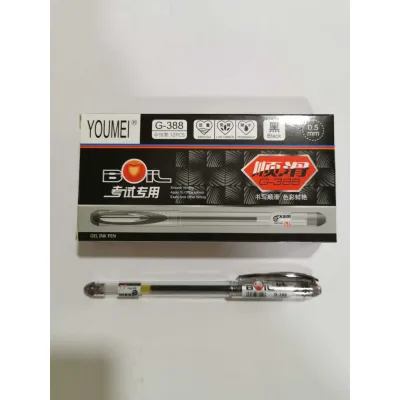
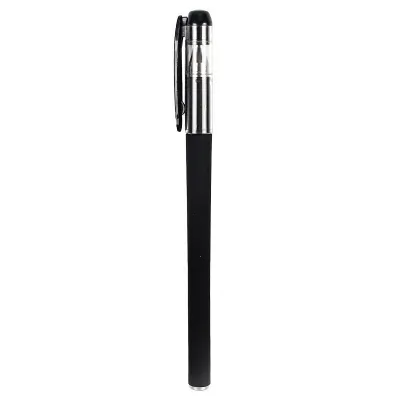
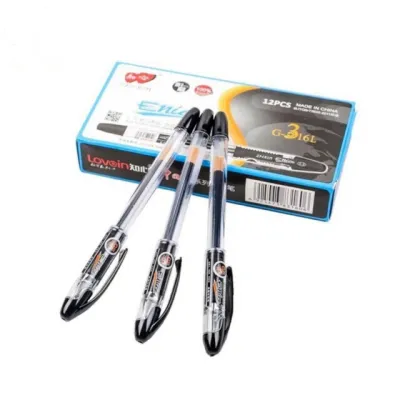
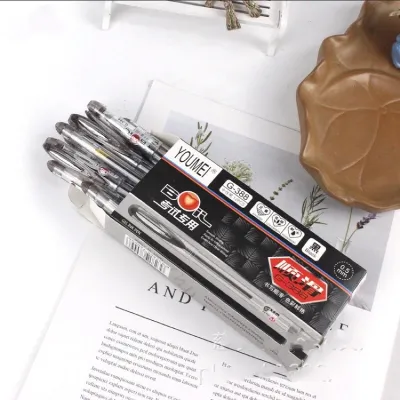
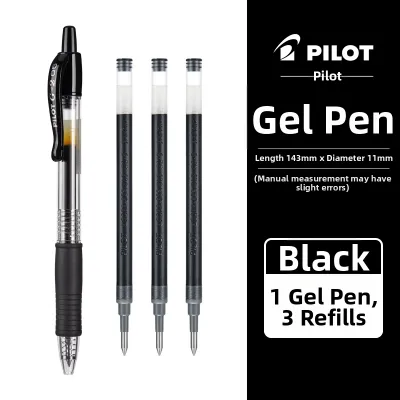
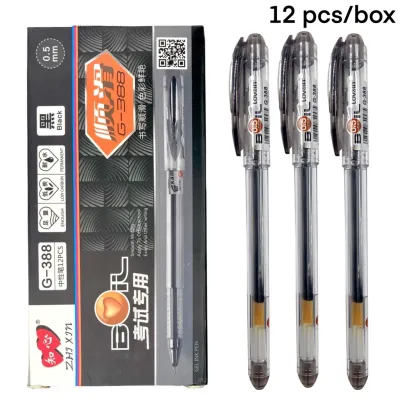
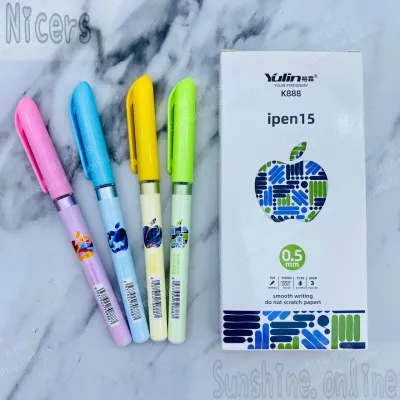
Prices are valid at publication and may change. Please refer to the product page for the latest price.
School Distribution Requirements
For school distribution, especially in tropical climates where high humidity and heat can affect stationery, durability is paramount. Pens distributed in classrooms must feature robust plastic barrels that resist cracking when dropped on hard concrete floors. The internal ink feed system must also remain stable under physical shock to prevent leaking inside student backpacks.
Standardized tip sizes, typically 0.5 mm or 0.7 mm, are essential for educational environments. These sizes ensure uniform line weights, which are critical for grading readability and compliance with optical mark recognition sheets used in standardized exams. Clear, consistent lines help teachers grade papers quickly and prevent scanning errors on automated test sheets.
Safety is another non-negotiable factor when procuring for younger demographics. Bulk buyers must verify that the wholesale gel pens carry non-toxic certifications, ensuring the materials and inks are safe for daily skin contact and accidental ingestion. Checking for ventilation holes in pen caps is also a vital safety standard to mitigate choking hazards.
To optimize the cost-per-unit, procurement officers should look for simplified designs that do not compromise basic ink flow. Eliminating expensive rubber grips or complex click mechanisms allows buyers to secure a lower price point per pen, often keeping the cost to a few pesos (₱) per unit, while still providing a reliable writing tool that does not skip or scratch the paper.
Office Procurement Standards
Corporate environments demand writing instruments that support prolonged administrative tasks, note-taking, and document signing. Ergonomic rubber grips and balanced weight distribution are critical features that reduce hand fatigue during long meetings or extensive paperwork. A comfortable grip encourages proper hand posture and prevents cramping over hours of continuous use.
Ink properties are highly scrutinized in professional settings, where smudged documents can delay workflows or ruin official records. Quick-drying ink formulations are essential, particularly for left-handed writers and fast-paced environments. Furthermore, administrative tasks often require archival-quality ink that resists water, fading, and chemical alteration to preserve signatures on legal contracts and financial ledgers.
The aesthetic design of the pen also plays a role in corporate branding and client interactions. Sleek, professional barrels with consistent ink saturation project attention to detail and reliability. Opaque or metallic-accented barrels are often preferred in executive boardrooms to maintain a polished corporate image.
When choosing between retractable mechanisms and capped designs, office buyers must weigh mobility against safety. Retractable gel pens offer one-handed convenience for employees on the move, such as medical staff or warehouse supervisors, and eliminate the risk of lost caps. However, capped pens provide a more secure seal that prevents ink from drying out in air-conditioned offices and protects shirt pockets from accidental ink stains.
Key Specifications to Compare on Wholesale Spec Sheets
Before committing to a bulk purchase order, procurement managers must carefully analyze the technical specifications provided by wholesale manufacturers. The tip construction is a primary indicator of writing feel and durability. Needle-point tips offer excellent precision and a clear view of the paper, making them ideal for detailed accounting work, but they are more prone to bending under heavy pressure. Conical tips, on the other hand, are structurally stronger, making them better suited for the heavy-handed writing styles common among students.

The chemical formulation of the gel ink determines its performance on different paper types. Pigment-based gel inks contain solid particles that sit on top of the paper fibers, offering superior water resistance, UV stability, and deep color saturation. Dye-based gel inks penetrate the paper fibers, resulting in vibrant colors and smooth flow, but they are highly susceptible to bleeding on low-grade paper and washing away if exposed to moisture.
Barrel transparency is another practical specification to compare. Fully transparent barrels allow users to monitor ink levels easily, preventing the frustration of a pen running out of ink unexpectedly during an exam or meeting. However, in hot and humid climates, opaque or tinted barrels can provide better protection for the ink reservoir against direct sunlight, which can degrade the gel formulation over time.
Finally, checking refill compatibility is a crucial step for sustainable office procurement. High-quality office pens should feature standard-sized ink cartridges that can be easily replaced. Standardizing on refillable models allows organizations to purchase bulk refills at a fraction of the cost of new pens, significantly reducing plastic waste and extending the lifespan of the initial investment.
Building Your Shortlist: Evaluation and Testing Steps
To mitigate the risk of receiving thousands of defective writing instruments, bulk buyers should establish a rigorous testing workflow before finalizing any wholesale contract. Requesting a small batch of samples from the manufacturer is the first step in this validation process. These samples should be tested directly on the specific paper stocks used within your school or office, as paper texture and absorption rates heavily influence ink performance.
During sample testing, conduct physical smudge and water-resistance trials. Write a standard sentence and immediately run a finger over the ink to measure the drying time in seconds. To test water resistance, place a drop of water on the written text to observe if the ink bleeds, runs, or remains legible. These simple, observable tests verify whether the manufacturer’s quick-dry or waterproof claims hold up under real-world conditions.
Packaging integrity must also be evaluated upon receiving sample shipments. Inspect the bulk packaging to ensure that each pen is fitted with a protective wax tip seal, which prevents the ink from drying out during transit and storage. Check for any signs of leakage, cracked barrels, or loose caps within the shipping carton, as poor packaging can lead to high defect rates upon arrival.
Lastly, verify the shelf-life indicators and manufacturing dates printed on the bulk cartons. Gel ink is a water-based emulsion that naturally degrades over time, especially when stored in warm warehouse environments. Ensuring that you receive recently manufactured stock prevents the issue of distributing pens that have already begun to dry out or separate in their reservoirs.
Cross-Scenario Compatibility and Inventory Strategy
Managing separate inventories for schools and offices can complicate logistics and increase administrative overhead. Some procurement managers choose to unify their stock by selecting a mid-tier, versatile gel pen that serves as a universal compromise. A pen with a comfortable but simple rubber grip, a durable conical tip, and standard quick-drying ink can satisfy both classroom needs and general office tasks, allowing for larger bulk discounts.
Standardizing refill sizes across the entire organization is another effective strategy to streamline inventory. Even if the school uses basic capped barrels and the office uses ergonomic retractable models, choosing pens that accept the same standard refill cartridge simplifies reordering. This approach reduces the number of unique SKUs that the purchasing department must track and manage.
However, separate inventories remain strictly necessary for specialized departments. Legal, compliance, and financial teams require specialized archival-quality, pigment-based ink to ensure the permanence of signatures and records. Distributing standard, dye-based school pens to these departments poses a compliance risk, making a dual-inventory strategy essential for safeguarding official documentation.
Frequently Asked Questions (FAQ)
How long do unused wholesale gel pens last in storage?
Under standard storage conditions, unused wholesale gel pens typically have a shelf life of approximately one to two years from the date of manufacture. To maximize this lifespan, bulk inventory should be stored in a temperature-controlled environment away from direct sunlight and extreme humidity, which can cause the water-based gel to evaporate or separate. Storing the pens horizontally is highly recommended, as it prevents the ink from settling at the back of the cartridge or pooling at the tip, ensuring immediate ink flow when the pens are finally distributed. Before releasing stored stock, perform a quick visual check for ink separation and test a few units to ensure smooth writing.
Can standard gel ink be used for signing official or legal documents?
Standard gel ink, which is often dye-based, is generally not recommended for signing official, legal, or financial documents. Dye-based inks are highly vulnerable to water damage, fading from UV exposure, and chemical washing, which can make signatures illegible or susceptible to alteration over time. For permanent records, procurement officers must select gel pens specifically labeled as containing pigment-based, archival-quality, or document-proof ink. These specifications can be verified on the manufacturer’s technical data sheets, ensuring the ink complies with international standards for permanence and acid-free properties.
Community discussion
Share your experience or ask a question. Comments are reviewed before publication.