
Quick Answer: Which Pencil Fits Your Workflow?
Choosing between a wooden and a mechanical pencil comes down to your specific task, your environment, and how you prefer to maintain your tools. Neither option is universally superior; instead, each excels in distinct scenarios. For expressive sketching, shading, and a traditional tactile feel, the wooden pencil remains unmatched. Its core can be carved to various angles, allowing for organic line variations and broad strokes.
Conversely, if your work demands absolute precision, clean lines, and zero downtime for sharpening, the mechanical pencil is the ideal choice. It provides a consistent line width that is perfect for technical drafting, mathematical equations, and neat note-taking. Your decision should align with whether you value the dynamic, evolving tip of wood-case graphite or the unchanging, low-maintenance precision of a mechanical mechanism.
Evaluating Grip Comfort and Ergonomics
The physical design of a pencil directly impacts hand fatigue during long writing or drawing sessions. Wooden pencils feature a fixed barrel, typically hexagonal or triangular. The hexagonal shape prevents the pencil from rolling off slanted desks, while triangular barrels encourage a proper tripod grip. Because they are made of lightweight cedar or alternative woods, these pencils place very little strain on the hand. However, their balance point is dynamic. A brand-new wooden pencil starts long and front-heavy, but as you repeatedly sharpen it, the tool shortens, shifting the center of gravity closer to your palm. This changing length requires subtle, ongoing adjustments to your hand posture.
Products mentioned in this guide
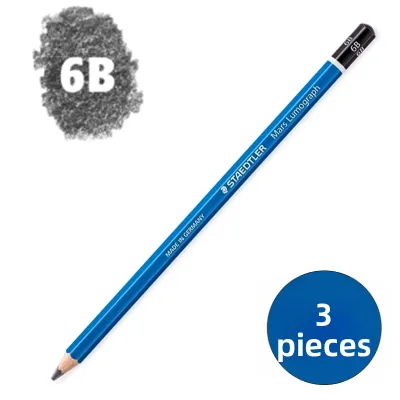
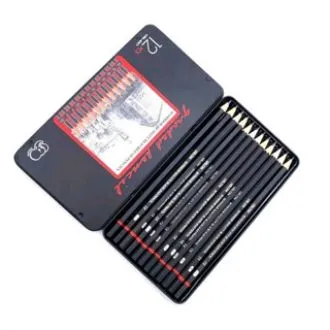
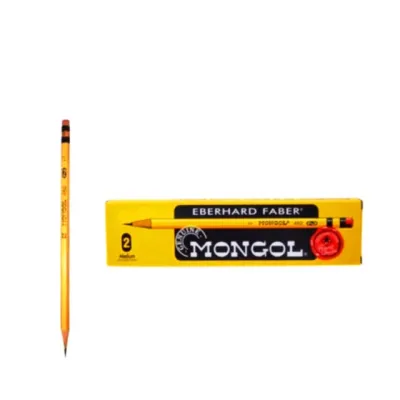
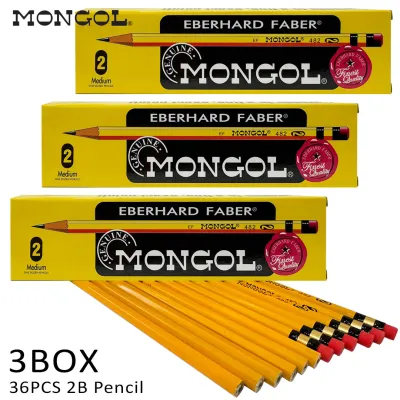
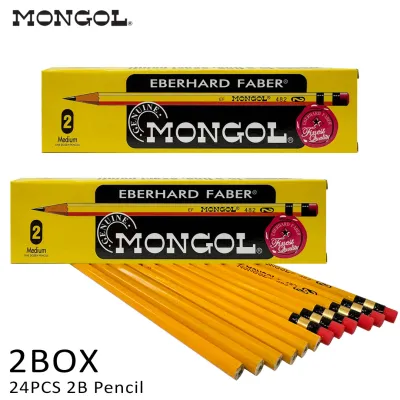
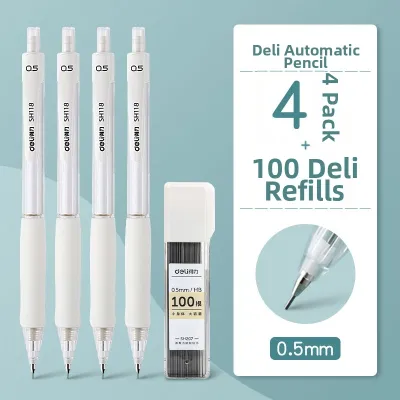
Prices are valid at publication and may change. Please refer to the product page for the latest price.

Mechanical pencils offer a highly stable alternative. Because the casing does not wear away, the length, weight, and center of gravity remain entirely constant. This consistency is highly valued by technical illustrators and students who write for hours at a time. Furthermore, mechanical pencils are available with a wide array of ergonomic features. You can find models equipped with soft silicone gel grips, textured rubber cushions, or machined metal knurling.
In the tropical climate of the Philippines, high humidity and warm temperatures often lead to sweaty hands during long study sessions or office work. Under these conditions, a glossy plastic mechanical pencil can easily slip, requiring a tighter grip that leads to cramping. A wooden pencil, with its painted or natural matte finish, naturally absorbs a tiny amount of surface moisture, often providing a more secure hold than cheap plastic. If you opt for a mechanical pencil in a humid environment, look for models featuring textured rubber or knurled metal grips to maintain traction.
Comparing Line Consistency and Lead Performance
The way a pencil deposits graphite onto paper dictates its suitability for different creative and professional tasks. Wooden pencils are celebrated for their expressive potential. As you write or draw, the graphite tip gradually wears down, transitioning from a sharp point to a dull, rounded edge. By tilting the pencil, you can transition seamlessly from a fine detail line to a broad, soft shadow. This makes wooden pencils the preferred medium for life drawing, portrait sketching, and tonal shading.
Mechanical pencils prioritize uniformity. They utilize ultra-thin lead refills in standardized diameters, most commonly 0.3mm, 0.5mm, 0.7mm, and 0.9mm. Because the lead diameter is fixed, the line width remains perfectly consistent regardless of how long you write. This eliminates the need to rotate the pencil constantly to find a sharp edge, making it incredibly efficient for writing kanji, solving complex algebraic formulas, or drafting clean architectural plans.
Both pencil types utilize the standard graphite hardness scale, ranging from hard, light-marking leads (such as 2H or 4H) to soft, dark-marking leads (such as 2B or 4B). However, the performance of these leads depends heavily on your paper and local conditions:
- Humidity and Paper Texture: High humidity softens paper fibers, making the sheets more receptive to graphite but also more fragile. A very sharp, thin mechanical lead (like a 0.5mm HB) can easily pierce or tear damp paper if you apply too much pressure.
- Smudge Resistance: Softer leads like 2B produce dark, beautiful lines but are highly prone to smudging when exposed to humid air and sweaty palms. If you write left-handed or work in warm environments, verifying the smudge resistance of your lead on a scrap piece of paper is a crucial step before committing to a specific brand.
- Erasability: Harder leads indent the paper, leaving permanent grooves even after the graphite is erased. Softer leads erase cleanly but can leave a gray haze if the eraser compound is too hard or cheap.
Understanding Maintenance, Sharpening, and Refills
The daily upkeep of your writing instrument affects both your productivity and your wallet. Wooden pencils require a reliable sharpener. A dull or poorly aligned blade will tear the wood casing and fracture the internal graphite core, leading to constant breakage and rapid consumption of the pencil. To prevent this, you must invest in a high-quality handheld sharpener with a replaceable steel blade, or a sturdy desk-mounted rotary sharpener. Over time, the sharpening process completely consumes the pencil, meaning you must eventually discard the short stub and purchase a replacement.
Mechanical pencils are designed for long-term reuse, but they come with their own mechanical vulnerabilities. To keep them functioning, you must purchase lead refills that precisely match the pencil’s internal mechanism. Attempting to feed 0.7mm lead into a 0.5mm pencil will cause an immediate jam, while using 0.5mm lead in a 0.7mm pencil will result in the lead slipping straight through the clutch. Additionally, cheap mechanical pencils are prone to internal jams if tiny fragments of broken lead get lodged inside the feeding tube. Clearing these jams requires a thin cleaning pin, which is typically located on the underside of the eraser in professional-grade models.
From a financial perspective, wooden pencils offer a very low entry cost. A box of twelve high-quality wooden pencils can be purchased for around ₱100 to ₱200, making them highly accessible for students on a budget. However, they are entirely consumable. A mechanical pencil requires a higher initial investment, with reliable everyday models starting around ₱80 and professional metal drafting pencils ranging from ₱300 to over ₱1,000. Despite the higher upfront cost, a durable mechanical pencil can last for years, requiring only inexpensive tubes of lead refills that typically cost ₱40 to ₱80 for a pack of thirty pieces.
Final Decision: Which Pencil Should You Choose?
To make your final purchase, evaluate your daily tasks against the strengths of each pencil type.
Choose wooden pencils if:
- You focus on visual arts: You need to shade large areas, create varied line weights, and execute expressive sketches.
- You prefer a lightweight tool: You dislike the heavy feel of metal mechanisms and enjoy the natural scent and tactile feel of real wood.
- You want a low-cost, disposable option: You frequently lose your writing instruments or need to supply a classroom or workshop on a budget.
Choose mechanical pencils if:
- You prioritize neatness and precision: You write small, take dense notes, or work on technical drawings where line consistency is mandatory.
- You demand uninterrupted focus: You want to write continuously during lectures, meetings, or exams without stopping to sharpen a dull tip.
- You value long-term durability: You prefer to invest in a single, high-quality writing tool that you can customize with different lead hardnesses over time.
Verify first if:
- The lead grade matches your paper: Test how easily the graphite smudges under your hand, especially during humid weather.
- The grip diameter fits your hand: Ensure the pencil barrel is comfortable to hold for at least fifteen minutes without causing finger fatigue.
- Refills are locally accessible: Confirm that the specific lead size (such as 0.5mm or 0.7mm) and replacement erasers are readily available in your local stationery shops.
Frequently Asked Questions (FAQ)
Can I use mechanical pencil lead in a wooden pencil?
No, you cannot use mechanical pencil lead in a standard wooden pencil. Wooden pencils use a thick, solid graphite core that is typically 2.0mm to 3.0mm in diameter, which is permanently bonded to the surrounding wood casing to prevent slipping. Mechanical pencil leads are incredibly thin, fragile, and designed to be supported by a metal or plastic guide pipe. Attempting to insert a thin mechanical lead into a wooden pencil is physically impossible and will result in the lead instantly snapping under writing pressure.
Which pencil type is better for standardized tests?
Both wooden and mechanical pencils are acceptable for standardized tests, provided they use the correct lead grade required by optical mark recognition (OMR) scanners. Most exams in the Philippines specify a No. 2 or HB lead, which provides the exact darkness needed for the scanner to read the bubbles. While a wooden pencil allows you to shade the circles slightly faster because the worn, flat tip covers more surface area, a mechanical pencil with a thicker lead size (such as 0.7mm or 0.9mm in 2B grade) offers the advantage of never needing to be sharpened during a timed exam. Whichever you choose, always verify that your lead container or pencil barrel is clearly marked with the correct HB or 2B designation before entering the testing room.
Community discussion
Share your experience or ask a question. Comments are reviewed before publication.