
The humble pencil remains an indispensable tool for students, professionals, and creatives alike. When choosing a writing instrument, the decision often comes down to a classic debate: the traditional wooden pencil versus the modern mechanical pencil. Neither option is universally superior; the ideal choice depends entirely on your writing pressure, need for line consistency, and tolerance for ongoing maintenance.
Wooden pencils excel in tactile feedback, natural hand balance, and the ability to produce varied line widths, making them highly suited for expressive writing, sketching, and shading. Conversely, mechanical pencils offer unmatched line consistency, continuous writing without the interruption of sharpening, and extreme precision. This makes them the superior choice for technical drawing, mathematical equations, and neat, uniform note-taking. Understanding how these tools differ in physical mechanics, ergonomics, and long-term economics will help you select the perfect instrument for your daily work.
Writing Feel, Feedback, and Line Consistency
The physical sensation of writing—often referred to as feedback—is a crucial component of the overall writing experience. Wooden pencils provide a distinct tactile connection to the paper. Because the graphite core is encased directly in wood (typically cedar or basswood), the casing acts as a natural shock absorber, dampening the micro-vibrations generated as the pencil glides across the page. This organic dampening gives wooden pencils a soft, forgiving feel that many writers find comfortable for long, continuous sessions.
Products mentioned in this guide
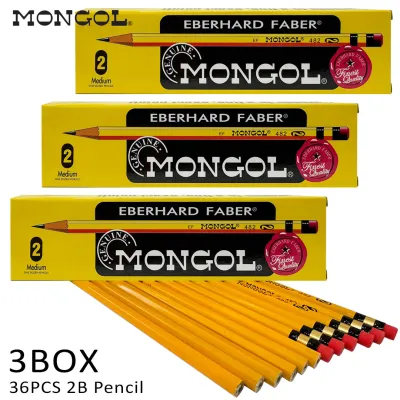
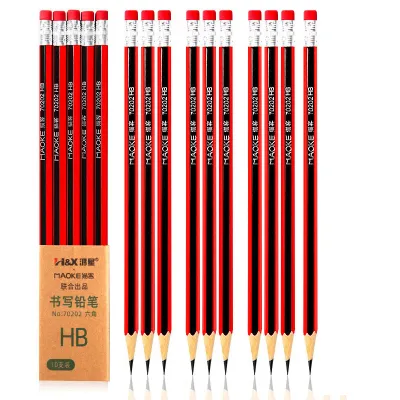
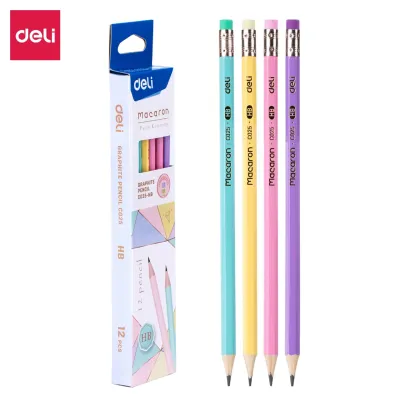
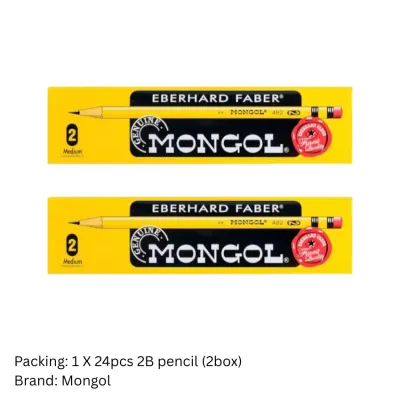
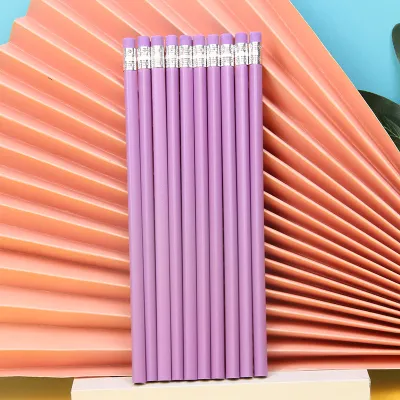
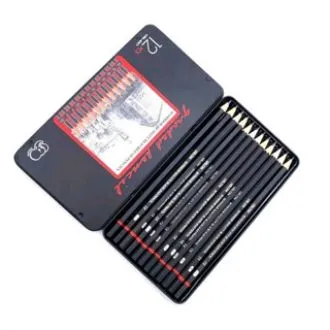
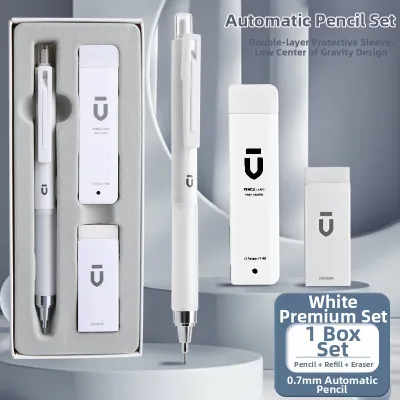
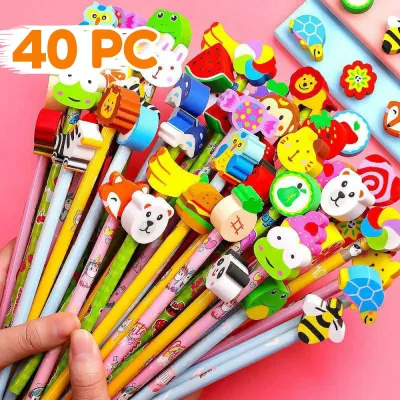
Prices are valid at publication and may change. Please refer to the product page for the latest price.
Furthermore, wooden pencils allow you to manipulate line width dynamically. By altering the angle of your hand or rotating the pencil, you can transition from a razor-sharp line to a broad, soft stroke. This versatility is highly prized by artists and those who practice expressive handwriting. It is important to note that the “smoothness” of a wooden pencil is not a characteristic of the wood itself, but rather of the graphite core’s formulation. Pencil leads are made from a mixture of graphite and clay. A higher proportion of graphite results in a softer, darker, and smoother lead (such as 2B or 4B), while a higher concentration of clay produces a harder, lighter, and more scratchy lead (such as H or 2H). The texture, or “tooth,” of your paper also plays a significant role; rough paper fibers grab more graphite, enhancing tactile feedback, while smooth paper allows the pencil to glide with minimal resistance.
Mechanical pencils offer a completely different tactile profile. Because they utilize ultra-thin leads—commonly ranging from 0.3mm to 0.9mm—they deliver a highly consistent, uniform line width that never changes. This eliminates the need to rotate the pencil to find a sharp edge. For tasks that demand absolute precision, such as filling out tight ledger columns, drafting architectural plans, or writing complex mathematical formulas, the mechanical pencil is unmatched.
However, this precision comes with a trade-off in feedback. Mechanical pencil leads are formulated with synthetic polymers or plastic binders rather than traditional clay to give the thin strands enough tensile strength to resist snapping. This chemical composition, combined with the rigid plastic or metal body of the pencil, results in a firmer, sometimes more metallic or “scratchy” feel on the page. There is no natural wood to absorb writing pressure, meaning every tiny imperfection in the paper is transmitted directly to your fingers.
To determine which feedback style suits your daily routine, you can perform a simple, observable trial on your standard writing paper:
- Gather Your Materials: Take a sheet of your everyday notebook paper, a standard wooden HB or 2B pencil, and a 0.5mm or 0.7mm mechanical pencil.
- Write a Test Sentence: Write the same sentence three times with the wooden pencil. On the first pass, use a freshly sharpened tip. On the second, write normally, allowing the tip to wear down. On the third, purposely tilt the pencil to use the side of the worn lead.
- Compare with the Mechanical Pencil: Write the same sentence with the mechanical pencil. Observe the uniformity of the letters.
- Evaluate the Sensation: Note how your hand feels. Did the wooden pencil feel softer and more cushioned? Did the mechanical pencil feel more precise but slightly stiffer? This direct comparison will reveal your personal sensory preferences.
Daily Convenience: Sharpening, Jamming, and Maintenance
Beyond writing feel, the practicalities of daily maintenance heavily influence which pencil is more convenient for your lifestyle. Wooden pencils require regular sharpening to maintain a usable point. This introduces the need for a secondary tool—whether a simple manual pocket sharpener, a desk-crank rotary sharpener, or an electric model. Dealing with wood shavings and graphite dust can be inconvenient in shared office spaces, clean study environments, or while commuting.

Additionally, wooden pencils suffer from internal core breakage. If a wooden pencil is dropped onto a hard floor, the shock can shatter the fragile graphite core inside the protective wood casing. When you attempt to sharpen the pencil, the lead may repeatedly fall out of the collar, forcing you to shave away large portions of the pencil before finding a continuous section of lead. The physical geometry of the wooden pencil also changes constantly. As you sharpen it, the pencil grows shorter and lighter, shifting its center of gravity. This changing balance requires your hand to adapt continuously, and very short pencils eventually require a pencil extender to remain usable.
Mechanical pencils bypass many of these issues by offering a push-button mechanism that advances fresh lead instantly. There are no shavings to discard, and the physical length, weight, and balance of the pen-like barrel remain entirely constant throughout its lifespan. This makes mechanical pencils highly convenient for rapid note-taking during lectures or long meetings where you cannot afford to pause and sharpen a dull point.
However, mechanical pencils introduce their own unique maintenance challenges. The most common issue is lead jamming. If a tiny fragment of lead breaks off inside the internal brass or plastic clutch mechanism, it can block the feed tube, preventing new lead from advancing or causing the lead to slip backward under writing pressure. Clearing these jams requires disassembling the tip and using a thin clearing pin—often found attached to the underside of the eraser cap on premium models—to push the obstruction out.
Furthermore, thin mechanical leads are highly susceptible to breakage if you write with a heavy hand or extend the lead too far beyond the protective metal sleeve. You must also manage consumables, ensuring you have a steady supply of lead refills of the correct diameter (a 0.5mm pencil will not accept 0.7mm lead) and replacement erasers, as the built-in erasers on mechanical pencils are typically very small and wear down quickly.
Environmental conditions also play a role in daily maintenance, particularly in tropical climates like the Philippines. High ambient humidity can affect stationery stored over long periods. Wooden pencils are organic; excessive moisture can cause the wood casing to swell slightly or weaken the glue holding the two halves of the pencil together, leading to splitting during sharpening. The graphite core itself is unaffected by humidity, but a damp wood casing can make manual sharpening feel gummy and uneven. Mechanical pencils, constructed primarily of molded plastics, aluminum, or brass, are entirely unaffected by atmospheric moisture, though low-grade steel internal springs in cheap models may occasionally rust if exposed to extreme, prolonged dampness.
Long-Term Value: Upfront Cost vs. Refill Economics
When evaluating the financial aspect of your stationery choices, it is helpful to look at the total cost of ownership over time. Wooden and mechanical pencils operate on completely different economic models, balancing low initial costs against long-term consumable expenses.
Wooden pencils feature an incredibly low upfront cost. You can purchase a high-quality box of twelve wooden pencils for a modest price (typically ranging from ₱50 to ₱150, depending on the brand and wood quality). This makes them highly accessible. However, wooden pencils are entirely consumable. Every time you sharpen the pencil, you physically shave away its material. Once a wooden pencil is worn down to a stub, it must be discarded. If you write or sketch heavily, you will go through boxes of pencils regularly, resulting in a continuous, recurring cost.
Mechanical pencils require a higher initial investment. A basic, entry-level plastic mechanical pencil might cost between ₱30 and ₱80, while a durable, professional-grade drafting pencil with a metal body, knurled grip, and retractable sleeve can range from ₱250 to over ₱1,000. While this upfront cost is higher, the mechanical pencil body is designed to be a permanent tool. The ongoing expenses are limited to lead refills (typically ₱30 to ₱80 for a tube of 12 to 40 leads) and occasional replacement erasers. Over several years of heavy use, a single high-quality mechanical pencil fed with inexpensive lead refills can prove more economical than purchasing dozens of wooden pencils.
However, physical durability and loss factors must be factored into this economic equation:
- Susceptibility to Drops: If you drop a wooden pencil, it may suffer internal lead breakage, but the tool remains functional once sharpened past the break. If you drop a mechanical pencil onto a hard tile floor, a fall can easily bend the delicate metal lead sleeve at the tip. A bent sleeve will prevent lead from advancing or cause the lead to shear off instantly upon contact with paper, often rendering the entire pencil permanently unusable.
- Loss and Misplacement: If you frequently lose your stationery in busy classrooms, lecture halls, or active office environments, the low replacement cost of a wooden pencil is highly advantageous. Losing a ₱10 wooden pencil is a minor inconvenience; losing a ₱500 professional mechanical drafting pencil is a frustrating financial loss.
If you are highly organized and tend to keep track of your writing instruments, investing in a durable mechanical pencil is a highly efficient, sustainable choice. If you work in an environment where stationery is easily misplaced or borrowed and never returned, a stock of inexpensive wooden pencils offers better practical value.
How to Choose: Match the Pencil to Your Writing Style
To make the final decision between these two classic writing tools, you should evaluate your physical writing habits, your typical tasks, and the specific paper you use most frequently.
Choose Wooden Pencils if:
- You enjoy expressive writing or drawing: The ability to shade, vary line weight, and tilt the pencil makes wooden models the undisputed choice for sketching, journaling, and creative work.
- You appreciate organic materials: If you find comfort in the natural scent of cedarwood, the warm feel of wood grain, and the changing weight and balance of a traditional pencil, the classic option is irreplaceable.
- You have a heavy hand: The thick, solid graphite core of a wooden pencil can withstand intense downward pressure without snapping, making it ideal for vigorous writers.
- You need a low-risk, disposable option: For shared workspaces, field research, or environments where items are easily lost, the low unit cost of wooden pencils provides peace of mind.
Choose Mechanical Pencils if:
- You require absolute precision: If you write small, work on grid paper, solve complex math equations, or perform technical drafting, the uniform line of a mechanical pencil is essential.
- You dislike interruptions: If you want to write continuously for hours without stopping to sharpen, empty shavings, or adjust to a shrinking pencil body, the click-to-advance mechanism is highly efficient.
- You prefer a consistent grip and weight: A mechanical pencil retains its exact balance, length, and weight indefinitely, allowing your hand to develop consistent muscle memory.
- You want a long-term, sustainable tool: If you are organized and want to minimize physical waste, a single reusable metal or high-grade plastic barrel with lead refills is an excellent investment.
Before making a final choice, perform a quick verification of your writing environment. Check the paper you use most often. If you write on thin, highly textured, or rough paper, thin 0.5mm mechanical leads may catch on the fibers and snap repeatedly; in this scenario, a wooden pencil or a thicker 0.7mm or 0.9mm mechanical lead will perform much better. Conversely, if you write on smooth, high-density, or coated paper, a mechanical pencil will glide effortlessly, while a soft wooden pencil may feel overly slick and require frequent rotating to keep a clean edge. By matching the pencil’s physical characteristics to your natural writing pressure and paper type, you can ensure a comfortable, fatigue-free writing experience.
Frequently Asked Questions (FAQ)
Can I use mechanical pencil lead in a wooden pencil?
No, you cannot use mechanical pencil lead in a wooden pencil. Mechanical pencil leads are extremely thin (typically 0.3mm to 0.9mm) and are formulated with synthetic polymers to make them flexible enough to feed through a mechanical clutch. They lack the structural thickness and rigidity required to be held by a wooden pencil casing. Standard wooden pencils use a much thicker graphite-and-clay core (usually around 2mm or thicker) that is glued directly to the wood halves during manufacturing. Attempting to place a mechanical lead inside a wooden casing is physically impossible and would result in the lead instantly shattering under any sharpening or writing pressure.
Which pencil type is better for standardized tests?
For standardized examinations that use Optical Mark Recognition (OMR) sheets, wooden pencils are generally the better and safer choice. OMR scanners read answer sheets by measuring the amount of light reflected off the filled-in bubbles. Both wooden and mechanical pencils can utilize HB graphite, which contains the correct balance of carbon to block light reflection properly. However, wooden pencils have a much broader, slightly rounded tip surface area. This allows you to shade and completely fill the multiple-choice bubbles in just two or three quick strokes. Using a fine-tipped 0.5mm mechanical pencil to fill bubbles requires significantly more strokes, takes longer, and runs the risk of tearing or puncturing the thin exam paper with its sharp metal sleeve.
How do I prevent mechanical pencil lead from breaking constantly?
If your mechanical pencil lead breaks frequently, you can resolve the issue with a few simple adjustments. First, check your writing pressure; mechanical pencils require a lighter touch than wooden pencils. Second, limit the amount of lead you extend. Only advance the lead by one or two clicks (less than a millimeter of exposed lead) so the metal sleeve can support the shaft and prevent it from flexing. Third, inspect the tip for hidden lead jams; a tiny fragment lodged in the sleeve can cause the lead to feed at an angle, making it highly unstable. Finally, consider upgrading your materials. Switch to a thicker lead size, such as 0.7mm or 0.9mm, or purchase high-polymer lead refills, which offer significantly higher tensile strength and flexibility than standard budget leads.
Community discussion
Share your experience or ask a question. Comments are reviewed before publication.