
Quick Answer: What Dictates Your Yellow Pad Choice
Choosing the right yellow pad paper complete set requires matching three core variables to your specific writing environment: physical dimensions, paper weight, and set configuration. The ideal choice depends entirely on whether your primary task involves formal legal drafting, daily university note-taking, or portable field memos.
For formal legal and administrative work in the Philippines, the local standard “long” size (8.5 x 13 inches) with a heavier paper weight is essential to prevent ink bleed-through. Daily student note-taking, by contrast, prioritizes high sheet counts and cost-effective binding. Portable office or field tasks require smaller dimensions, such as Junior Legal (5 x 8 inches), paired with an exceptionally rigid backing board that allows you to write comfortably without a desk.
Core Paper Specifications to Evaluate
Dimensions and Margin Standards
Paper dimensions are the first critical specification to verify before purchasing a complete set. In the local market, “Legal” size yellow pads typically measure 8.5 x 13 inches, which is often referred to as long size. This differs from the US Legal standard of 8.5 x 14 inches. If you purchase pads without checking the exact measurements on the label, you may find they do not fit standard local clipboards, folders, or filing cabinets. Letter size (8.5 x 11 inches) is also widely available and serves as a highly practical option for general office work, while Junior Legal (5 x 8 inches) is designed for quick, highly portable note-taking.
Products mentioned in this guide
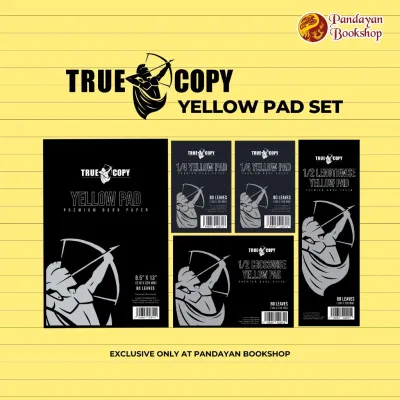
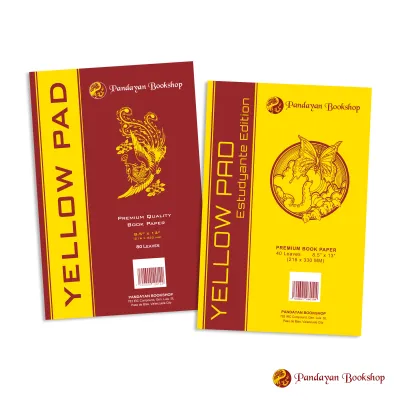
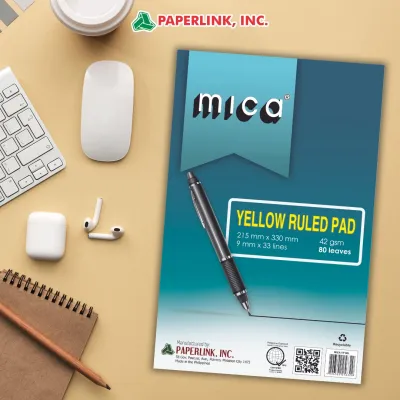
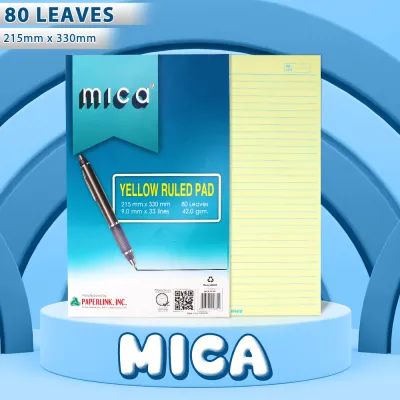
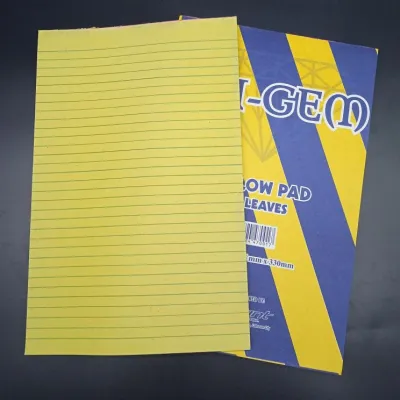
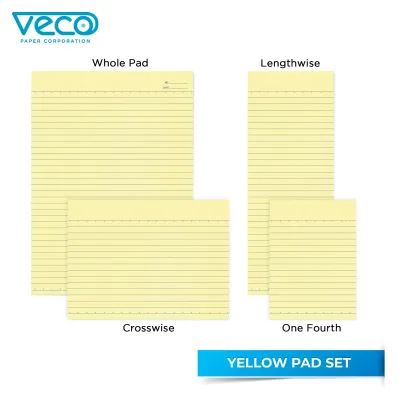

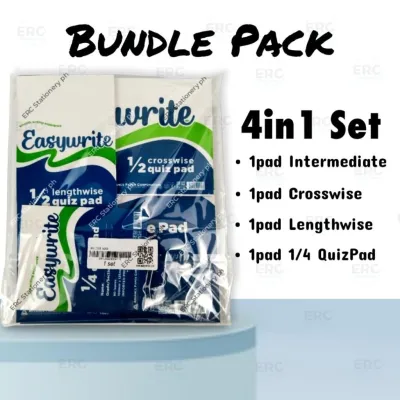
Prices are valid at publication and may change. Please refer to the product page for the latest price.

Margins and line spacing also dictate how much information you can fit on a single page. Standard yellow pads feature a vertical red margin line on the left side, providing a clean boundary for annotations, correction codes, or indexing. Look for pads that include a dedicated header space at the top of each sheet, which allows you to write dates, titles, or subject headings clearly without crowding your main notes.
Paper Weight and Ink Compatibility
Paper weight is measured in grams per square meter (GSM) and directly influences the writing experience. Standard yellow pads generally range from 50 GSM to 70 GSM or higher. Thinner paper (50 to 55 GSM) is highly economical and perfectly suitable for quick drafts using standard ballpoint pens. However, if you prefer writing with gel pens, rollerballs, or fountain pens, thin paper is highly susceptible to ghosting (where writing is visible on the reverse side) and bleed-through (where ink saturates through the sheet).
In tropical climates with high humidity, paper fibers naturally absorb moisture from the air. This moisture absorption softens the paper, making low-GSM sheets even more prone to ink feathering, where the ink spreads sideways along the fibers. To ensure clean, legible notes when using liquid ink, look for premium sets specified at 70 GSM or higher. This extra thickness provides the opacity and fiber density needed to resist bleed-through even in humid conditions.
Ruling Options
Line spacing, or ruling, determines how much text you can write per page and how neat your handwriting will appear. The two most common options are college ruling and wide ruling:
- College Ruling: Features narrower spacing (typically 9/32 inch or approximately 7.1 mm). This is the preferred choice for university students, journalists, and professionals who need to record dense, detailed notes on a single sheet.
- Wide Ruling: Features wider spacing (typically 11/32 inch or approximately 8.7 mm). This option is ideal for individuals with larger handwriting, quick brainstorming sessions, or drafting legal documents where space is needed between lines for manual edits and corrections.
Assessing the Set Configuration and Binding
Set and Sheet Counts
Yellow pads are commonly sold in complete sets or bulk packs containing 3, 5, 10, or 12 pads. When comparing prices in ₱, always calculate the cost-efficiency by looking at both the number of pads in the set and the exact sheet count per pad. A budget-friendly set might seem like a bargain until you realize each pad contains only 40 sheets instead of the standard 80 sheets. Checking the total sheet yield ensures you are getting genuine bulk value.
Binding Methods and Perforations
The structural integrity of a yellow pad depends entirely on how the sheets are bound at the top. The three primary binding methods offer distinct levels of durability:
- Glued or Gummed Top: The simplest binding method, where sheets are held together by a strip of adhesive. While this allows for incredibly easy page removal, the glue can soften and lose its grip in high-temperature environments, causing pages to detach prematurely when carried inside a bag.
- Stitched or Stapled with Tape: This method uses metal staples or heavy-duty stitching to secure the pages, which are then covered by a protective strip of binding tape. This is the most durable option, ensuring the pad remains completely intact even under rough daily handling.
- Micro-perforations: To ensure clean page removal from a stitched pad, look for sheets featuring micro-perforations just below the binding tape. High-quality perforations allow you to tear out pages smoothly with a single, clean pull, preventing the ragged, torn edges that can make professional documents look untidy.
Backing Board Rigidity
The backing board is the unsung hero of the yellow pad. A thick, heavy-duty chipboard backing provides the structural rigidity required to write comfortably when you do not have access to a desk or table. If you frequently take notes while standing, during site inspections, or while sitting in lecture halls with small tablet chairs, press the backing board before buying. A flimsy, thin cardboard backing will bend under the pressure of your pen, making legible writing nearly impossible.
Some premium complete sets also feature a protective front cover. While not strictly necessary for desk use, a front cover shields the top sheet from dust, spills, and physical damage when the pad is tossed into a backpack or briefcase.
Matching Pad Specifications to Your Workflow
To simplify your decision, use the following comparison matrix to map specific yellow pad features to your daily writing scenarios:
| Workflow Scenario | Recommended Dimensions | Paper Weight (GSM) | Binding & Backing | Key Feature Priority |
|---|---|---|---|---|
| Legal & Administrative | 8.5" x 13" (Local Legal) | 70+ GSM | Stitched with Tape / Rigid Backing | High bleed resistance, standard margins, and clean perforations for filing. |
| University Students | 8.5" x 11" (Letter) or 8.5" x 13" | 55 to 70 GSM | Glued or Stitched / Medium Backing | High sheet count, college ruling to maximize writing space, and cost-efficiency. |
| Field Workers & Inspectors | 5" x 8" (Junior Legal) | 70 GSM | Stitched with Tape / Extra-Rigid Backing | Maximum portability, durable binding, and a stiff backing board for writing while standing. |
| General Office Drafting | 8.5" x 11" (Letter) | 55 to 60 GSM | Glued Top / Standard Backing | Easy sheet removal for quick memos and temporary brainstorming notes. |
Actionable Rules for Your Final Selection
To finalize your purchase of a yellow pad paper complete set, apply these practical, condition-based rules to ensure the product matches your exact needs:
- Choose a 70+ GSM, tape-bound, local legal-size set if: You write primarily with gel pens, rollerballs, or fountain pens, require archival-quality records for legal or administrative filing, and need to tear out pages frequently without tearing the paper.
- Choose a 55 to 60 GSM, high-pad-count letter-size set if: You write exclusively with standard ballpoint pens, consume large volumes of paper for temporary study drafts, and perform almost all of your writing on a flat desk.
- Choose a junior legal-size set with an extra-thick chipboard backing if: You travel frequently, take notes on the go, or have limited desk space.
Before committing to a large bulk order of multiple pads, always read the physical product label carefully to verify the exact dimensions (8.5″ x 13″ versus 8.5″ x 14″) and the sheet count per pad. If you are purchasing for an entire office or school year, consider buying a single sample pad first. This allows you to conduct a quick, hands-on test to verify the paper’s texture, ink drying times, and perforation strength with your preferred writing instruments before investing in a complete set.
Frequently Asked Questions (FAQ)
Does the yellow tint actually reduce eye strain under bright lights?
Yes, the yellow tint of pad paper can help reduce eye strain under specific lighting conditions. Bright white paper reflects a high amount of harsh blue light, which can cause glare and visual fatigue under intense fluorescent office lights. The yellow hue absorbs some of this high-energy light, creating a softer contrast between the paper and your ink. However, visual comfort is highly subjective. To verify if it works for you, place a single yellow sheet next to a white sheet under your typical workspace lighting and observe which one feels more comfortable during extended reading and writing sessions.
How do I keep the edges of my yellow pads from fraying over time?
To maintain the physical integrity of your yellow pad set, store the pads flat on a dry shelf or inside a drawer rather than standing them upright, which causes the pages to sag and curl. Because paper fibers absorb moisture, keep your unused pads in their original plastic packaging until you are ready to use them, especially during the humid rainy season. When transporting a pad in a bag, place it inside a rigid plastic envelope or a dedicated folder to protect the exposed edges and the top binding from friction and fraying.
Community discussion
Share your experience or ask a question. Comments are reviewed before publication.